


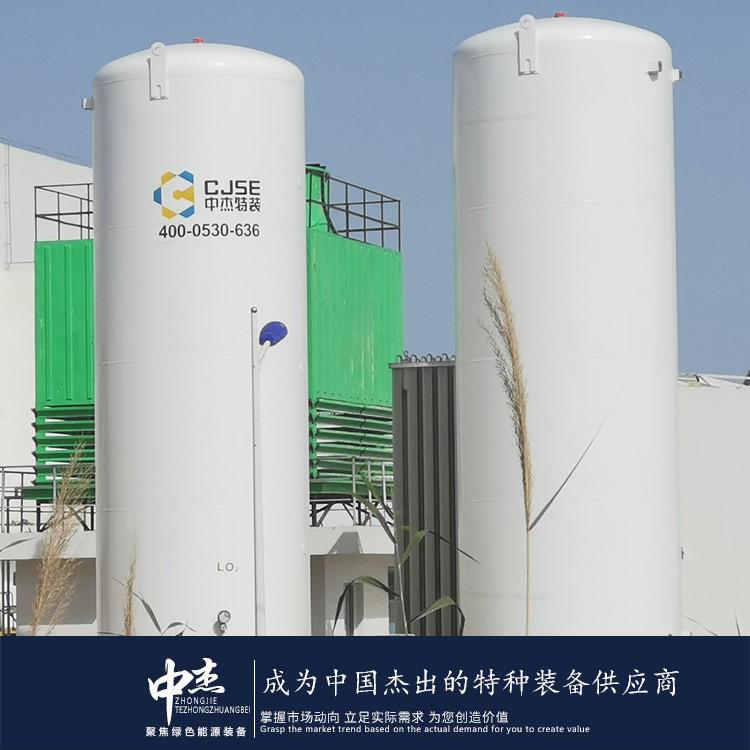
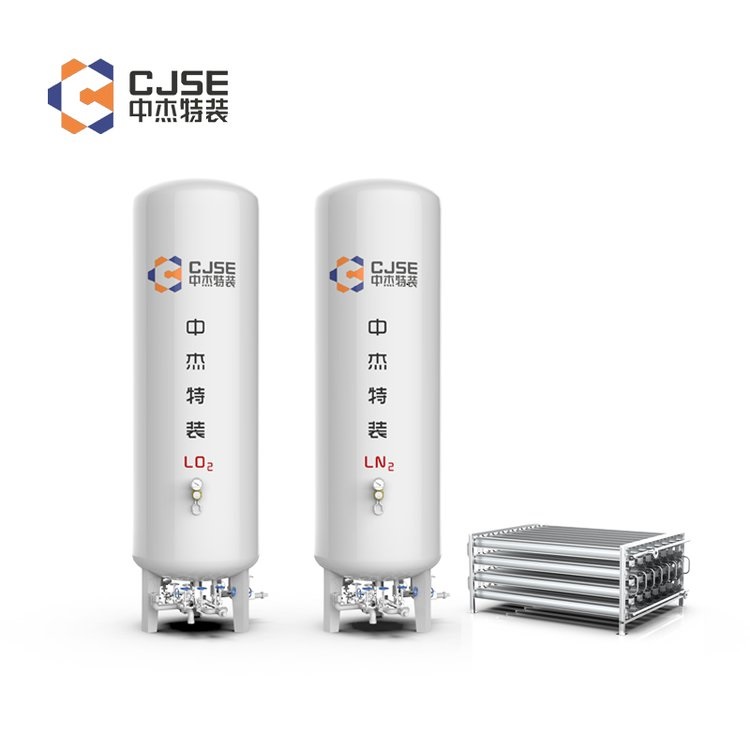
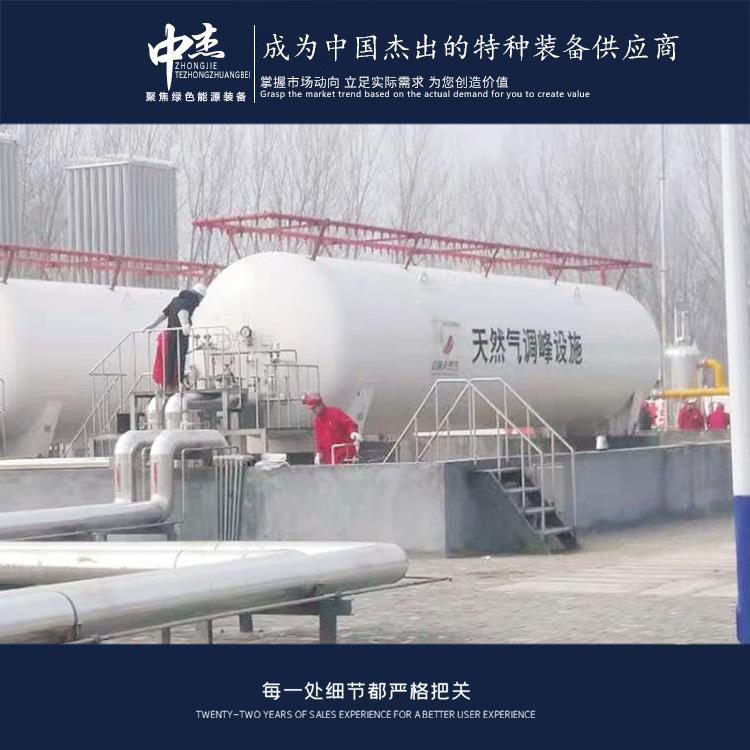
Shandong Zhongjie Special Equipment Co., Ltd. specializes in the following products: fuel (gas) boilers, organic heat carrier boilers, biomass boilers, waste heat boilers, and other boiler products; vacuum insulation cryogenic pressure vessels such as LNG storage tanks, oxygen/nitrogen/argon storage tanks, and CO2 storage tanks; pressure vessel products including denitrification engineering equipment, heat storage and energy storage equipment, and complete chemical equipment sets; central air conditioning and HVAC equipment such as ground (water) source heat pumps, air source units, water-cooled screw units, and air-cooled modular units. Planned products include large-scale energy centers, LNG transport vehicles, LNG tank containers, and other green energy equipment.
The cooling process for carbon dioxide storage tanks can vary depending on specific application requirements and design. Here is an example of a general cooling process for a carbon dioxide storage tank: Initial Cooling: When carbon dioxide enters the tank, it is typically initially cooled to lower its temperature. This can be achieved by passing the carbon dioxide through a condenser or cooler. The cooling medium can be cold water or refrigerant. Tank Cooling: After carbon dioxide enters the tank, it is necessary to continue cooling the tank itself to maintain the liquid state of the carbon dioxide. This can be done by setting up coolers or cooling pipes externally and circulating the cooling medium (such as cold water or refrigerant). Temperature Control: During the tank cooling process, the temperature inside the tank needs to be controlled to ensure carbon dioxide remains within an appropriate temperature range. This can be achieved through temperature sensors and control systems, which automatically control the temperature based on the set range. Insulation: To reduce heat transfer and energy loss, the tank is usually insulated. This can be done by setting up insulating materials (such as polyester foam or glass wool) externally to reduce heat conduction. Regular Inspection and Maintenance: In the cooling process of the tank, regular inspection and maintenance of cooling equipment and insulating materials are required to ensure proper operation and effectiveness. This includes cleaning coolers, checking the integrity and effectiveness of insulating materials, etc. It should be noted that the specific cooling process for carbon dioxide storage tanks may vary due to different application scenarios and process requirements. In practice, process design and operation should be based on specific conditions to ensure the safety and performance of the tank. Consult an engineer or storage specialist.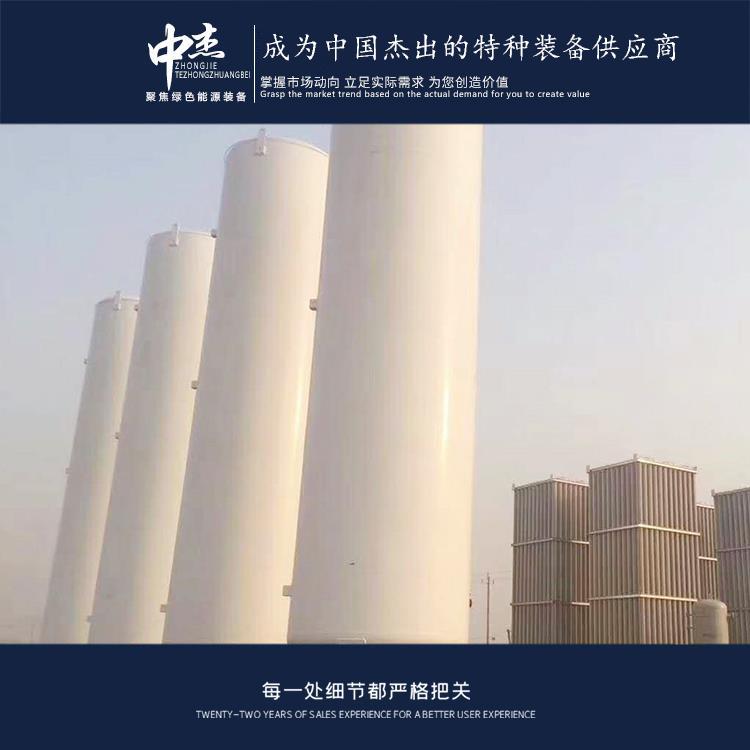
Low-temperature CO2 storage tanks are equipment used for storing and transporting low-temperature liquid CO2. Here are some key points about low-temperature CO2 storage tanks:
- Tank Structure: These tanks typically feature a double-wall design, with the inner wall for liquid CO2 storage and the outer wall for insulation. The interior is usually made of stainless steel or aluminum alloy, offering excellent corrosion resistance.
- Storage Temperature: The storage temperature usually ranges from -40°C to -196°C, depending on specific application requirements. Temperature control is crucial to ensure the stability and safety of the liquid CO2.
- Storage Capacity: The capacity of low-temperature CO2 storage tanks can be selected based on actual needs, typically ranging from a few thousand to several tens of thousands of liters. The choice of capacity should consider storage requirements, supply frequency, and spatial constraints.
- Safety Protection: These tanks require safety protection devices such as pressure relief valves, pressure sensors, and temperature sensors to ensure internal pressure and temperature remain within safe limits.
- Transportation: Low-temperature CO2 storage tanks can be transported via road, rail, or ship. Proper insulation measures must be taken during transportation to maintain the low-temperature state of the liquid CO2 inside.
- Safe Operation: Operation of low-temperature CO2 storage tanks requires training and adherence to safety procedures. Operators should understand the tank's characteristics and safety considerations to ensure safe and effective operation.
- Regular Inspection and Maintenance: Regular checks and maintenance are necessary for low-temperature CO2 storage tanks, including visual inspections, valve and pipeline checks, and pressure relief device checks. Regular maintenance ensures the tank operates normally and safely.
The above information covers some key aspects of low-temperature CO2 storage tanks. When using and operating these tanks, it is essential to follow relevant safety regulations and standards, and consult experts to ensure safety and effectiveness.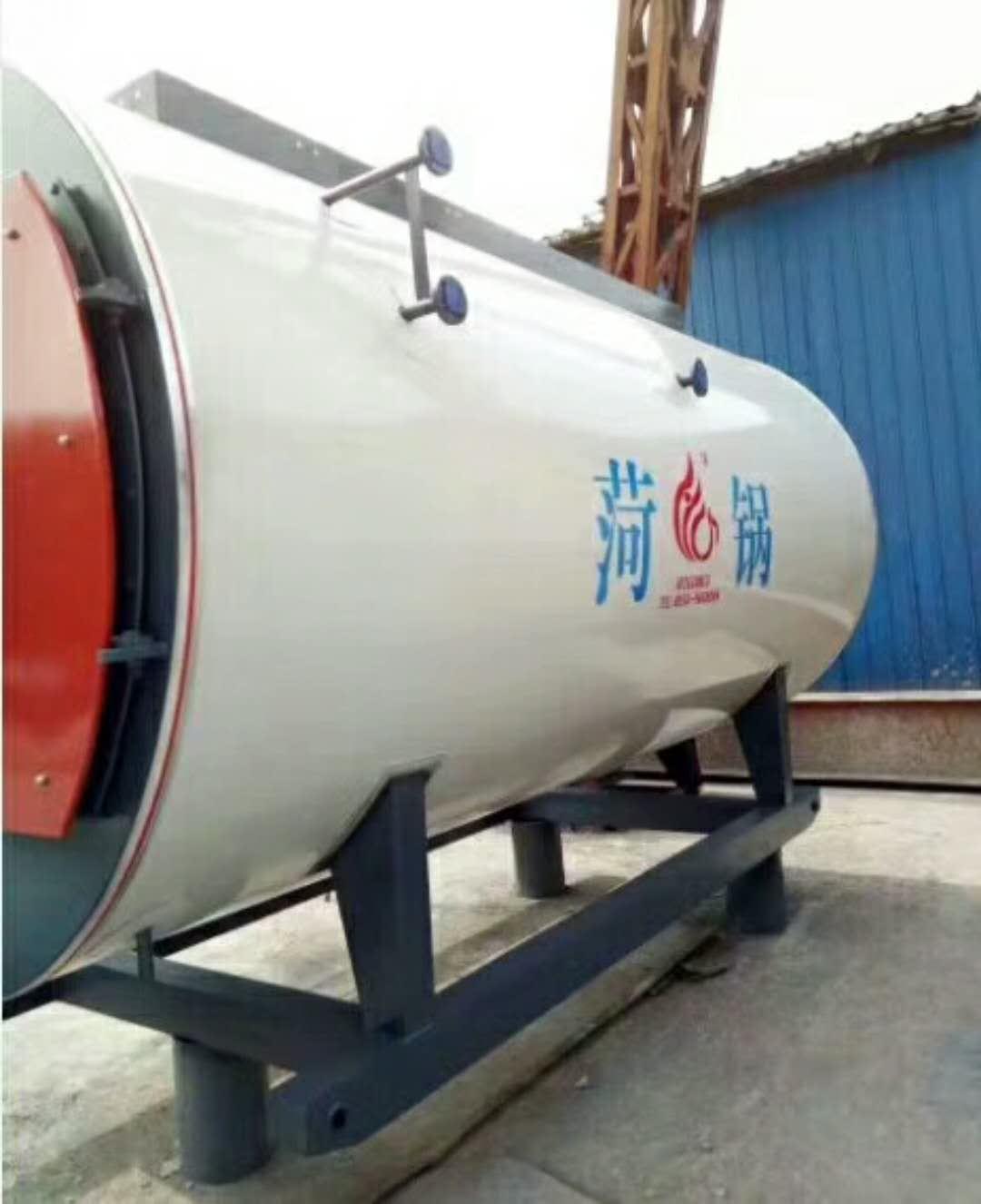
The internal structure of carbon dioxide storage tanks typically includes the following main components:
- Tank Shell: The tank shell serves as the primary container for storing carbon dioxide and is usually made of carbon steel or stainless steel. It is designed with sufficient strength and sealing to withstand the pressure and loads inside the tank.
- Lining Layer: To prevent direct contact between carbon dioxide and the tank shell, which could lead to corrosion and contamination, an internal lining layer is applied. This lining is typically made of corrosion-resistant materials such as fiberglass or polyester resins.
- Support Structure: To support the weight of the tank and maintain stability, an internal support structure is often installed. This can include supports, brackets, or other devices to bear the weight of the bottom and sides of the tank.
- Internal Accessories: The tank is also equipped with essential accessories such as level gauges, pressure sensors, temperature sensors, and safety valves. These are used to monitor and control the liquid level, pressure, and temperature within the tank to ensure safe operation.
- Pressure Relief Device: To prevent excessive pressure inside the tank, pressure relief devices such as safety valves are typically installed. When the internal pressure exceeds the set value, these devices automatically open to release pressure, protecting the tank from damage.
- Inlet and Outlet Piping: The tank is also fitted with inlet and outlet piping for injecting and discharging carbon dioxide. These pipes are usually connected to external supply or consumption systems to facilitate the storage and use of carbon dioxide.
- The above descriptions provide a general overview of the internal structure of carbon dioxide storage tanks. Specific design and configurations may vary depending on the tank's intended use and specifications. When using and maintaining the tank, it is necessary to...
Carbon dioxide tanks are widely used in various industries. Here are some common sectors with examples of carbon dioxide tank applications:
- Beverage and Food Industry: Carbon dioxide is used as a carbonating agent for beverages and food, in the production of soda, beer, soft drinks, etc. Tanks are used for storing and supplying carbon dioxide to meet production line demands.
- Industry: Carbon dioxide has multiple applications in industry, such as anesthesia, respiration, tissue freezing, etc. Tanks are used for storing and supplying medical-grade carbon dioxide to meet facility needs.
- Fire Extinguishing: Carbon dioxide is extensively used in fire suppression systems, particularly in extinguishing electrical and sensitive equipment. Tanks are used for storing and supplying carbon dioxide for fire extinguishing purposes.
- Gas Industry: Carbon dioxide is also a significant product in the gas industry, used in the production of chemicals, metal processing, welding, gas shielding, etc. Tanks are used for storing and supplying industrial-grade carbon dioxide.
- Greenhouse Agriculture: Carbon dioxide can be used to promote plant growth in greenhouses, providing additional carbon dioxide concentration. Tanks are used to supply the required carbon dioxide for greenhouse use.
- Automotive Industry: Carbon dioxide is used for tire inflation and airbag systems in vehicles. Tanks are used for storing and supplying carbon dioxide to meet automotive manufacturing and repair needs.
These are just some common industry examples. In reality, carbon dioxide tanks are also widely used in many other sectors, such as chemicals and frozen food industries. Specific applications may vary depending on industry needs and scenarios.
Our company attaches great importance to technological innovation and R&D design, boasting one municipal-level enterprise technology center in Heze City. We have established testing facilities for non-destructive testing, physical and chemical testing, welding testing, hydrostatic testing, etc., and are equipped with over 600 types of instruments and equipment, including CNC machine tools, X-ray flaw detectors, digital ultrasonic flaw detectors, mechanical property testing machines, chemical analyzers, spectrometers, tensile testing machines, plasma welding machines, and more. Our key products and technologies, such as thermal pressure vessel welding, biomass boiler emission reduction, and waste heat recovery, have successively been selected for multiple Shandong Provincial Department of Industry and Information Technology science and technology innovation projects, key projects in Shandong Province, and Heze City innovative and excellent projects, etc. We have accumulated a total of 27 authorized utility models, 16 authorized inventions, participated in drafting 2 standards, 2 industry standards, and registered 15 trademarks. The technical team of our company, in collaboration with Professor Yajiang Li from Shandong University, has developed deep cryogenic container processing technology using the internationally recognized plasma arc + wire filling tungsten inert gas arc welding (PAW-GTAW) technology. After being appraised as a provincial-level scientific and technological achievement, our technology level has reached an international standard in the field of deep cryogenic container manufacturing. Choose ZJ Special Equipment, and let's create brilliance together!
太原15立方二氧化碳储罐 生产厂家
