


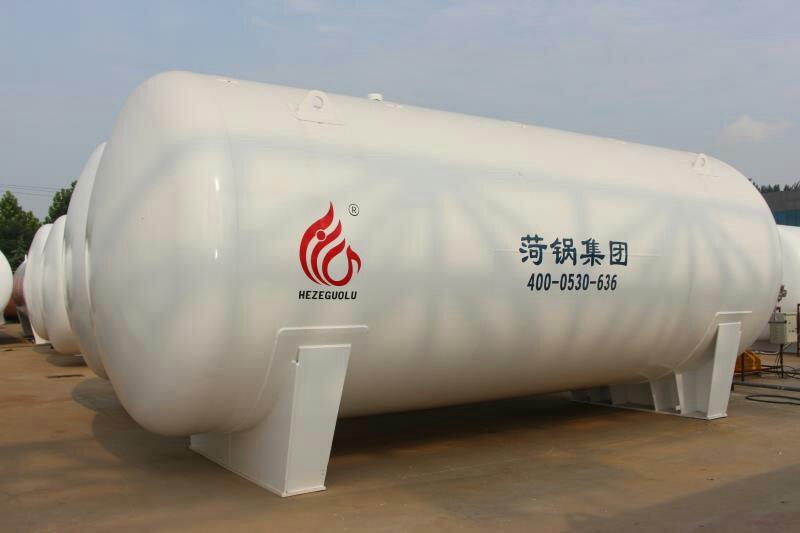
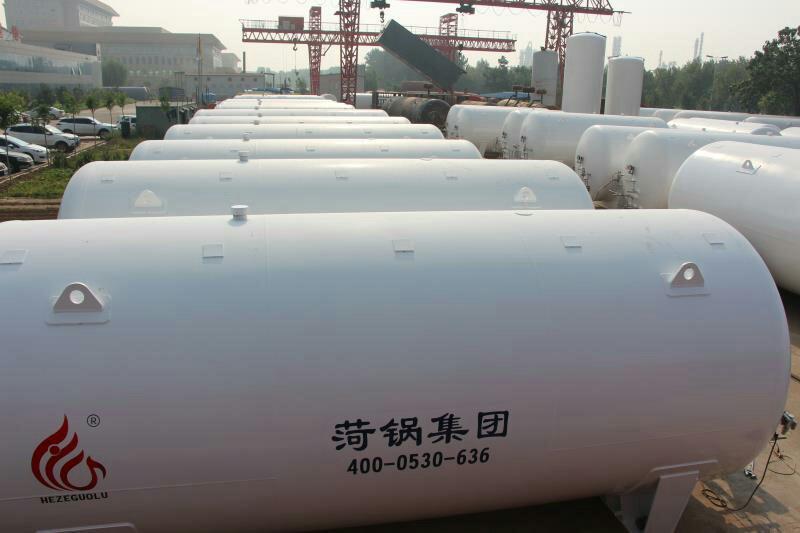
Product Description
Brand Hegu Group Model CFW-60/0.8
Material: Stainless Steel, Diameter: 2916mm
Application Range: -162℃; Volume: 60,000L
Wall Thickness: 8mm; External Dimensions: φ2916*14929mm
Origin: Shandong Heze

Heze LNG Storage Tank, Low Temperature Oxygen Nitrogen Argon Carbon Dioxide Storage Tank, 60 Cubic Meters LNG Storage Tank
Low-temperature LNG tanks are high-vacuum insulated stainless steel pressure vessels, designed for the storage, transportation, and use of liquid natural gas. The containers are manufactured in accordance with GB18442 standards and are used for reliable and cost-effective transportation and storage of cryogenic liquids, as well as for on-site storage and supply of liquid gases in a wide range of applications.
With the development of low-temperature liquid storage and transportation, the insulation technology of low-temperature containers is becoming increasingly refined. To maintain the storage and transportation of low-temperature liquids and the temperature of low-temperature refrigeration, insulation measures must be taken for the low-temperature environment. Only under insulating conditions can low temperatures be maintained. Insulation can reduce vaporization loss or create conditions for long-term and long-distance transportation of low-temperature liquids.
Low-temperature insulation methods can be divided into two major categories: general insulation and vacuum insulation.
(1) Ordinary insulation is an older, traditional insulation method that involves applying solid, porous insulating materials to the outer side of equipment, containers, and pipes. These materials contain air or other gases under atmospheric pressure within their voids.
(2) There are three basic types of vacuum insulation: high vacuum insulation, vacuum powder insulation, and vacuum multilayer insulation.
Principles of Pressure Increase and Decrease in LNG Storage Tanks
Boost Pressure:
As LNG is used, the liquid level inside the tank continuously decreases, causing the gas phase space to expand and the tank pressure to drop continuously. The flow rate of LNG gradually slows down until it stops. Therefore, during normal operation, it is necessary to continuously replenish gas into the tank to maintain the pressure within a certain range. This process is called pressurization. Its principle is shown in the figure: The pressurization of the tank is achieved by an automatic pressurization system consisting of an automatic pressurization regulator and a small air-temperature vaporizer. When the tank pressure falls below the set value of the automatic pressurizer, the regulator opens, and the liquid inside the tank slowly flows into the pressurization vaporizer due to the liquid level difference, and the gas produced by the vaporization of the liquid flows through the regulator and the gas phase pipe to replenish the tank. The continuous replenishment of gas causes the tank pressure to rise, and when it exceeds the regulator's set value, the regulator closes. At this point, the pressure inside the pressurization vaporizer will prevent further liquid inflow, and the pressurization process ends.
Pressure Relief: (Overpressure Protection)
LNG can slowly evaporate during storage due to heat loss from the storage tank's environment, causing the tank's pressure to gradually increase and ultimately posing a risk to the tank's safety. Therefore, it is necessary to control the pressure limit by releasing the gas inside the tank. This is done by installing a regulator on the gas phase pipeline of the storage tank. When the tank's pressure rises to a set value, the pressure relief valve slowly opens to release the tank's gas. Once the pressure drops below the set value, the automatic regulator closes. It should be noted that the regulator referred to here is not the commonly used gas regulator. Generally, regulators rely on the action of the control valve at the outlet end, but this type of regulator relies on the action of the control valve at the inlet end, similar to the commonly used vent valve, and it must withstand low temperatures. The released gas is usually not released into the atmosphere; instead, subsequent processes will recover and utilize it. This portion of the gas is abbreviated as BOG.
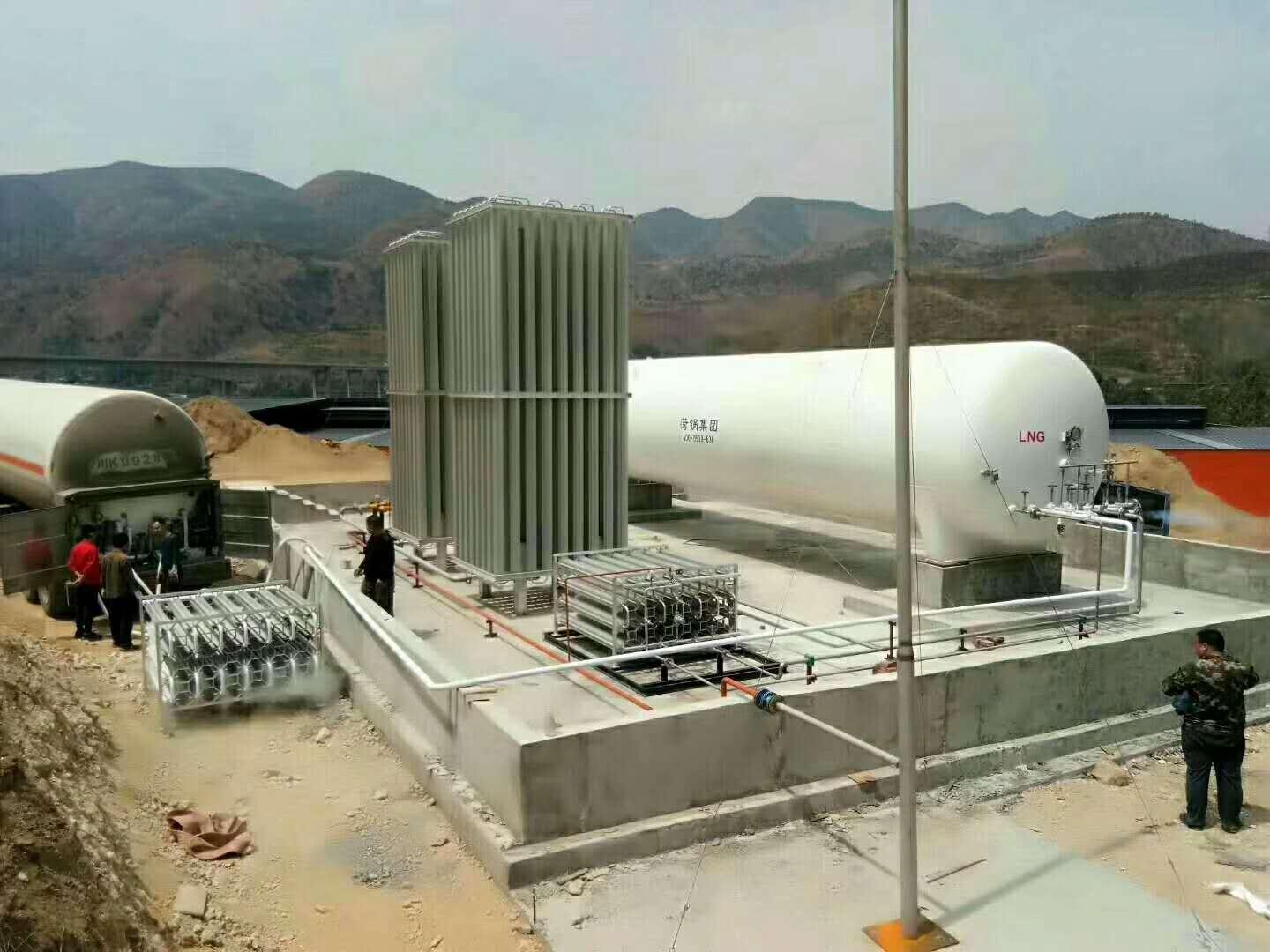
Heze LNG Storage Tank, Low Temperature Oxygen/Nitrogen/Argon Carbon Dioxide Storage Tank, 60 Cubic Meters LNG Tank
Product Description

Brand Huoguo Group Model CFW-30/0.8
Material: Stainless Steel, Diameter: 2916mm
Application Range -162℃ Volume 30,000L
Heat Exchange Area - See drawing sq. m, Environmental Temperature - See drawing °C
Wall Thickness: 8/10mm, External Dimensions: 2916*8289mm
Origin: Shandong Heze
30立方LNG储罐 60立方天然气储罐 100立方液化天然气储罐厂家
The operational pressure of the low-temperature LNG storage tank is 0.6-1.44 MPa, with an operating temperature of -162°C. (Available in vertical or horizontal configurations) The LNG storage tank consists of two layers, both internally and externally. To minimize the transfer of external heat into the tank, a vacuum insulation structure filled with diatomaceous earth is used between the layers, isolating it from the atmosphere. This prevents the impact of atmospheric pressure or temperature changes and the entry of moist air into the insulation layer between the inner and outer tanks, effectively ensuring and enhancing the performance of the insulation material.
Safety regulations and standards for fixed pressure vessels
1. GB/T 18442-2011 "Fixed Vacuum Insulation Low-Temperature Pressure Vessel"
2. GB50028—2006 "Code for Design of Urban Gas Pipelines"
(Note: Applicable to the design of new, expanded, or renovated urban gas pipelines for various users, including residential, commercial, industrial, heating, ventilation, and air conditioning, in cities, towns, or residential areas.)
3. GB50494—2009 "Regulations for Urban Gas Technology"
(Note: Applicable to the construction, operation, maintenance, and use of urban gas facilities.)
4. GB50156—2012 Design and Construction Code for Gasoline and Gasoline-Fueling Stations
(Note: Applies to the design and construction of new, expanded, and reconstructed auto gas stations, gas stations, and combined gas stations with both fuel and gas services.)
5. JB/T6869-1997 "Safety Rules for the Use of Low-Temperature Liquid Storage and Transportation Equipment"
(Note: Applies to low-temperature storage and transport equipment for liquid oxygen, nitrogen, argon, and carbon dioxide in cryogenic containers and tank trucks.)
Low-temperature LNG storage tanks are equipped with multiple valves and piping components, including: top liquid inlet valve, bottom liquid inlet valve, liquid discharge valve, overflow valve, vent valve, vacuum gauge valve, suction valve, liquid inlet main valve, gas usage valve, three-way switch valve, inner cylinder safety valve, liquid level display gas phase valve, also for level balance valve, vacuum gauge, outer cylinder explosion-proof device, pressure gauge, liquid level gauge, pipeline safety valve, and remote transmission interface valves, etc. The material of the valves is extremely important;不合格 materials can lead to external or internal leakage of the shell and sealing surfaces; the comprehensive mechanical properties, strength, and stiffness of the components may not meet the usage requirements and may even fracture. Therefore, the material is the primary and critical issue in the selection process of low-temperature storage tank valves. The company has strict requirements for the selection of its product valves and piping, ensuring customer safety and peace of mind through rigorous quality and performance screening by professionals.
30立方LNG储罐 60立方天然气储罐 100立方液化天然气储罐厂家


正规液化天然气储罐制造商-专业的液化天然气储罐生产厂家-专业生产液化天然气储罐制作-山东菏泽锅炉液化天然气储罐十大品牌
