


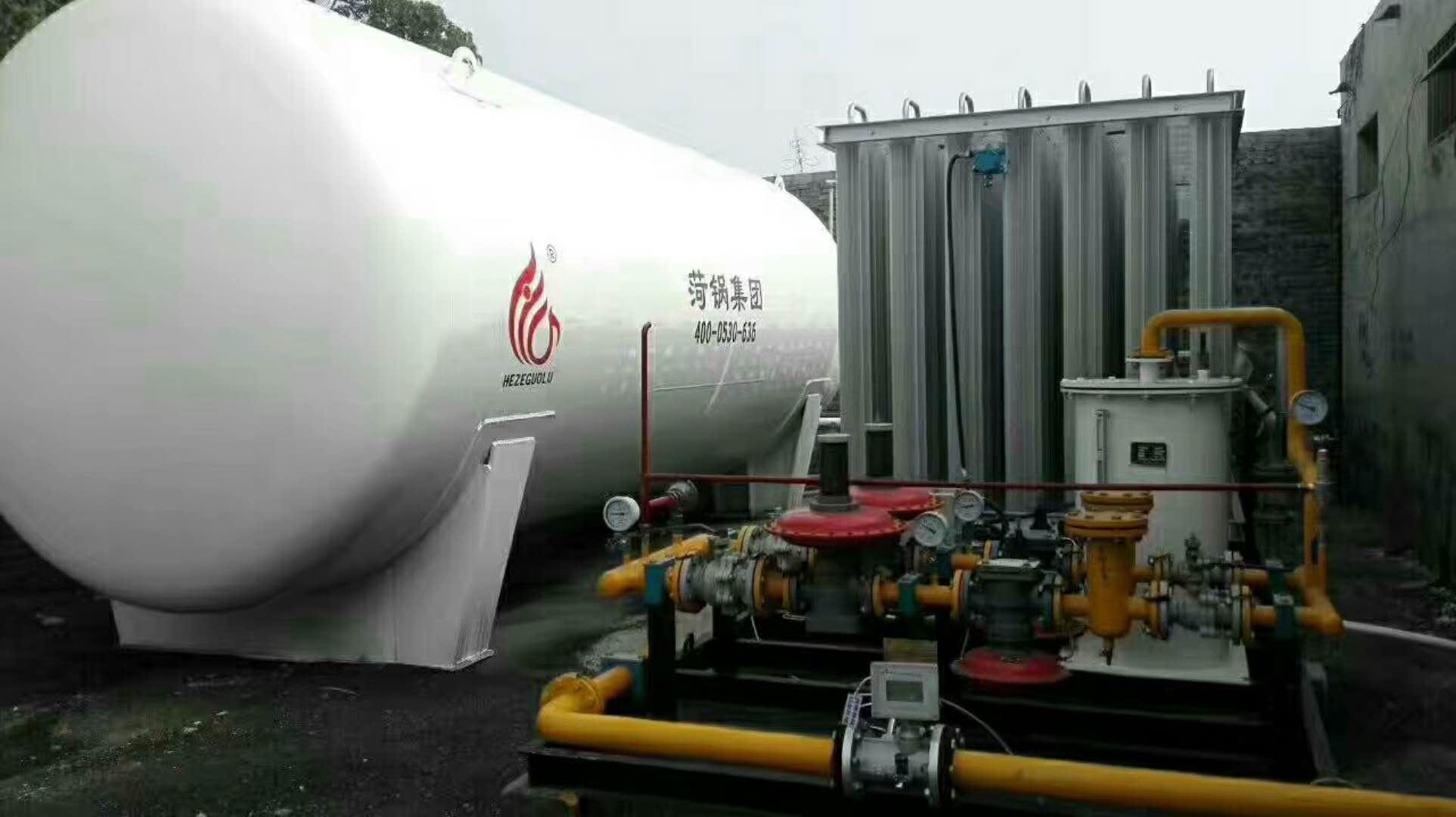


Product Description

Brand Hoekou Group Model CFW-60/0.8
Material: Stainless Steel, Diameter: 2916mm
Application Range -162℃ Volume 60000L
Heat Exchange Area - See drawing m², Ambient Temperature - See drawing °C
Wall Thickness: 8mm, Outer Dimensions: φ2916*14929mm
Origin: Shandong Heze

60 Cubic Meters Horizontal LNG Storage Tank, Low-Temperature Natural Gas Storage Tank, Vacuum LNG Storage Tank - Competitive Pricing
The Functions of Different Parts of an LNG Tank
Outer Shell: Protects the inner container and the insulation material between the inner and outer shells, creating a vacuum between them to enhance the insulating performance of the material. The outer shell can completely seal off any leaked liquid and evaporated gas, ensuring storage safety.
Inner罐: Primarily used for storing LNG, but due to the ultra-low temperature characteristics of LNG, strict requirements are placed on the material and manufacturing process of the tank. Upper and lower liquid inlet pipes: Pay attention to the length of the upper liquid inlet pipe, which is nearly the same as the inner tank. The liquid inlet pipes in the storage tank use a mixed nozzle and porous pipe to ensure that newly injected LNG is thoroughly mixed with the existing LNG. LNG is transported to the gas station from the LNG liquefaction plant via road tankers or tank container vehicles. During unloading, to prevent an increase in pressure within the LNG storage tank from affecting unloading speed, the upper liquid inlet method is used when the LNG temperature in the tanker is lower than that in the tank. The低温 LNG in the tanker is sprayed into the tank through the upper liquid inlet pipe nozzle in a spray state, cooling some of the gas to a liquid and reducing the tank pressure, allowing unloading to proceed smoothly. If the LNG temperature in the tanker is higher than that in the tank, the lower liquid inlet method is employed, with the high-temperature LNG entering the tank from the lower liquid inlet, mixing with the cooler LNG inside to lower the temperature and prevent the high-temperature LNG from evaporating through the upper liquid inlet, which could increase the tank pressure and complicate unloading. In practice, due to the long distance from the LNG gas source to the cities consuming the gas, when transported over long distances to consuming cities, the LNG temperature in the tankers is typically higher than that in the storage tanks at the gasification stations, necessitating the use of the lower liquid inlet method. Therefore, except for the first time of filling LNG, the lower liquid inlet method is generally used during normal tanker unloading.
Safety Valve: When the pressure inside the storage tank exceeds the set pressure of the safety valve (also known as the working pressure), the safety valve will automatically open to release excess gas and stabilize the pressure. The set pressure of the safety valve is generally 1.04-1.1 times the operating pressure of the pressure vessel, and the reset pressure is 0.8 times the operating pressure of the vessel.
Safety Valve Terminology: The nominal pressure of a safety valve indicates the maximum allowable pressure under normal temperature conditions. For safety valves used in high-temperature equipment, the reduction in allowable stress of the material under high temperature should not be considered. Safety valves are designed and manufactured according to the nominal pressure standards.
Setpoint Pressure: Also known as the adjustment pressure, it is the pressure of the medium when the safety valve disc starts to lift under operating conditions. Discharge Pressure: The pressure on the inlet side when the valve disc reaches the specified opening height.
Seat Pressure: The inlet pressure when the valve disc re-seats onto the valve seat after the safety valve discharges, and the medium stops flowing out. Seat pressure is an important parameter indicating the quality of the safety valve's use, generally requiring it to be at least 80% of the working pressure, with the upper limit set to prevent frequent valve disc oscillation.
Open/Close Pressure Difference: The difference between the opening pressure and the return seat pressure.
Outer tank bursting disk: It is designed to prevent leakage at the junction of the inner tank and pipeline, and to avoid the outer tank's explosion caused by increased pressure between the layers. By installing a bursting disk, pressure can be released in a timely manner, thereby protecting the storage tank.
Differential Pressure Level Gauges: Typically used in LNG storage tanks.

Hekou 60 Cubic Horizontal LNG Storage Tank, Natural Gas Low-Temperature Storage Tank, Vacuum LNG Storage Tank - Competitive Pricing
山东LNG储罐厂家 30立方卧式LNG储罐 真空天然气储罐

LNG Tank Characteristics Requirements
Low-temperature resistant
The boiling point of liquefied natural gas at atmospheric pressure is -162°C. Therefore, LNG storage tanks must have excellent low-temperature resistance and insulation properties.
(2) High safety requirements
Due to the storage of low-temperature liquids inside the tank, in the event of an accident, the refrigerated liquid would volatilize in large quantities, with the vaporization amount being approximately 625 times that of the original refrigerated state, forming an explosive mixture in the atmosphere. Therefore, it is required that the tank be constructed with a double-walled structure and utilize the sealing concept. In the event of a leak in the first layer of the tank, the second layer can completely seal off the leaking liquid and the evaporated gas, ensuring storage safety.
(3) Special Material.
The inner tank must be capable of withstanding low temperatures and is made of austenitic stainless steel, while the outer cylinder is constructed from Q345R low-carbon alloy steel plate.
(4) Strict thermal insulation measures.
Due to the maximum temperature difference of up to 200℃ between inside and outside the drum, the drum must have excellent thermal insulation properties to maintain an internal temperature of -160°C. High-performance thermal insulation materials should be filled between the inner and outer drums. The thermal insulation material at the drum bottom must also have sufficient pressure-bearing capacity. (5) Good seismic performance
General building seismic requirements are to crack under specified earthquake loads but not collapse. To ensure the safety of storage tanks under unexpected loads, they must have excellent seismic performance. Ensure that the tank body remains undamaged under the given earthquake intensity. (6) Strict construction requirements
Tanks' weld seams must undergo 100% magnetic particle inspection (MT) and 100% vacuum leak detection (VBT). Strict selection of insulation materials is required, and the specified procedures must be followed during construction.
2. LNG Tank Structure
The low-temperature storage tank is double-walled, with the inner tank containing low-temperature liquids, withstanding medium pressure and low temperatures, and made of low-temperature-resistant alloy steel (0Cr18Ni9). The outer shell serves as a protective layer for the inner tank, maintaining a certain distance to form an insulating space. It bears the weight of the inner tank, the medium, and the vacuum negative pressure of the insulating layer. The outer shell does not come into contact with the low temperature and is made of container steel. The insulating layer is mostly filled with mica sand and high vacuum is drawn. The evaporation rate of the low-temperature storage tank is generally less than 0.2%.
Main components include: outer can, inner can, inner can support, insulation layer, upper and lower liquid inlet pipes, upper and lower liquid level pipes, gas phase pipe, overflow pipe, discharge pipe, as well as safety accessories and instruments.
山东LNG储罐厂家 30立方卧式LNG储罐 真空天然气储罐


燃气导热油锅炉液化天然气储罐菏泽锅炉厂-专业生产液化天然气储罐供应商-供应液化天然气储罐价格-【液化天然气储罐价格】液化天然气储罐图片
