


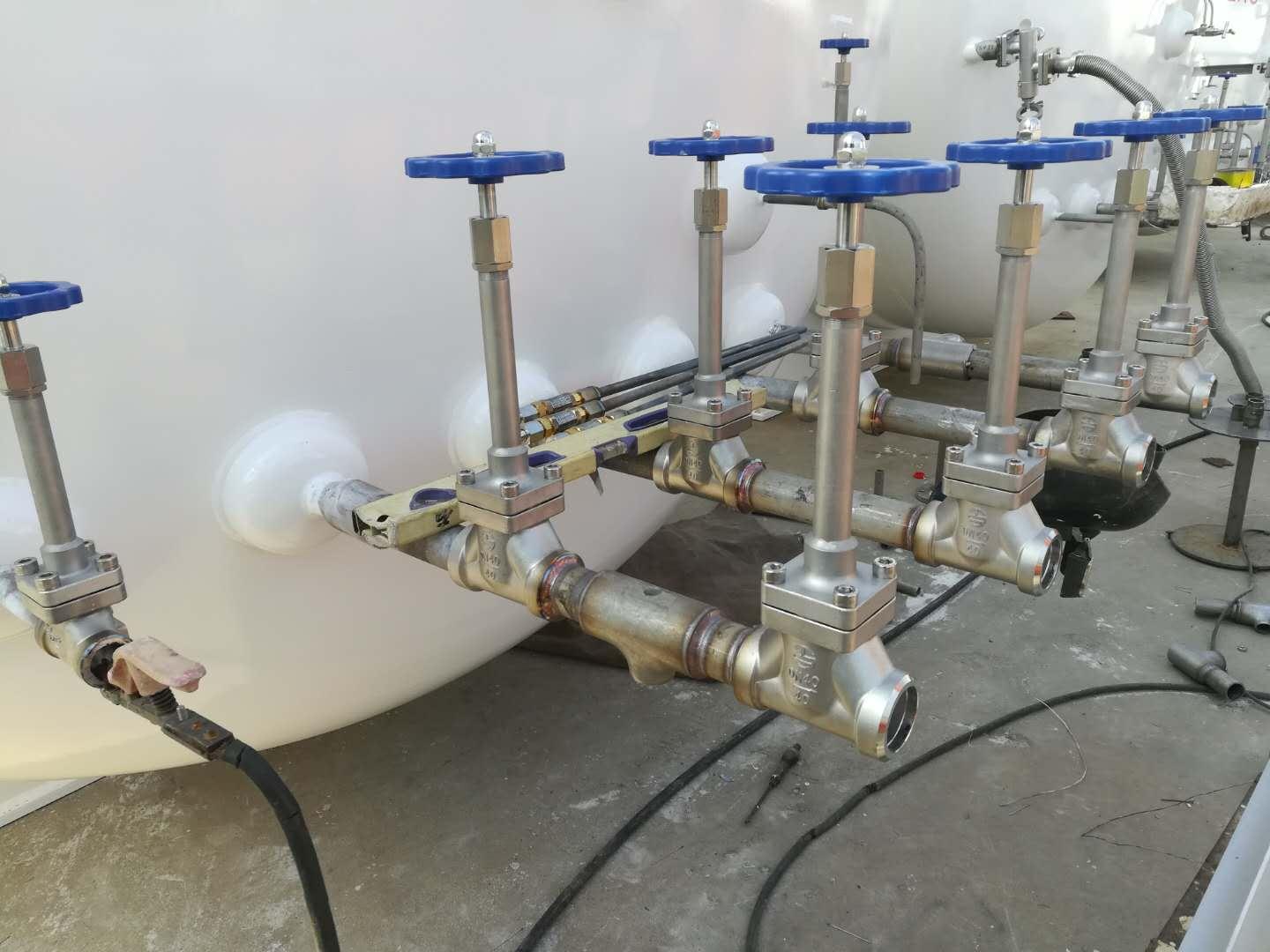
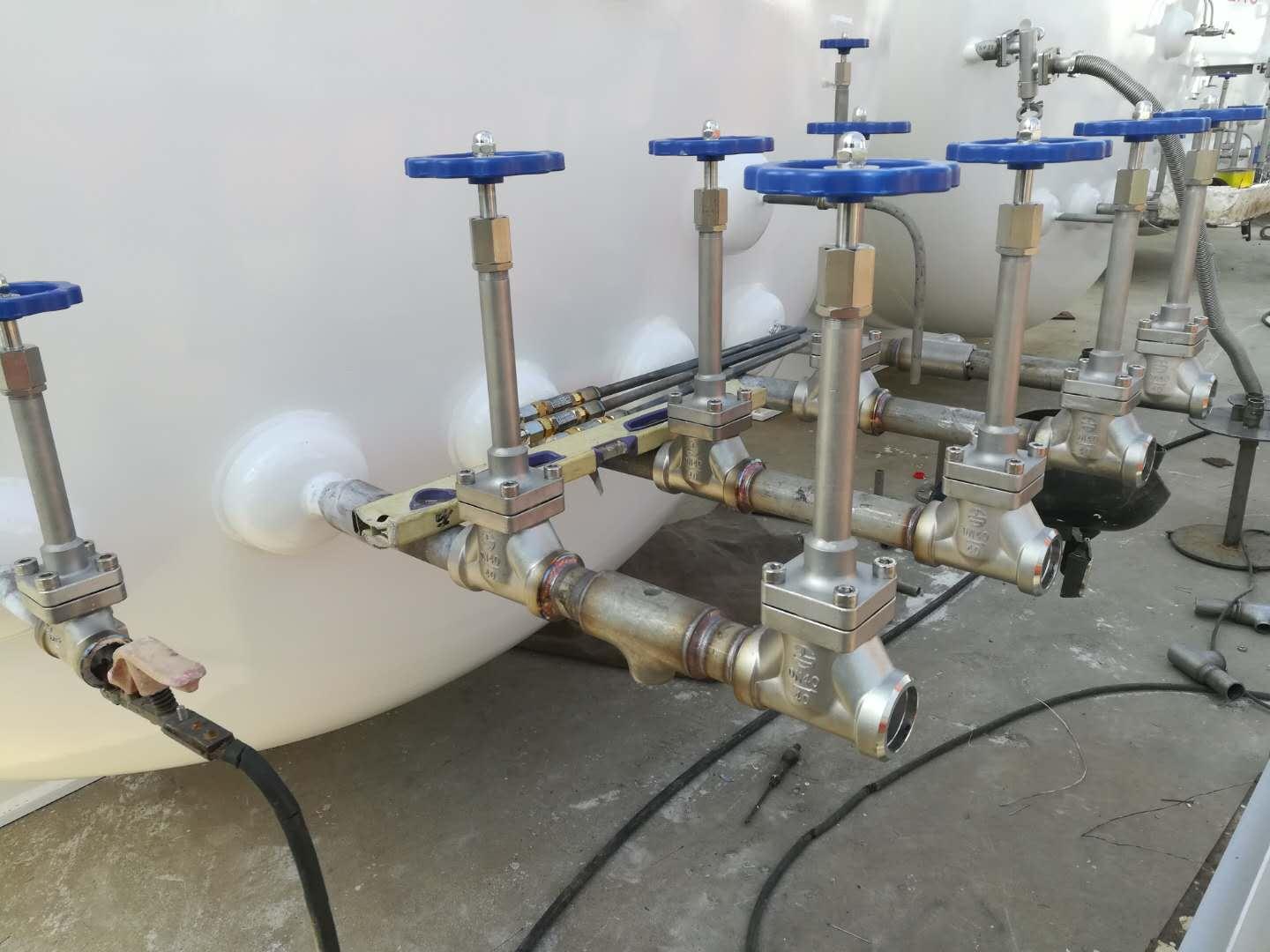
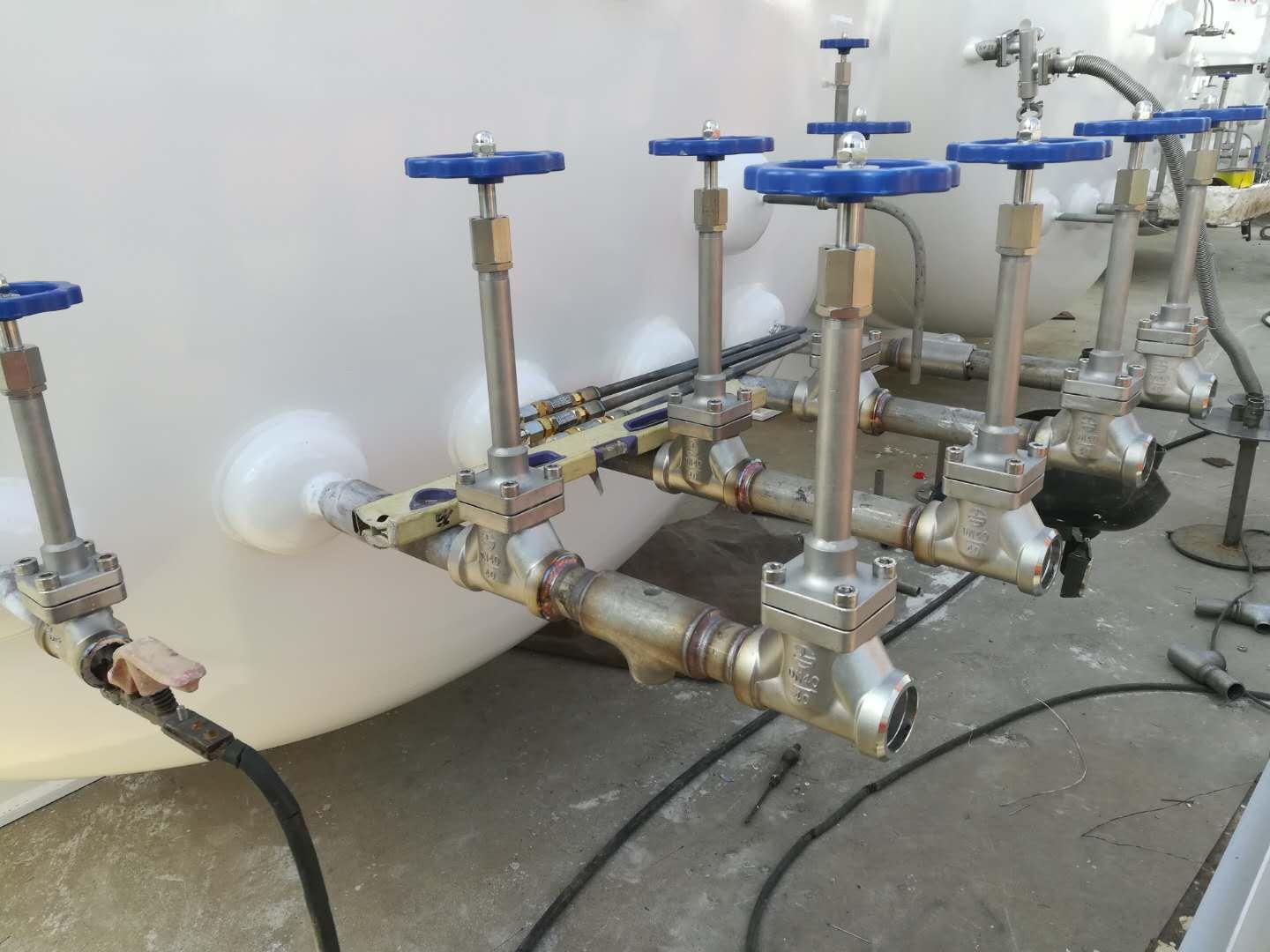
Product Description
Brand He Cook Group Model CFW-60/0.8
Material: Stainless Steel, Diameter: 2916mm
Application Range: -162℃; Volume: 60,000L
Wall Thickness: 8mm; Outer Dimensions: φ2916*14929mm
Origin: Shandong Heze

Heze LNG Storage Tank, Low Temperature Oxygen/Nitrogen/Argon Carbon Dioxide Storage Tank, 60 Cubic Meters LNG Storage Tank
Low-temperature LNG tanks are high-vacuum insulated stainless steel pressure vessels designed for storing, transporting, and using liquid natural gas. The tanks are manufactured in accordance with GB18442 standards and are used for reliable and cost-effective transportation and storage of low-temperature liquids, as well as for on-site storage and supply of low-temperature liquid gases across a wide range of applications.
With the development of low-temperature liquid storage and transportation, the insulation technology of low-temperature containers is increasingly refined. To maintain the storage and transportation of low-temperature liquids and the temperature for low-temperature refrigeration, insulation measures must be taken for the low-temperature environment. Only under insulation conditions can low temperatures be maintained. Insulation can reduce vaporization loss, or create conditions for the long-distance transportation of low-temperature liquids.
Low-temperature insulation methods can be divided into two major categories: ordinary insulation and vacuum insulation.
(1) Standard insulation is an older, traditional method that involves applying solid, porous insulating materials to the exterior of equipment, containers, and pipes. These materials are filled with air or other gases under atmospheric pressure within their voids.
(2) There are three basic types of vacuum insulation: high vacuum insulation, vacuum powder insulation, and vacuum multi-layer insulation.
Principles of pressure increase and decrease in LNG storage tanks
Boost Pressure:
With the use of LNG, the liquid level in the tank continuously decreases, causing the gas phase space to expand and the tank pressure to drop continually. The flow rate of LNG gradually slows down until it stops. Therefore, during normal operations, it is necessary to continuously replenish gas into the storage tank to maintain the pressure within a certain range. This process is called pressure boosting. Its principle is shown in the figure: The pressure boosting of the tank is achieved by an automatic pressure boosting system consisting of an autonomous pressure regulator and a small air-temperature gasifier. When the tank pressure falls below the set value of the automatic booster, the regulator opens, and the liquid in the tank slowly flows into the booster gasifier due to the liquid level difference, and the gas produced by the vaporization of the liquid flows through the regulator and the gas phase pipe to supplement the tank. The continuous addition of gas causes the tank pressure to rise, and when the pressure rises above the regulator's set value, the regulator closes. At this point, the pressure inside the booster gasifier will prevent the continued inflow of liquid, and the pressure boosting process ends.
Pressure Relief: (Overpressure Protection)
LNG can slowly evaporate during storage due to heat loss from the storage tank's environment, causing the tank's pressure to gradually increase and ultimately pose a safety risk. Therefore, it is necessary to control the pressure limit by releasing the gas inside the tank. This is achieved by installing a pressure regulator on the gas phase pipeline of the storage tank. When the tank's pressure rises to a set value, the pressure relief valve slowly opens to release the tank's gas. Once the pressure drops back below the set value, the automatic regulator closes. It should be noted that the regulator referred to here is not the commonly used gas regulator. While most regulators rely on the action of the control valve at the outlet end, this type of regulator operates based on the pressure control valve at the inlet end, similar to the commonly used vent valve. Additionally, it must withstand low temperatures. The released gas is generally not released into the atmosphere; it is instead recycled in subsequent processes. This portion of the gas is abbreviated as BOG.
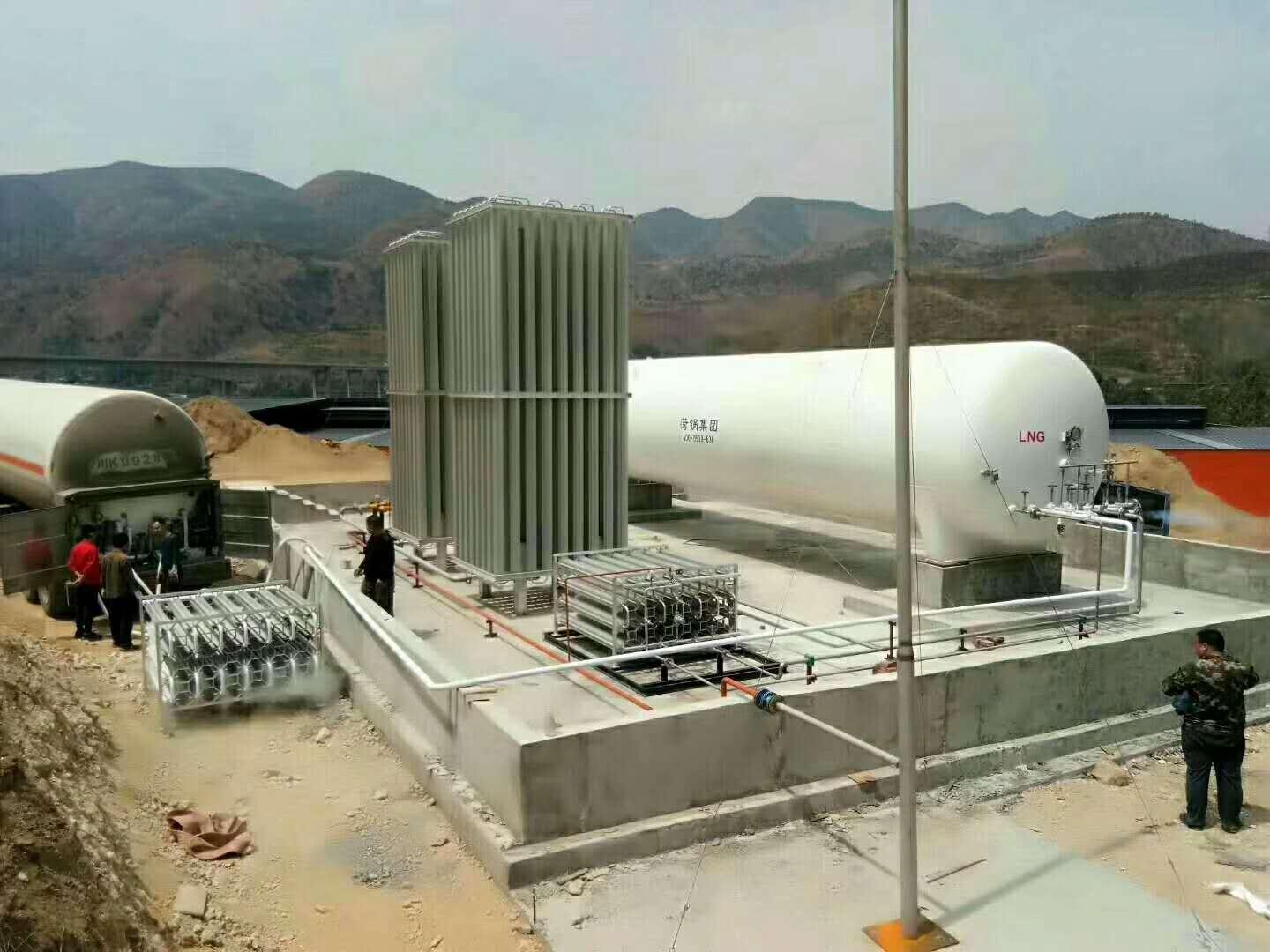
Heze LNG Storage Tank, Low-Temperature Oxygen/Nitrogen/Argon Carbon Dioxide Storage Tank, 60 Cubic Meters LNG Storage Tank
山东LNG储罐厂家 30立方卧式LNG储罐 真空天然气储罐

LNG Tank Characteristics Requirements
Low-temperature resistance
The boiling point of liquefied natural gas at atmospheric pressure is -162°C. Therefore, LNG storage tanks must have excellent low-temperature resistance and insulation properties.
(2) High safety requirements
Due to the storage of low-temperature liquids inside the tank, in the event of an accident, the refrigerated liquid will evaporate in large quantities, with the vaporization amount reaching approximately 625 times that of its refrigerated state, forming an explosive mixture in the atmosphere. Therefore, it is required that the tank be constructed with a double-walled design and utilize the principle of containment. In the event of leakage from the first tank body, the second layer can completely contain the leaked liquid and the evaporated gases, ensuring storage safety.
(3) Special Material.
The inner tank must be able to withstand low temperatures and is made of Austenitic stainless steel, while the outer cylinder is made from Q345R ordinary low-carbon alloy steel plate.
(4) Strict thermal insulation measures.
Due to the maximum temperature difference of up to 200°C between inside and outside the can, the can must have excellent insulation properties to maintain a temperature of -160°C inside. High-performance insulation materials are filled between the inner and outer cans. The insulation material at the bottom of the can must also have sufficient load-bearing capacity. (5) Good seismic performance
The seismic requirements for general buildings are to crack but not collapse under specified seismic loads. To ensure the safety of storage tanks under accidental loads, they must possess excellent seismic performance. It is crucial to ensure that the tank does not sustain damage under the given seismic intensity. (6) Strict construction requirements
The tank welds must undergo 100% magnetic particle testing (MT) and 100% vacuum leak testing (VBT). Strict selection of insulation materials is required, and the prescribed procedures must be followed during construction.
2. LNG Storage Tank Structure
Low-temperature storage tanks feature a double-layer structure, with the inner vessel storing low-temperature liquids, withstands medium pressure and low temperatures, and is made of low-temperature-resistant alloy steel (0Crl8Ni9). The outer shell acts as a protective layer for the inner vessel, maintaining a certain distance to create an insulating space. It bears the weight of the inner vessel, the medium, and the vacuum negative pressure of the insulation layer. The outer shell does not come into contact with low temperatures and is made of container steel. The insulating layer is primarily filled with mica sand and a high vacuum is drawn. The evaporation rate of low-temperature storage tanks is generally less than 0.2%.
Main components include: outer can, inner can, inner liner support, insulating layer, upper and lower liquid inlet pipes, upper and lower liquid level pipes, vapor pipe, overflow pipe, liquid outlet pipe, as well as safety accessories and instruments, etc.

山东LNG储罐厂家 30立方卧式LNG储罐 真空天然气储罐


知名液化天然气储罐厂家-优质液化天然气储罐制作-正规液化天然气储罐电话-专业的液化天然气储罐电话
