




Product Description

Brand Hegu Group Model CFW-60/0.8
Material: Stainless Steel, Diameter: 2916mm
Application Range -162℃ Volume 60000L
Heat Exchange Area - See drawing m²; Ambient Temperature - See drawing °C
Wall thickness: 8mm, External dimensions: φ2916*14929mm
Origin: Shandong Heze

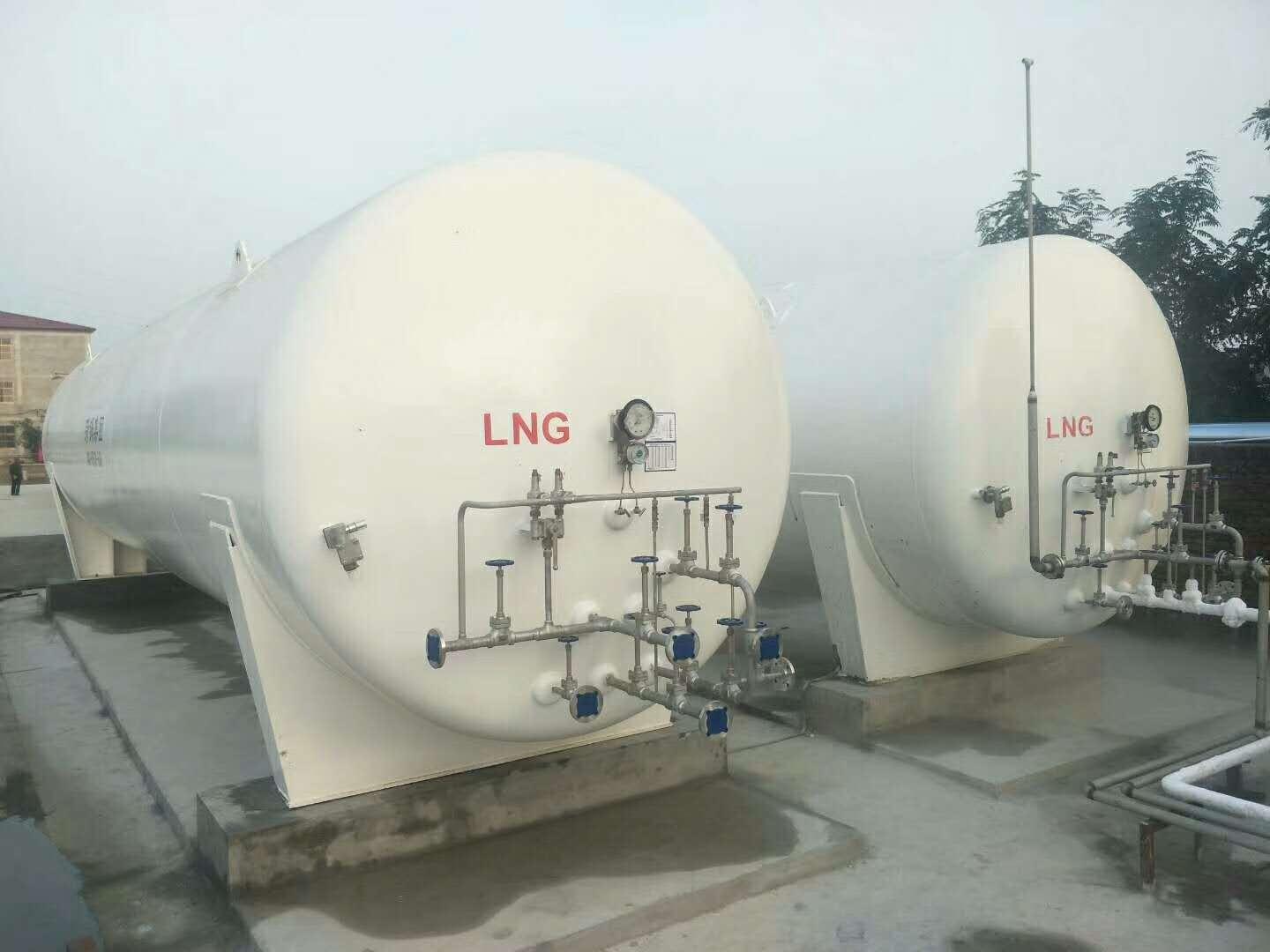
60 Cubic Meters Horizontal LNG Storage Tank, Natural Gas Low-Temperature Storage Tank, Vacuum LNG Storage Tank, Competitive Price
The Functions of Different Parts of an LNG Tank
Outer罐: Protects the inner tank and the insulating material between the inner and outer tanks, forming a vacuum between them to enhance the insulating performance of the material. The outer tank can completely seal off any leaked liquid and evaporated gas, ensuring storage safety.
Inner Tank: Primarily used for storing LNG, but due to the ultra-low temperature characteristics of LNG, the material and manufacturing requirements for the tank are extremely strict. Upper and Lower Inlet Pipes: Pay attention to the length of the upper inlet pipe, which is almost the same as the inner tank. The inlet pipes in the storage tank use a combination of spray nozzles and porous pipes, allowing newly injected LNG to thoroughly mix with the existing LNG. LNG is transported to the refueling station from the LNG liquefaction plant via road tankers or tank container trucks. During unloading, to prevent an increase in pressure within the LNG storage tank from affecting the unloading speed, the upper inlet method is used when the LNG temperature in the tanker is lower than that in the storage tank. The低温 LNG in the tanker is sprayed into the storage tank through the upper inlet pipe nozzles in a spray-down state, cooling some of the gas to a liquid and reducing the tank pressure, ensuring smooth unloading. If the LNG temperature in the tanker is higher than that in the storage tank, the lower inlet method is employed. The high-temperature LNG enters the storage tank through the lower inlet, mixing with the cooler LNG inside to lower the temperature and avoid the high-temperature LNG evaporating through the upper inlet, which could increase the tank pressure and complicate unloading. In practice, due to the relatively long distance from the LNG gas source to the consuming cities, when transported over long distances to consuming cities, the LNG temperature inside the tanker is typically higher than that in the storage tanks at the gasification stations, necessitating the use of the lower inlet method. Therefore, except for the initial LNG filling, the lower inlet method is generally used during normal tanker unloading.
Safety Valve: When the pressure inside the storage tank exceeds the set pressure of the safety valve (also known as the working pressure), the safety valve will automatically open, releasing excess gas to stabilize the pressure. The set pressure of the safety valve is generally 1.04-1.1 times the operating pressure of the pressure vessel, and the reset pressure is 0.8 times the operating pressure of the vessel.
Safety Valve Terminology: The nominal pressure of a safety valve indicates the maximum allowable pressure under normal temperature conditions. For safety valves used in high-temperature equipment, the reduction in allowable stress of the material under high temperature should not be considered. Safety valves are designed and manufactured according to the nominal pressure standards.
Set Pressure: Also known as the adjustment pressure, it is the pressure of the medium when the safety valve disc starts to rise under operating conditions. Discharge Pressure: The pressure on the inlet side when the valve disc reaches the specified opening height.
Seat Pressure: The inlet pressure when the valve seat is re-seated after the safety valve discharge, and the medium stops flowing. Seat pressure is an important parameter indicating the quality of the safety valve usage, generally requiring it to be at least 80% of the working pressure, with an upper limit set to prevent frequent valve disc oscillation.
Opening and Closing Pressure Difference: The difference between the opening pressure and the return seat pressure.
External Shell Bursting Disc: Designed to prevent leakage at the junction of the inner tank and pipeline, and to mitigate the risk of external shell explosion caused by increased pressure in the sandwich layer. The bursting disc is installed to relieve pressure in a timely manner, thereby protecting the storage tank.
Differential Pressure Level Gauges: The differential pressure level gauge is commonly used in LNG storage tanks.

60 Cubic Meter Horizontal LNG Storage Tank, Natural Gas Low-Temperature Storage Tank, Vacuum LNG Storage Tank, Competitive Price
Product Description

Brand He Guo Group Model CFW-60/0.8
Material: Stainless Steel, Diameter: 2916mm
Application Range: -162℃; Volume: 60,000L
Heat Exchange Area - See drawing in square meters (㎡) | Ambient Temperature - See drawing in degrees Celsius (℃)
Wall thickness: 8mm, Outer dimensions: φ2916*14929mm
Origin: Shandong Heze
Horizontal 60 Cubic Meter LNG Storage Tank, Manufacturer of Liquefied Natural Gas Storage Tanks
LNG tanks are low-temperature insulated pressure vessels that can be refilled multiple times. They feature high gas tightness, low thermal conductivity, excellent insulation properties, minimal evaporation loss, and a long service life. They have been mass-produced through a continuous production line. Heze Boiler Factory produces 3-cubic, 5-cubic, 10-cubic, 15-cubic, 20-cubic, 30-cubic, 50-cubic, 60-cubic, and 100-cubic low-temperature LNG tanks, as well as customized specifications.
The operational pressure of the LNG low-temperature storage tank is 0.6-1.44 MPa, with an operating temperature of -162°C, and it is a flat-bottomed, double-walled cylindrical structure. The tank is composed of two layers: an inner and an outer layer, with an insulating structure between them for the cooling layer. The inner tank is used for storing liquefied natural gas, while the outer shell serves to protect and insulate. To minimize the transfer of external heat to the tank, the inner and outer shells are designed to be separate and independent. The tank consists of a carbon steel vacuum shell and a pressure vessel placed within it. The tank can operate under low to medium pressure as per actual design requirements. Explosion-proof plates and double safety valves can protect the tank in the event of excess pressure. The safety relief device is designed to protect the internal pressure vessel and vacuum shell, with its use and type determined by GB150 and the "Fixed Container Regulations." This includes a double safety relief valve and explosion-proof plate device for protecting the internal pressure vessel, and an explosion-proof cover for protecting the vacuum shell (outer shell). The tank is designed and manufactured for safety, reliable operation, and durability (capable of years of trouble-free operation). When operating the tank, strict adherence to proper safety and operational regulations is mandatory.
LNG storage tanks are the main equipment of LNG gasification stations, directly affecting their normal production and accounting for a significant portion of the construction cost. They can be categorized into underground tanks, above-ground metal tanks, and metal prestressed concrete tanks. For LNG storage tanks, there are currently vacuum powder insulation tanks, positive pressure pile insulation tanks, and high vacuum layer insulation tanks. Medium and small-scale gasification stations typically opt for vacuum powder insulation type low-temperature tanks. The tanks are divided into inner and outer layers, with the gap filled with mica sand and vacuumed to minimize the transfer of external heat, ensuring that the daily gasification rate of LNG inside the tank is less than 0.3%.

Horizontal 60-cubic-meter LNG Storage Tank, Manufacturer of Liquefied Natural Gas Storage Tanks


Special Price Liquefied Natural Gas Tanks Manufacturer - Special Price Liquefied Natural Gas Tanks Phone - Professional Liquefied Natural Gas Tanks Wholesale Prices - In Stock Liquefied Natural Gas Tanks Manufacturer
