


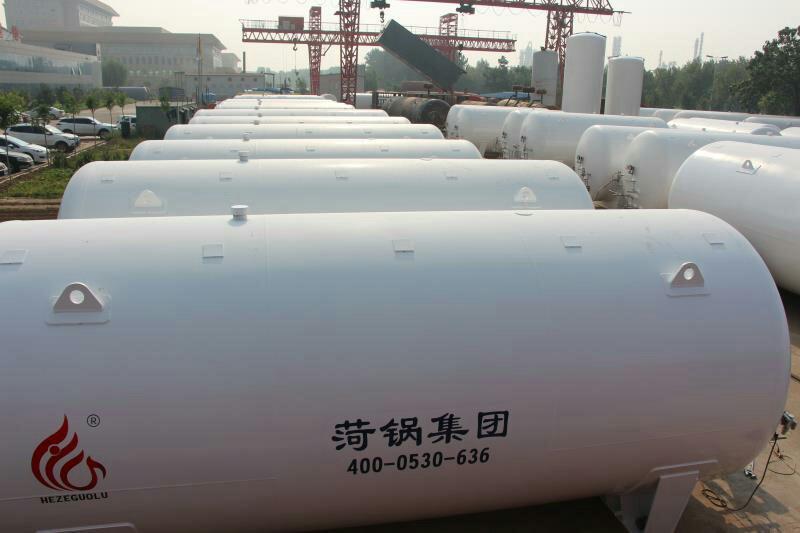

Product Description

Brand: He Guo Group Model: CFW-60/0.8
Material: Stainless Steel, Diameter: 2916mm
Application Range -162℃ Volume 60000L
Heat Exchange Area - See drawing sqm, Environmental Temperature - See drawing °C
Wall Thickness: 8mm; Outer Dimensions: φ2916*14929mm
Origin: Shandong Heze

Hekou 60 cubic meter horizontal LNG tank, Natural Gas Low Temperature Storage Tank, Vacuum LNG Storage Tank, Competitive Price
The Functions of Various Parts of LNG Tanks
Outer Canister: Protects the inner canister and the insulating material between the inner and outer canisters, creating a vacuum between them to enhance the insulating properties of the material. The outer canister provides complete containment for any leaking liquid and evaporating gases, ensuring safe storage.
Inner罐: Primarily used for storing LNG, but due to the ultra-low temperature characteristics of LNG, the materials and manufacturing requirements for the tank are extremely strict. Upper and Lower Inlet Pipes: Pay attention to the length of the upper inlet pipe, which is nearly the same as the inner tank. The inlet pipes in the storage tank use a mixture nozzle and porous pipes to ensure that newly added LNG is thoroughly mixed with the existing LNG. LNG is transported to the filling station from the LNG liquefaction plant via road tankers or tank container vehicles. During unloading, to prevent an increase in pressure within the LNG storage tank from affecting unloading speed, the upper inlet method is used when the LNG temperature in the tanker is lower than that in the tank. The low-temperature LNG in the tanker is sprayed into the tank through the upper inlet pipe nozzle in a spray state, cooling some of the gas to a liquid and reducing the tank's pressure, allowing for smooth unloading. If the LNG temperature in the tanker is higher than that in the tank, the lower inlet method is used. The high-temperature LNG enters the tank through the lower inlet, mixing with the low-temperature LNG inside to cool down, preventing the high-temperature LNG from evaporating through the upper inlet, which could increase the tank's pressure and complicate unloading. In practice, since the LNG gas source is usually farther from the cities that use it, the LNG in the tanker is typically warmer upon arrival at the city than the LNG in the storage tank at the gasification station, necessitating the use of the lower inlet method. Therefore, except for the first time of filling LNG, the lower inlet method is generally used for normal unloading procedures.
Safety Valve: When the pressure inside the storage tank exceeds the set pressure of the safety valve (also known as the working pressure), the safety valve will automatically open to release excess gas and stabilize the pressure. The set pressure of the safety valve is generally 1.04-1.1 times the operating pressure of the pressure vessel, and the seat pressure is 0.8 times the operating pressure of the vessel.
Safety Valve Terminology: The nominal pressure of a safety valve indicates the maximum allowable pressure under normal temperature conditions. Safety valves used in high-temperature equipment should not consider the reduction in allowable stress of materials under high temperatures. Safety valves are designed and manufactured according to the nominal pressure standards.
Set Pressure: Also known as the adjustment pressure, it is the medium pressure at which the valve disc of the safety valve begins to lift under operating conditions. Discharge Pressure: The pressure on the inlet side when the valve disc reaches the specified opening height.
Seat Pressure: The inlet pressure when the valve seat is re-tightened after the safety valve discharge and the medium stops flowing. Seat pressure is an important parameter indicating the quality of the safety valve's use, generally requiring it to be at least 80% of the working pressure, with an upper limit set to prevent frequent valve disk oscillation.
Opening and closing pressure difference: The difference between the opening pressure and the return seat pressure.
Outer Shell Burst Disc: Designed to prevent leakage at the connection root between the inner tank and the pipeline, which can cause the outer shell to explode due to increased pressure between the layers. The installation of a burst disc allows for timely pressure relief, thereby protecting the storage tank.
Differential Pressure Level Gauges: Commonly used differential pressure level gauges for LNG storage tanks.

60 Cubic Meters Horizontal LNG Storage Tank, Natural Gas Low-Temperature Storage Tank, Vacuum LNG Storage Tank, Competitive Pricing
Export 30 Cubic Meter LNG Storage Tanks; Manufacturer Offers 5-150 Cubic Meter LNG Storage Tanks
LNG (Liquefied Natural Gas) is the abbreviation for liquefied natural gas. Natural gas is a combustible gas naturally extracted from gas fields, primarily composed of methane. LNG is produced by cooling gaseous natural gas under normal pressure to -162°C, causing it to condense into a liquid. Liquefying natural gas significantly reduces storage and transportation space and costs, and it boasts high calorific value and superior performance.
LNG is a clean and efficient energy source. Importing LNG aids energy-consuming countries in diversifying their energy supply and ensuring energy security, while exporting LNG helps natural gas-producing countries effectively develop their natural gas resources, increase foreign exchange earnings, and boost national economic development. Therefore, LNG trade is becoming a new hot spot in the global energy market.

Overview of Liquid Low-Temperature Storage Tanks: LNG Storage Tanks
With the rapid development of the national economy and the widespread application of low-temperature technology, the usage of low-temperature liquids has expanded, including liquid hydrogen, liquid oxygen, liquid nitrogen, liquid argon, liquid helium, and liquefied natural gas, among others. The production, application, and research of these low-temperature liquids necessitate their storage and transportation. Many significant scientific research projects require operations under low-temperature conditions. The demand for low-temperature storage and transportation containers is increasing across various industries, particularly in industrial, agricultural, defense research, and medical fields.
Due to the low boiling point and small latent heat of vaporization of low-temperature liquids, a significant cost is incurred to obtain low-temperature liquefied gases. Therefore, the effective storage and transportation of low-temperature liquids hold significant economic value. In the application of low-temperature technology, the following situations often arise:
(1) Centralized production followed by distribution to various users, such as the centralized production and distribution of liquid oxygen, liquid nitrogen, liquid argon, liquefied natural gas, liquefied petroleum gas, and liquid helium.
(2) Short-term production items are designed for long-term use, such as the liquid oxygen production equipment operated by many research and medical institutions.
(3) Production for extended periods, intended for short-term, large-scale applications, such as for large-scale low-temperature testing or rocket launches, involves providing liquid helium, liquid hydrogen, liquid oxygen, and liquid nitrogen using this method.
To accommodate the above situations, effective storage and transportation of low-temperature liquids are necessary. For departments using gases, liquid transportation is also quite economical. For instance, a 3650 L liquid oxygen storage tank holds liquid oxygen with a total weight not exceeding 1250 kg, whereas gas transportation would require 500 steel cylinders, weighing 35500 kg. Another example is a 175L liquid oxygen tank with an evaporator, which can be easily transported on a small cart and can replace 20 oxygen cylinders for welding. In summary, almost all applications involving low temperatures rely on the storage and transportation of low-temperature liquids, as well as the equipment used for storing them. Therefore, the storage and transportation of low-temperature liquids are fundamental tasks in low-temperature engineering and have been one of the fastest-growing technologies in the field over the past 30 years.

Export 30 cubic meter LNG tanks, manufacturers supply 5-150 cubic meter LNG tanks


LNG Storage Tank Brand - Professional LNG Storage Tank Brand - Wholesale Prices for Professional LNG Storage Tank Production - Special Price LNG Storage Tank Company
