


Product Description
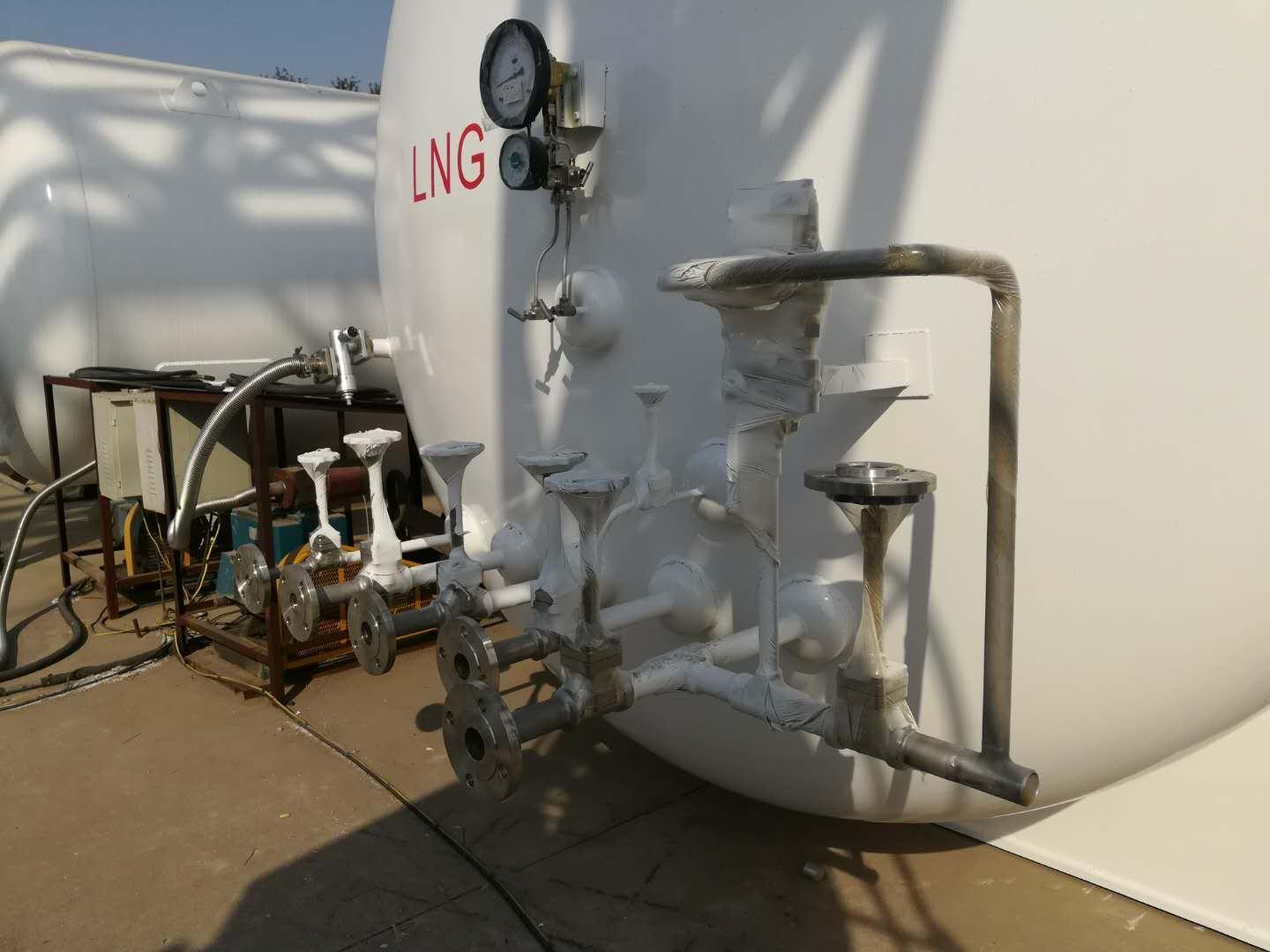
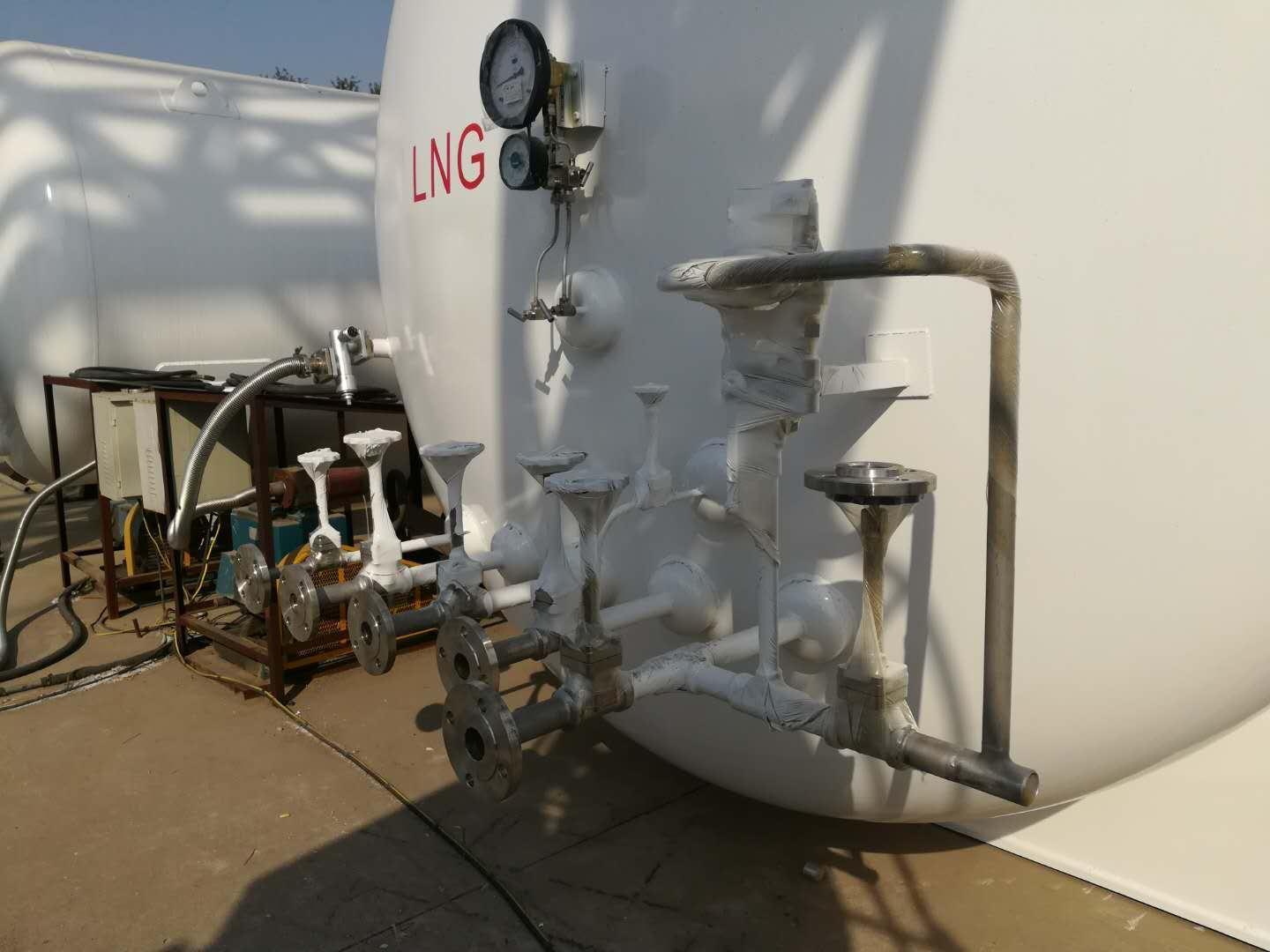
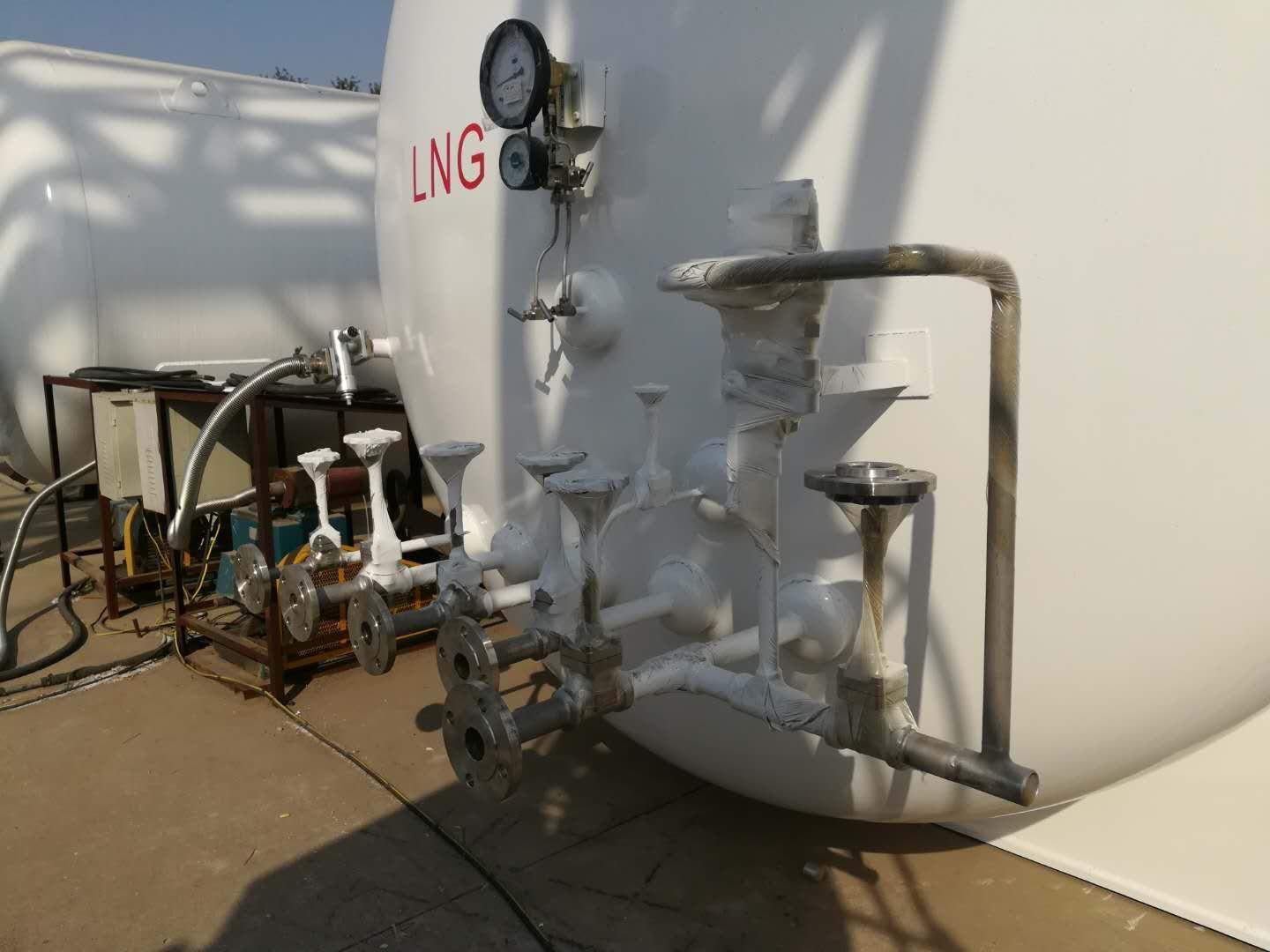
Brand Hegu Group Model CFW-30/0.8
Material: Stainless Steel, Diameter: 2916mm
Application Range: -162℃; Volume: 30,000L
Heat Exchange Area - See Drawing sq. m Ambient Temperature - See Drawing °C
Wall Thickness: 8/10mm | Outer Dimensions: 2916*8289mm
Origin: Shandong Heze

30立方立式lng储罐 卧式LNG储罐 低温天然气储罐厂家
The low-temperature storage tank features a double-layer structure. The inner shell stores low-temperature liquids, withstanding the pressure and low temperatures of the medium. The material of the inner shell is a low-temperature-resistant alloy steel (0Crl8Ni9). The outer shell acts as a protective layer for the inner shell, maintaining a certain gap to form an insulating space. It bears the gravity loads of the inner shell and the medium, as well as the vacuum negative pressure of the insulating layer. The outer shell does not come into contact with the low temperature and is made of container steel. The insulating layer is mostly filled with mica sand and high vacuum is drawn. The evaporation rate of the low-temperature storage tank is generally less than 0.2%.
LNG storage tanks are categorized by capacity
(1) Small (5-50 m³): Commonly used at civil LNG refueling stations and civil gas liquefaction stations, etc. (2) Medium (50-100 m³): Often utilized at industrial gas liquefaction stations. (3) Large (100-1000 m³): Suitable for small-scale LNG production facilities.
(4) Large (10,000~40,000 m³): For base load and peak-shaving liquefaction plants. (5) Extra-large (40,000~200,000 m³): For LNG receiving terminals.
LNG tanks are categorized by shape
Spherical: Generally used for medium to small capacity storage tanks. (2) Cylindrical: Used in storage tanks of various capacities. LNG Storage Tanks by Placement Type (1) Above Ground: Located on the ground. (2) Underground: Located beneath the ground.
Determination of Design Pressure and Calculated Pressure
Currently, the majority of 100m3 vertical LNG storage tanks have a maximum working pressure of 0.8MPa. According to the provisions of GB150 "Steel Pressure Vessels," when the maximum working pressure of the storage tank is 0.8MPa, the design pressure can be taken as 0.84MPa. The filling factor of the tank is 0.95, and the net pressure of the liquid column after filling the inner tank with LNG is 0.062MPa. The absolute pressure between the inner and outer tanks is 5Pa, so the calculated pressure of the inner tank is 1.01MPa.
The primary function of the outer container is to fix the inner container and the insulating material in suspension or support, simultaneously forming a high vacuum insulating layer with the inner container. The loads acting on the outer container are mainly the gravitational loads of the inner container and the medium, as well as the vacuum negative pressure of the insulating layer. Therefore, the outer container is an external pressure vessel, with a design pressure of -0.1 MPa.
Material Selection for LNG Tanks
During normal operation, the working temperature of the LNG storage tank is -162.3°C. Before the first use, the tank must be pre-cooled with liquid nitrogen at -196°C, making the design temperature of the tank -196°C. The inner tank must withstand both the working pressure of the medium and the low temperature of LNG, requiring the inner tank material to have excellent comprehensive mechanical properties at low temperatures, particularly good low-temperature toughness. Therefore, the inner tank material is selected as SS30408. Based on the calculated pressure of the inner tank and the selected material, the calculated thickness and design thickness are 11.1mm and 12.0mm, respectively. As a normal temperature external pressure vessel, the outer tank material is chosen to be low-alloy steel 16MnR, with a design thickness of 10.0mm.
LNG Tank接管Design
Tapping ports on the inner tank include: inlet liquid port, outlet liquid port, liquid discharge port, vapor port, level checking port, upper level gauge port, lower level gauge port, and 8 process manholes. All tapping materials on the inner tank are OCrl8Ni9.
For ease of regular vacuum measurement and evacuation, a vacuum evacuation port is provided in the bottom sealed cap of the outer casing (the port is sealed after evacuation). To prevent vacuum failure and the leakage of the inner casing medium into the outer casing, a pressure relief device is set up on the sealed cap of the outer casing.
30立方立式lng储罐 卧式LNG储罐 低温天然气储罐厂家
Product Description
Brand: He Guo Group Model: CFW-30/0.8
Material: Stainless Steel, Diameter: 2916mm
Application Range -162℃ Volume 30000L
Heat Exchange Area - See drawing m², Ambient Temperature - See drawing °C
Wall Thickness: 8/10mm, Outer Dimensions: 2916*8289mm
Origin: Shandong Heze
Horizontal LNG Storage Tank 30 Cubic LNG Storage Tank 60 Cubic LNG Storage Tank 100 Cubic Natural Gas Storage Tank

The low-temperature LNG storage tank is a double-layered structure, with the inner shell storing low-temperature natural gas liquid, withstanding the pressure and low temperatures of the medium. The material of the inner shell is SS30408. The outer shell serves as a protective layer for the inner shell, maintaining a certain gap to form an insulating space, and bearing the gravitational loads of the inner shell and the medium, as well as the vacuum negative pressure of the insulating layer. The outer shell does not come into contact with the low temperature and is made of container steel. The insulating layer is mostly filled with mica sand, and a high vacuum is drawn. The evaporation rate of the low-temperature LNG storage tank is generally less than 0.2%.

Low-Temperature LNG Storage Tank Structural Design
1.1 Liquid Filling System
The filling is divided into top filling and bottom filling, equipped with a quick connector CN-1 and a four-way connector connecting to the top filling valve V3 and the bottom filling valve V2, respectively, with pipes and transition joints leading to the inner cylinder.
Tubes are selected in φ28×2 and φ45×3.5 sizes.
1.2 Drainage System
The valve V6 can directly drain fluid, connected from the bottom of the cylinder; the pipes are selected in φ45×3.5. V6 is chosen with 32gDA25C, with a specification of DN40PN4.0.
1.3 Vacuum Degree Measurement System
VR vacuum silicon tube, used to measure the vacuum degree of the tank's insulation layer, connected to the evacuation pipe of the insulation layer. The insulation layer should be re-evacuated when the vacuum degree of the vacuum layer exceeds 3Pa, to ensure the vacuum degree of the insulation layer and enhance the insulation effect.
1.4 Vacuum Insulation Panel System
VV vacuum valve, select CF-40 with DN 40, used for vacuuming. Close VV when the vacuum level reaches the required standard, to maintain the interlayer vacuum.
1.5 Level Measurement System
Two pipes are drawn out from the top and bottom of the cylinder respectively, with the top section being the vapor phase and the bottom section the liquid phase, connected together by a level gauge valve. The L1 level gauge valve PS×Z-1 connects to a pressure gauge valve and a pressure gauge, with a liquid level measurement range of 0 to 6 meters of water column.
1.6 Full Mouth Measurement
Install the piping according to the set liquid level. When the liquid level reaches the set value, it flows downward through the pipe to the full valve MV. Upon filling, this valve opens until liquid starts to flow out, indicating the tank is full. Close the valve. Use a 32gDA10C valve, specification: DN20 PN4.0.
1.7 Self-pressurizing System
The pressure booster valve V1 is connected to the PBC-1 turbocharger, which utilizes the CFB03-00 model. It vaporizes a portion of the liquid flowing from the tank, then introduces it into the inner tank, increasing the pressure inside. The liquid is then expelled under the pressure.
1.8 Gas Venting System
When the pressure at the top of the container increases, gas is discharged through the pipeline and passes through the vent valve E1, then to a one-way valve CV. Since gas can only exit, a one-way valve is used to prevent backflow. Therefore, a flame arrester is connected after the one-way valve because gas discharge and contact with air may cause sparks. The flame arrester is designed to prevent sparks from entering the inner tank with the gas and causing a fire, which might lead to an explosion.

Horizontal LNG Storage Tank 30 Cubic LNG Storage Tank 60 Cubic LNG Storage Tank 100 Cubic Natural Gas Storage Tank


专业液化天然气储罐批发价格-销售液化天然气储罐价格-现货液化天然气储罐价格-液化天然气储罐_液化天然气储罐厂家 液化天然气储罐生产厂家
