


Liquefied Natural Gas (LNG) Storage Vessel Capacity and Applicable Scenarios
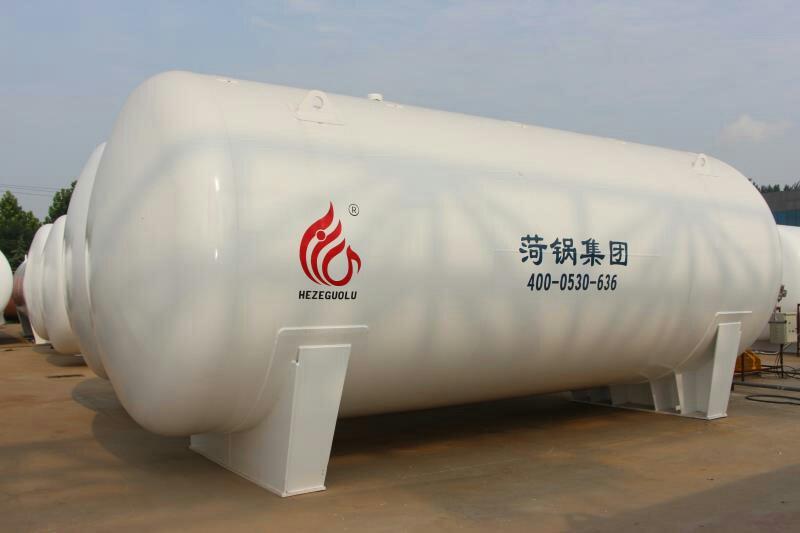
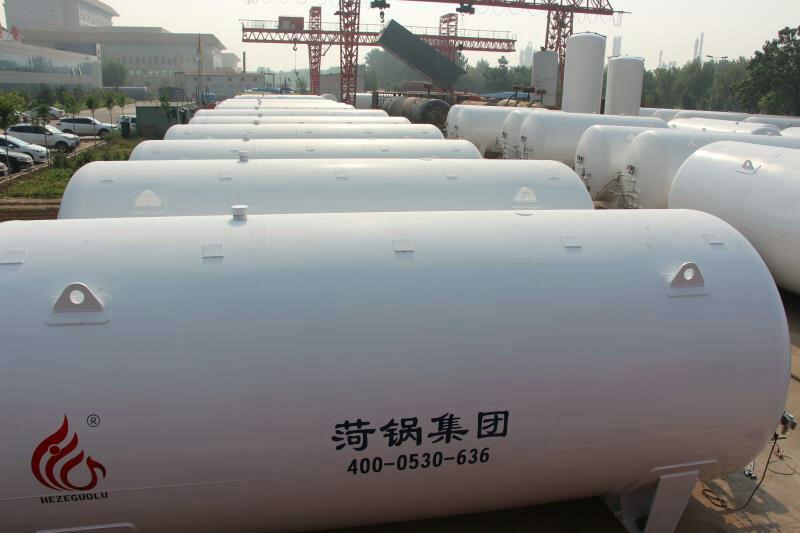
1. 60-cubic-meter LNG vacuum powder-insulated storage tank, available in sizes from 5 to 200 cubic meters. Suitable for civil gasification stations, industrial gasification stations, LNG refueling stations, small modular liquefaction units, and refrigerant storage, etc.
2. Mother and child horizontal low-temperature storage tanks from 300 to 5,000 cubic meters, suitable for small liquefaction units, air separation plants, civil gasification stations, industrial gasification stations, LNG gasification stations, etc.
3. Horizontal and Vertical Low-Temperature Storage Tanks, 100~10,000 cubic meters, suitable for small and medium-sized liquefaction plants, peak-shaving liquefaction plants, air separation units, LNG storage and distribution stations, LNG gasification stations, etc.
4. Vertical flat-bottomed cylindrical storage tanks, ranging from 200 to 200,000 cubic meters, suitable for various liquefaction units, LNG storage and distribution stations, LNG regasification stations, air separation units, liquid hydrocarbon storage, coastal LNG receiving terminals, etc.
Vacuum powder insulation storage tanks are composed of an inner cylinder and an outer cylinder, with the annular space utilizing vacuum powder insulation technology. Due to transportation limitations, the maximum tank capacity is currently 200 m³, suitable for storing smaller volumes of liquid.
When the storage volume exceeds 200 m³, a 60-cubic-meter LNG storage tank can be connected in parallel as a cluster tank using multiple vacuum powder-insulated storage tanks. When the storage volume exceeds 1500 m³, it is advisable to use a mother-daughter horizontal low-temperature storage tank (abbreviated as mother-daughter tank), which has the advantages of fewer on-site equipment, lower investment, convenient operation and maintenance, and safety reliability compared to cluster tanks. The mother-daughter tank is composed of multiple (more than 3) sub-tanks in parallel to form the inner tank, and assembled into a large outer tank (mother tank). The mother-daughter tank is also limited by transportation and lifting conditions, with a maximum single tank volume of 250 m³ and a total maximum volume of 5000 m³. When the storage volume exceeds 200 m³, spherical horizontal low-temperature storage tanks and vertical flat-bottomed cylindrical horizontal low-temperature storage tanks can also be chosen. When the storage volume exceeds 10,000 m³, vertical flat-bottomed cylindrical horizontal low-temperature storage tanks are more commonly used. During the actual selection process, for storage volumes of 200 m³ or less, vacuum powder-insulated storage tanks with mature manufacturing and installation technology are chosen for the 60-cubic-meter LNG storage tank.
30, 60, 100 cubic LNG storage tank valves, piping, and fittings
Valve Selection and Design
Process system valves must meet the pressure and flow requirements for transporting LNG, while they must also possess low-temperature performance capable of withstanding -196℃. Common LNG valves include pressure relief valves, pressure reducing valves, emergency shutdown valves, low-temperature cut-off valves, safety valves, check valves, etc. The valve material is 0Cr18Ni9.
Pipe, fittings, and flange selection and design
Pipes with medium temperatures ≤ -20℃ are made of seamless stainless steel tubes for conveying fluids (GB/T 14976—2002), with material 0Cr18Ni9. Fittings are all made of seamless stamped fittings with material 0Cr18Ni9 (GB/T 12459). Flanges are of the raised face long neck weldable steel pipe flange (HG 20592), with material 0Cr18Ni9. The flange sealing gasket is a metal-wound type, with material 0Cr18Ni9. Fasteners are special double-ended studs and nuts, with material 0Cr18Ni9.
Process pipelines with medium temperatures greater than -20°C, for nominal diameters ≤ 200 mm, use seamless steel tubes for fluid conveyance (GB/T 8163) made of 20# steel; for nominal diameters > 200 mm, use welded steel tubes (GB/T 3041—2001) made of Q235B steel. All pipe fittings are made of seamless stamped fittings made of 20# steel (GB/T 12459). Flanges are used with raised face flanged steel pipe flanges (HG 20592) made of 20# steel.法兰 sealing gaskets are made of flexible graphite composite gaskets (HG 20629).
LNG process pipelines are installed with welding connections, except for the necessary flange joints. Cryogenic process pipelines are insulated using polyurethane insulated pipe supports and composite polyethylene insulated pipe shells. Carbon steel process pipelines are treated for corrosion resistance.
Section 6: Fire Protection Design for LNG Gasification Stations
The fire protection design of the LNG gasification station is in accordance with the LPG part of CB 50028 "Urban and Rural Gas Design Code." A dike area is set around the LNG storage tanks to minimize the damage to surrounding facilities in case of an accident. A sprinkler system is installed on the LNG storage tanks with a sprinkling intensity of 0.15 L/(s·m²). The water usage for sprinkling is calculated based on the total surface area of the storage tank on fire. For adjacent tanks within a diameter of 1.5 times that of the fire tank, the water usage is calculated at 50% of their surface area. The water usage for fire hoses is selected according to GBJ 16 "Code for Fire Protection Design of Buildings" (2001 edition) and GB 50028 "Urban and Rural Gas Design Code" (2002 edition).


