


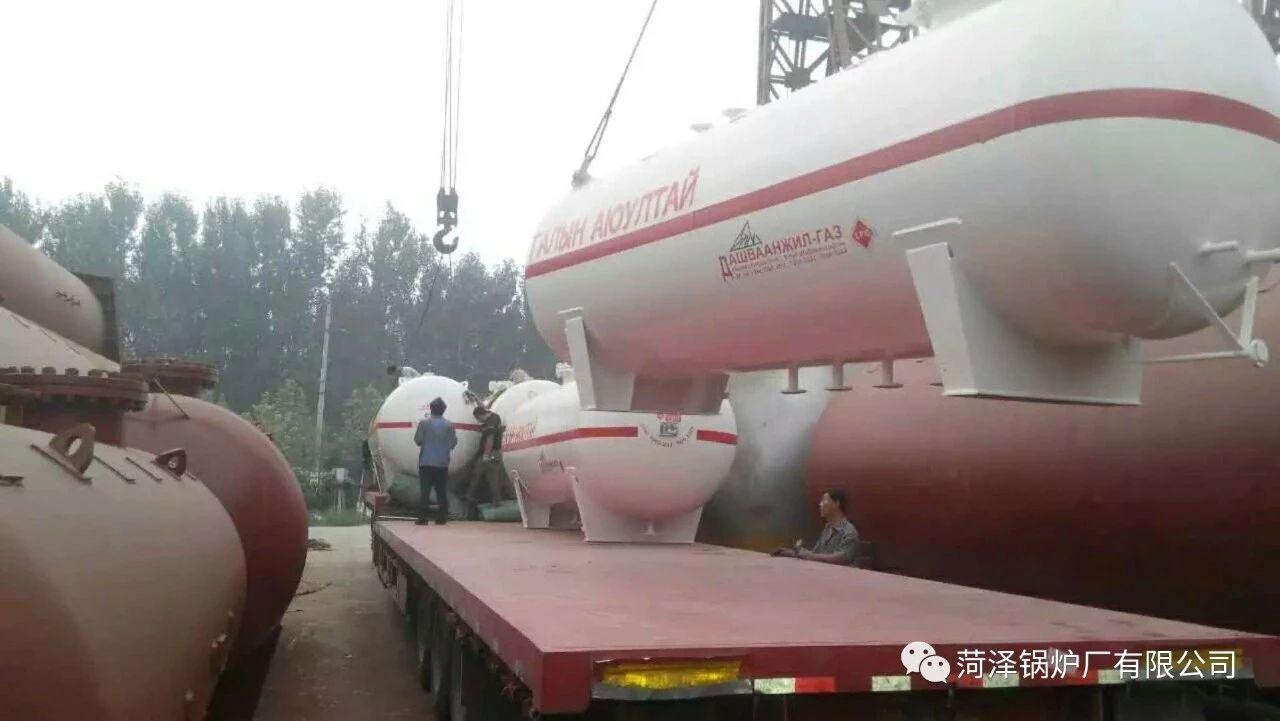
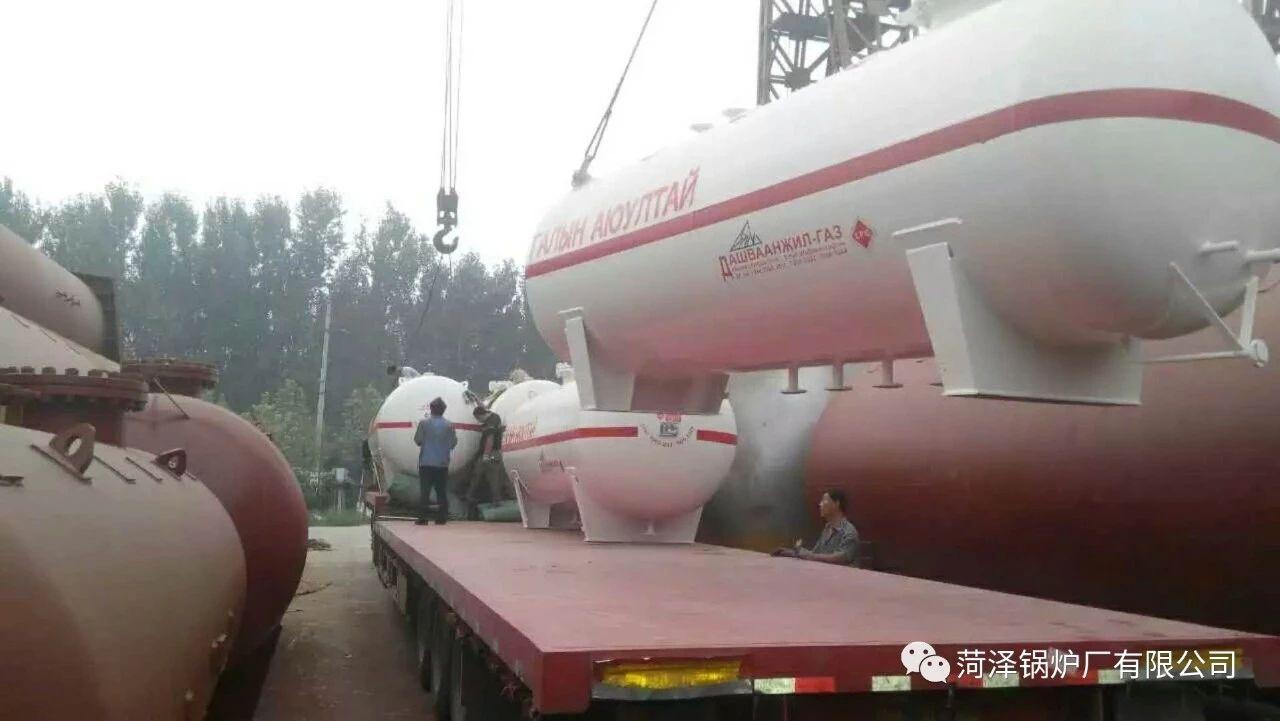
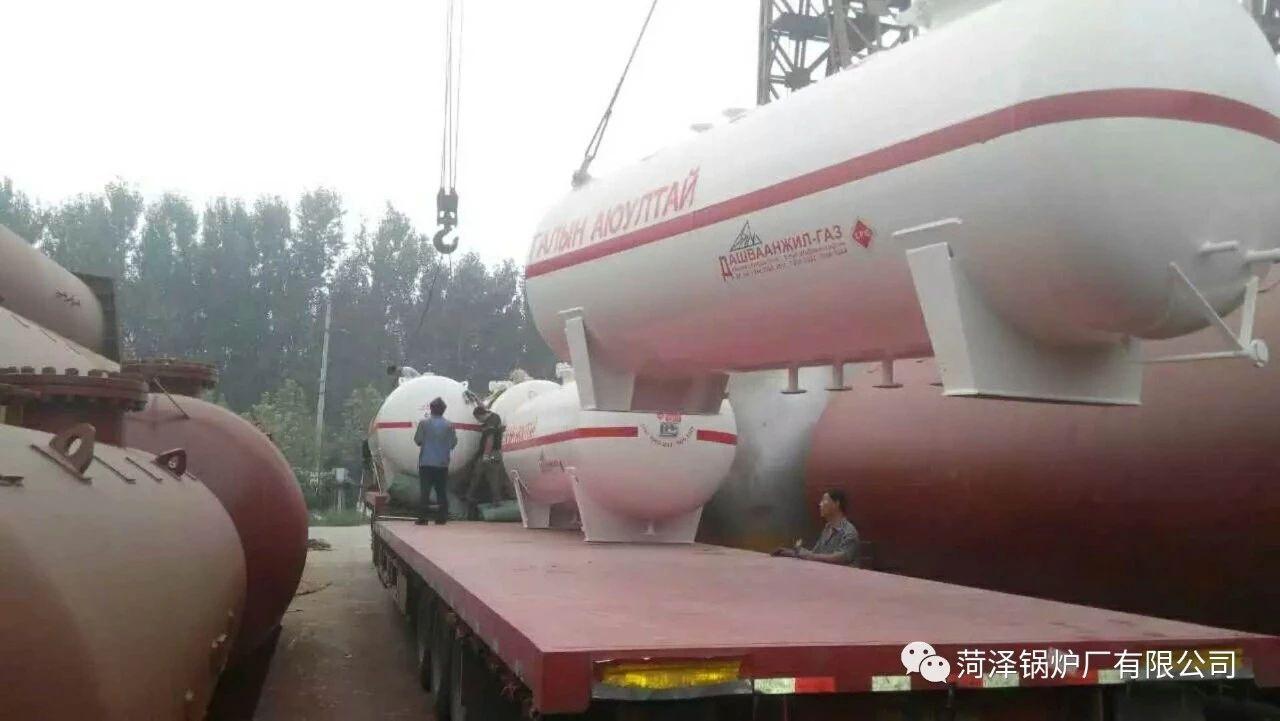
Liquefied Natural Gas (LNG) Storage Vessel Capacity and Applicable Scenarios
1. 60-cubic-meter LNG storage tanks, vacuum powder insulation tanks, ranging from 5 to 200 cubic meters, suitable for residential gasification stations, industrial gasification stations, LNG refueling stations, small mobile liquefaction units, and refrigerant storage.
2. Mother and child horizontal low-temperature storage tanks from 300 to 5,000 cubic meters, suitable for small liquefaction units, air separation plants, civil gasification stations, industrial gasification stations, LNG gasification stations, etc.
3. Horizontal and Lying Low-Temperature Storage Tanks, 100~10,000 cubic meters, suitable for medium and small-scale liquefaction units, peak-shaving liquefaction units, air separation units, LNG storage and distribution stations, LNG gasification stations, etc.
4. Vertical flat-bottomed cylindrical storage tanks, ranging from 200 to 200,000 cubic meters, suitable for various liquefaction units, LNG storage and distribution stations, LNG liquefaction plants, air separation units, liquid hydrocarbon storage, and coastal LNG receiving stations.
Vacuum powder insulation storage tanks consist of an inner cylinder and an outer cylinder, with the annular space insulated using vacuum powder insulation technology. Due to transportation limitations, the maximum tank capacity is currently 200 m³, suitable for storing smaller quantities of liquids.
When the liquid storage capacity exceeds 200 m³, multiple vacuum powder insulation storage tanks can be connected in parallel to form a cluster tank for a 60-cubic-meter LNG storage tank. When the storage capacity exceeds 1500 m³, it is advisable to use a horizontal sub-parent storage tank (abbreviated as sub-parent tank), which has the advantages of fewer site equipment, lower investment, convenient operation and maintenance, and reliable safety compared to cluster tanks. The sub-parent tank consists of multiple (more than 3) sub-tanks in parallel to form the inner tank and is assembled into a large outer tank (parent tank). The sub-parent tank is also limited by transportation and lifting conditions, with a maximum single tank capacity of 250 m³ and a total capacity of up to 5000 m³. When the storage capacity exceeds 200 m³, spherical horizontal low-temperature storage tanks and vertical flat-bottomed cylindrical horizontal low-temperature storage tanks can also be chosen. When the storage capacity exceeds 10,000 m³, horizontal flat-bottomed cylindrical low-temperature storage tanks are more commonly used. During the actual selection process, when the storage capacity is less than or equal to 200 m³, vacuum powder insulation storage tanks with mature manufacturing and installation technology are used for the 60-cubic-meter LNG storage tank.
30, 60, 100 cubic meter LNG storage tanks, LNG gasification stations, and vehicle refueling station process and equipment selection
1. LNG, CNG, LPG: Meanings
CNG: Compressed Natural Gas is high-pressure natural gas compressed to 20MPa. Natural gas stored in high-pressure cylinders is used as fuel for vehicles, known as CNG vehicles. Cylinder high-pressure storage at normal temperature: 20MPa.
LNG: Liquefied Natural Gas (LNG) is natural gas cooled to -162℃ through deep refrigeration, forming a liquid. It's stored in low-temperature storage tanks, and used as fuel in vehicles known as LNG cars. Cylinder Low Pressure and Low Temperature Storage: 1.6 MPa.
LNG and CNG refueling, storage, and supply systems have certain differences, but natural gas ultimately enters the car engine in a gaseous state after being pressurized through a pressure regulator to 0.15 MPa for combustion and work.
LPG: Liquefied Petroleum Gas
2. Uses of LNG Storage Tanks: Gasification Stations and Auto Gas Filling Stations
LNG liquefaction plant
(1) Peak load and load balancing for urban pipeline gas supply and accident response
(2) Gas supply source for city municipal networks where natural gas pipelines have not been laid.
(3) Gas sources for community supply: Boiler gas and domestic gas supply.
(4) Source for corporate gas supply; (Image)
2. Gasoline Filling Station: Used for automotive fuel
Section 3: Types of CNG Fueling Stations
LNG Vehicle Refueling Station
1) Conventional Station: Located at a fixed site, LNG is unloaded using unloading equipment, filled into storage tanks, and refueled into vehicles using fueling machines. (Image)
2) Skid-mounted Station: Equips gas station-related equipment and devices onto a truck or skid, highly integrated for easy transportation and relocation, suitable for smaller-scale gas stations. (Image)
2. CNG Vehicle Refueling Station
3. L-CNG Vehicle Fueling Station


