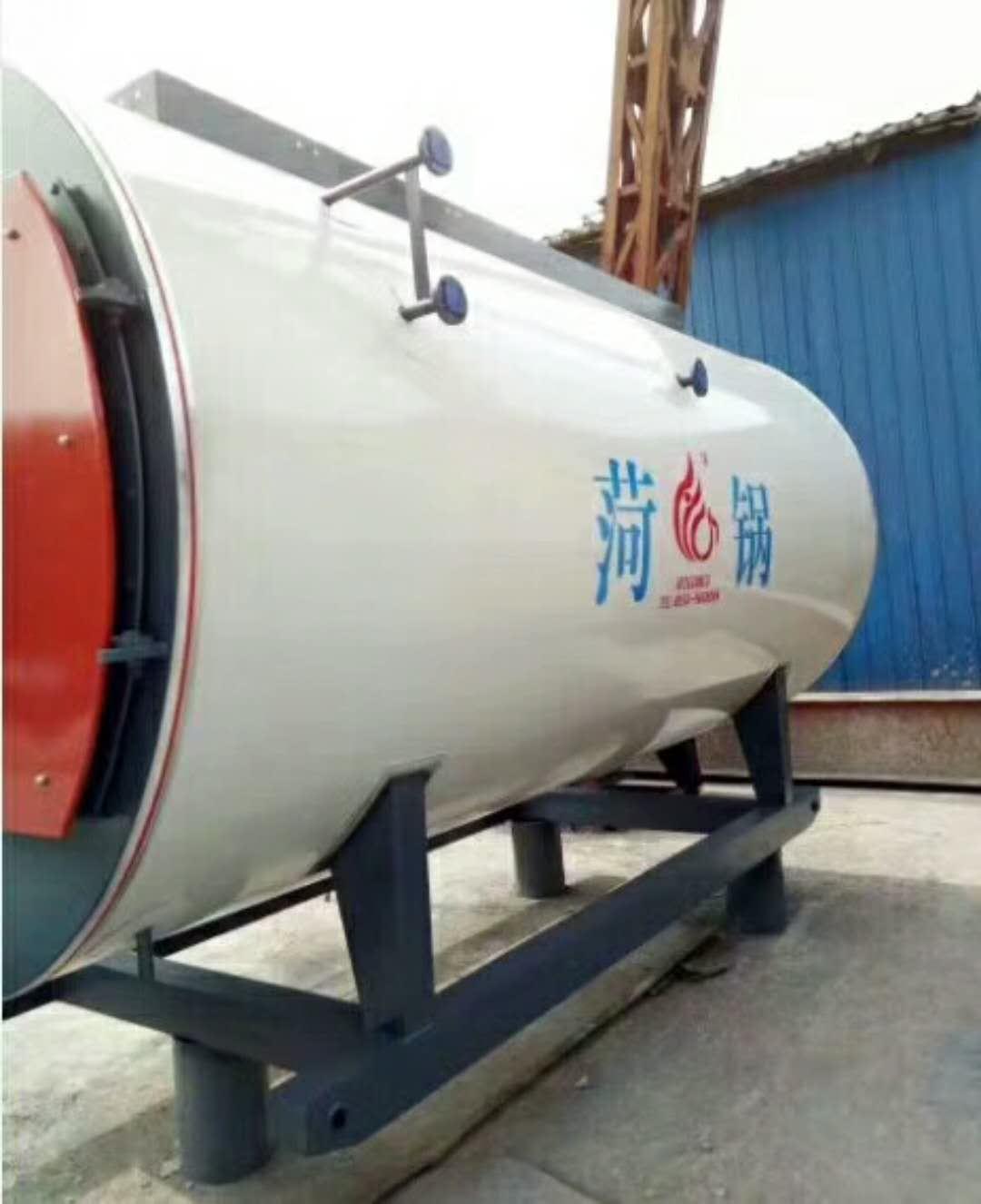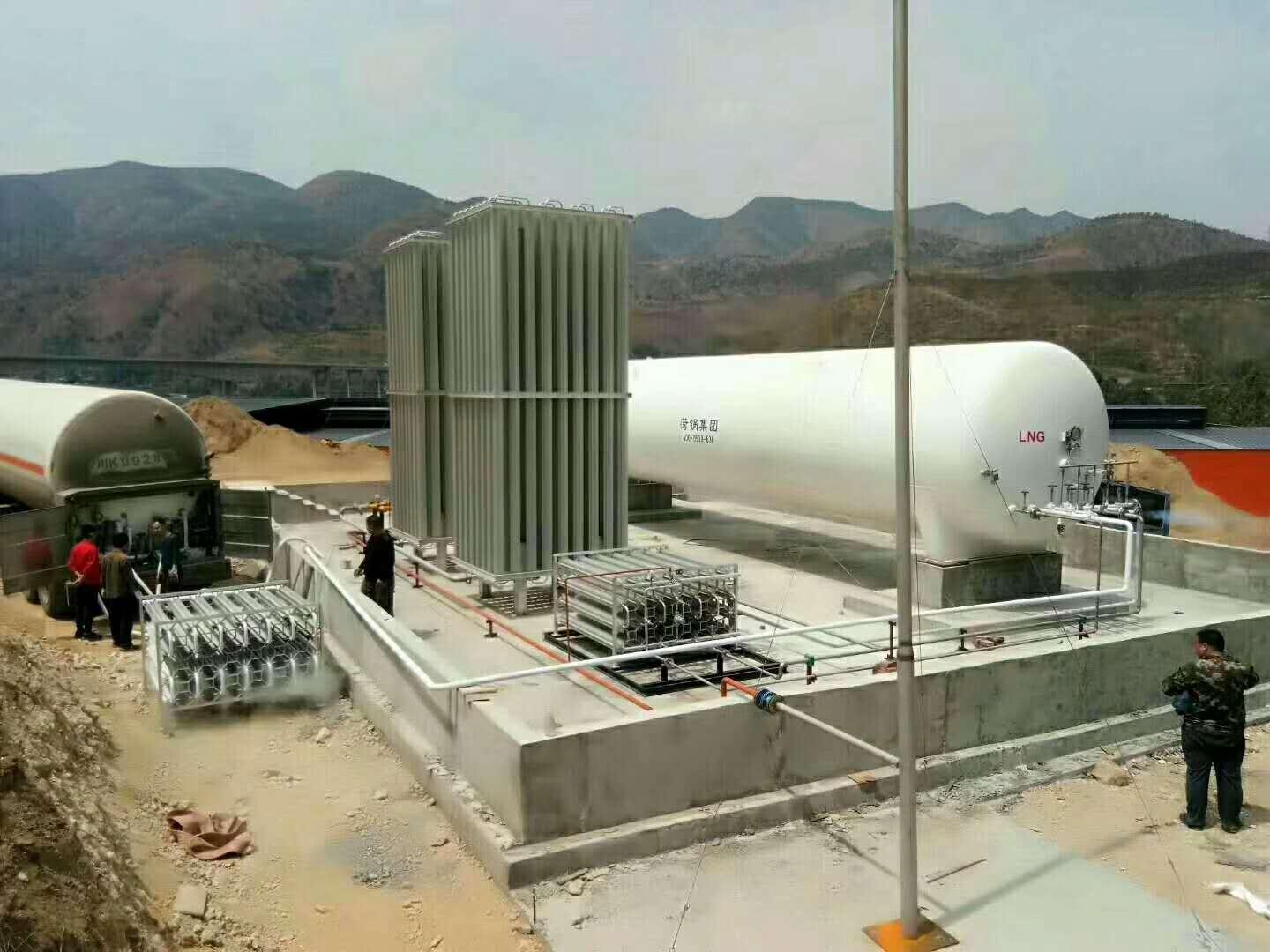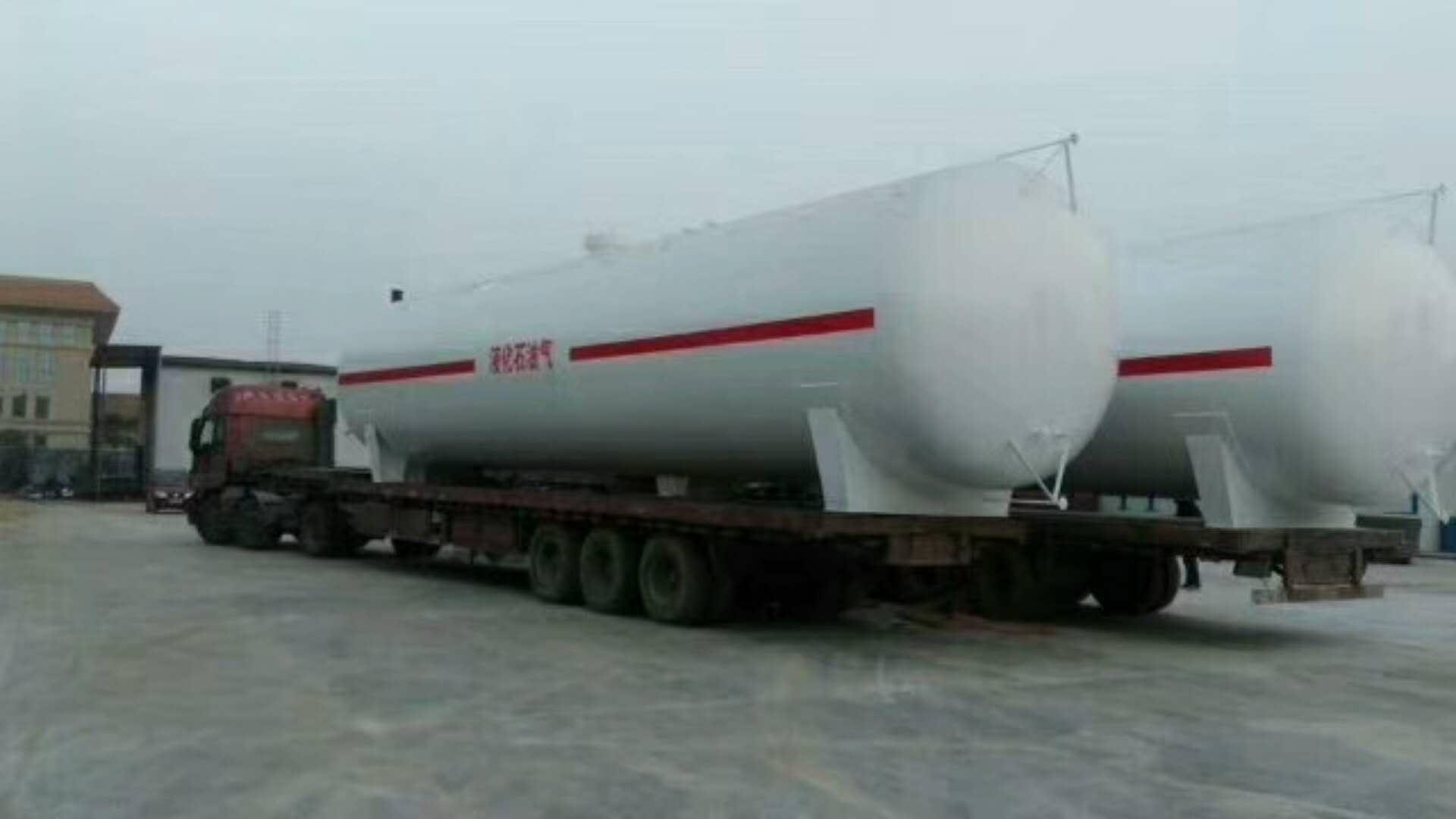
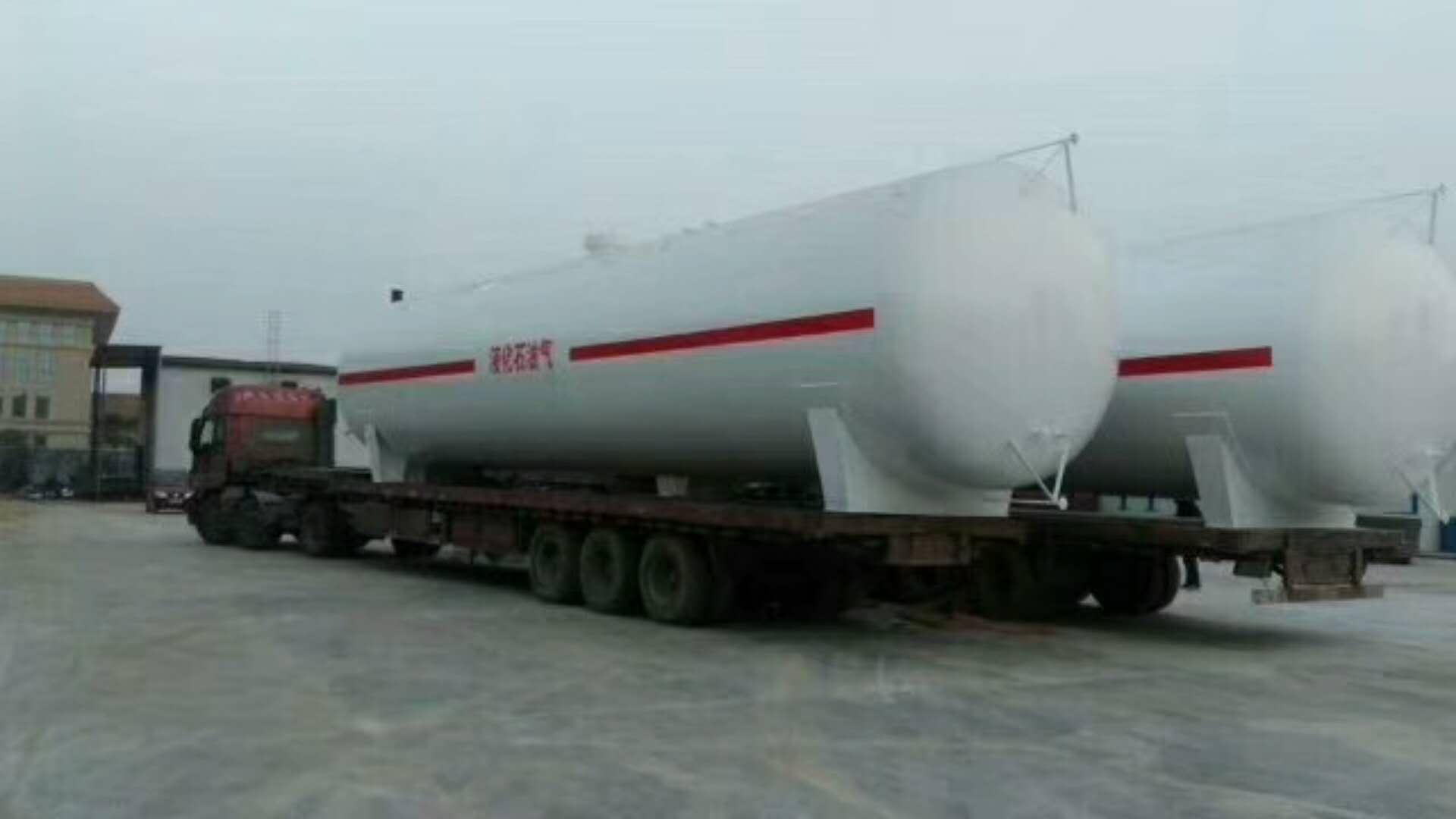

Liquefied Natural Gas (LNG) Storage Tank
LNG storage tanks are specialized products for storing liquefied petroleum gas, classified as special equipment, category III pressure vessels, made of 06Ni9DR material. They undergo non-destructive testing, hydrostatic and pneumatic testing, and on-site inspection by the Technical Supervision Bureau, resulting in a pressure vessel inspection certificate. The manufacturing process also includes external rust removal and painting. The storage tanks undergo strict quality assessments for the material, dimensions, and weld quality of the pressure components, operational quality, installation quality, internal equipment, and safety accessories.
Routine physical and chemical testing of the drum material, such as mechanical properties and chemical composition.
The weld joints, weld seams, tank end caps, and the mutual geometric positions of all pressure components are rigorously inspected via X-ray non-destructive testing and magnetic particle inspection. Tests are conducted for the product's sealability, pressure resistance, and all technical indicators that could affect the safe operation of the product.
Common structures of LNG storage tanks include: vertical LNG tanks, horizontal LNG tanks, vertical mother-child tanks, and atmospheric storage tanks.
Vertical LNG Storage Tank
Volumes available: 50 cubic, 100 cubic, 150 cubic, 200 cubic.
Horizontal LNG Storage Tank
Volume options include 50 cubic and 100 cubic.
Vertical mother and son tanks
Sub-compartment drums refer to an inner drum composed of multiple sub-drums connected in parallel to meet large capacity storage requirements. Multiple sub-drums are assembled side by side within a large outer drum. The number of sub-drums ranges from 3 to 7, generally not exceeding 12. The volume of a single sub-drum should not be too large, typically between 100 to 150 cubic meters, with the maximum reaching 250 cubic meters. Common sizes include 1000 cubic meters, 1750 cubic meters, and 2000 cubic meters.
Atmospheric Storage Tank:
We offer large and medium-sized atmospheric LNG storage tanks, as well as extra-large atmospheric LNG storage tanks.
2 Points of Attention
1. Cylinders must be stored in well-ventilated areas, with a distance of at least 1.5 meters from any fire or heat source. Cylinders are strictly prohibited from being heated with fire, boiled, or exposed to direct sunlight. Regular inspections of cylinder valves and pipeline joints for airtightness are required to ensure no leakage. Leaks can be checked using soap water, but open flames for testing are strictly forbidden.
2. When lighting, always ignite the primer first, followed by opening the gas—do not reverse this sequence. Always have someone supervising during use, and do not leave the area to prevent boiling water from overflowing and extinguishing the flame, which could lead to a gas leak and explosion. After use, ensure the valve is tightly closed to prevent gas leakage.
3. The liquefied gas inside the cylinder should not be fully exhausted, and a certain residual pressure must be maintained. The residual pressure should generally be greater than 49.03 kPa (i.e., 0.5 kg/cm², gauge pressure) to prevent air from entering the cylinder. After the liquefied petroleum gas is used up, the remaining residue inside the cylinder is also a flammable substance and should not be disposed of私自. This is to prevent fires caused by the leakage and evaporation of the residue.
4. LPG cylinders are pressurized containers that require proper maintenance and regular inspections. Prevent the cylinders from falling or being struck during handling and use. Do not use metal tools to敲击 open the valve, and protect them from direct sunlight and prolonged exposure to rain. Cylinders should generally be inspected every 2 years.
5. Although the explosive range of liquefied petroleum gas (LPG) is not very wide, its lower explosive limit is low, making it easy to ignite and explode upon leakage. Additionally, since LPG is heavier than air, it tends to flow downward when leaked into the air, accumulating in low-lying areas and posing a hidden danger of gas explosions. Therefore, it is essential to ensure adequate ventilation, not just rely on window ventilation in areas where gas can leak.
6. When liquid gas leakage is detected indoors, windows and doors should be promptly opened for ventilation, allowing it to disperse towards a direction without open flames. No fire is allowed in the vicinity. Use of the area is permitted only after the fault is rectified and the distinctive odor has dissipated. Dispose of any leaked liquid on the ground by covering it with sand and soil before removing it to a safe location. In case of a gas cylinder fire, immediately close the valve, move it to an open area outdoors, and extinguish the fire using dry powder extinguisher, carbon dioxide extinguisher, or by covering it with a wet sack.
7. Educate children not to tamper with gas cylinders carelessly, and users must be aware of the safety knowledge for using gas cylinders.
The rise of LNG community gasification in China
If the 1980s to 1990s were the era of China's LPG community gasification, then the first 10 to 20 years of the 21st century will be the era of China's LNG community gasification. The origin of China's LPG community gasification is in Shenzhen, Guangdong, and the origin of China's LNG community gasification should be in Zibo, Shandong. The main gas source for Guangdong's LPG community gasification relies on overseas imports, while the current main gas source for Shandong's LNG community gasification comes from the LNG production plant in Puyang, Henan. In the future, there will be more gas supply routes.
Yangzhai LNG Community Gasification Station, Zibo City, Shandong Province
This project is the first in China to design a gasification station for unloading, storing, and gasifying liquefied natural gas. The LNG is transported from the Zhongyuan Oilfield to the Zibo Gasification Station via low-temperature tankers.
The Zibo project commenced design in June 1999 and was completed in January 2000. Zibo Gas Company started construction in January 2000, completed the construction in October 2000, and began trial operations using LNG. It began supplying LNG on December 2, 2001, becoming the first liquefied natural gas (LNG) gasification station in China and the largest in Asia. The natural gas is supplied exclusively to industrial users, with a designed capacity of 120,000 Nm3/d.
Qingdao Jiajialing LNG Residential Area Gasification Station
The Jiajingling project commenced design in June 2000 and was completed in January 2001; Qingdao Gas Company started construction in January 2001, and the facility was built and successfully tested in February 2002, becoming the first civil liquefied natural gas gasification station in China, with a design capacity of 20,000 Nm3/d.
Guangdong Longchuan LNG Community Gasification Station Project
The Longchuan LNG Gasification Station features a short design and construction period, taking less than a year from design to completion, with the dedication ceremony held on May 23rd this year. Its design capacity is 10,000 Nm3/d.
Although Longchuan Station's LNG currently comes from Puyang, Henan, the operator's gaze is fixed on Shenzhen. Once the Shenzhen LNG receiving station is completed, Longchuan will be the受益者.
The Longchuan LNG Gasification Plant project is a management general contracting project managed by Qingdao Chemical Design Institute.
In China, currently under construction and about to be operational are LNG gasification stations in Shangqiu, Henan; Jiangyan and Shuyang, Jiangsu; Fangzi, Shandong; Suzhou, Zhejiang; Miyun, Beijing; and Bengbu, Anhui. Under planning are cities such as Yuyao, Zhejiang; Jiujiang, Jiangxi; Weifang, Shandong; Pingdu, Qingzhou; and Xiamen, Fujian. It is said that after completing the construction of the LNG gasification station in Longchuan, Guangdong, Shanghai Tandao Energy Co., Ltd. plans to invest in and build LNG community gasification stations in cities like Yangjiang, Huiedong, and Shanwei in Guangdong.
It appears that the recent LNG residential gasification boom in Shandong, China, has far outpaced the earlier LPG residential gasification surge in Guangdong. It's even faster than Japan's development pace in the 1970s. Whether it's the scale of construction, speed, or the organizational form of construction, as well as the level of public concern and influence, it is unparalleled by Guangdong's LPG residential gasification.
Section II: The global natural gas conversion project is inevitable.
As the times progress and with the economic development of society and the increasing demand for environmental protection, the disadvantages of coal-to-gas processes are increasingly being exposed comprehensively. Advanced countries have already phased out coal-to-gas in the 1950s, 1960s, 1970s, 1980s, and 1990s. Oil-to-gas processes also have numerous insurmountable flaws. Liquefied petroleum gas will become a transitional energy source as oil reserves dwindle in the future. The global shift to natural gas as a replacement for all other energy sources is an inevitable development in the revolution of gas energy.
Schedule for Natural Gas Conversion in Some Countries
Country
During the natural gas conversion (year)
Gas Source
United States
1945-1958
Pipeline natural gas predominant
Former Soviet Union
1948-1960
Pipeline natural gas predominant
United Kingdom
1964-1977
Initially use LNG, later primarily switch to pipeline natural gas.
France
1962-1982
LNG and pipeline natural gas integration
Germany
1960-1970
Pipeline natural gas, with a small amount of LNG
Australia
1976-1986
Pipeline Natural Gas
Japan
1969-1998
All LNG supply
天然气的利用途径可采取管道输送和液化后用船运输、公路槽车和铁路槽车运输多种途径来实现。长输管道输送受到铺设管道需要穿过崇山峻岭、农田村庄以及征用村镇土地赔偿费用等限制,超过一定长距离,从经济角度来考虑是很不合算的。而将天然气液化后用大船(13.5万立方米)通过海上运输,送至城市边沿建设的LNG接收基地是非常经济合算的事。LNG在美国、欧洲、日本早就得到广泛的应用,而日本是世界上使用LNG最成功的国家,年用量达到了5000万吨,占世界LNG贸易量8000万吨的62.5%。亚洲的日本、韩国和台湾地区LNG消费数量,占了世界总消费量的四分之三还多。
The launch of the 3 million tons LNG project in Guangdong, China, the establishment of the 2 million tons LNG project in Fujian, along with the initiation of the Indian LNG project, and the completion of the Dongding LNG receiving base in Taiwan, will lead to a significant increase in Asia's LNG consumption.
Section 3: Development of the Global LNG Industry
The primary component of natural gas is methane, a permanent gas that cannot be liquefied by compression at room temperature; it only becomes liquid at low temperatures (-162 degrees Celsius). Since the 1920s, with the rapid development of cryogenic industrial technology, it has become possible to liquefy large quantities of natural gas.
In 1910, the United States began industrial-scale liquefaction of natural gas. In 1917, Cabot was granted the first U.S. patent related to the liquefaction, storage, and transportation of natural gas. The same year, the world's first liquefied methane plant was built in West Virginia, USA, for methane liquefaction production.
In 1937, Egerton from the UK proposed using liquefied natural gas (LNG) to regulate peak loads in urban gas supply. This involved liquefying and storing natural gas for peak winter supply and emergency situations. The Shanghai Pudong LNG production plant, completed and put into operation at the end of 1999 with assistance from the French Sofirigas Engineering Company, is China's first natural gas backup/peak load regulation station to adopt LNG technology, with a design capacity of 120,000 cubic meters per day.
In 1955, the Comstock International Methane Company, USA, dedicated itself to the planning and design of cross-sea transportation for liquefied natural gas.
In 1957, British Gas decided to enter into a contract with Comstock Company to import liquefied natural gas (LNG) to supplement the city's gas supply shortage, and established the world's first LNG receiving terminal on the Isle of Canvey in the United Kingdom for storing the imported LNG.
In 1959, Comstock International Methane Company in the United States built the world's first liquefied natural gas carrier, the "Methane Pioneer." From January 28 to February 20 of the following year, it transported 2,200 tons of liquefied natural gas from Lake Charles, Louisiana, to the receiving base on Canvey Island in the United Kingdom, marking the birth of the global liquefied natural gas industry.
In 1960, Shell UK acquired a 40% stake in the company. The "Methane Pioneer" tanker was launched in 1964 for the LNG transport service from Algeria to the UK, rapidly propelling the global LNG commercial trade.
The surge in the popularity of LNG community gasification in China is set to greatly propel the establishment of China's LNG industry and the rapid development of the global LNG industry, with the continuous emergence of domestic LNG liquefaction plants and the increase of coastal import LNG receiving bases.
Liquefied Natural Gas (LNG) Storage Tank
Liquefied Natural Gas (LNG) storage tanks are specialized products for storing liquefied petroleum gas, classified as special equipment and Category III pressure vessels. They are made from 06Ni9DR material, undergo ultrasonic testing, hydrostatic and pneumatic testing, and are inspected on-site by the Technical Supervision Bureau, with a pressure vessel inspection certificate issued. The manufacturing process also includes external rust removal and painting. The storage tanks undergo rigorous quality assessments for the material of the pressure components, appearance dimensions, weld quality, operational quality, installation quality, internal equipment, and safety accessories.
Routine physical and chemical tests for the material of the drum, such as mechanical properties and chemical composition.
The welding joints, welds, tank end caps, and the mutual geometric positions of all pressure elements are rigorously inspected through X-ray non-destructive testing and magnetic particle inspection. Tests are conducted on the product's sealing, pressure resistance, and all technical indicators that could affect the safe operation of the product.
Common LNG storage tank structures include: vertical LNG tanks, horizontal LNG tanks, vertical mother-child tanks, and atmospheric pressure tanks.
Vertical LNG Storage Tank
Volume options include 50 cu, 100 cu, 150 cu, and 200 cu.
Horizontal LNG Storage Tank
Volume options: 50 cubic, 100 cubic.
Vertical mother-child storage tank
The mother tank is an inner tank composed of multiple sub-tanks connected in parallel to meet large storage capacity requirements. These sub-tanks are assembled side by side within a large outer tank. There are typically 3 to 7 sub-tanks, usually not exceeding 12. Each individual sub-tank should not have an excessive volume, generally ranging from 100 to 150 cubic units, with the maximum reaching 250 cubic units. Common sizes include 1000 cubic units, 1750 cubic units, and 2000 cubic units.