


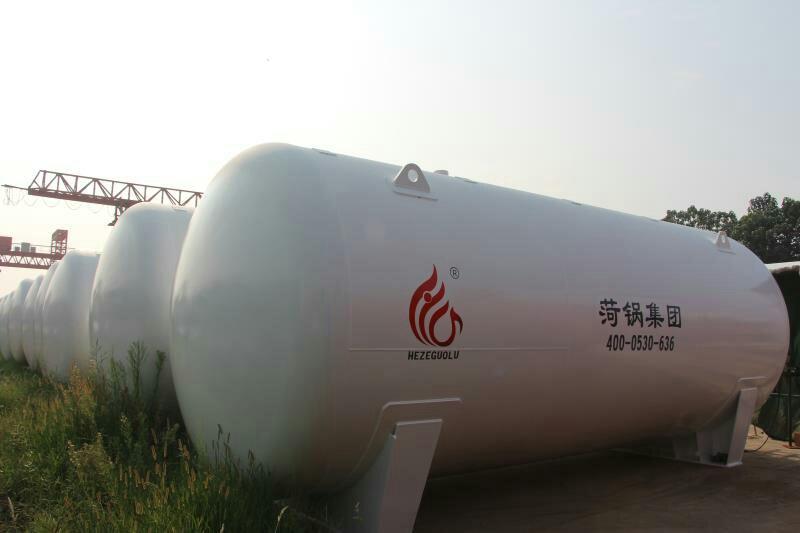
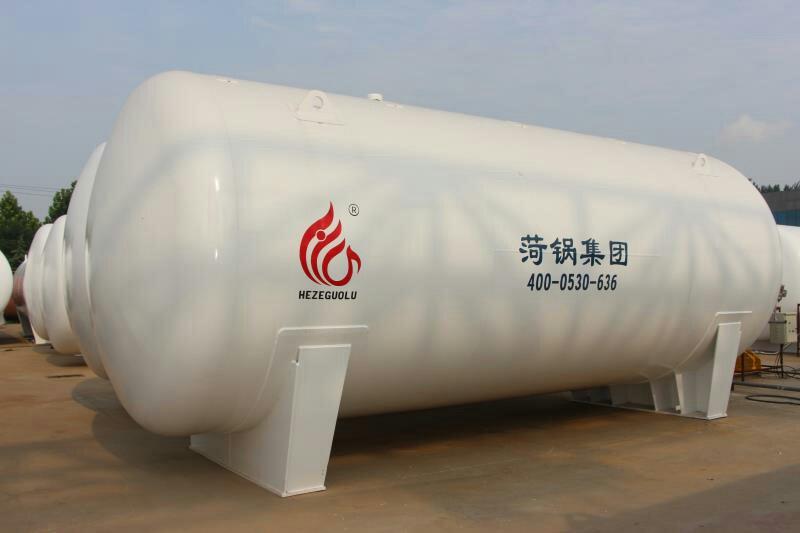
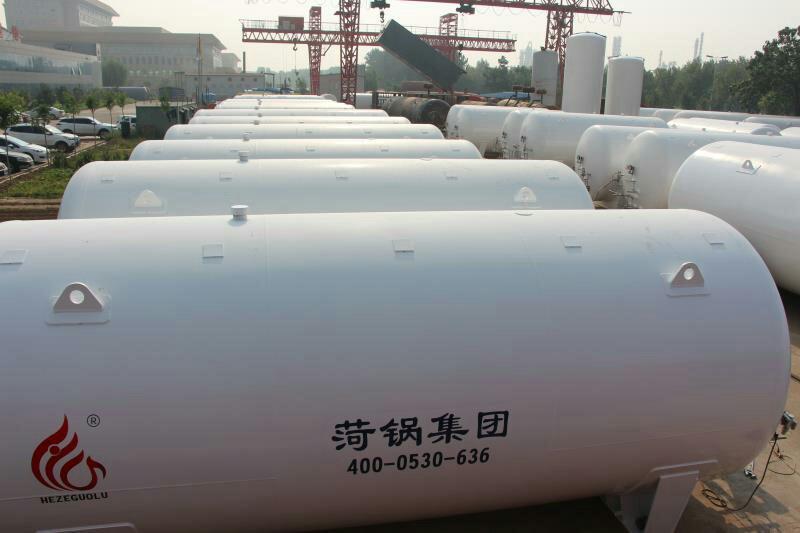
In the early stages of LNG tank development, tanks were all single-walled. They were insulated with block insulation, but had flaws such as the lack of a metallic moisture barrier and vulnerability to wind disasters. Subsequently, they evolved into double-walled, double-roofed tanks. Due to the ease of LNG vaporization, which can lead to overpressure inside the tank, they eventually developed into double-walled, single-roof tanks.
1. Tank Classification and Brief Introduction
LNG low-temperature storage tanks come in the following types: underground tanks, spherical tanks, single-vessel tanks, double-vessel tanks, full-vessel tanks, membrane tanks, and mother-daughter tanks. Currently, single-vessel tanks and mother-daughter tanks are commonly used in LNG plants, while underground tanks, full-vessel tanks, and membrane tanks are mainly applied in large-scale LNG receiving terminals.
(1) Single-Container Tank
Single-wall containers and double-wall containers are available, with design pressures ranging from 17 to 20 kPa, and operating pressures typically at 12.5 kPa. For large-diameter single-wall containers, the design pressure is relatively lower, potentially less than 14 kPa. The equipment layout for single-wall containers requires a larger safety distance and area, and firebreaks and embankments must be set up.
(2) Mother and child drums
The mother tank is composed of an inner and an outer tank. The inner tank is made up of multiple sub-tanks, which are assembled side by side within a large outer tank. This is a new technology low-temperature storage tank that has developed in recent years. It is suitable for both pressurized and atmospheric storage, with working pressures ranging from 0.2 to 1.0 MPa, up to a maximum of 1.8 MPa. Like single-container tanks, it requires a larger safety distance, occupies more land area, and often features firebreaks and embankments.
(3) Spherical Tank
The inner and outer shells of the spherical storage tank are both spherical. In operation, the inner tank is an internal pressure vessel, while the outer tank is a vacuum external pressure vessel. The volume of the spherical tank is typically 200~1500 m³, with an operating pressure of 0.2~1.0 MPa.
(4) Underground Tanks
An underground storage tank is a storage facility where the highest liquid level of stored LNG is below ground level, with the tank body resting on an impermeable stable foundation. Underground storage tanks are typically cylindrical metal tanks, with a reinforced concrete outer shell. Due to the high investment cost and long delivery cycle of underground storage tanks, they are generally not selected for design.
(5) Full Capacity Tank
The full-volume tank consists of an inner cylinder, outer cylinder, and a top cover, providing double containment for LNG and its vapors. The design pressure of the full-volume tank can reach 0.029 MPa, with a design temperature range of -196 to 60°C. The seismic design friction coefficient is generally 0.3 to 0.6, and the distance between the inner and outer cylinders should not exceed 2 meters. Compared to single or double containment tanks, it has the highest cost but the best safety reliability, making it extremely common in receiving stations.
(6) Membrane罐
The Membrane Tank uses stainless steel inner lining and concrete outer wall, meeting the same fire prevention and safety distance requirements as full-volume tanks. The operational flexibility of the Membrane Tank is greater than that of full-volume tanks, making it particularly suitable for use in areas with frequent seismic activity and high population density. However, it is characterized by higher investment and longer construction period.
(7) Double containment tank
The dual-container design has the same pressure as a single-container design, with both the inner and outer containers capable of separately containing stored low-temperature liquid products. The outer container is made of low-temperature steel or concrete, while the inner container is made of 9% nickel steel or stainless steel. The distance between the inner and outer containers must not exceed 6 meters.


