


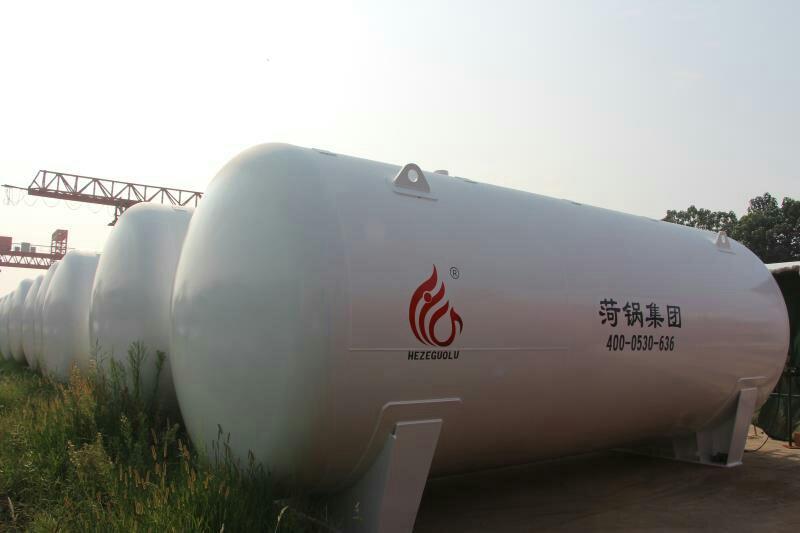
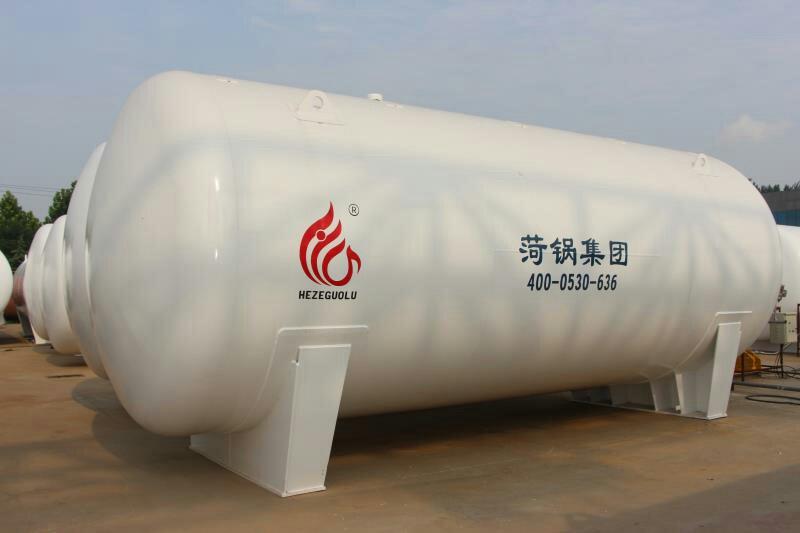
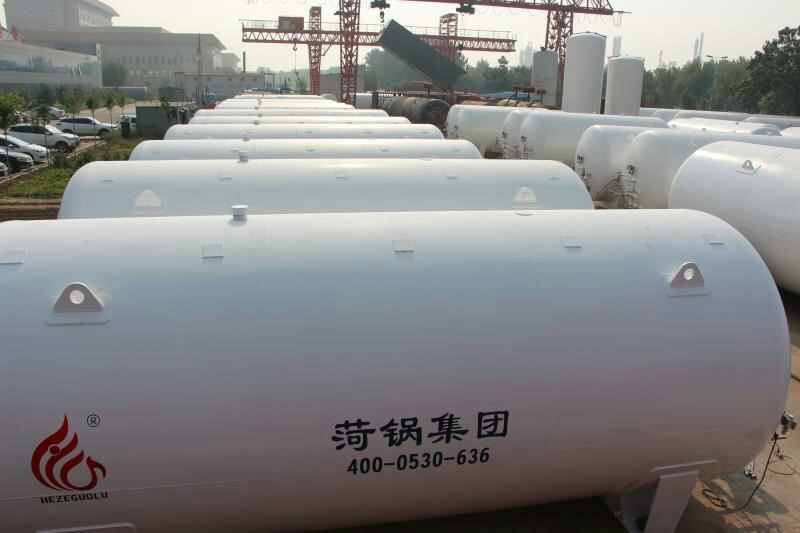
30, 60, 100 cubic meter LNG tanks
30, 60, and 100 cubic meter LNG tanks are commonly used in our production. It's believed that this new type of LNG tank will be quickly embraced by a wide range of users. Compared to standard tanks, LNG tanks offer enhanced safety. LNG tanks can be categorized by size: small LNG tanks, ranging from 5 to 30 cubic meters, are often used in residential gas vaporization stations and LNG vehicle refueling stations; medium-sized LNG tanks, from 30 to 150 cubic meters, are commonly used in satellite liquefaction units and are the ideal choice as a replacement for conventional tanks.
The storage system of the LNG tank consists of low-temperature storage tanks, affiliated pipelines, and control instruments, yet it also falls under the category of low-temperature storage tanks.
2. All lng tank piping is made of austenitic stainless steel tubes. Austenitic stainless steel tubes offer excellent low-temperature properties.
3. The lng storage tanks can also be categorized by their installation type, including vertical (lng) tanks. These tanks utilize vacuum powder insulation technology, with the inner tank and piping materials made of Austenitic S30408 stainless steel, and the outer shell made of high-quality carbon steel Q345R pressure vessel steel plate. These lng storage tanks are not only long-lasting but also extremely safe to use, having gained widespread recognition.
30, 60, 100 cubic meter LNG storage tanks, LNG gasification station, and vehicle refueling station process and equipment selection
30, 60, 100 cubic meter LNG storage tanks, LNG gasification plant process flow
As shown in the figure, LNG is transported to the LNG satellite station via low-temperature tanker trucks. It is pressurized in the tanker truck tanks using horizontal specialized unloading boosters set at the unloading platform. The pressure difference then delivers the LNG to the satellite station's low-temperature LNG storage tanks. Under operating conditions, the storage tank booster increases the pressure of the LNG in the tank to 0.6 MPa. The pressurized low-temperature LNG is then fed into an air-cooled gasifier, where it exchanges heat with air, converting to gaseous natural gas and increasing in temperature. The outlet temperature is 10°C below ambient temperature, with a pressure of 0.45-0.60 MPa. If the gas temperature at the outlet of the air-cooled gasifier does not reach above 5°C, it is heated using a water bath heater. Finally, after pressure regulation (with the regulator outlet pressure at 0.35 MPa), metering, and odorization, it enters the urban transmission and distribution network, supplied to various users.
1. Unloading Process
LNG is transported to the city's LNG regasification station via highway tank trucks or tank container vehicles from the LNG liquefaction plant. The tank trucks are pressurized using the onboard air-temperature booster vaporizers (or through the station's unloading booster vaporizers for tank container vehicles), creating a pressure difference between the tank trucks and the LNG storage tanks. This pressure difference is then used to unload the LNG from the tank trucks into the station's storage tanks. Upon completion of unloading, the gas phase natural gas from the tank trucks is recovered through the vapor phase pipeline at the unloading platform.
During unloading, to prevent an increase in pressure within the LNG storage tank from affecting unloading speed, an upward liquid injection method is used when the LNG temperature in the tanker is lower than that in the storage tank. The low-temperature LNG in the tanker is sprayed into the tank through the upward liquid injection nozzle of the storage tank in a spray state, cooling part of the gas to a liquid and reducing the tank pressure, allowing for smooth unloading. If the LNG temperature in the tanker is higher than that in the storage tank, a downward liquid injection method is employed, with the high-temperature LNG entering the tank from the bottom injection port, mixing with the low-temperature LNG inside to cool down and prevent the high-temperature LNG from evaporating through the upward injection port, which could increase the tank pressure and make unloading difficult. In actual operations, due to the relatively long distance from the LNG gas source to the consuming cities, the LNG temperature inside the tanker is typically higher than that in the storage tanks at the gasification stations upon arrival in the consuming cities, necessitating the use of the downward liquid injection method. Therefore, except for the initial LNG filling, the downward liquid injection method is generally used during normal tanker unloading.
To prevent the generation of significant temperature difference stress that may damage the pipeline or affect unloading speed due to rapid cooling during unloading, the unloading pipeline should be pre-cooled with LNG from the storage tank before each unloading. Additionally, it is necessary to prevent the sudden change in LNG flow rate caused by rapid opening or closing valves, which can lead to liquid impact damage to the pipeline.
2. Tank Boosting Technology
Driven by pressure, LNG flows from the storage tank to the regasifier, where it is converted into gaseous natural gas for customer use. As LNG exits the tank, the internal pressure drops continuously, slowing down the outflow rate until it stops. Therefore, during normal gas supply operations, it is necessary to continuously replenish gas into the tank to maintain the pressure within a certain range, ensuring the continuous LNG regasification process. The tank's pressure increase is achieved using an automatic pressure boosting valve and an auto-pressurizing regasifier. When the tank's pressure falls below the set opening value of the automatic pressure boosting valve, the valve opens, and the LNG in the tank flows into the auto-pressurizing regasifier (the installation height of the auto-pressurizing regasifier should be below the tank's lowest liquid level) due to the liquid level difference. In the auto-pressurizing regasifier, the LNG is vaporized into gaseous natural gas by heat exchange with air, which then flows back into the tank, raising the tank's pressure to the required working pressure.
3. LNG Gasification Technology
LNG undergoes heat exchange with the atmosphere in a vacuum vaporizer, transitioning from liquid to gas. At the outlet, it is 10°C cooler than ambient temperature. If it drops below 5°C, it is heated by a water bath vaporizer. The hot water for the water bath vaporizer comes from the water cycle of a hot water boiler.
4. Safety Venting Process for Gases
LNG is a liquid mixture primarily composed of methane, with a boiling point of -161.5°C at atmospheric pressure and a storage temperature of -162.3°C under atmospheric conditions. Its density is approximately 430 kg/m³. When LNG is converted to gaseous natural gas, its critical buoyancy temperature is -107°C. If the temperature of the gaseous natural gas exceeds -107°C, it becomes lighter than air and will rise and drift away from the leak source. However, if the temperature is below -107°C, the gaseous natural gas is heavier than air, and the cold gas will accumulate downward, forming an explosive mixture with air. To prevent the accumulation of low-temperature gaseous natural gas from the safety valve, which could form an explosive mixture, a 1-unit air-temperature safety vent gas heater is installed. The vent gas is first heated by this heater to reduce its density below that of air, and then released into the atmosphere at high altitudes.
For LNG liquefaction stations in the south that do not have EAG heating equipment, to prevent operators from being injured by cold burns from the low-temperature LNG gas-liquid mixture released after the safety valve trips, the individual safety valve vent pipes and the storage tank vent pipes should be connected to the centralized vent main pipe for venting.


