


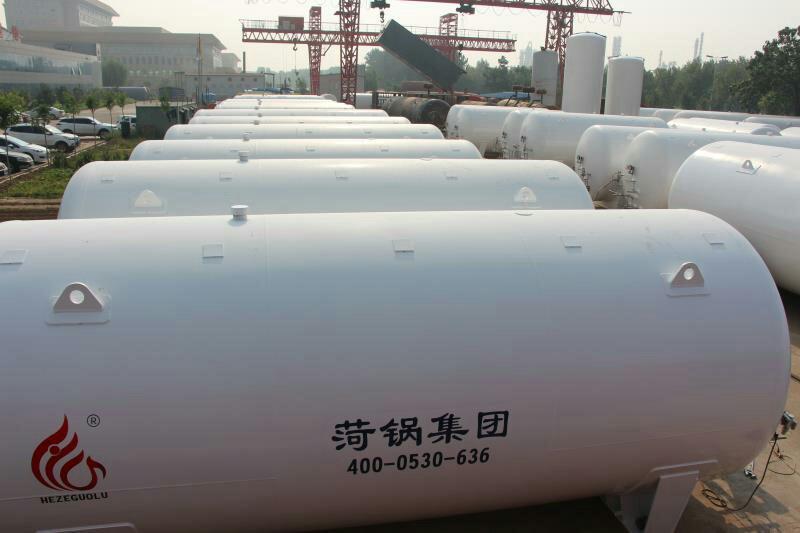
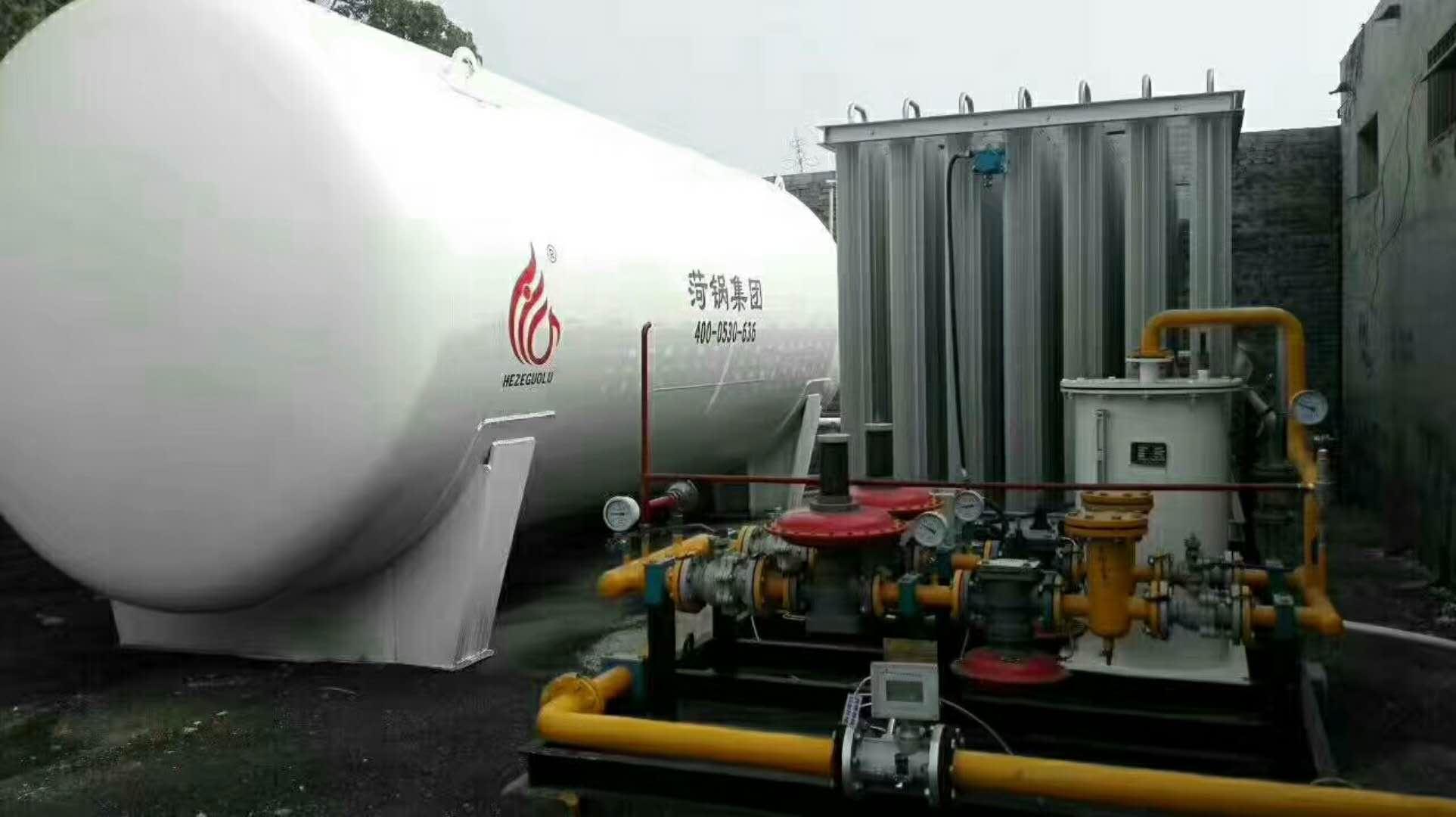
Low-temperature storage tanks are primarily used in the industrial gas sector, with a wide range of applications. Industries such as steel mills, chemicals, oil, food, and aerospace all require gases. Industrial needs for gases like oxygen, nitrogen, and argon, which are in high demand, are separated from air by air separation equipment, which compresses and liquefies the air and then separates the oxygen, nitrogen, and argon based on their different boiling points, before storing them in low-temperature storage tanks.
The company has two sandblasting rooms, all tanks are treated with an air-powered steel shot sandblasting process, ensuring both the surface quality and paint quality. (After the overall sandblasting, the paint adhesion is enhanced, significantly extending the lifespan of the paint.)
Each unit undergoes hydrostatic testing to ensure equipment strength and safety; each unit is tested for airtightness to guarantee equipment sealing performance. After hydrostatic testing, the internal air is blown clean; and plastic plates are used to seal off all pipe openings to prevent secondary contamination from external sources.
Heze Boiler Factory Co., Ltd.'s Pressure Vessel Division specializes in manufacturing 5-200 cubic meter liquefied gas storage tanks, liquid ammonia tanks, etc. Our series of liquefied petroleum gas storage tanks are designed, manufactured, and inspected in strict accordance with GB150-2011 standards, utilizing Q345R steel plates for pressure vessels. The entire tank is rolled using CNC coiling equipment and焊接 with automatic gas shielded welding technology, ensuring solid and aesthetically pleasing welds. After heat treatment in an overall annealing furnace, the internal stresses of the tank are better eliminated, enhancing the material's toughness and hardness, offering superior results compared to resistance wire heat treatment. The liquefied gas storage tanks undergo 100% radiographic inspection to ensure the steel plates and welds meet technical requirements. High-pressure jet shot peening is used for rust removal, providing much better results than manual or sandpaper polishing. Additionally, applying four coats of paint—two anti-corrosion and two topcoats—guarantees the tank does not require repainting for years of use. Each tank is inspected and certified by the Quality and Technical Supervision Bureau before shipment, ensuring nationwide validity.
Proper Usage Precautions for lng Liquefied Natural Gas Filling Station Storage Tanks:
1. Tanks with dual root valves, and valves near the tank, should remain open.
2. During unloading, it is recommended that the tank's maximum filling capacity not exceed 90% of its effective volume (manufacturers specify between 85%-95% of the geometric volume), with the remaining capacity not to be less than 10%.
3. High pressure in the LNG tank doesn't necessarily indicate an issue with the tank itself. Consider the overall system's heat loss and liquid storage time. Generally, when pressure exceeds 1.1 MPa, it's necessary to vent and relieve pressure. Long-term high pressure in the tank can affect the lifespan of the tank's vacuum insulation.
4. If the storage tank experiences extensive and prolonged "sweating" or frosting, and the pressure continues to rapidly increase, consider the vacuum failure. Immediate action is required, including manual pressure relief and transferring the LNG liquid within the tank.
5. Suggest conducting vacuum tests on the storage tank annually. For hot tanks, a vacuum level less than 1Pa is considered acceptable. For cold tanks, a vacuum level less than 0.5Pa (0.00375 TOF) is deemed合格.
6. Tanks must not be transported with liquid, and the LNG liquid inside should be discharged if they are left unused for a prolonged period.
7. Storage tanks are pressure vessels. According to the "Safety Supervision Regulations for Pressure Vessel Technology" promulgated and implemented by the People's Republic of China, installation, maintenance, and modification of pressure vessels require units with corresponding qualifications to notify the local quality supervision department. Permission must be obtained before installation, maintenance, or modification can proceed.
LNG Storage Tanks
LNG Storage Tanks, Manufacturer of LNG Storage Tanks, Producer of LNG Storage Tanks


