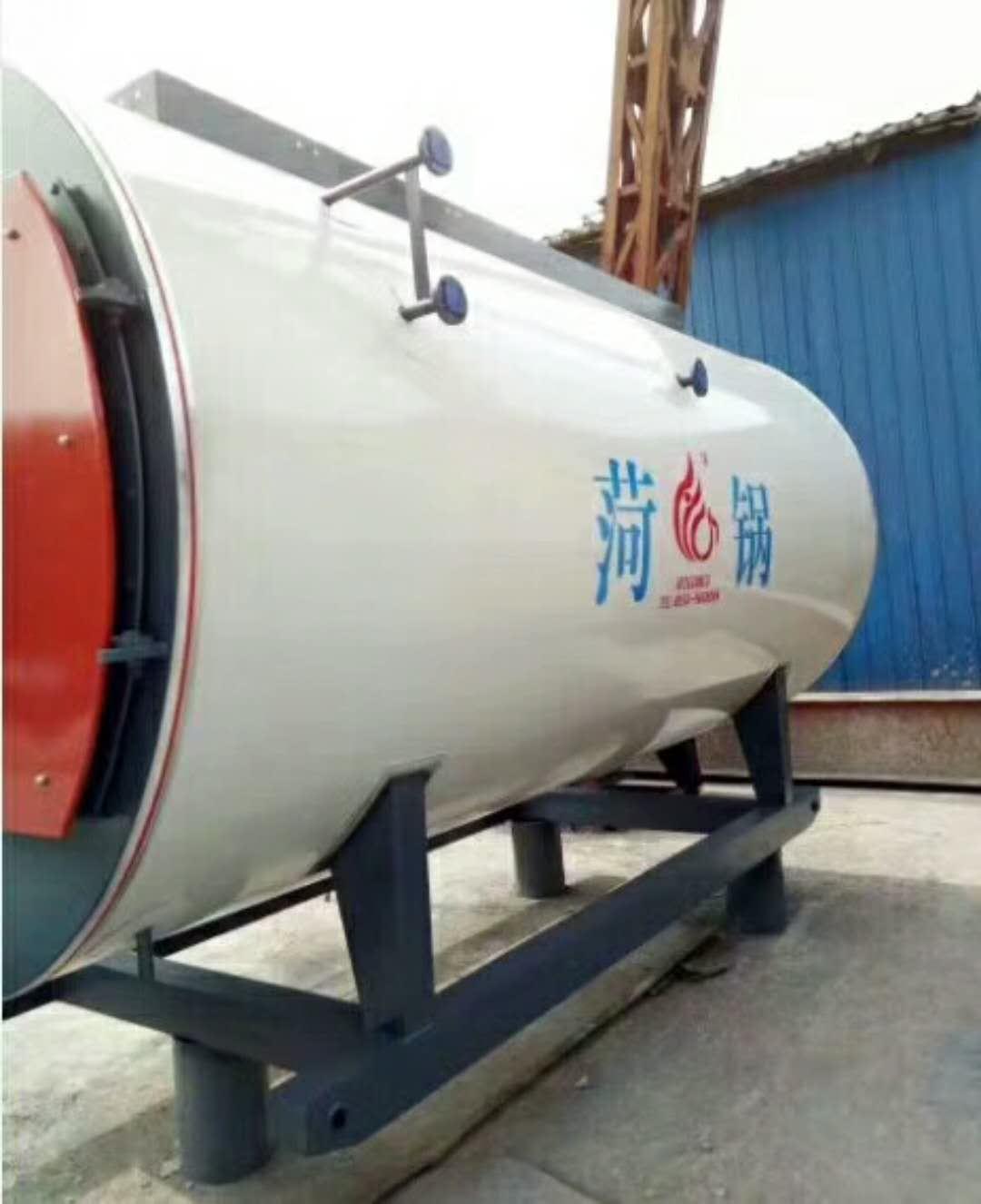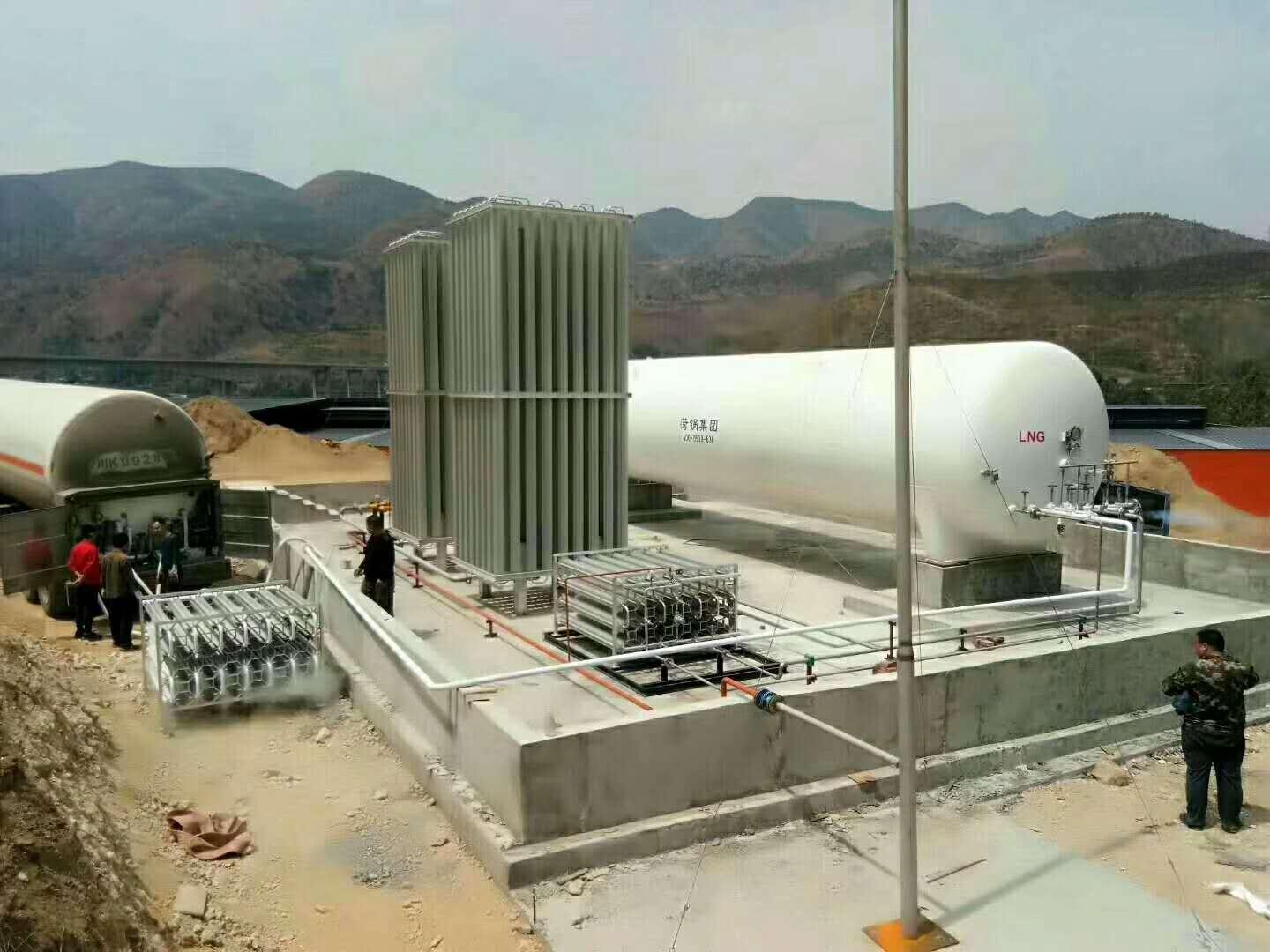
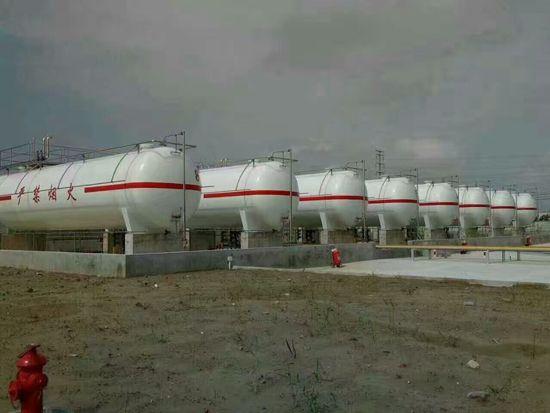
Liquefied Natural Gas Tank
Liquefied Natural Gas (LNG) storage tanks are specialized products for storing liquefied petroleum gas, classified as special equipment and type III pressure vessels. They are made from 06Ni9DR material, undergo non-destructive testing, hydrostatic and pneumatic testing, and are inspected on-site by the Technical Supervision Bureau, with a pressure vessel inspection certificate issued. The manufacturing process includes external rust removal and painting, etc. The LNG storage tanks have strict quality assessments for the material of the pressure components, appearance dimensions, weld quality, operational quality, installation quality, internal equipment, and safety accessories.
Routine physical and chemical tests for drum materials, such as mechanical properties and chemical composition.
The welding joints, seams, tank end caps, and the mutual geometric positions of all pressure elements are rigorously inspected through X-ray non-destructive testing and magnetic particle inspection. Tests are conducted on the product's sealing, pressure resistance, and all technical indicators that could affect the safe operation of the product.
Common LNG storage tank structures include: vertical LNG tanks, horizontal LNG tanks, vertical mother-child tanks, and atmospheric pressure tanks.
Vertical LNG Storage Tank
Volume options include 50, 100, 150, and 200 cubic units.
Horizontal LNG Storage Tank
Volume options include 50 cubic and 100 cubic.
Vertical mother-child tank
The mother tank refers to an inner tank composed of multiple sub-tanks connected in parallel to meet large capacity storage requirements. These sub-tanks are assembled side by side within a large outer tank. The number of sub-tanks ranges from 3 to 7, generally not exceeding 12. The volume of individual sub-tanks should not be too large, typically between 100 to 150 cubic meters, with the maximum reaching 250 cubic meters. Common sizes include 1000 cubic meters, 1750 cubic meters, and 2000 cubic meters.
Atmospheric Storage Tank:
We offer large and medium-sized atmospheric LNG tanks, as well as extra-large atmospheric LNG storage tanks.
2. Cautionary Notes
1. Cylinders must be stored in well-ventilated areas and kept at a distance of not less than 1.5 meters from any fire or heat source. Cylinders are strictly prohibited from being heated with fire, boiled in hot water, or left exposed to direct sunlight. Regular checks should be conducted on the gas tightness of cylinder valves and pipeline joints to ensure no leakage. Leak detection can be done using soap water, but it is strictly forbidden to use open flames for testing.
2. When lighting, ignite the primer first, followed by opening the gas; do not reverse the order. There should be someone on guard during use, do not leave, to prevent boiling water from overflowing and extinguishing the flame, which could cause the gaseous stream to escape and lead to an explosion. After using the gas cylinder, make sure to close the valve tightly to prevent gas leakage.
3. The liquefied gas in the cylinder should not be completely exhausted, and a certain residual pressure should be maintained. The residual pressure should generally be greater than 49.03 kPa (i.e., 0.5 kg/cm², gauge pressure) to prevent air from entering the cylinder. After the liquefied petroleum gas is used up, the remaining residue in the cylinder is also a flammable substance and should not be poured out arbitrarily to prevent fires caused by the leakage and evaporation of the residue.
4. LPG cylinders are pressurized containers that require proper maintenance and regular inspections. Prevent the cylinders from falling or colliding during handling and use. Do not use metal tools to strike open the valve. Protect them from direct sunlight and prolonged exposure to rain. Cylinders should generally be inspected every 2 years.
5. Although the explosive range of liquefied petroleum gas (LPG) is not very wide, due to its low limit, it's easily ignited and explodes upon leakage. Moreover, as LPG is heavier than air, it tends to flow downwards upon leaking into the air, accumulating in low-lying areas and posing a hidden danger of gas explosion. Therefore, areas prone to gas leakage cannot rely solely on window ventilation; attention must also be given to lower-level ventilation.
6. When a liquefied gas leak is detected indoors, windows and doors should be opened immediately for ventilation, allowing the gas to disperse away from any open flames. No fire is permitted in the vicinity until the leak is resolved and the distinctive odor has dissipated. Any spilled liquid on the ground should be covered with sand or soil before being removed to a safe location. In case of a gas cylinder fire, the valve should be closed immediately, the cylinder moved to an open area outdoors, and extinguished using dry powder extinguishers, carbon dioxide extinguishers, or by covering with a wet sack.
7. Educate children not to tamper with gas cylinders carelessly, and users must be aware of the safety knowledge for using gas cylinders.
One. The rise of LNG community gasification in China
If the 1980s to 1990s were the era of LPG community gasification in China, then the first 10 to 20 years of the 21st century will be the era of LNG community gasification in China. The origin of China's LPG community gasification is in Shenzhen, Guangdong, and the origin of China's LNG community gasification should be in Zibo, Shandong. The gas source for Guangdong's LPG community gasification mainly relies on overseas imports, while the gas source for Shandong's LNG community gasification currently mainly comes from the LNG production plant in Puyang, Henan. In the future, there will be more gas supply channels.
Yangzhai LNG Residential Community Gasification Station, Zibo City, Shandong Province
This project is the first in China to design a gasification station for unloading, storage, and gasification of liquefied natural gas. The liquefied natural gas is transported from the Zhongyuan Oilfield to the Zibo Gasification Station in低温 tank trucks.
The Zibo project commenced design in June 1999 and was completed in January 2000. Zibo Gas Company started construction in January 2000, completed it in October 2000, and initiated trial operations with LNG. On December 2, 2001, it began supplying LNG. It is the first liquefied natural gas (LNG) gasification station in China and the largest in Asia. The natural gas is supplied exclusively to industrial users, with a designed capacity of 120,000 Nm3/d.
Qingdao Jiajialing LNG Residential Community Gasification Station
The Jiajialing project commenced design in June 2000 and was completed in January 2001; Qingdao Gas Company started construction in January 2001, and the facility was completed and successfully trial-operated in February 2002, becoming the first civil liquefied natural gas gasification station in China, with a design capacity of 20,000 Nm3/d.
Guangdong Longchuan LNG Community Gasification Plant Project
The Longchuan LNG liquefaction station boasts a short design and construction period, with the entire process from design to completion taking less than a year. The opening ceremony was held on May 23rd this year. The design capacity is 10,000 Nm3/d.
Although Longchuan's LNG currently comes from Puyang, Henan, the operator's sights are set on Shenzhen. Once Shenzhen's LNG receiving station is completed, Longchuan will be the beneficiary.
The Longchuan LNG Gasification Plant Project is a management general contracting project managed by Qingdao Chemical Engineering Design Institute.
In China, currently under construction and set to be operational are LNG liquefaction stations in Shangqiu, Henan; Jiangyan and Shuyang, Jiangsu; Fangzi, Shandong; Suzhou, Zhejiang; Miyun, Beijing; and Bengbu, Anhui. Planned and being designed are cities such as Yuyao, Zhejiang; Jiujiang, Jiangxi; Weifang, Shandong; Pingdu, Qingzhou; and Xiamen, Fujian. It is said that after completing the construction of the LNG liquefaction station in Longchuan, Guangdong, Shanghai Datan Energy Co., Ltd. plans to invest in and build LNG community liquefaction stations in cities like Yangjiang, Huide, and Shanwei in Guangdong.
It appears that the recent LNG community gasification boom in Shandong, China, has far outpaced the earlier LPG community gasification surge in Guangdong. It's even faster than Japan's development pace in the 1970s. Whether in terms of construction scale, speed, organizational form, or the extent of public concern, it is unparalleled by Guangdong's LPG community gasification.
Section II: The global natural gas conversion project is inevitably approaching.
With the advancement of the times, the development of the economy, and the demands for environmental protection, the drawbacks of coal-to-gas production are increasingly being fully exposed. Advanced countries have successively phased out coal-to-gas production in the 1950s, 1960s, 1970s, 1980s, and 1990s. Petroleum-to-gas also has many insurmountable shortcomings. LPG will become a transitional energy source as the future depletion of oil approaches. The global shift to natural gas, replacing all other energy sources, will become an inevitable development in the revolution of gas energy.
Partial Natural Gas Conversion Schedule for Some Countries
Country
Achieve natural gas conversion (annually)
Gas Source
USA
1945-1958
Pipeline natural gas predominant
Former Soviet Union
1948-1960
Pipeline natural gas predominant
United Kingdom
1964-1977
Initially use LNG, later transition to pipeline natural gas as the main source.
France
1962-1982
LNG combined with pipeline natural gas
Germany
1960-1970
Pipeline natural gas as the main, with a small amount of LNG
Australia
1976-1986
Pipeline Natural Gas
Japan
1969-1998
All LNG Supply
天然气的利用途径可采取管道输送和液化后用船运输、公路槽车和铁路槽车运输多种途径来实现。长输管道输送受到铺设管道需要穿过崇山峻岭、农田村庄以及征用村镇土地赔偿费用等限制,超过一定长距离,从经济角度来考虑是很不合算的。而将天然气液化后用大船(13.5万立方米)通过海上运输,送至城市边沿建设的LNG接收基地是非常经济合算的事。LNG在美国、欧洲、日本早就得到广泛的应用,而日本是世界上使用LNG最成功的国家,年用量达到了5000万吨,占世界LNG贸易量8000万吨的62.5%。亚洲的日本、韩国和台湾地区LNG消费数量,占了世界总消费量的四分之三还多。
The launch of the 3 million tons LNG project in Guangdong, China, the construction of the 2 million tons LNG project in Fujian, and the commissioning of the Indian LNG project, along with the completion of the Dongding LNG receiving base in Taiwan, will lead to a significant increase in Asia's LNG consumption.
III. Development of the Global LNG Industry
The primary component of natural gas is methane, a permanent gas that cannot be liquefied by compression at room temperature; it only turns into a liquid at low temperatures (-162 degrees). Since the 1920s, with the rapid development of cryogenic industrial technology, it has become possible to liquefy large amounts of natural gas.
In 1910, the United States began industrial-scale natural gas liquefaction. In 1917, Cabot received the first U.S. patent related to natural gas liquefaction, storage, and transportation. That same year, the world's first methane liquefaction plant was established in the West Virginia region of the United States, commencing methane liquefaction production.
In 1937, Egerton from the UK proposed using liquefied natural gas (LNG) to regulate peak loads in urban gas supply. This involved liquefying and storing natural gas for peak winter supply and emergency situations. The Shanghai Pudong LNG production plant, constructed with assistance from France's Sofinergie Engineering Company and commissioned by the end of 1999, has a daily design capacity of 120,000 cubic meters. It is China's first natural gas backup/peak load regulation station utilizing LNG technology.
1955, Comstock International Methane Company, USA, dedicated to the planning and design of cross-sea transportation for liquefied natural gas.
In 1957, British Gas decided to enter into a contract with Comstock Company to import liquefied natural gas to supplement the city's gas supply shortage, and established the world's first liquefied natural gas receiving terminal on the island of Canvey in the United Kingdom for storing the imported LNG.
In 1959, the U.S. Consol Energy International Methane Company built the world's first liquefied natural gas carrier, the "Methane Pioneer," which transported 2,200 tons of LNG from Lake Charles, Louisiana, to the Canvey Island receiving facility in the UK from January 28 to February 20 the following year, marking the birth of the global LNG industry.
In 1960, Shell UK acquired a 40% stake in the company. The "Methane Pioneer" tanker began transporting LNG from Algeria to the UK in 1964, rapidly boosting the global LNG commercial trade.
The surging LNG community gasification trend in China is set to greatly propel the launch of the Chinese LNG industry and the rapid development of the global LNG industry, as domestic LNG liquefaction plants continue to emerge and coastal import LNG receiving bases increase.
Carbon Dioxide Storage Tank
1 Overview
The low-temperature liquid carbon dioxide storage tank consists of a double-wall container with an inner and outer vessel, featuring a vacuum powder insulation design. It is available in two types: vertical and horizontal. The inner vessel is made of 16MnDR material, while the outer vessel material can be selected based on the user's location, either Q235-B or 16MnR. The annular space between the inner and outer vessels is filled with pearlite insulation material and then vacuumized. (Available in both vertical and horizontal configurations)
2 Uses
Storage: Liquid Carbon Dioxide (LCO2)
3 Insulation Performance
Insulation materials are filled with pearlescent sand under high temperatures and then evacuated. The standard vacuum degree after the sandwich is sealed is:
Effective Volume: ≤ 10m³ with a vacuum ≤ 2Pa, > 10m³ ≤ 50m³ with a vacuum ≤ 3Pa, > 50m³ ≤ 100m³ with a vacuum ≤ 5Pa. Achieved through exquisite technology, unique filling process, and quality assurance commitment to deliver optimal insulation performance.
4 Security Technical Features
Low-temperature liquid carbon dioxide storage tanks utilize a "combined, safety system valve" that employs two safety valves working simultaneously. During regular safety valve calibration, one side can be shut off while the other continues to operate, ensuring the safe operation of the tank.
5 Operating Systems
The storage tank container is equipped with a pressure gauge, a differential pressure level gauge, and a level reference chart at the top, allowing for real-time monitoring of the container's stored volume and pressure changes, facilitating operations during filling and draining.
6 Inspection System
The bottom of the tank is equipped with a dedicated vacuum detection system, vacuum gauge, and vacuum valve. The interlayer vacuum can be periodically or on-demand checked with a vacuum gauge to ensure the safe operation of the tank.
7 Technical Specifications
Design Pressure: 2.3 MPa
Working Pressure: 2.16 MPa
Design Temperature: -40℃
Operating Temperature: -20℃
Effective Vessel Capacities: 5m3, 10m3, 15m3, 20m3, 30m3, 50m3
Liquid Oxygen Storage Tank
Overview
This series of low-temperature storage tanks is a double-layer fixed vacuum powder insulation tank (tank). The inner shell is made of stainless steel (with 16MnDR for CO2 tanks), and the outer shell is made of Q235B or 16MnR. Surface anti-corrosion coating is applied through sandblasting, sweeping, and spraying processes, and a two-component rapid curing liquid paint is also used.
Application Scope and Features
Primarily used for low-temperature storage of liquid oxygen, nitrogen, argon, carbon dioxide, and other gases. One cubic meter of liquid can replace 130 gas cylinders. It can eliminate the daily round-trip transportation of gas cylinders, saving a significant amount of labor and material resources. Widely applied in industries such as gas, hospitals, and metal smelting, where high gas consumption is required, it is the best product for centralized gas supply. It features a long service life, compact structure, minimal land occupation, centralized control, and easy operation.
2 Product Model
5 cu ft, 10 cu ft, 15 cu ft, 20 cu ft, 30 cu ft, 50 cu ft, 100 cu ft
Technical Data
Maximum Working Pressure: 1.6 MPa
Maximum working pressure of CO2 storage tank: