


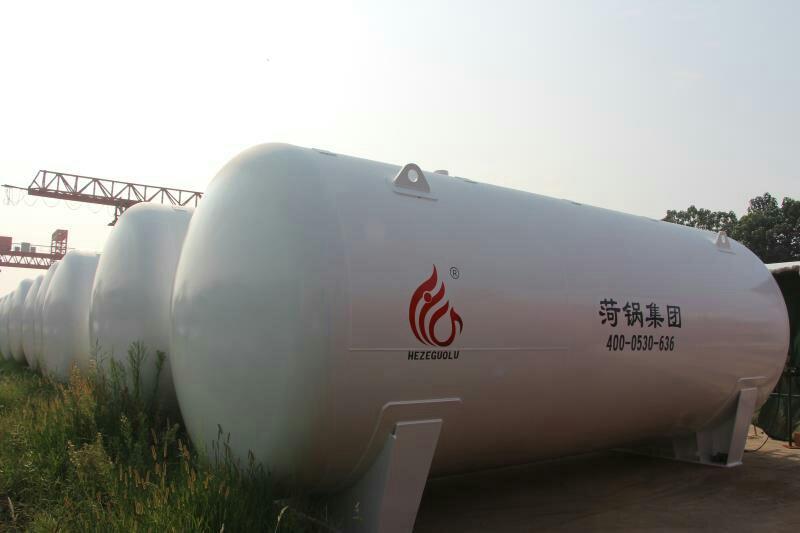
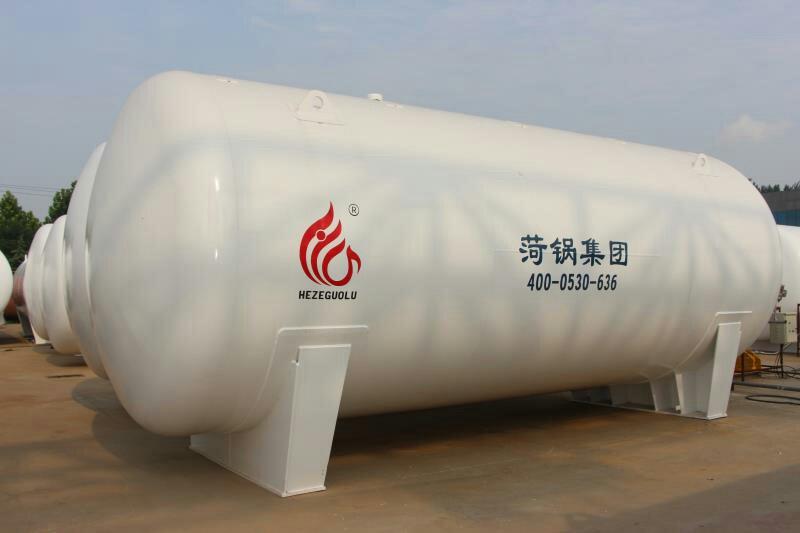
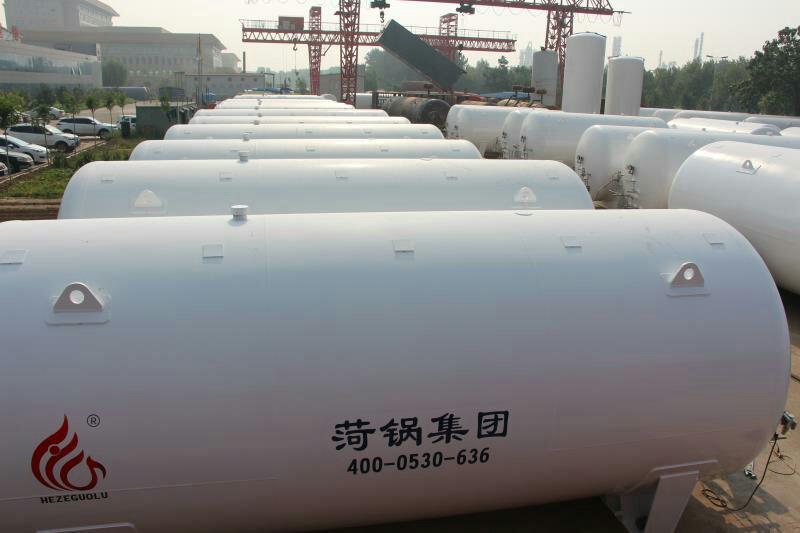
30, 60, 100 cubic meters LNG storage tanks
30, 60, and 100 cubic meter LNG tanks are commonly used in our production. It's believed that this new type of LNG tank will also be quickly embraced by a wide range of users. Compared to standard tanks, the LNG tank offers greater safety. LNG tanks can be categorized by size: small LNG tanks, ranging from 5 to 30 cubic meters, are often used for residential gas vaporization stations, LNG vehicle refueling stations, etc.; medium-sized LNG tanks, from 30 to 150 cubic meters, are frequently used in satellite liquefaction units, and are also the best choice as an alternative to standard tanks.
The storage system for LNG tanks consists of low-temperature storage tanks, affiliated pipelines, and control instruments, yet it falls under the category of low-temperature storage tanks as well.
2. All lng storage tank piping uses Austenitic stainless steel pipes. Austenitic stainless steel pipes offer excellent low-temperature properties.
3. The LNG storage tanks can be further categorized into vertical (lng) types. These tanks utilize vacuum powder insulation technology and are constructed with airtight inner cylinders and piping made from Austenitic S30408 stainless steel, while the outer cylinders are made from high-quality carbon steel Q345R steel plates for pressure vessels. These lng storage tanks not only have a long service life but are also extremely safe to use, having gained widespread recognition.
30, 60, 100 cubic meter LNG storage tanks, LNG gasification station, and vehicle refueling station process and equipment selection
30, 60, 100 cubic LNG storage tank vaporization station valves, piping materials, pipe fittings
Valve Selection and Design
Process system valves must meet the pressure and flow requirements for transporting LNG while also possessing low-temperature performance of -196℃. Common LNG valves include pressure-reducing control valves, pressure-reducing control valves, emergency cut-off valves, low-temperature cut-off valves, safety valves, check valves, etc. The valve material is 0Cr18Ni9.
Pipe, fittings, and flange selection and design
Pipes with medium temperatures ≤ -20℃ are made of seamless stainless steel tubes for fluid conveyance (GB/T 14976—2002) with material 0Cr18Ni9. All fittings are seamless stamped fittings with material 0Cr18Ni9 (GB/T 12459). Flanges are long-neck socket-welding steel pipe flanges (HG 20592) with material 0Cr18Ni9. The flange gaskets are metal-wound types with material 0Cr18Ni9. Fasteners are special double-ended studs and nuts, made of 0Cr18Ni9.
Process pipelines with medium temperatures greater than -20°C, for nominal diameters ≤ 200 mm, use seamless steel tubes for conveying fluids (GB/T 8163) made of 20# steel; for nominal diameters > 200 mm, use welded steel tubes (GB/T 3041—2001) made of Q235B steel. All fittings are made of seamless stamped fittings made of 20# steel (GB/T 12459). Flanges are used with raised face and neck welding steel pipe flanges (HG 20592) made of 20# steel. The flange sealing gasket is a flexible graphite composite pad (HG 20629).
LNG process pipelines are installed using焊接 connections, with only necessary flange connections. Insulation is provided for low-temperature process pipelines with polyurethane insulated supports and composite polyethylene insulated pipe shells. Carbon steel process pipelines are treated for corrosion protection.
Section 6: Fire Protection Design for LNG Gasification Stations
The fire protection design of the LNG gasification station is based on the LPG part of GB 50028 "Urban Gas Design Code." A dike area is set around the LNG storage tanks to minimize the damage to surrounding facilities in the event of an accident. A sprinkler system is installed on the LNG storage tanks with a sprinkling intensity of 0.15 L/(s·m²). The water usage for sprinkling is calculated based on the total surface area of the ignited tank. Adjacent tanks within a diameter of 1.5 times the diameter of the ignited tank are calculated at 50% of their surface area. The water usage for fire hoses is selected according to GBJ 16 "Code for Fire Protection Design of Building Design" (2001 edition) and GB 50028 "Urban Gas Design Code" (2002 edition).


