


Heze Boiler Factory Co., Ltd. operates a development center, an installation company, and three production bases. It has established close cooperative relationships with numerous key universities and research institutions in China. New product development is continuous and well-received by a wide customer base. We offer industrial and residential coal-fired boilers, oil-fired boilers, gas-fired boilers, biomass boilers, heat transfer oil boilers, waste heat recovery boilers, refrigeration auxiliary equipment, pressure vessels of categories I, II, and III (including liquefied gas tanks, liquid ammonia tanks, methyl chloride tanks, propane tanks, underground tanks, tower equipment), low-temperature containers (liquid oxygen tanks, liquid nitrogen tanks, liquid argon tanks), heat exchanger units, ground-source heat pump units, and more. For many years, the company has actively implemented an innovation strategy centered around technological, market, and management innovation, accelerating corporate reform and restructuring. It has gradually established a modern corporate system that adapts to the socialist market economy system.
Liquefied Petroleum Gas primarily originates from refinery gas and associated gas from oil fields.
I. Derived from petroleum gas obtained from refineries
Refinery gas is a byproduct of the oil refining and processing, with its quantity depending on the production method and processing depth of the refinery, generally accounting for about 4%-10% of the original weight. Currently, the recovery of liquefied petroleum gas from the catalytic cracking gas of refineries is the main source of domestic LPG.
From associated gas produced at oil fields
Associated gas from oil fields is a byproduct of the oil extraction process, itself a combustible gas present in the geological structure of the oil reservoirs. This gas contains 10%-40% of propane, butane, pentane, and higher carbon alkanes. During oil extraction, both oil and associated gas are emitted simultaneously. They are separated using gas-oil separation units installed above the oil wells. The associated gas contains approximately 5% of propane and butane components, which can be extracted using absorption methods, resulting in high-purity liquefied petroleum gas with low sulfur content. The liquefied petroleum gas supplied by countries in Europe, America, Japan, and other regions often falls into this category.
3. Extracted from natural gas
Pure natural gas extracted from underground is divided into dry gas and wet gas. Wet gas contains less than 90% methane, with more than 10% of ethane, propane, butane, and other alkanes. After the gas is compressed and fractionated, it is absorbed using diesel spray, then condensed into a liquid state at a pressure of 1.6 MPa in a fractionation tower, forming liquefied petroleum gas.
Safety Procedures for Inverting Drum Operations
1. First, check the pressure, liquid level, and temperature of the pouring and emptying tanks according to production or maintenance processes. After confirming everything is correct, record the information before proceeding with decanting.
2. Determine the liquid output volume of the discharge tank and the incoming liquid volume of the receiving tank, and calculate whether the receiving tank's capacity meets the process and safety requirements, then confirm the tank transfer process.
3. The operational procedure is: open the liquid phase valves of the in/out tanks - adjust the vapor phase valve - start the circulating compressor.
4. When decanting, pay attention to checking the storage tank's pressure and liquid level changes, and always revalidate calculations. Do not exceed the maximum allowable liquid level when filling the tank.
5. After decanting is complete, shut off the compressor, close the liquid phase valve, and re-adjust the compressor valve.
6. Carefully fill out the operation records.


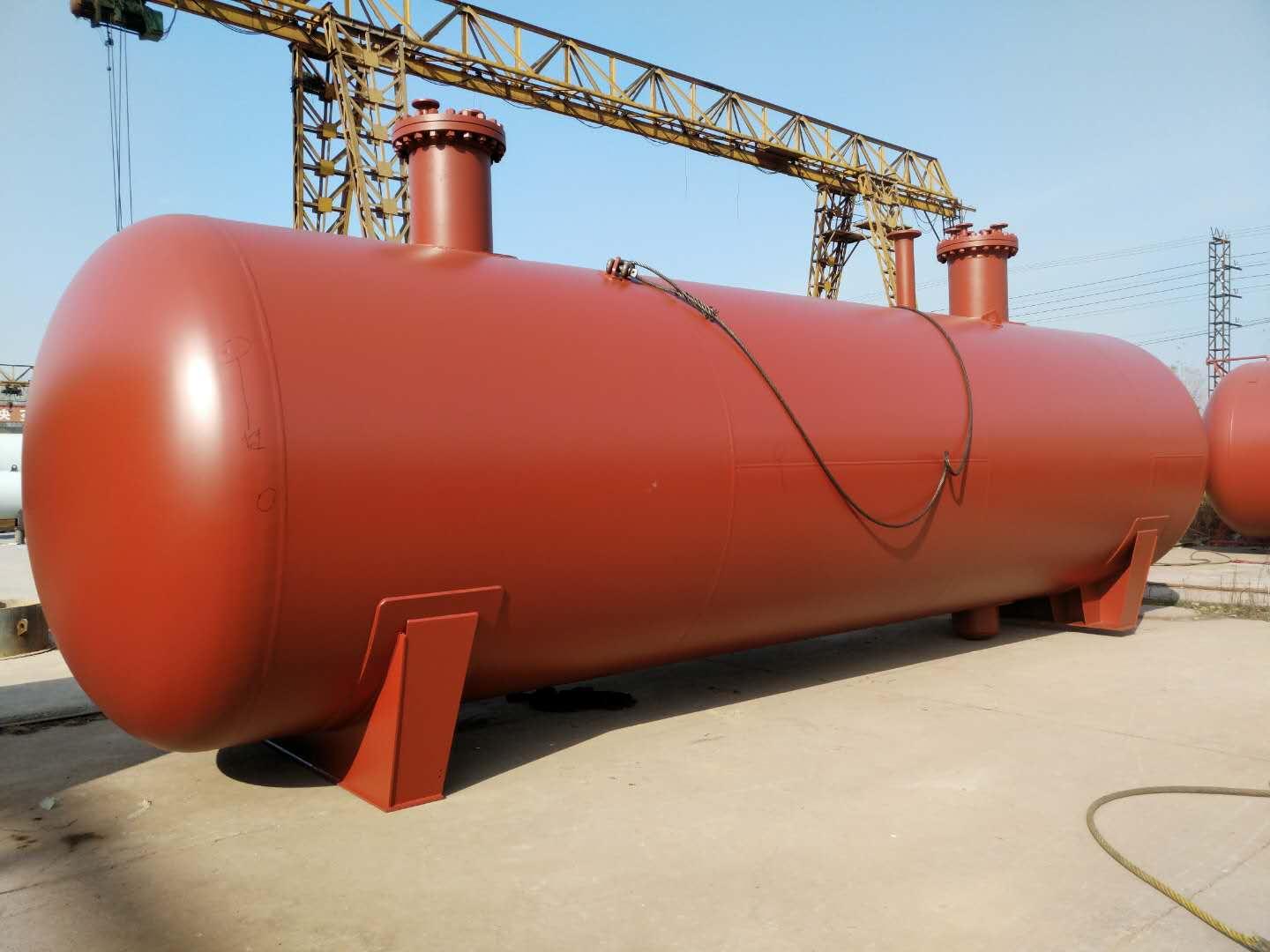
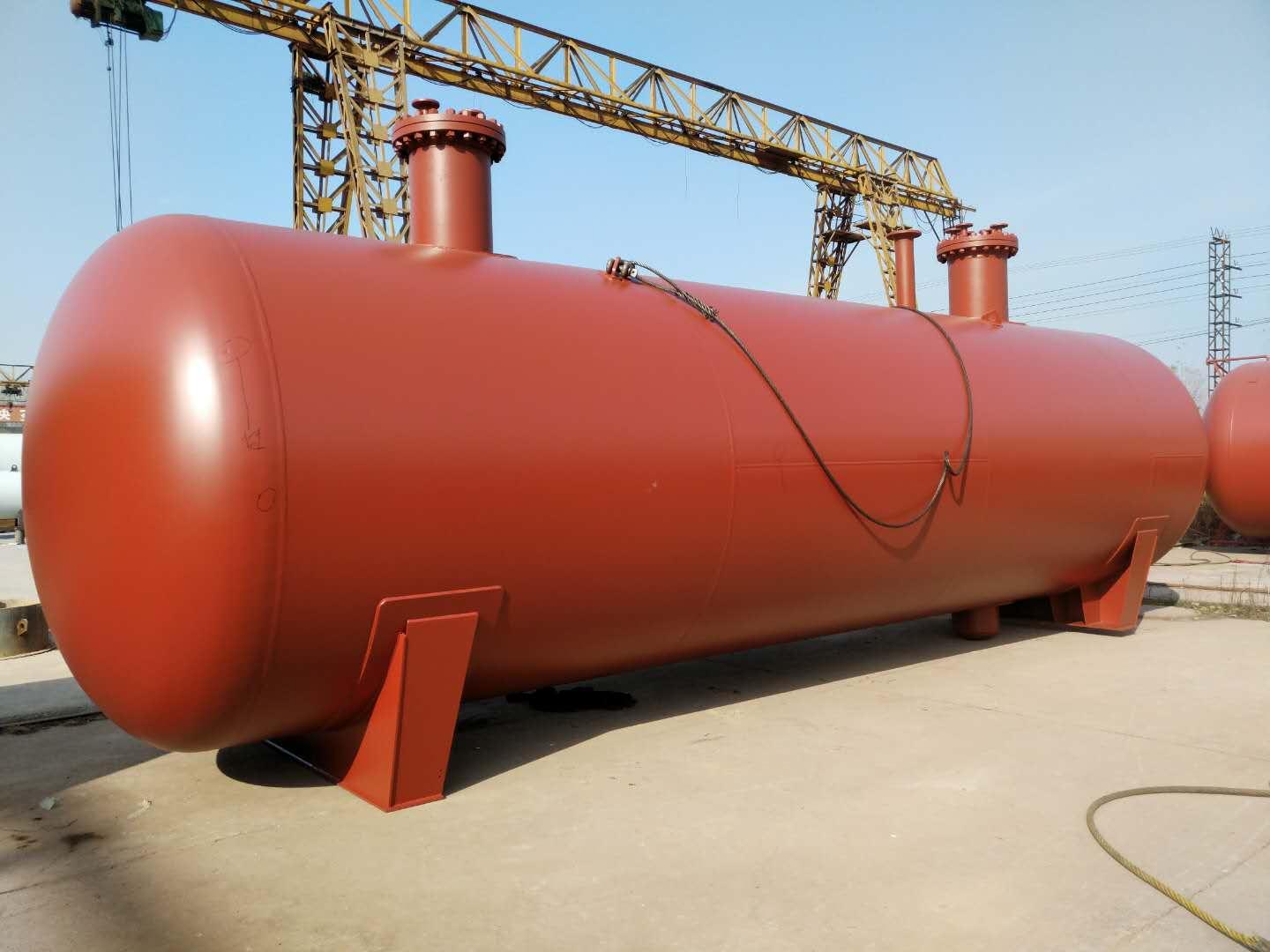
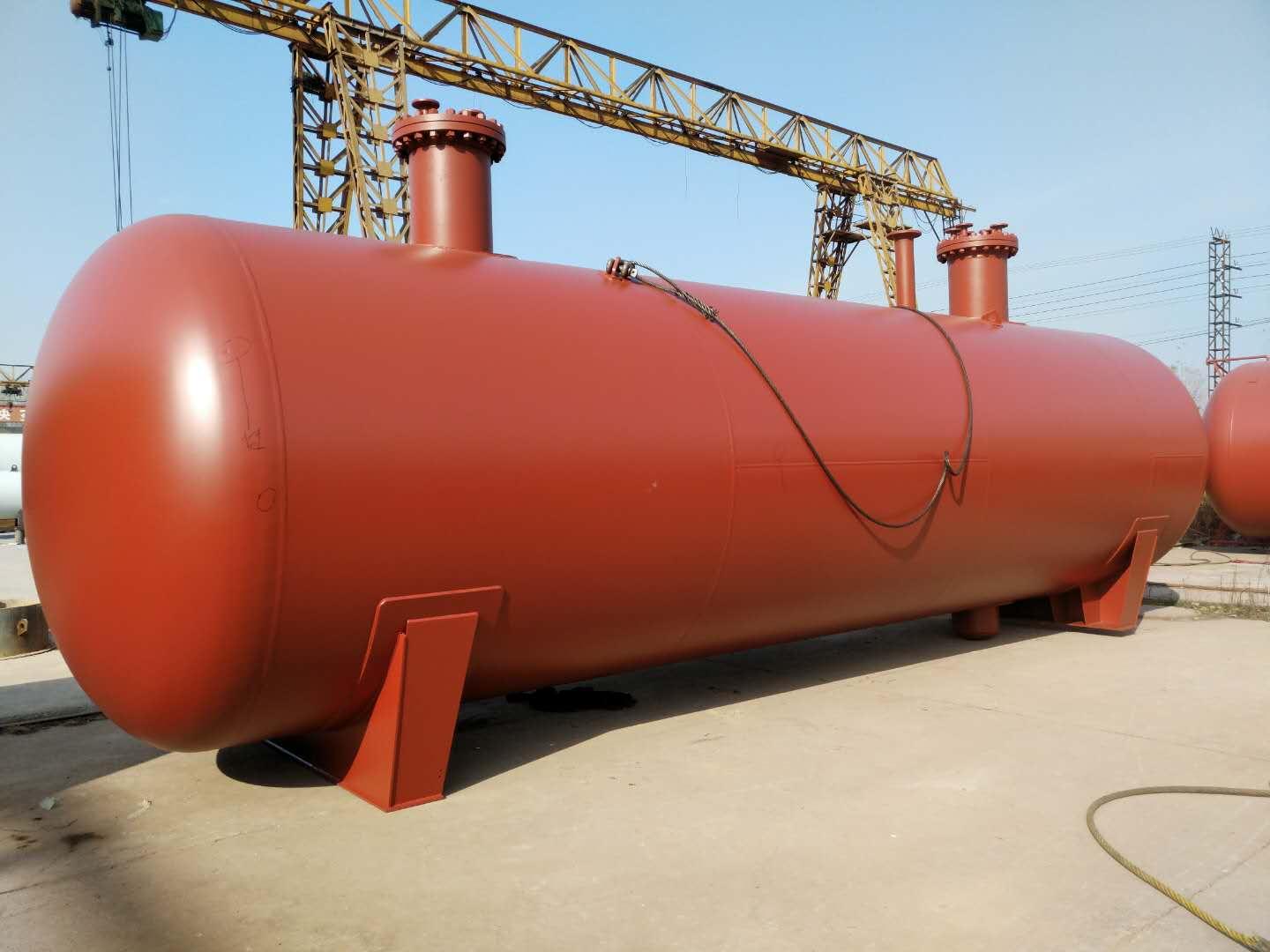
Storage tanks, including LPG tanks, anhydrous ammonia tanks, liquid chlorine tanks, propane tanks, pentane tanks, and low-temperature storage tanks like liquid oxygen and nitrogen, are among our key products. Especially, our LPG tanks have been produced in bulk with continuous production lines, offering a variety of models in stock.
Table of Performance Parameters for Class III Storage Tanks
Tank Type Product Model Effective Volume m3 Working Pressure MPa Dimensions mm
LPG Storage Tank
[On the ground]
WG 1.77-1400-551.77DN1400×2750
WG 1.77-1400-10101.77DN1400×5980
WG 1.77-1600-10101.77DN1600×4400
WG 1.77-2000-20201.77DN2000×5650
WG 1.77-2200-25251.77DN2200×5800
WG 1.77-2200-30301.77DN2200×7100
WG 1.77-2600-40401.77DN2600×6600
WG 1.77-2600-50(B)501.77DN2600×8500
WG 1.77-2600-60601.77DN2600×10360
WG 1.77-3000-1001001.77DN3000×13200
WG 1.77-3600-1201201.77DN3600×10500
WG 1.77-3600-1501501.77DN3600×13500
WG 1.77-3800-2002001.77DN3800×16300
LPG Storage Tank
[Underground]
WDG 1.77-1400-551.77DN1400×2750
WDG 1.77-1600-10101.77DN1600×4400
WDG 1.77-2200-25251.77DN2200×5770
WDG 1.77-2200-30301.77DN2200×7100
WDG 1.77-2600-50501.77DN2600×8500
WDG 1.77-2800-60601.77DN2800×8740
WDG 1.77-3000-1001001.77DN3000×13200
Supplies listed company He Guo brand LPG tanks ranging from 5 to 200 cubic meters


