


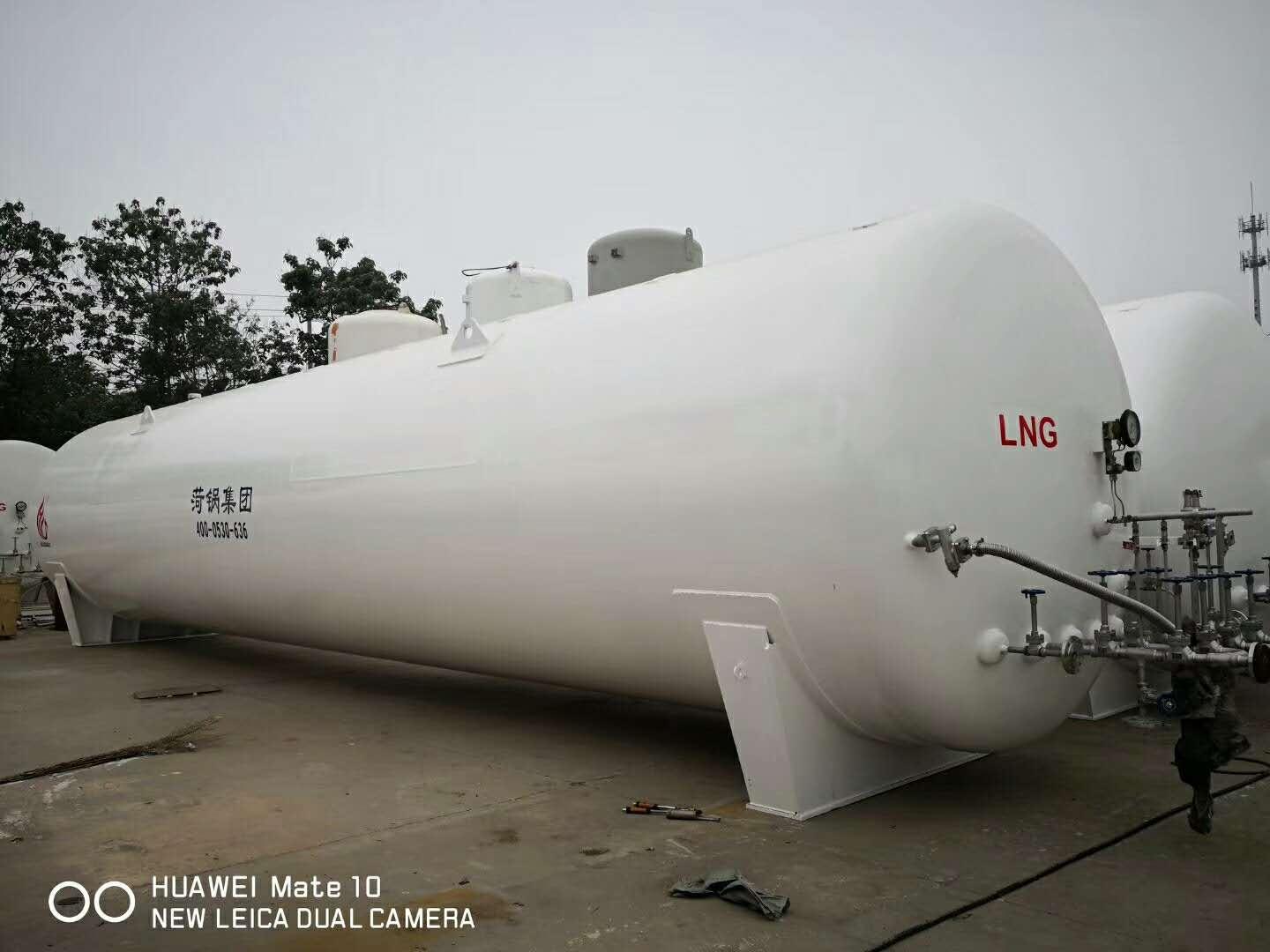

He Guo Group 60 cubic meter LNG storage tank price

60-cubic-meter LNG storage tank is a low-temperature insulated tank of vacuum powder insulation type. Its structure consists of an inner container and an outer container forming a double-wall container. The materials used are austenitic stainless steel, with the outer container material selected as Q235-B or 16MnR based on the user's location. The space between the inner and outer containers is filled with insulating material pumice and vacuumed. The insulating material is filled with pumice in a heated state and vacuumed.
60-cubic-meter LNG Storage Tank - Application Range for Liquefied Natural Gas Storage
Our products are suitable for industries such as steel, metallurgy, construction, chemicals, pharmaceuticals, food, glass, civil, and medical, and help reduce gas consumption costs. They are the preferred liquid gas storage containers across various industries.
Product Features of Liquefied Natural Gas Tanks
1. LNG Storage Tank Models: Vertical and Horizontal
2. Tank Effective Volume: 2m3-100m3 (Common volumes include 2m3, 3m3, 5m3, 10m3, 15m3, 20m3, 30m3, 50m3, 100m3) and can be customized according to customer requirements.
3. Working Pressure: ≥0.2 MPa (common pressures include 0.8 MPa, 1.6 MPa)
4. Storage Media: Liquid Oxygen (LOX), Liquid Nitrogen (LIN), Liquid Argon (LAr), Liquid Carbon Dioxide (LCO2), Liquefied Natural Gas (LNG), etc.
Design Pressure: 0.84 Mpa, 1.68 Mpa; Working Pressure: 0.8 Mpa, 1.6 Mpa
High impact resistance and strong shock absorption.
60 cubic meter LNG storage tank development
With the development of the gas and natural gas industries, the application of liquefied natural gas (LNG) storage tanks has become increasingly widespread. In addition to large-scale LNG facilities and LNG receiving terminals, which are equipped with large and extra-large horizontal low-temperature storage tanks, air separation units, small and medium-sized LNG facilities, LNG storage and distribution stations, and LNG gasification stations generally utilize small and medium-sized horizontal low-temperature storage tanks, with capacities typically below 10,000 cubic meters. As the core equipment of these units, the selection of the tank type significantly impacts the overall cost and operating expenses of the facility. Choosing the appropriate type of horizontal low-temperature storage tank to meet the installation requirements is therefore of paramount importance.
Liquefied Natural Gas (LNG) Storage Vessel Capacity and Applicable Scenarios
1. 60 cubic meter LNG storage tank with vacuum powder insulation, available in sizes from 5 to 200 cubic meters. Suitable for residential and industrial gasification stations, LNG refueling stations, small mobile liquefaction units, and refrigerant storage.
2. Mother-and-child horizontal low-temperature storage tanks, ranging from 300 to 5,000 cubic meters, suitable for small liquefaction units, air separation units, civil gasification stations, industrial gasification stations, and LNG gasification stations, etc.
3. Horizontal and Vertical Low-Temperature Storage Tanks, 100~10,000 cubic meters, suitable for medium and small-scale liquefaction plants, peak-shaving liquefaction plants, air separation units, LNG storage and distribution stations, LNG gasification stations, etc.
4. Vertical flat-bottomed cylindrical storage tanks, ranging from 200 to 200,000 cubic meters, suitable for various liquefaction units, LNG storage and distribution stations, LNG gasification stations, air separation units, liquid hydrocarbon storage, and coastal LNG receiving stations.
Vacuum powder insulation storage tanks consist of an inner cylinder and an outer cylinder, with the annular space insulated using vacuum powder insulation technology. Due to transportation constraints, the maximum tank capacity is currently 200 m³, and they are commonly used for storing smaller liquid volumes.
When the liquid storage capacity exceeds 200 m³, a 60-cubic-meter LNG storage tank can be connected in parallel to form a cluster tank using multiple vacuum powder insulating storage tanks. When the storage capacity exceeds 1500 m³, it is advisable to use a horizontal sub-parent storage tank (shortened to sub-parent tank), which, compared to the cluster tank, offers advantages such as fewer site equipment, lower investment, convenient operation and maintenance, and safety and reliability. The sub-parent tank is composed of multiple (more than 3) sub-tanks in parallel to form the inner tank, and assembled into a large outer tank (parent tank). The sub-parent tank is also limited by transportation and lifting conditions, with a maximum single tank capacity of 250 m³ and a total capacity of up to 5000 m³. When the storage capacity exceeds 200 m³, spherical horizontal low-temperature storage tanks and vertical flat-bottomed horizontal low-temperature storage tanks can also be chosen. When the storage capacity exceeds 10,000 m³, horizontal flat-bottomed cylindrical low-temperature storage tanks are more commonly used. During the actual selection process, when the storage capacity is less than or equal to 200 m³, a vacuum powder insulating storage tank with mature manufacturing and installation technology is chosen for the 60-cubic-meter LNG storage tank.
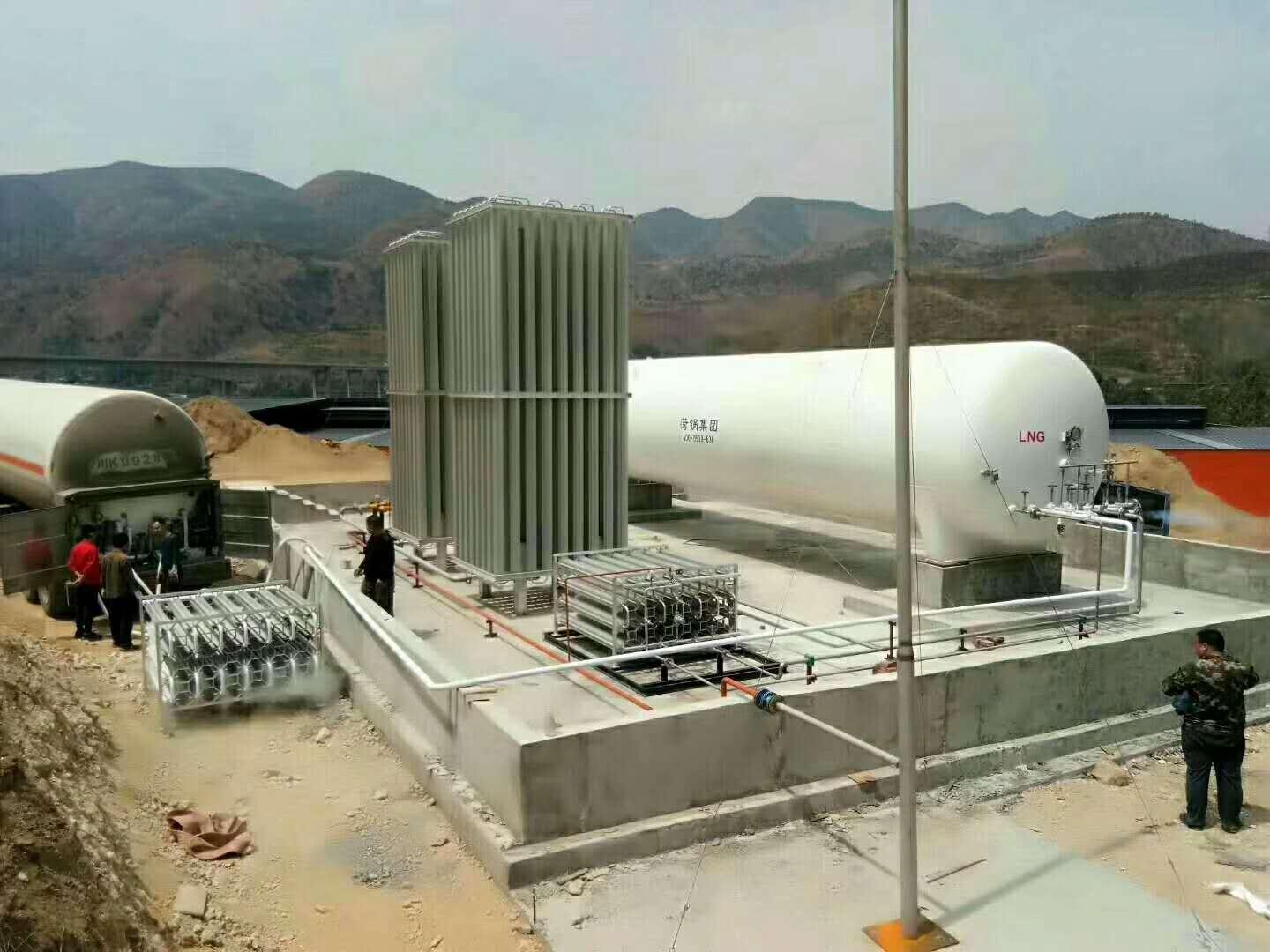
Low-temperature storage tanks are primarily used in the industrial gas sector, which has a wide range of applications. These include steel mills, chemical industry, oil, food, and aerospace, all of which require gases. Industrial needs for large quantities of oxygen, nitrogen, argon, and other gases are met by air separation equipment, which compresses and liquefies air, then separates it based on the different boiling points of oxygen, nitrogen, and argon, before storing it in low-temperature storage vessels.
The company has two sandblasting rooms, all tanks are treated with pneumatic steel shot sandblasting for rust removal, ensuring both the surface quality and paint quality. (After the overall sandblasting, the paint adhesion is enhanced, significantly extending the lifespan of the paint.)
Each unit undergoes hydrostatic testing to ensure equipment strength safety; each unit is tested for air tightness to guarantee sealing performance. After hydrostatic testing, the internal air is blown clean; and plastic covers are used to seal all pipe openings to prevent secondary contamination from the outside.
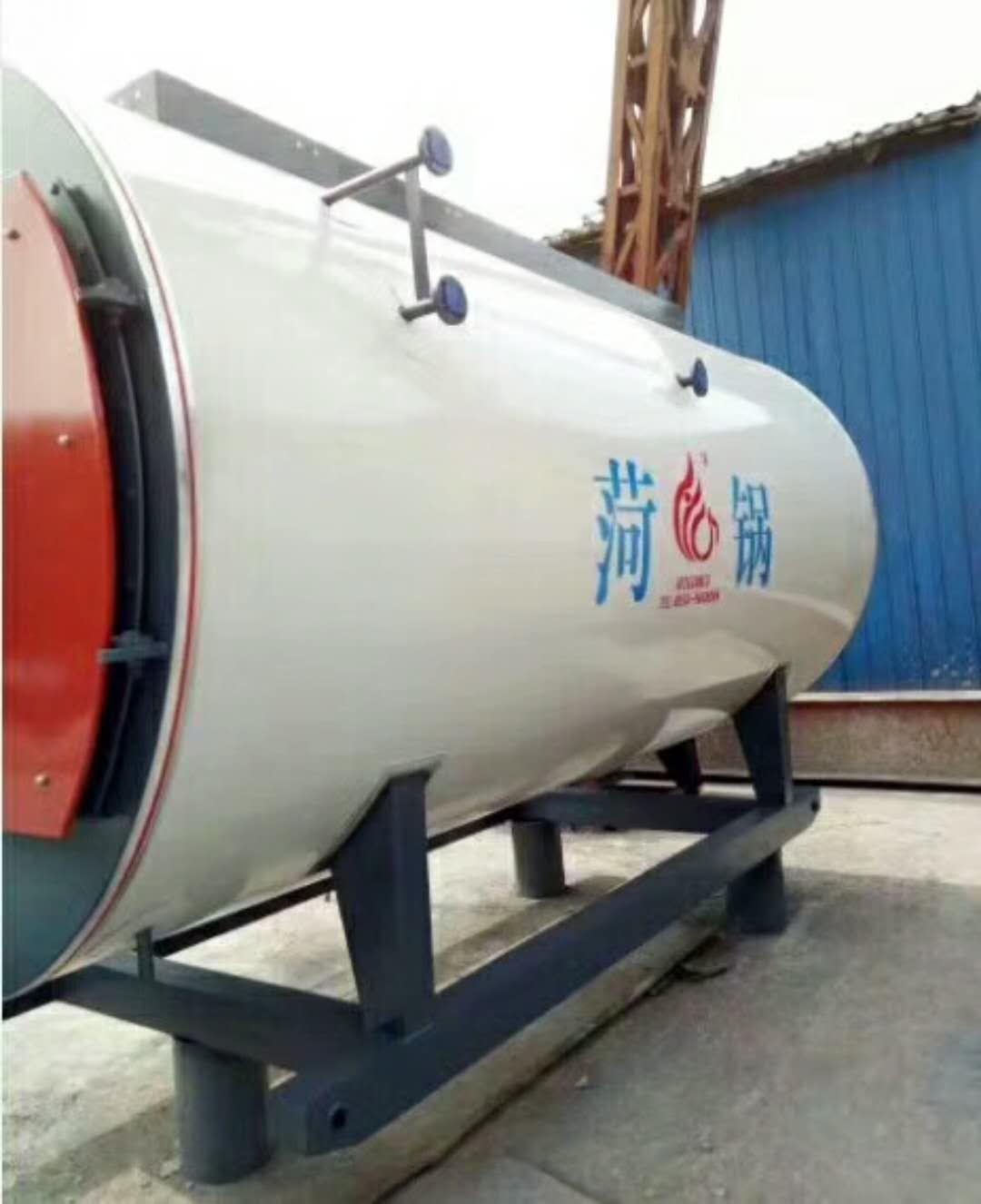
Heze Boiler Factory Co., Ltd.'s Pressure Vessel Division primarily produces 5-200 cubic meter liquefied gas storage tanks, liquid ammonia tanks, etc. The series of liquefied petroleum gas storage tanks are designed, manufactured, and inspected in strict accordance with the GB150-2011 standard, utilizing Q345R steel plates specifically for pressure vessels. The entire tank is rolled using CNC coiling equipment and焊接 with automatic gas shielded welding technology, ensuring strong and aesthetically pleasing welds. After undergoing heat treatment in an overall annealing furnace, the internal stress of the tank is better eliminated, enhancing the material's toughness and hardness, offering superior results compared to resistance wire heat treatment. The liquefied gas storage tanks undergo 100% X-ray inspection to ensure the steel plates and welds meet technical requirements. High-pressure jet shot peening is used for rust removal, providing much better results than manual or sandpaper grinding. Then, coated with four layers of paint—two anti-rust and two topcoats—the tanks ensure long-term use without the need for repainting. Each tank is inspected and certified by the Quality and Technical Supervision Bureau before shipment, making it universally applicable nationwide.


