


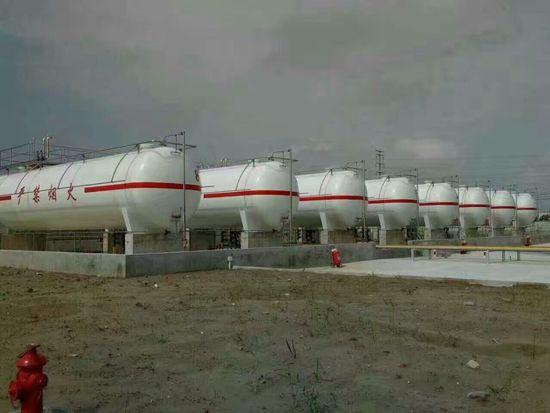
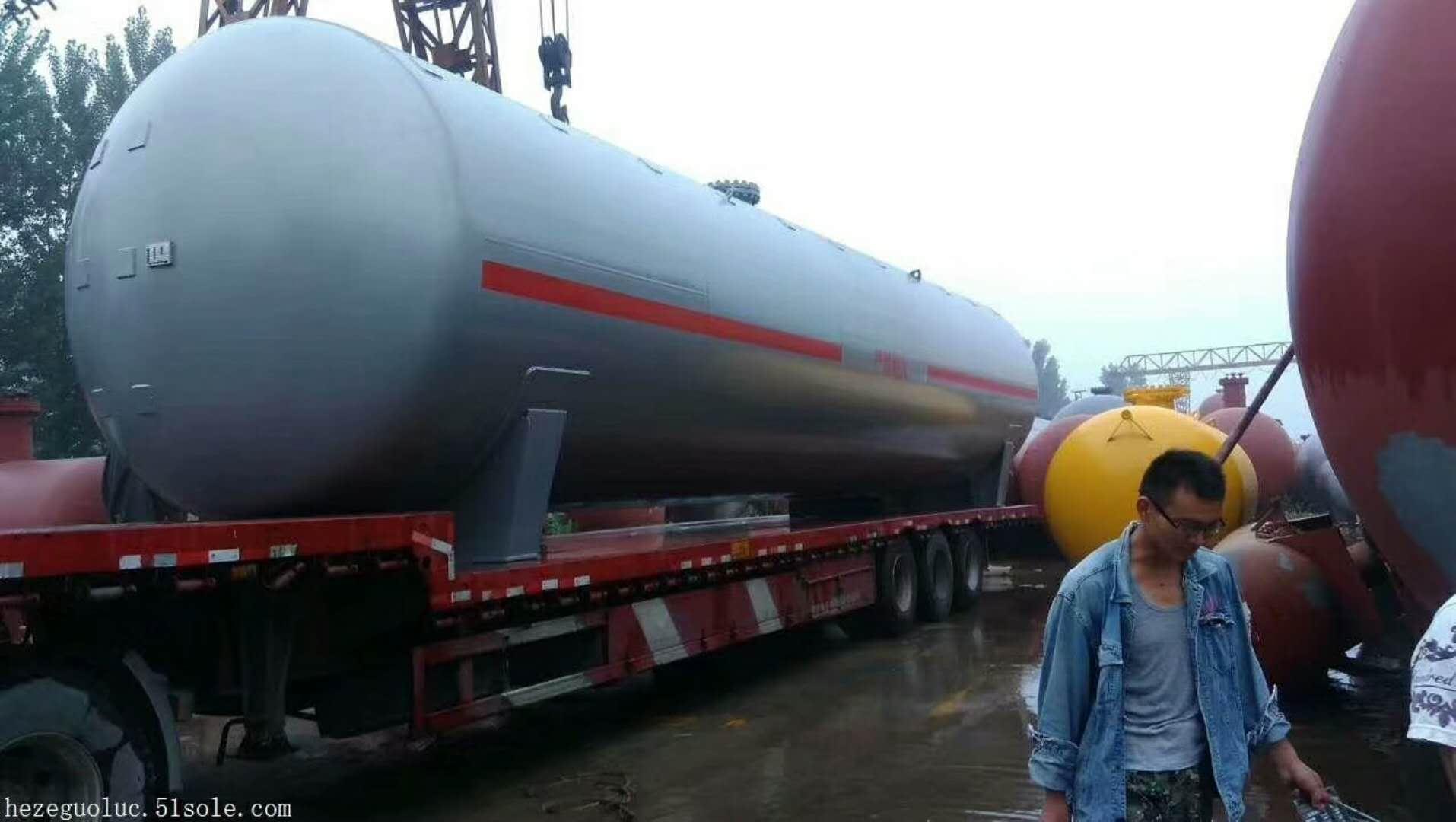
Attachment: Safety valves and pressure gauges must be rigorously inspected. It is mandatory to report for inspection to the local quality supervision and inspection authority. This ensures better usage for the customers. If the pressure gauge fails, you won't know the exact pressure your terminal uses, and you can't use it with peace of mind, fearing issues with the liquefied gas storage tank. Both the air compressor and the storage tank itself have safety valves. When pressure exceeds the safe setting of the safety valve, it will automatically release pressure, and the pressure gauge plays a significant role. Therefore, all components of special equipment must be used with caution daily. In case of any issues, first confirm if the steel plate thickness of the storage tank meets the standards, and if not, determine the cause of the steel plate corrosion. Then, reconfirm if the safety valves, pressure gauges, and other auxiliary equipment meet the requirements. If all are found to be不合格, the local technical supervision bureau of the enterprise issues an inspection不合格 notice, and the enterprise is to replace the new pressure vessel upon receiving the notice.

Use Instructions
1. Cylinders must be stored in well-ventilated areas, with a minimum distance of 1.5 meters from any fire or heat source. Cylinders should never be heated with fire, boiled in water, or exposed to direct sunlight. Regularly inspect the gas valves and pipeline joints for leaks, ensuring no gas escapes. Typically, soap and water are used to detect leaks; open flames for testing are strictly prohibited.
2. When lighting the device, ignite the primer first, followed by opening the gas; do not reverse the order. Always have someone supervising during use and do not leave it unattended to prevent boiling water from overflowing and extinguishing the flame, which could lead to a gas leak and explosion. After use, ensure the valve is tightly closed to prevent gas leakage.
3. The liquefied gas inside the cylinder should not be completely depleted; a certain residual pressure must be maintained. The residual pressure should generally be greater than 49.03 kPa (i.e., 0.5 kg/cm², gauge pressure) to prevent air from entering the cylinder. After the liquefied petroleum gas is used up, the remaining residue inside the cylinder is also a flammable substance and should not be poured out arbitrarily to avoid fires caused by the residue's flow and evaporation.
4、Liquefied Petroleum GasCylinder bottles are pressurized containers that require proper maintenance and regular inspections. During handling and use, they must be prevented from falling or colliding. It is forbidden to use metal tools to敲击 open the valve, and they should be protected from direct sunlight and prolonged exposure to rain. Cylinder bottles are typically inspected every 2 years.
5、PetroleumThe explosion range of liquefied gas is not very wide, but due to its low limit, it is easily ignited and explodes upon leakage. Moreover, since LPG is heavier than air, it tends to flow downward in the air, accumulating in low-lying areas and posing a hidden danger of gas explosions. Therefore, in areas prone to gas leakage, relying solely on window ventilation is insufficient; attention must also be given to adequate ventilation at the lower level.
6. When液化 gas is detected indoors, immediately open windows and doors for ventilation, allowing it to disperse in the direction away from any open flame. Prohibit any fire nearby until the fault is resolved and the distinctive odor dissipates before use. Dispose of any leaked liquid on the ground by covering it with sand and soil before removing it to a safe location. In case of a gas cylinder fire, promptly close the valve, move it to an open area outdoors, and extinguish the fire using dry powder extinguishers, carbon dioxide extinguishers, or by covering it with a wet sack.
7. Educate children not to tamper with gas cylinders carelessly, and users must be aware of the safety knowledge for using gas cylinders.


