Product Description
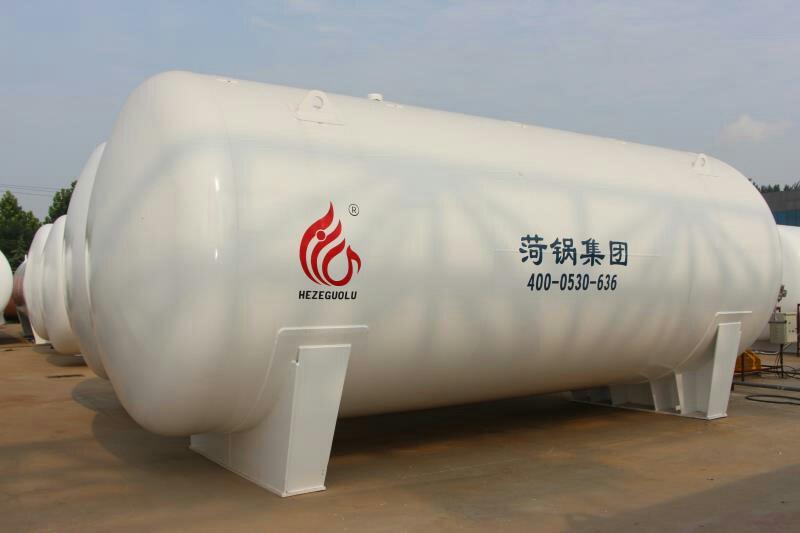
Brand Huoguo Group Model CFW-30/0.8
Material: Stainless Steel, Diameter: 2916mm
Application Range -162℃ Volume 30,000L
Heat Exchange Area - See drawing m², Environmental Temperature - See drawing °C
Wall Thickness: 8/10mm, Dimensions: 2916*8289mm
Origin: Shandong Heze
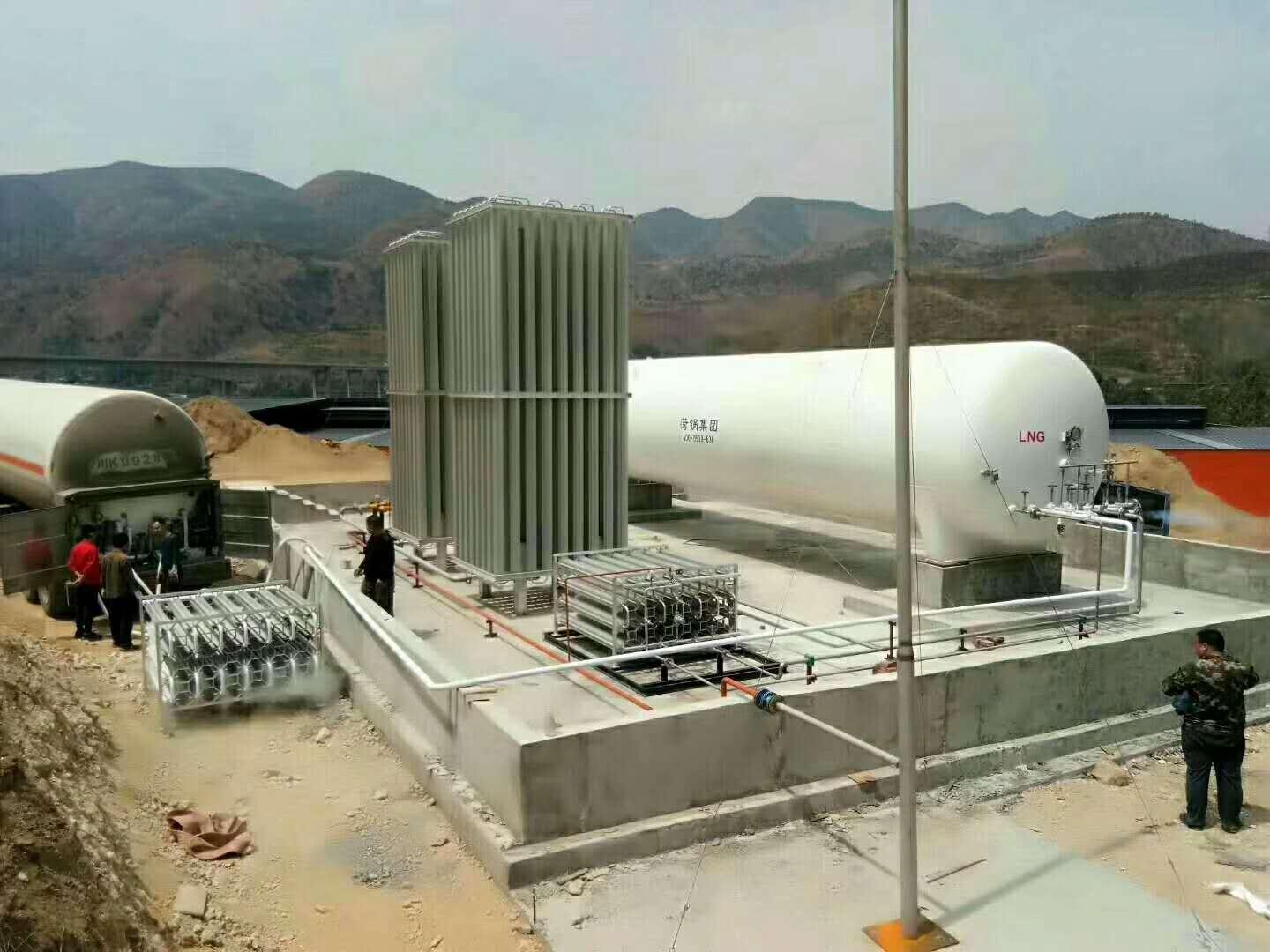
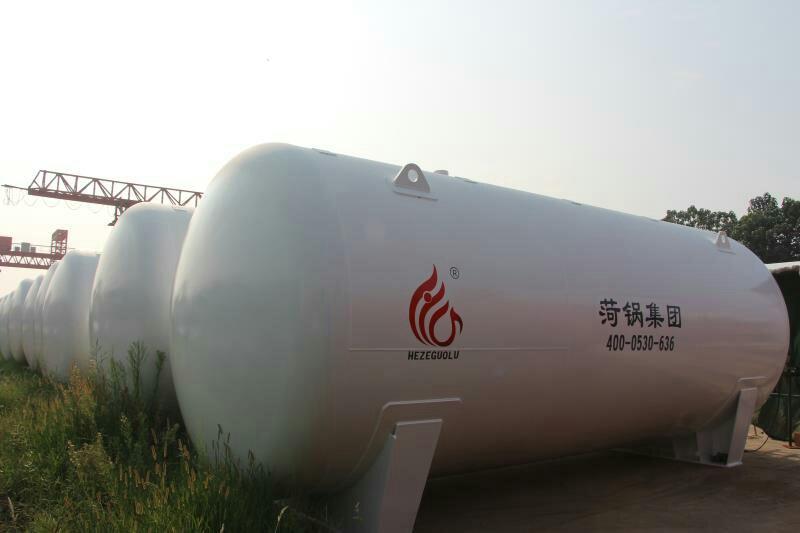
Horizontal LNG Tank 30 Cubic Meter LNG Tank 60 Cubic Meter LNG Tank 100 Cubic Meter Natural Gas Tank

The low-temperature LNG storage tank is a double-layer structure, with the inner tank storing low-temperature natural gas liquid, withstanding the pressure and low temperatures of the medium. The material of the inner tank is SS30408. The outer shell serves as a protective layer for the inner tank, maintaining a certain gap to form an insulating space, bearing the gravity loads of the inner tank and the medium, as well as the vacuum negative pressure of the insulating layer. The outer shell does not come into contact with the low temperature and is made of container steel. The insulating layer is mostly filled with mica sand and high vacuum is drawn. The evaporation rate of the low-temperature LNG storage tank is generally less than 0.2%.

Low-Temperature LNG Storage Tank Structural Design
1.1 Liquid Filling System
The filling is divided into upper filling and lower filling, with a quick connector CN-1 and a four-way connector connecting to the upper filling valve V3 and the lower filling valve V2, respectively, with pipes and transition connectors leading to the inner cylinder.
Tubes are selected in sizes φ28×2 and φ45×3.5.
1.2 Drainage System
The V6 valve can be directly drained from the bottom of the cylinder; the pipes are selected in φ45×3.5. The V6 is chosen with 32gDA25C, with a specification of DN40 PN4.0.
1.3 Vacuum Measurement System
VR vacuum silicon tube, used to measure the vacuum degree of the tank's insulation layer, connected to the evacuation pipe of the insulation layer. The insulation layer should be re-evacuated when the vacuum degree of the vacuum layer exceeds 3Pa, to ensure the vacuum degree of the insulation layer and enhance the insulation effect.
1.4 Vacuum Insulation Panel System
VV vacuum vent, selects CF-40 with DN 40, used for vacuuming, closes VV when the vacuum level reaches the required standard, maintaining the interlayer vacuum.
1.5 Level Measurement System
Two pipes are extended from the upper and lower parts of the cylinder, with the top being the gas phase and the bottom the liquid phase, connected by a level gauge valve. The L1 level gauge valve PS×Z-1 connects to a pressure gauge valve and pressure gauge, with the liquid level range of 0 to 6 meters of water column.
1.6 Full Mouth Measurement
The pipeline is installed based on the set liquid level. When the liquid level reaches the set value, it flows downward through the pipe to the level gauge valve MV. When filling, this valve opens until liquid starts to flow out, indicating the tank is full. Close the valve. Use a 32gDA10C valve, specification: DN20 PN4.0.
1.7 Self-pressurizing System
The pressure booster valve V1 is connected to the supercharger PBC-1, which uses the CFB03-00. It vaporizes a portion of the liquid flowing down from the tank, then introduces it into the inner tank, raising the tank's pressure and expelling the liquid under pressure.
1.8 Gas Venting System
When the pressure at the top of the container increases, gas is expelled through the pipeline and passes through the vent valve E1, then to a one-way valve CV. Since gas can only flow outward, a one-way valve is used to prevent backflow. A flame arrester is then connected because the release of gas and contact with air may cause sparks. The flame arrester is designed to prevent sparks from entering the inner tank with the gas, which could ignite and cause an explosion.

Horizontal LNG Storage Tank 30 Cubic LNG Storage Tank 60 Cubic LNG Storage Tank 100 Cubic Natural Gas Storage Tank

Export 30 Cubic Meter LNG Tanks, Manufacturer Supplies 5-150 Cubic Meter LNG Tanks
LNG stands for Liquefied Natural Gas. It is a combustible gas naturally extracted from gas fields, primarily composed of methane. LNG is produced by cooling gaseous natural gas to -162°C under atmospheric pressure, causing it to condense into a liquid. Liquefying natural gas significantly reduces storage and transportation space and costs, and it boasts high calorific value and superior performance.
LNG is a clean and efficient energy source. Importing LNG helps energy-consuming countries achieve energy supply diversification and ensure energy security, while exporting LNG aids natural gas-producing countries in effectively developing their natural gas resources, increasing foreign exchange earnings, and boosting national economic development. As a result, LNG trade is emerging as a new hot spot in the global energy market.

Overview of Liquid Low-Temperature Storage Tanks and LNG Storage Tanks
With the rapid development of the national economy and the widespread adoption of low-temperature technology, the application of low-temperature liquids has become increasingly widespread, including liquid hydrogen, liquid oxygen, liquid nitrogen, liquid argon, liquid helium, and liquefied natural gas. The production, application, and research of low-temperature liquids all require storage and transportation of these liquids. Many important scientific research projects must be conducted under low-temperature conditions. The demand for low-temperature storage and transportation containers is growing across various industries, particularly in industrial, agricultural, defense research, and medical fields.
Due to the low boiling point and small latent heat of vaporization of low-temperature liquids, a significant cost is incurred to obtain low-temperature liquefied gases. Therefore, the effective storage and transportation of low-temperature liquids hold significant economic value. In the application of low-temperature technology, the following situations often arise:
(1) Centralized production followed by distribution to various users, such as the centralized production and distribution of liquid oxygen, liquid nitrogen, liquid argon, liquefied natural gas, liquefied petroleum gas, and liquid helium.
(2) Products produced for short-term use are intended for long-term application, such as the case where many research and medical units have their own liquid oxygen generators to produce liquid oxygen.
(3) Production over an extended period, suitable for short-term, large-scale concentrated use, such as for large-scale low-temperature tests or rocket launches, involves providing liquid helium, liquid hydrogen, liquid oxygen, and liquid nitrogen in this manner.
To accommodate the above situations, effective storage and transportation of low-temperature liquids are essential. For departments using gases, liquid transportation is also relatively economical. For instance, a 3650 L liquid oxygen storage tank can store liquid oxygen weighing no more than 1250 kg, whereas gas transportation would require 500 steel cylinders, weighing 35500 kg. Similarly, a 175L liquid oxygen tank with an evaporator, mounted on a small cart, is convenient to transport and can replace 20 oxygen cylinders for welding. In summary, almost all applications involving low temperatures rely on the storage and transportation of low-temperature liquids, as well as the equipment used for such storage. Therefore, the storage and transportation of low-temperature liquids are fundamental to cryogenic engineering and have been one of the fastest-growing technologies in the field of cryogenics over the past 30 years.

Export 30 Cubic Meters LNG Storage Tanks, Manufacturer Supplies 5-150 Cubic Meters LNG Storage Tanks