


Product Description
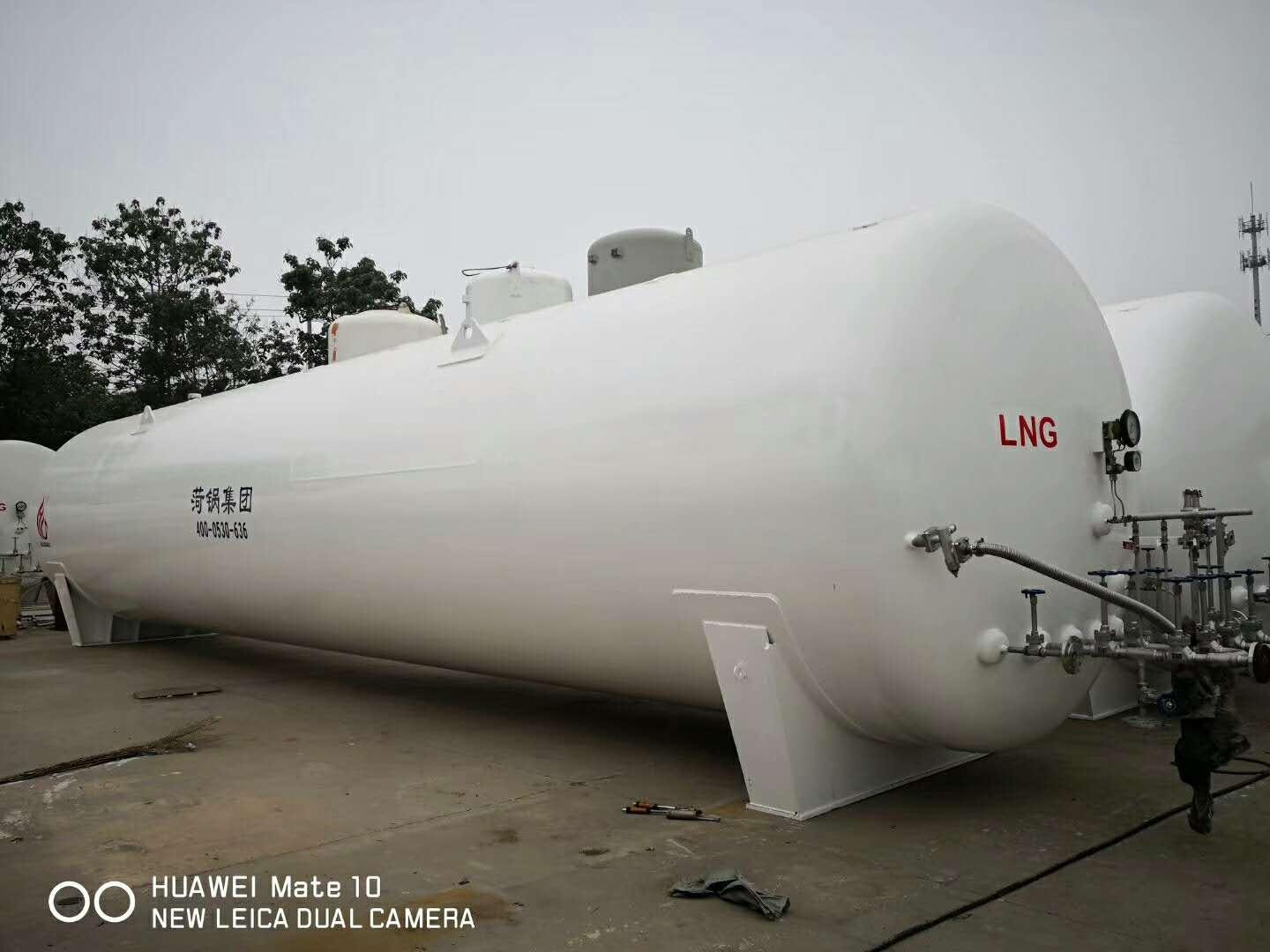
Brand Huoguo Group Model CFW-100/0.8
Material: Stainless Steel, Diameter: 3400mm
Application Range: -162℃; Volume: 100,000L
Heat Exchange Area See drawing sq. m Ambient Temperature See drawing °C
Wall Thickness: 10/12mm, Outer Dimensions: 3424*16442mm
Origin: Shandong Heze

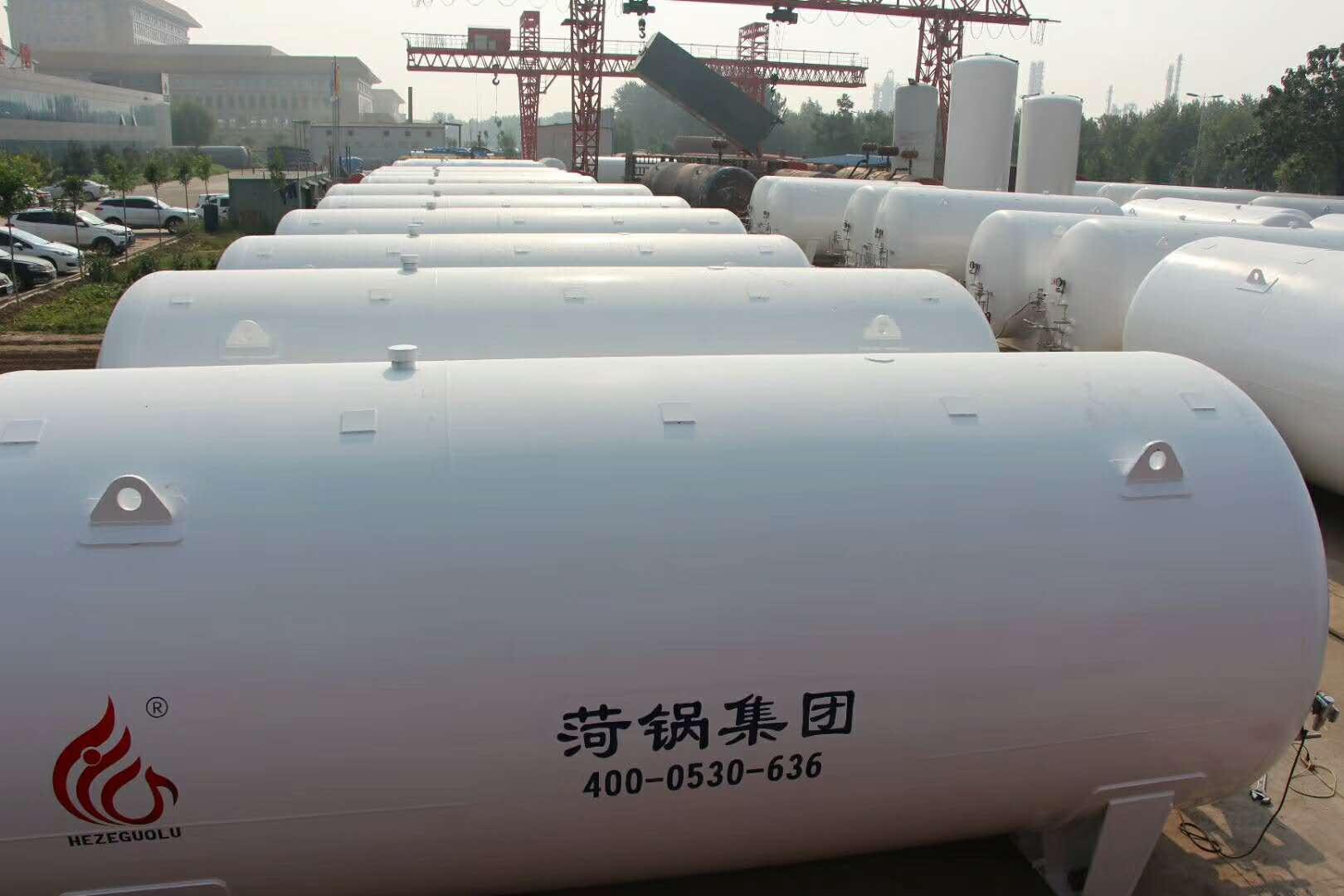
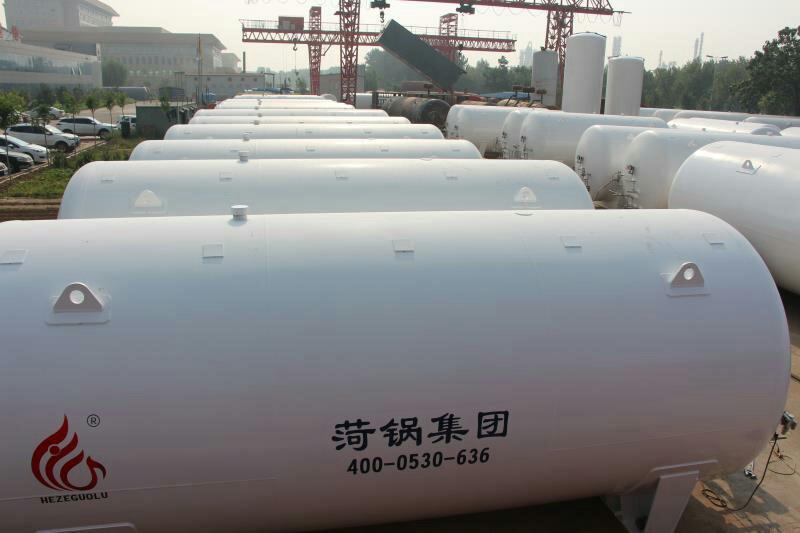
60 Cubic Meters LNG Tank Price 30 Cubic Meter to 60 Cubic Meter LNG Tanks Provided by Factory
3. LNG Tank Fault Inspection and Handling 3.1 Daily Inspection
3.1.1 Level gauges and pressure gauges are functioning properly.
3.1.2 Are the shut-off valves, regulating valves, and safety valves in normal working condition?
3.1.3 Tank, pipelines, and valves for any leaks.
3.2 Regular Inspections
3.2.1 Pressure gauges should be calibrated annually and accompanied by a certification of inspection with a lead seal.
3.2.2 The safety valve should be calibrated annually and sealed with lead.
3.2.3 Liquid at low temperatures should be analyzed every three to six months as needed for operation.
3.3 Fault Handling
Occurred malfunction
Original Cause
Processing Measures
1. Abnormal inner cylinder pressure
(Raise or lower)
A pressure gauge distortion
B Tank Vacuum Reduced
Valve operation error
A pressure gauge
B Weight Vacuum Picked
C follows the manual's operation requirements
Level gauge distortion
Improper operation of the level gauge valve
The B level gauge is damaged.
Reoperate as per requirements
B Replace with New Level Gauge
3 External tank frosting
Vacuum Failure
B-laminate leakage
C Pearl-like Sand sinking
A vacuum-sealed again
B Pressure Test Leak Check and evacuate air
Please reinstall the pearl sand in the C balanced sandwich and then re-evacuate the vacuum.
Note:
1. If the user needs to evacuate or re-install pearlescent sand in the sandwich, they must first empty the inner cylinder liquid and wait until the inner cylinder returns to room temperature before proceeding.
2. Should users encounter difficult-to-handle issues, they may contact our after-sales service department promptly. We offer a three-package quality guarantee for our products. For products beyond the three-package period and non-company products, we also provide repair services.
4. Cautionary Notes
4.1 The vacuum valve is sealed before the product leaves the factory. After the storage tank is delivered to the customer's site, the customer must ensure to protect all pipeline valves during installation, particularly the vacuum valve, and strictly prohibit any collision or opening of the vacuum valve.
4.2 Do not empty the liquid in the storage tank unless it will be unused for a long period, as this may cause the inner cylinder to overheat, requiring re-cooling upon refilling and resulting in unnecessary losses.
4.3 Low-temperature liquid storage tanks can be used for storing liquid nitrogen, liquid oxygen, and liquid argon. However, when switching to another liquid, the original liquid must be completely drained and purged before refilling with the new liquid.
Note:
1. The measuring full valve opens when the liquid is nearly full, closes when liquid starts to flow, and stops the liquid intake. For the first liquid intake, it should be filled from the top first, followed by the bottom.
2. Open when disposing of residual liquid.
3. Release the vent valve when the container pressure is too high.
4. The container automatically opens when over-pressurized. Normally, only one is used. In case of a malfunction in the working one, the other is immediately activated to ensure the safe operation of the storage tank. The damaged safety valve is then repaired and calibrated, and promptly reassembled upon passing inspection.
5. The inner cylinder automatically starts upon opening the boost valve when an increase in pressure is required.
6. The level gauge is often turned off during normal operation.
7. Burst upon overpressure; must be replaced immediately if bursting occurs.

Natural Gas Storage Tank Pricing - 100 Cubic Horizontal LNG Storage Tank Direct from Manufacturer - Competitive Pricing, High Vacuum Level

Liquefied Natural Gas (LNG) Storage Vessel Capacity and Applications
1. 60-cubic-meter LNG vacuum powder-insulated storage tank, available in sizes from 5 to 200 cubic meters. Suitable for residential gasification stations, industrial gasification stations, LNG refueling stations, small skid-mounted liquefaction units, and refrigerant storage.
2. Mother-child horizontal low-temperature storage tanks, 300 to 5,000 cubic meters, suitable for small liquefaction units, air separation units, civil gasification stations, industrial gasification stations, and LNG gasification stations, etc.
3. Horizontal and Lying Low-Temperature Storage Tanks, 100~10,000 cubic meters, suitable for small and medium-sized liquefaction units, peak-shaving liquefaction units, air separation units, LNG storage and distribution stations, LNG gasification stations, etc.
4. Vertical flat-bottomed cylindrical storage tanks, ranging from 200 to 200,000 cubic meters, suitable for various liquefaction units, LNG storage and distribution stations, LNG regasification stations, air separation units, liquid hydrocarbon storage, and coastal LNG receiving stations.
Vacuum powder insulation storage tanks consist of an inner cylinder and an outer cylinder, with the annular space insulated using vacuum powder insulation technology. Due to transportation constraints, the maximum tank capacity is currently 200 m³, and they are commonly used for storing smaller liquid volumes.
When the liquid storage capacity exceeds 200m³, multiple vacuum powder-insulated storage tanks can be connected in parallel to form a cluster tank for a 60-cubic LNG storage tank. When the storage capacity surpasses 1500m³, it is advisable to use sub-mother horizontal low-temperature storage tanks (abbreviated as sub-mother tanks), which have the advantages of fewer on-site equipment, lower investment, convenient operation and maintenance, and safety reliability compared to cluster tanks. The sub-mother tank consists of multiple (three or more) sub-tanks in parallel to form the inner tank, and is assembled into one large outer tank (mother tank). The sub-mother tank is also limited by transportation and lifting conditions, with a maximum individual volume of 250m³ and a total maximum volume of 5000m³. When the storage capacity exceeds 200m³, spherical horizontal low-temperature storage tanks and vertical flat-bottomed horizontal low-temperature storage tanks can also be chosen. When the storage capacity exceeds 10,000m³, horizontal flat-bottomed vertical storage tanks are more commonly used. During the actual selection process, for storage capacities of 200m³ or less, vacuum powder-insulated storage tanks with mature manufacturing and installation technology are chosen for the 60-cubic LNG storage tank.


