


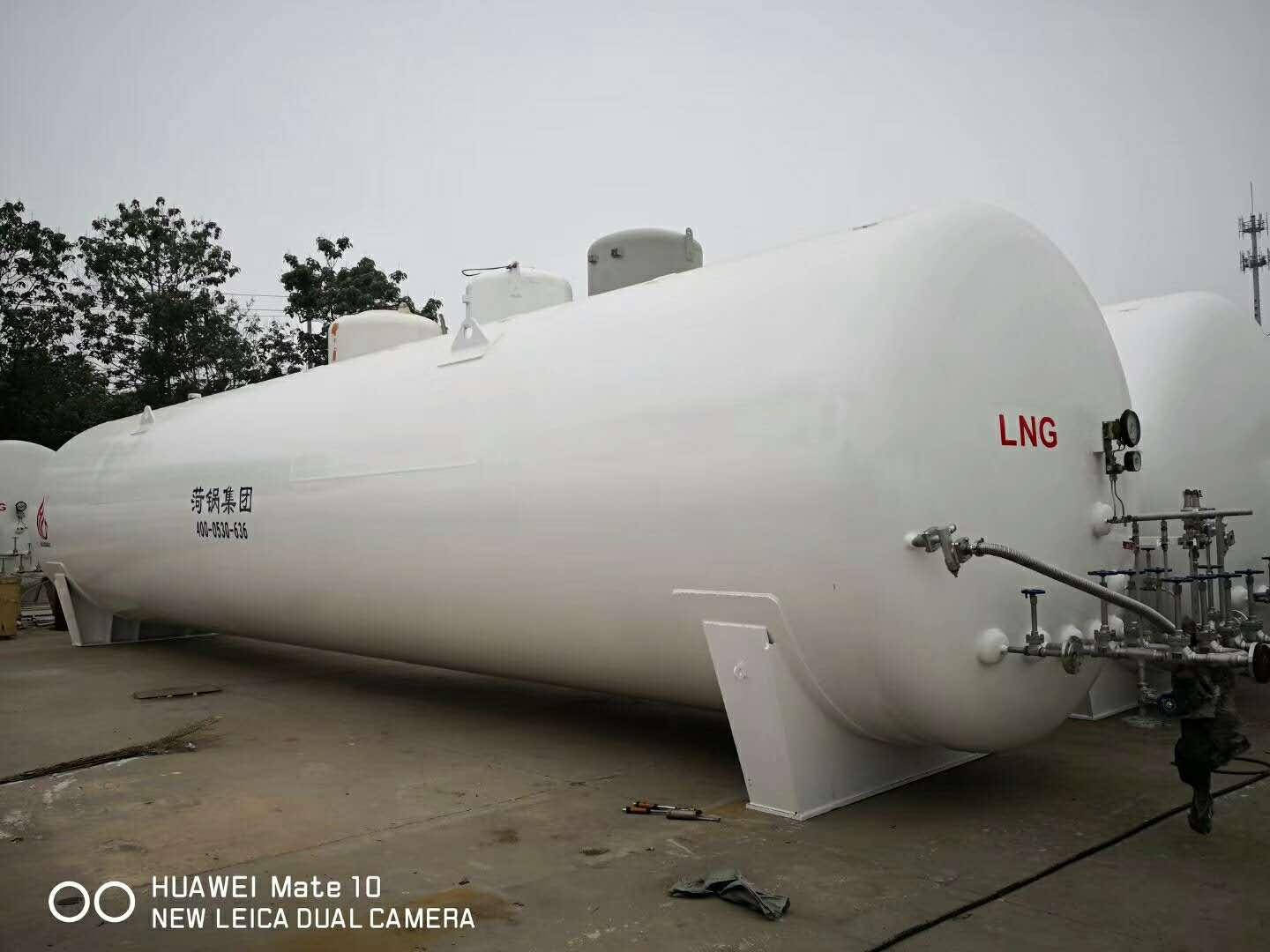
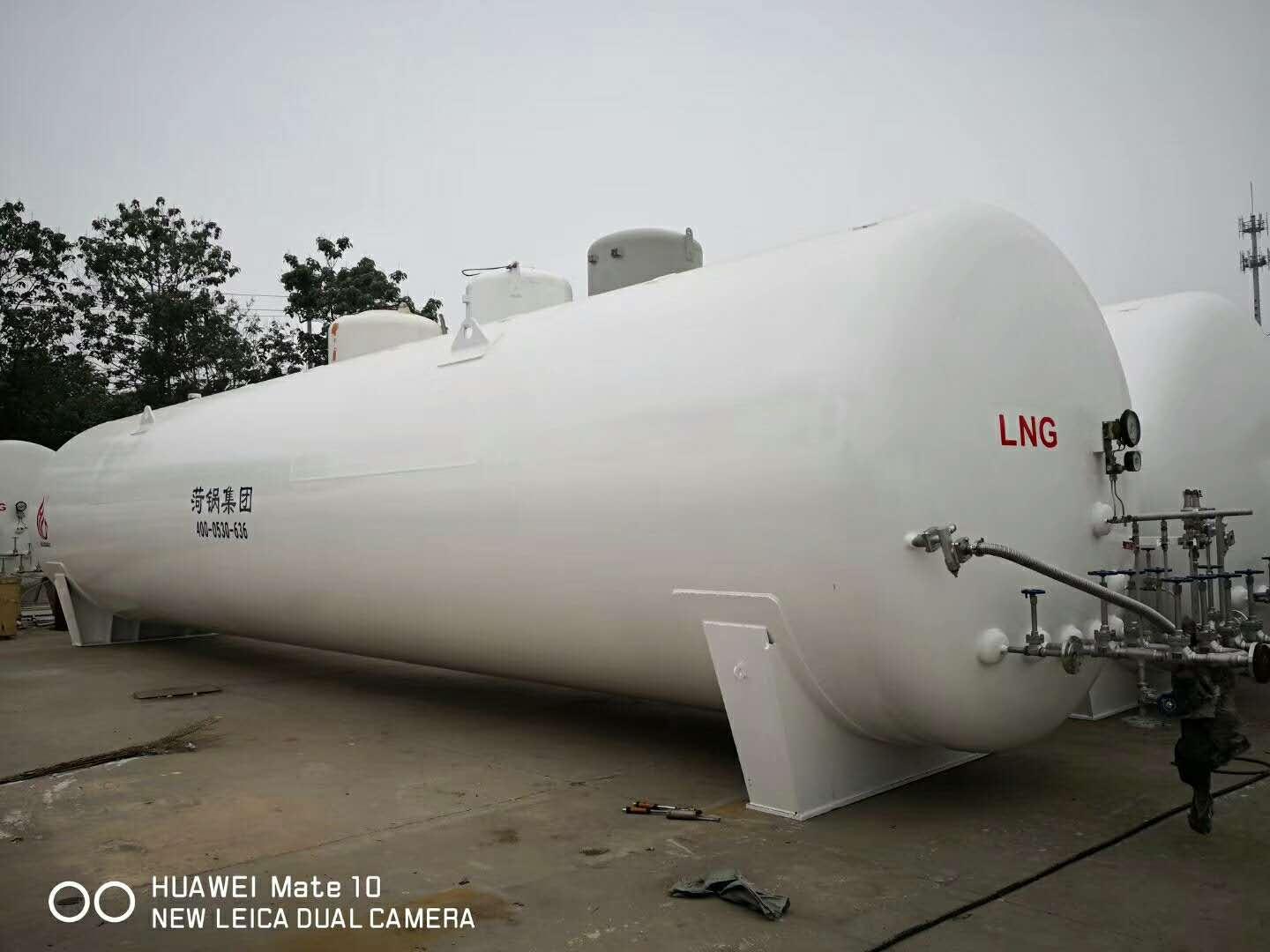
Low-temperature storage tank structure:
A low-temperature storage tank is a compact storage device for low-temperature liquids, fully equipped with accessories (valves, safety systems, etc.). The tank consists of a carbon steel vacuum shell and a pressure vessel inside it. It can operate under low to medium pressure as per actual design requirements. Blasting discs and double safety valves can protect the tank in case of excess pressure. The safety relief device is designed to protect the internal pressure vessel and vacuum shell, with its use and type determined by GB150 and the "Fixed Container Regulations." This includes a double safety relief valve and a bursting disc assembly for the internal pressure vessel protection, as well as a bursting cap for the vacuum shell (shell). The tank is designed and manufactured for safety, reliable operation, and durability (can operate without failure for years), and strict adherence to proper safety and operational regulations is required during tank operation.
High safety requirements. As the tank stores low-temperature liquids, in the event of an accident, the stored liquid would volatilize in large quantities, with the vaporization amount being approximately 300 times that of its refrigerated state, forming an explosive gas cloud in the atmosphere. Therefore, standards such as API, BS, etc., require tanks to be constructed with double-walled structures and utilize containment concepts. In the event of a leak in the first layer, the second layer can completely seal off the leaked liquid and evaporated gas, ensuring storage safety.

Operation Procedure for Low-Temperature Natural Gas Storage Tanks
1.1 Introduction to Site Pressure Regulation Process
An illustration of the local process flowchart for pressure regulation areas is attached, with the equipment requiring operation numbered in the process flowchart.
1.2 Pre-Pressure Regulation Preparation
1.2.1 Preparation of Tools
Explosion-proof wrench, two pairs of gloves, and two sets of protective gear.
1.2.2 Pre-job Preparation
Wear personal protective equipment, including anti-static suits, static-free shoes, and safety helmets, etc.
(2) Ensure that equipment prone to static discharge, such as mobile phones and computers, are placed in a safe area. Check if the surrounding environment is secure and meets the operational requirements.
(3) Before entering, rub your hands on the static touch release device to discharge static electricity.
(4) Verify that all pressure adjustment tools, such as explosion-proof wrenches, are carried.
(5) Inspect that the tank's pressure gauge, level gauge, thermometer, combustible gas detector, and safety valve are all functioning normally.
(6) Inspect the pipeline valves, pressure gauges, and safety valves to ensure they are operating normally.
(7) Prepare all explosion-proof tools


