



液化天然气储罐厂家:
Manufacturer of Liquefied Natural Gas Storage Tanks:Huzhou Boiler Factory Co., Ltd.
Section 1: LNG Tank Safe Operation Procedures
1.1.1 Tank Operation Process Specifications
1)Highest AllowableWork Pressure: 0.86MPa
2)DesignTemperature: -196℃
1.1.2 Tank Liquid Filling Procedure
1.1.2.1 Preparation
1) Operator Requirements: Operators must be certified after completing safety education and operational technical training, and must wear necessary protective gear and work uniforms during operations.
2) Pressure Testing Requirements
3) All equipment should undergo pressure tests in accordance with design specifications prior to operation.
4) The test pressure gas should be dry nitrogen, with oxygen content not exceeding 3%, moisture dew point not exceeding -25°C, and free of oil contamination.
5) Blow-off displacement requirements: Blow-off displacement is a safety measure to ensure the formal filling of equipment with liquid. It should first be purged with nitrogen containing no more than 3% oxygen, while ensuring there is no oil contamination and the dew point of moisture is not greater than -25°C. Then, use LNG to displace to achieve the required purity of the liquid before allowing the filling of the liquid.
6) Pre-cooling: After pressure testing passes, the equipment must be pre-cooled using liquid nitrogen to ensure reliable low-temperature operation. The tank must be purged and pre-cooled with nitrogen prior to its first use. The high purge pressure should be equivalent to 50% of the high working pressure, or lower than this pressure.
1.1.2.2 Initial Liquid Filling Operation of Storage Tank
1) Open both the upper and lower liquid inlet valves simultaneously for filling. Simultaneously, open the liquid overflow valve to discharge the gas in the storage tank until LNG gas is discharged; immediately close the liquid overflow valve.
2) When the tank is filled to more than 50% of its volume, the lower liquid inlet valve should be closed.
3) When the tank is filled to 85% of its capacity, close the inlet valve and stop filling for 5 minutes to allow the liquid level to settle. Then, reopen the inlet valve and continue filling until liquid overflows from the full overflow valve. Immediately close the full overflow valve, stop filling, and close the inlet valve.
4) When beginning to fill, loosen the joints at both ends of the level gauge, fully open the liquid phase valve and the gas phase valve for level display, and check if there is moisture in the exhaust gas flow. If moisture is present, continue to exhaust until no moisture is detected. Then, tighten the joints at both ends of the level gauge and close the balance valve to place the level gauge in normal operating condition.
1.1.2.3 Tank Refueling Operation Procedure
1) After the first formal filling, the gas phase pressure inside the tank should be as low as possible during subsequent refills.
2) Fill both top and bottom simultaneously. When the liquid level gauge shows approximately 50% full, close the lower inlet valve. When filled to 85% of the storage tank's capacity, close the upper inlet valve and stop filling for 5 minutes to allow the liquid level to settle. Then, reopen the upper inlet valve to continue filling until liquid starts to drain from the overflow valve. Close the overflow valve and simultaneously close the upper inlet valve to stop filling.
3) Monitor the pressure gauge and level gauge during the filling process. (If the pressure rises above the filling transfer pressure or nears the safety valve pressure, it is necessary to open the gas discharge valve to release an appropriate amount of gas phase from the storage tank.)
4) Fill out the operation record form
2. Tank Pressure Boosting Operation Procedure
1) The boost system is the tank pressure regulating system; when the tank pressure falls below the set value, we open the boost regulating valve to increase the pressure in the tank.
2) During operation, open the boost liquid phase valve to allow LNG to enter the boost gasifier directly. After vaporization, it passes through BOG into the storage tank. At this point, closely monitor the pressure and close the boost liquid phase valve once the storage tank pressure reaches the desired level.
3) Important Notes:
a) During operation, the LNG tank must maintain a liquid level of ≥15%.
b) During the operation of the boost system, personnel must not leave the scene.
c) When the supercharging system is in operation, the pressure-reducing system should be turned off.
3. Tank Discharge Procedure
Preparation work:
1) Check that the tank's pressure gauge, level gauge, thermometer, flammable gas detector, and safety valve are all operating normally.
2) Inspect that the pipeline valves, pressure gauges, and safety valves are in normal operating condition.
3) Prepare all explosion-proof tools and wear personal protective equipment.
Section 2: Safety Operating Procedures for Gasifiers
1) During operation, first close the in-liquid and out-liquid valves in the system, then gradually open the in-liquid valve. When frost appears on the pipe, slowly open the exhaust valve until the desired vaporization amount is reached, then stabilize the valve opening.
2) If frost is found on the exhaust pipe, indicating an abnormally low exhaust temperature, it suggests that the incoming liquid volume is too high. It is imperative to immediately reduce the incoming liquid valve to prevent overflow, and to promptly clear the frost outside the pipe, increase ventilation equipment, or take other corresponding measures.
3) The vaporizer must be oil-free. Wear oil-free insulated gloves during operation. If the vaporizer is contaminated with oil, clean the heat exchanger. Use hot water at 60-80℃ for cleaning, and if necessary, use nitrogen heated to 80-100℃ for blowing until oil-free.
4) In severe cases, use carbon tetrachloride for cleaning. Be highly vigilant during cleaning and wear a gas mask if the odor is intense. After the chemical wash, rinse with oil-free and debris-free clean water until no chemical residue is present. Then, use nitrogen heated to 80-100°C to blow off the moisture, ensuring complete drying.
5) Conduct leakage checks on the vaporizer and all pipeline systems every six months, and maintain detailed records.
液化天然气储罐价格液化天然气储罐厂家
LNG储罐厂家,液化天然气储罐价格液化天然气储罐厂家:Shandong Hebei Group,Please provide the Chinese content you would like translated into American English.Manager1??????????。
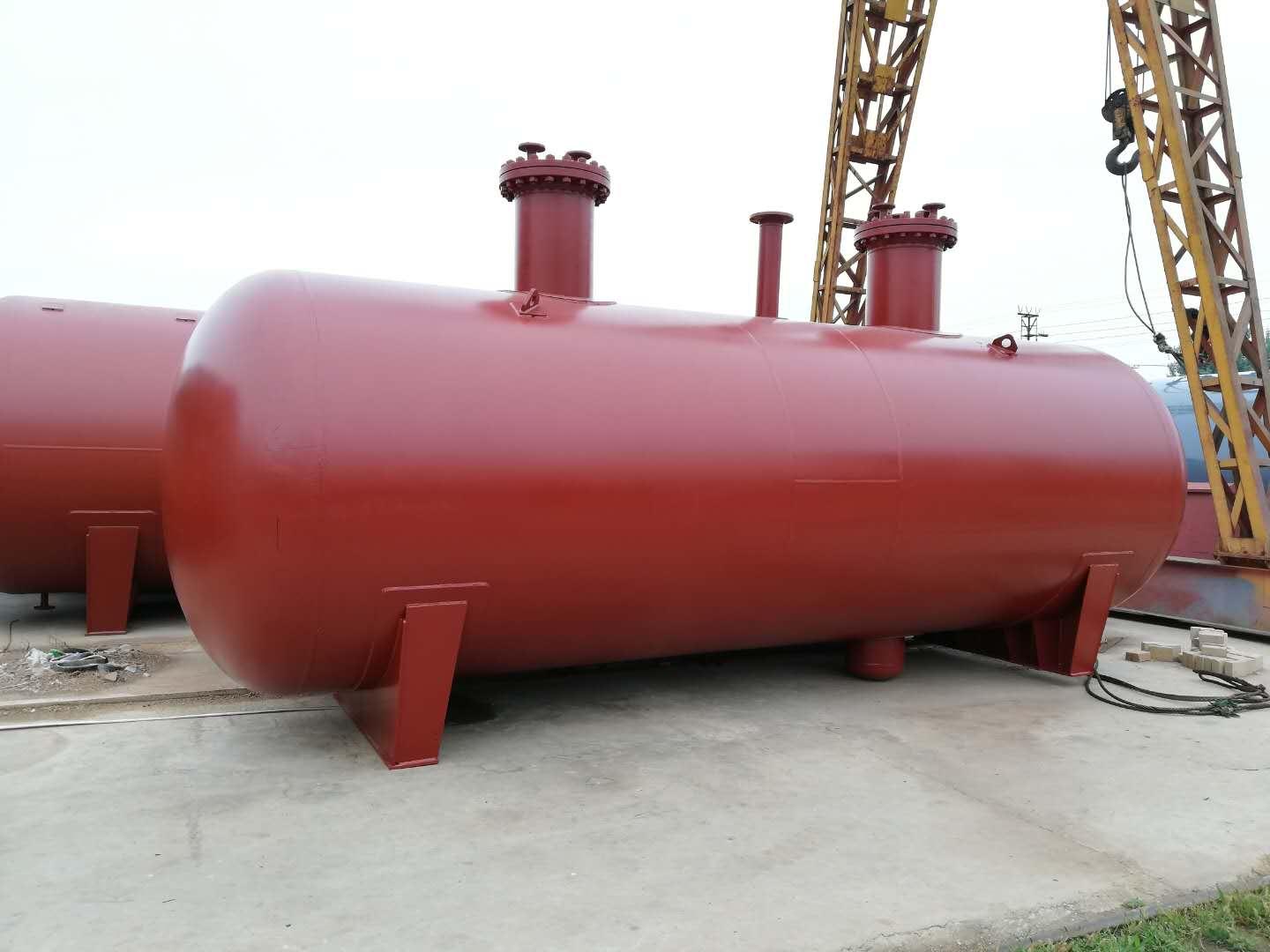
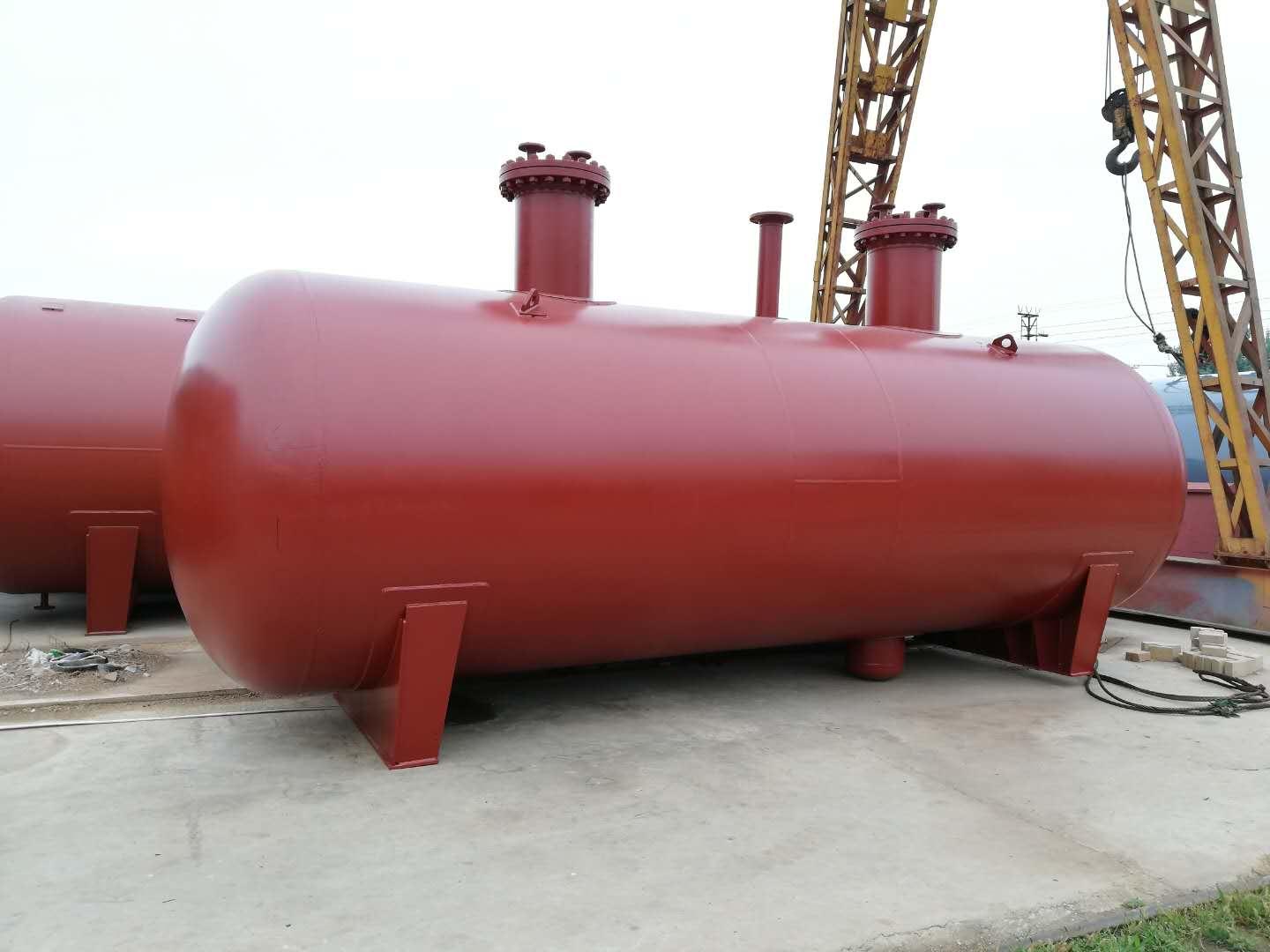
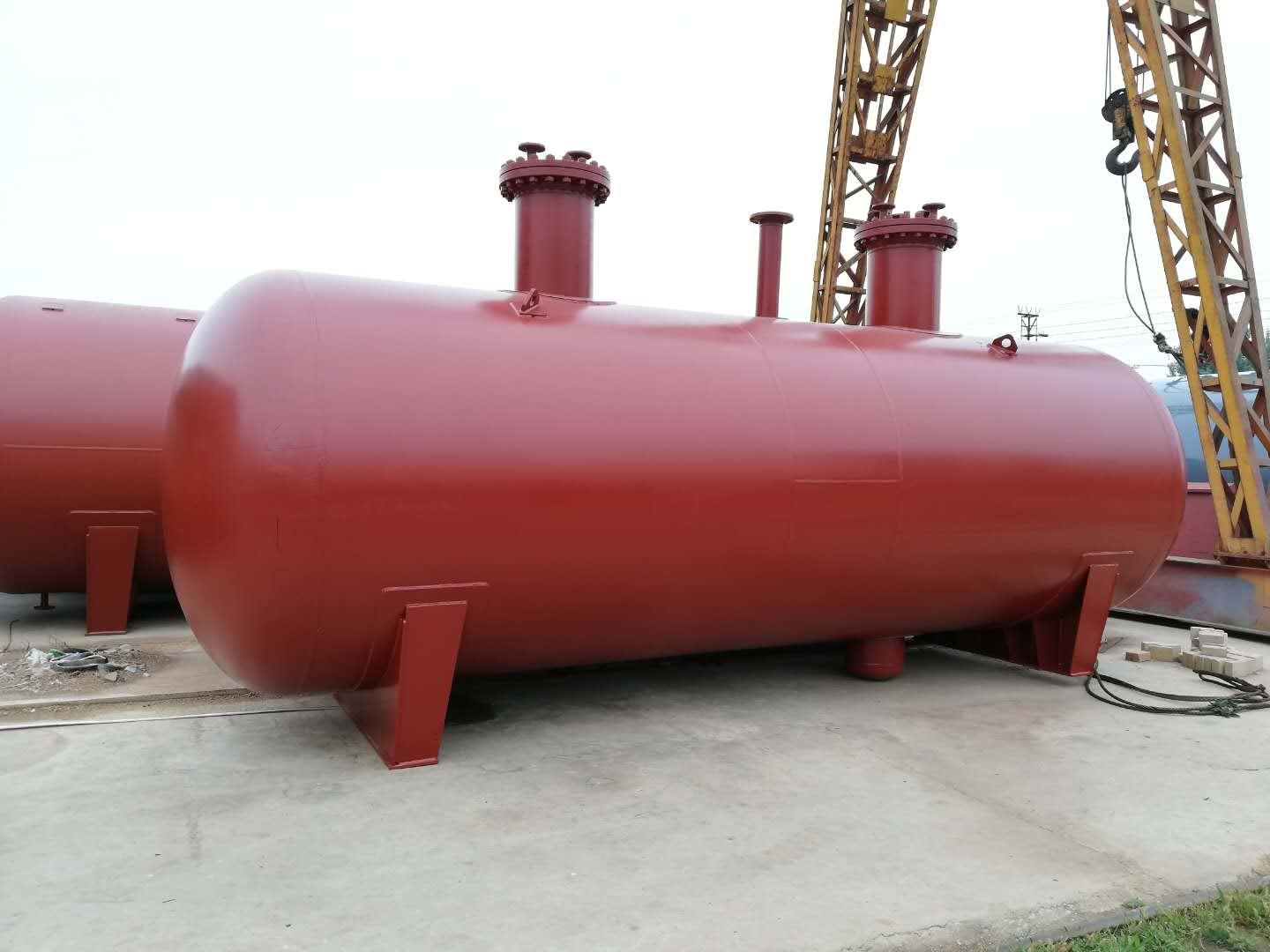
The basic structure of the LNG storage tank is as shown in the figure. The external piping and operating system are located at the bottom of the tank, while the inner cylinder is used to contain LNG. Various pipelines connected to it extend from the inner cylinder to the external piping system through the annular space. The outer cylinder, on one hand, forms an enclosed vacuum insulated space with the inner cylinder, and on the other hand, it provides protection and support for the inner cylinder. The support between the inner and outer cylinders is made of glass fiber reinforced plastic with excellent insulation properties, which is used to support the axial and radial loads of the inner cylinder.
液化天然气储罐价格液化天然气储罐厂家
LNG储罐厂家,液化天然气储罐价格液化天然气储罐厂家:Shandong Hezhou Group,Please provide the Chinese content to be translated into American English.Manager1??????????
When filling the tank with liquid, open the upper and lower inlet valves, and activate the exhaust pipeline system. The liquid enters the tank through the filling and discharging port, with the liquid level height read by the level gauge. Stop filling when liquid begins to flow out of the overflow port. For draining, activate the self-pressurization system; the tank will maintain stable pressure during draining, with the liquid discharged through the filling and discharging port.

LNG (Liquefied Natural Gas) - the abbreviation for Liquefied Natural Gas in English.
Natural gas is a combustible gas extracted naturally from gas fields, primarily composed of methane.
2, LNG is produced by cooling natural gas to -162°C at atmospheric pressure, causing it to condense into a liquid.
Liquefied natural gas (LNG) significantly reduces storage and transportation space and costs, and boasts high calorific value and superior performance.
液化天然气储罐价格液化天然气储罐厂家
LNG储罐厂家,液化天然气储罐价格液化天然气储罐厂家:Shandong He Guo Group,AvailableManager1??????????。
LNG is a clean and efficient energy source.
1. Importing LNG aids energy-consuming countries in diversifying energy supply and ensuring energy security, while exporting LNG helps natural gas-producing countries effectively exploit natural gas resources, increase foreign exchange earnings, and promote national economic development. Therefore, LNG trade is becoming a new hot spot in the global energy market.
Natural gas, as a clean energy source, is gaining popularity, with many countries listing LNG as an optional fuel. Its proportion in the energy supply is rapidly increasing.
Liquefied natural gas is growing at an approximate rate of 12% annually, making it one of the fastest-growing energy sectors globally.
In recent years, the production and trade of global LNG have become increasingly active, making LNG a scarce clean resource and a new hot spot in the world's oil and gas industry.
To ensure diversified energy supply and improve energy consumption structures, major energy-consuming countries are increasingly focusing on importing LNG. Japan, South Korea, the United States, and Europe are all constructing large-scale LNG receiving terminals.
International major oil companies are increasingly shifting their new profit growth points to LNG business, with LNG poised to become the next hot global commodity after oil.
China's natural gas utilization is extremely unbalanced, with a very small proportion of natural gas in China's energy mix.
8. From the perspective of China's natural gas development, natural gas resources are limited, with production far less than demand, and the supply-demand gap is widening.
9. Although it has not yet reached scale, the characteristics of LNG determine its rapid development.
10. It is predictable that within the next 10 to 20 years, LNG will become the main force in China's natural gas market.
In 2007, China imported 2.91 million tons of LNG, which was more than three times the import volume of 2006.
In January to December 2008, China's total imported liquefied natural gas (LNG) reached 3,336,405 tons. In January to December 2009, the total imported LNG was 5,531,795 tons. Amidst China's sustained and rapid economic growth, there was an extreme shortage of energy to power the economy.


优质LNG储罐生产-专业定做LNG储罐哪里有卖-专用LNG储罐制作-知名LNG储罐报价
