


Heze Boiler FactoryLimited Company

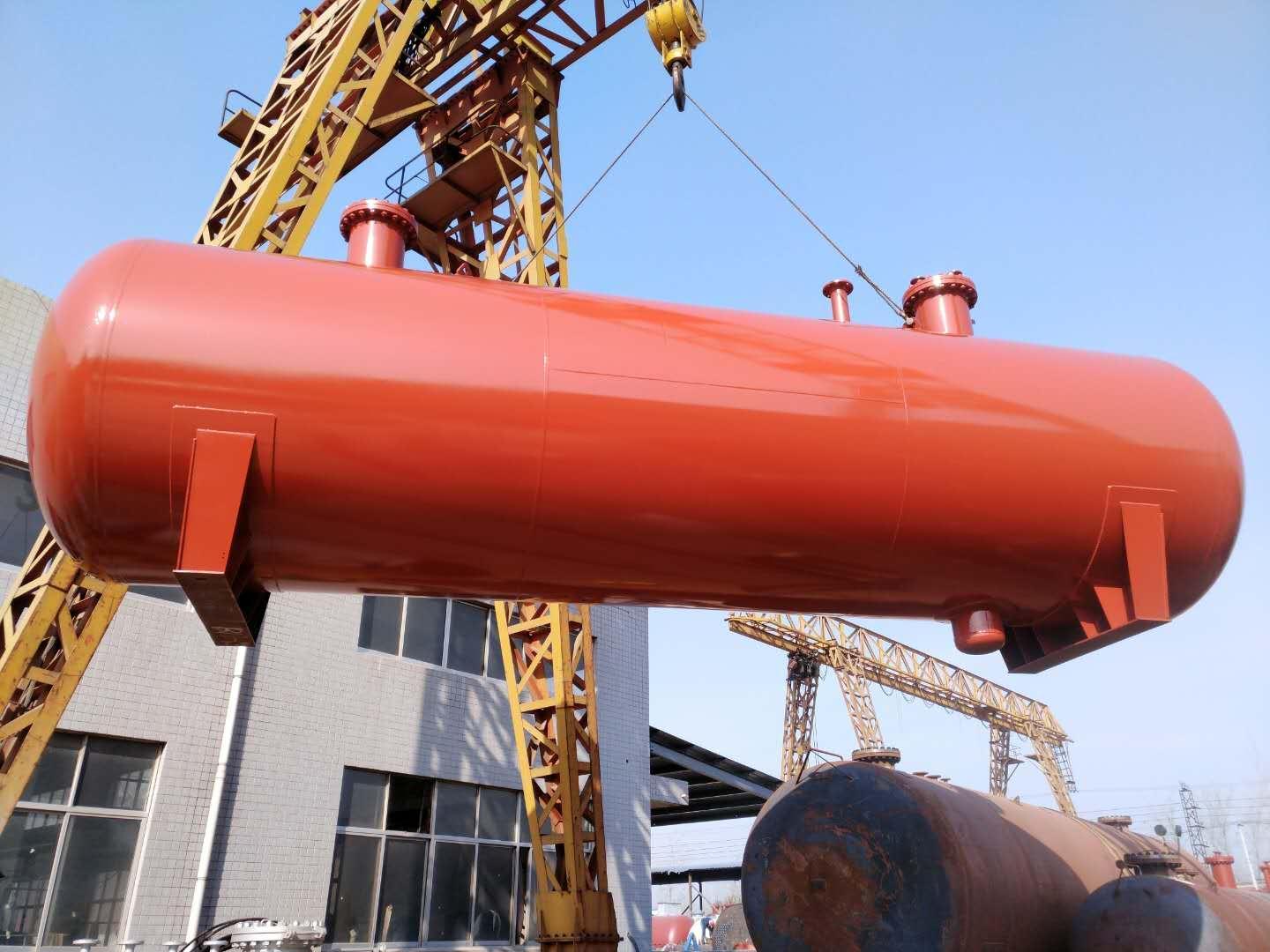
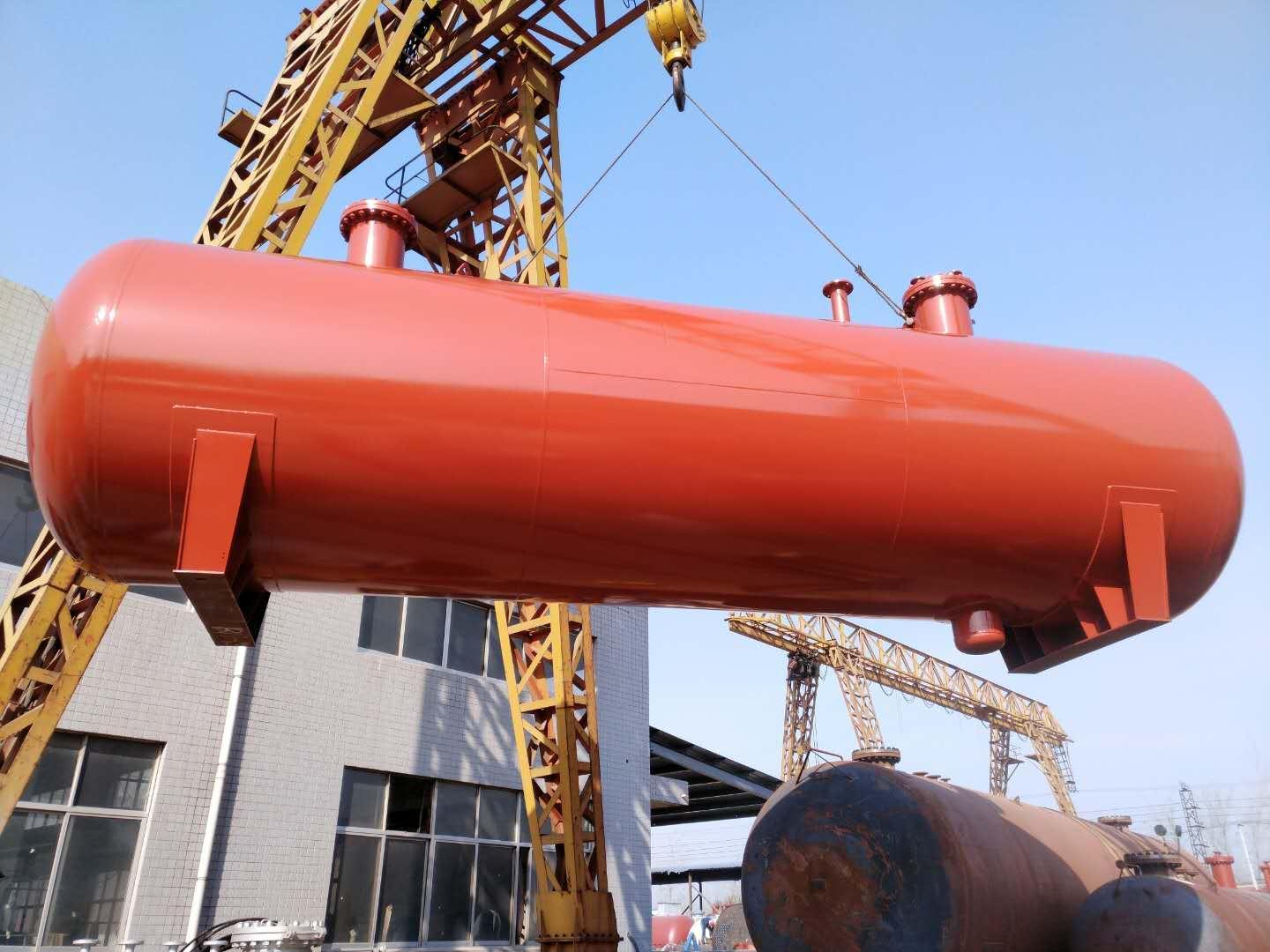
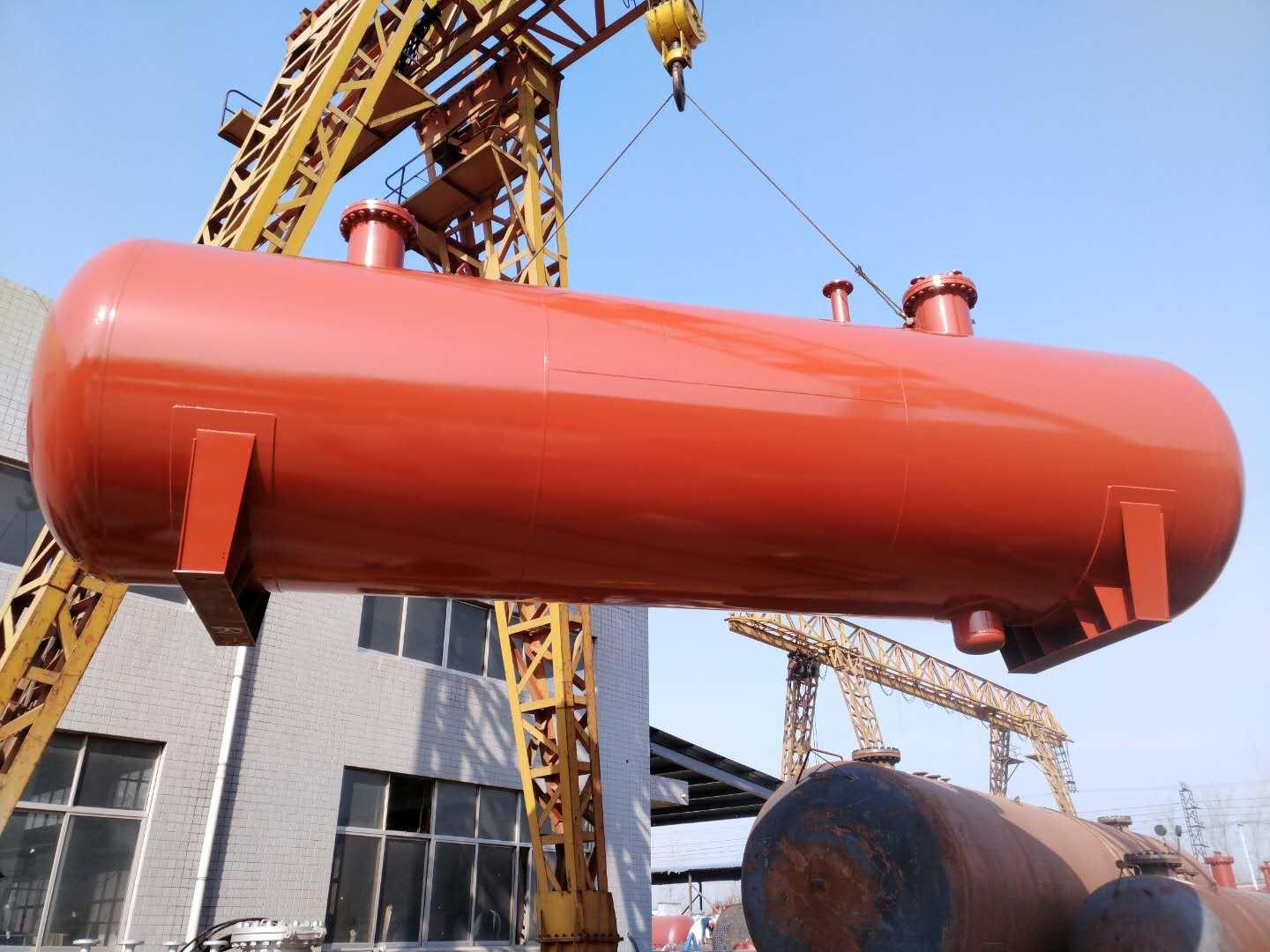
60 cubic meters LNG storage tank
Product Category: LNG Tanks
LNG stands for Liquefied Natural Gas. Its primary component is methane. LNG is colorless, odorless, non-toxic, and non-corrosive. It occupies about 1/600th the volume of an equivalent amount of gaseous natural gas, with a weight approximately 45% of that of water. Its calorific value is around 52 MMBtu per ton (1 MMBtu = 2.52×10^8 calories).
Model:
60 cubic meters0.8MPa
Detailed Description
Product Name: LNG Storage Tank
【Manufacturer】Heze Boiler FactoryLimited Company
LNG Storage Vessel
Hezhou Group
An LNG tank is a jacketed vacuum powder-insulated pressure vessel specifically designed for storing and supplying low-temperature liquefied gases (such as liquid nitrogen, liquid oxygen, liquid argon, liquid carbon dioxide, etc.). It has been widely used in both industrial production and daily life. This article briefly discusses the basic requirements and safety usage points by analyzing the hazardous characteristics of low-temperature liquids and combining various gas supply modes for low-temperature liquid storage tanks.
1. Analysis of Low-Temperature Liquid Hazards
Low-temperature liquids possess hazardous characteristics such as low boiling points, high expansibility, strong asphyxiating properties, and strong oxidizing properties.
1.1 Boiling points of low-temperature liquids at 101.3 KPa pressure: Liquid nitrogen at -196°C, liquid oxygen at -183°C, and liquid argon at -186°C. Contact with the human body can cause severe frostbite to the skin and eyes. In case of minor leaks or internal leaks in valves and pipes, these liquids absorb heat from the surrounding environment, causing rapid condensation and frost formation at the leak point, which can freeze in severe cases.
1.2 Low-temperature liquids absorb energy from the surrounding environment due to high heat or large leaks, causing their volume to expand rapidly as they vaporize. At 0°C and a pressure of 101.3 KPa, the volume of gas produced from 1L of low-temperature liquid upon vaporization is: nitrogen at 674L, oxygen at 800L, and argon at 780L. Inside sealed containers or pipelines, the increase in internal pressure due to the vaporization of low-temperature liquids can easily lead to overpressure explosions.
1.3 In the environment surrounding the low-temperature liquid storage tank, the liquid can easily vaporize upon leakage, forming a rich gas area. High concentrations of nitrogen, argon, and carbon dioxide can easily cause asphyxiation injuries. Additionally, high oxygen concentrations can lead to oxygen enrichment injuries.
1.4 Oxygen is a powerful oxidizer with extremely strong oxidizing properties. Liquid oxygen, when in close proximity to combustible materials, is highly flammable upon contact with an open flame; contact with combustible materials can easily lead to explosions due to vibrations or impacts; mixing with combustible materials poses a potential explosive hazard. Liquid oxygen can adhere to clothing and fabrics, and upon contact with an ignition source, it can cause a flash fire, posing a risk to personal safety.
2. Low-Temperature Liquid Storage Tank Gas Supply Mode and Basic Requirements
Based on different application scenarios and user requirements, the gas supply mode of low-temperature liquid storage tanks mainly varies.
Available services include high-pressure gas cylinder refilling, low-temperature insulated cylinder packaging, centralized gas supply through pipelines, and low-temperature liquid spray feeding.
LNG60 cubic meters, 0.8 MPa parameter value:
60 cubic meter LNG storage tank
Formed:
The natural gas produced from the gas field is first purified and then liquefied under ultra-low temperature (-162℃) and atmospheric pressure to form liquefied natural gas.
The critical temperature of LNG between gas and liquid phases at atmospheric pressure is -162℃.
The standard commonly used in LNG manufacturing is API 620.
LNG Storage Tank
Supplying gas to high-pressure cylinders, utilizing low-temperature liquid storage tanks as the gas source, suitable for numerous applications.
Individual users of scattered gas typically require the standardized implementation by professional production and filling units. According to current national administrative licensing requirements, filling units must hold a designated production (storage) permit for hazardous chemicals, an occupational safety and health license, and a gas cylinder filling permit, collectively known as "one certificate and two permits," to proceed with high-pressure gas cylinder filling. At the liquid outlet of low-temperature liquid storage tanks, a low-temperature liquid pump and a high-pressure gasifier are installed, utilizing a high-pressure filling system to fill high-pressure gas into dedicated gas cylinders. In the gas cylinder filling process, it is mandatory to set up an automatic shutdown protection system for pipeline low temperature and overpressure. When there is still low-temperature liquid at the outlet of the gasifier or the pipeline pressure exceeds the high working pressure of the gas cylinder, the low-temperature liquid pump should automatically shut down, and the low-temperature liquid storage tank should stop supplying gas to prevent the direct filling of low-temperature liquid into the gas cylinder or the overpressure filling of the gas cylinder causing an explosion.

Low-temperature valve fault handling
Common faults of low-temperature valves: leakage at the handwheel stuffing box; leakage at the valve cover nut; internal leakage of the valve; leakage at the valve-pipe connection.
Leakage at the handwheel stuffing box or valve cover nut can be tightened with a wrench when the tank is not pressurized. Absolutely no pressure-tightening is allowed.
Valve internal leakage is usually caused by solid particles in the valve stem or wear from frequent opening and closing. Both the inlet and outlet valves are double-valve designs, with one in reserve. When internal leakage is detected, close the reserve valve and repair the leaking valve. First, loosen the valve cover nut with a wrench, remove the valve stem, and dry the valve disc and cover rod with a hair dryer; then clean the valve body sealing surface and the seal pad of the valve disc, and wipe off any frost or water. If the seal pad of the valve disc is uneven or has cracks or grooves, replace it immediately with a spare pad. If wear marks are found on the valve body sealing surface, sand it smooth with metal abrasive paper (or fine wood sandpaper if unavailable). Before reassembly, carefully remove dust and frost or water, and tighten the valve cover nut.
When a leak is found at the valve-pipe connection, please have a qualified unit repair it. During the repair, empty the liquid and vent it, and the oxygen equipment must be replaced to an oxygen content less than 21%. Before welding, leave the valve half-open and loosen the valve cover nuts. After welding, retighten the nuts and conduct an airtightness test on the pipeline.
Differential Pressure (Level) Gauge Fault Handling
Common issues include malfunctioning indicators and pointer tremors.
1) A malfunctioning indicator can be due to either the pointer not returning to zero or the pointer remaining fixed at a certain value. If it's the former, it's usually caused by improper use, such as the combined valve of the differential pressure (level) gauge not being in a balanced state before filling, preventing the pointer from returning to zero. Open the combined valve after liquid is introduced through the lower inlet. If the deviation between the pointer and zero is minimal, you can loosen the screw securing the fixed gauge needle, move the pointer to zero, and then retighten the screw.
2) Pointer jitter is usually due to air leakage in the gauge tube, so carefully inspect the gauge tube, combination valve of the level gauge, and related joints of the pressure gauge. Additionally, if the liquid is overfilled, causing a differential pressure (level) gauge to take in liquid, the tube may also experience jittering.
(4) Summary of Fault Handling Methods
Potential faults during use, their causes, and solutions are listed in the following table.
Fault Resolution Methods
Fault Phenomenon Cause Solution Method
During use, internal pressure
An abnormal increase has occurred: a. The turbocharger's intake valve is not sealed properly, causing internal leakage. The intake of the turbocharger requires grinding and maintenance.
b. The pressure gauge indicates inaccurately. Inspect or replace the pressure gauge.
Pressure (Level) Gauge Indications are Inaccurate a. The pressure (level) gauge is malfunctioning. Inspect the pressure (level) gauge.
b. Leak at the upper and lower pipes of the differential pressure (level) gauge. Leak repair and sealing.
c. Differential Pressure (Level) Gauge Joint Leaking. Repair and clear the leak.
Evaporation rate exceeds design
Value, sweating and frosting on top a. Air phase vent valve not tightly closed, internal leakage. Valve grinding and maintenance required.
b. Degradation of vacuum level. Re-pump vacuum.
c. Top pearl sand has settled, sand not fully packed. Refill pearl sand, re-evacuate vacuum.
Leakage of liquid or gas from the valve cap or joint: a. Sealant material is not tightly compressed. Tighten the gland nut.
b. Sealing ring damaged. Replace the sealing ring.
c. Seal face damage. Repair or replace parts.
d. Weld Seam Leaks - Repair Welding (but should be carried out according to repair welding specifications).


正品LNG储罐生产-现货LNG储罐多少钱-专业制造LNG储罐哪里有卖-哪里有卖LNG储罐加工
