


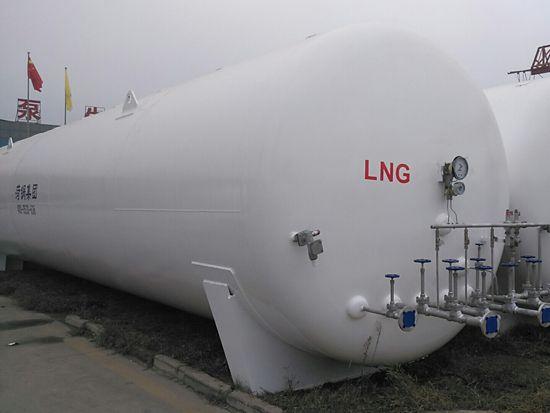
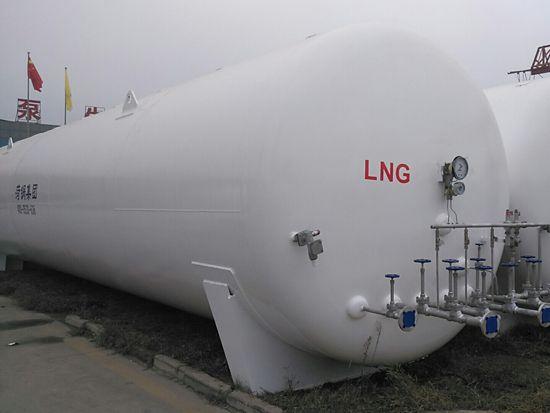
Natural gas tanks, also known as low-temperature tanks, are vertical or horizontal double-layer vacuum insulated tanks. The inner shell is made of austenitic stainless steel, while the outer shell material varies by user location and is selected according to national regulations as 345R. The annular space between the inner and outer shells is filled with insulating material, pearl sand, and then evacuated. The product undergoes on-site inspection by the National Technical Supervision Bureau and is issued with a pressure vessel supervision and inspection certificate.

Natural gas tanks are the main equipment of LNG gasification stations, directly affecting the normal production of the stations and accounting for a significant portion of the construction cost. They can be categorized by structure into underground tanks, above-ground metal tanks, and metal prestressed concrete tanks. For LNG tanks, there are currently vacuum powder insulation tanks, positive pressure accumulation insulation tanks, and high-vacuum layer insulation tanks. Medium and small-scale gasification stations typically opt for vacuum powder insulation low-temperature tanks. The tanks consist of an inner and outer layer, with the gap filled with pearly sand and vacuumed to reduce the transmission of external heat, ensuring the daily gasification rate of LNG within the tank is less than 0.3%.

Natural Gas Storage Tank
The operating pressure of the natural gas storage tank is 0.6-1.44 MPa, with an operating temperature of -162°C. (Available in vertical or horizontal models) The tank is constructed with two layers, an inner and an outer. To reduce heat transfer from the outside to the inside, a vacuum insulation structure filled with diatomaceous earth is used between the layers, isolating it from the atmosphere. This prevents the effects of atmospheric pressure or temperature changes, as well as the entry of moist air into the insulating layer between the inner and outer tanks, effectively ensuring and enhancing the performance of the insulating material.

Natural gas storage tanks have stringent safety requirements. As they contain cryogenic liquids, any accident could lead to a significant release of refrigerated liquid, which vaporizes to about 300 times its original volume, forming explosive gas clouds in the atmosphere. Therefore, standards such as API and BS require double-walled tank structures and the application of sealing concepts. In the event of a leak in the primary tank, the secondary tank can completely seal the leaked liquid and evaporated gas, ensuring storage safety.
Advantages of LNG
Compared to LPG and CNG, the advantages of LNG as a substitute automotive fuel are as follows:
(1) Clean and environmentally friendly. As a vehicle fuel, LNG must first be vaporized by a vaporizer, then enter the engine in a gaseous state for complete combustion, resulting in extremely low levels of harmful substances in the exhaust, making it highly clean and eco-friendly.
(2) High calorific value per unit price. Compared to other fuels, LNG offers a lower price and higher calorific value per unit. The low-temperature characteristics of LNG can reduce the temperature of the mixed gas and the combustion temperature, thereby improving the engine's thermal efficiency. Consequently, LNG boasts strong economic and applicability benefits.
(3) High safety. LNG fuel tanks typically allow for a working pressure of 1.586 MPa, and automotive LNG storage tanks often use double-layered metal vacuum powder insulation or double-layered metal vacuum spiral insulation structures, which offer high thermal insulation efficiency and can maintain a longer period without releasing gas.
(4) Easy to install. Compared to CNG refueling stations, LNG refueling stations require less land, produce no noise, and have lower operating costs. The initial investment for setting up an LNG station is over 30% less than that for a CNG station, and it can reduce daily operation and maintenance costs by more than 50%. As LNG refueling stations are not restricted by natural gas sources and pipelines, they can be designed as fixed or skid-mounted, offering strong mobility.
(5) High efficiency in cold energy recovery. LNG is stored and transported at atmospheric pressure and low temperature, releasing a large amount of cold energy during gasification to normal conditions. Currently, the cold energy recovery rate of LNG can reach 50%, with 1 cubic meter of LNG capable of recovering and utilizing 960 to 1095 MJ of cold energy. For instance, a refrigerated truck absorbs an average of 56.16 MJ of heat daily during operation. To absorb this heat, a standard diesel refrigeration system would require about 15 liters of diesel. However, in an LNG vehicle, the cold energy released by vaporizing 143 liters of liquefied natural gas can completely absorb 56.16 MJ of heat, resulting in significant economic benefits. Utilizing LNG cold energy for vehicle air conditioning or refrigerated trucks eliminates the need for a dedicated refrigeration system, saving energy and reducing noise pollution caused by mechanical refrigeration.
(6) Wide Application Range. By adding a high-pressure pump and high-pressure gasifier to the LNG refueling system, an LNG-to-CNG refueling station can be established, directly converting LNG into CNG. The refueling station can service both LNG and CNG vehicles, thus avoiding the need for modifying the fuel systems of CNG vehicles and eliminating the limitations of CNG refueling stations due to natural gas supply and pipeline constraints. The scalability of the LNG refueling system further expands the applicability of LNG.


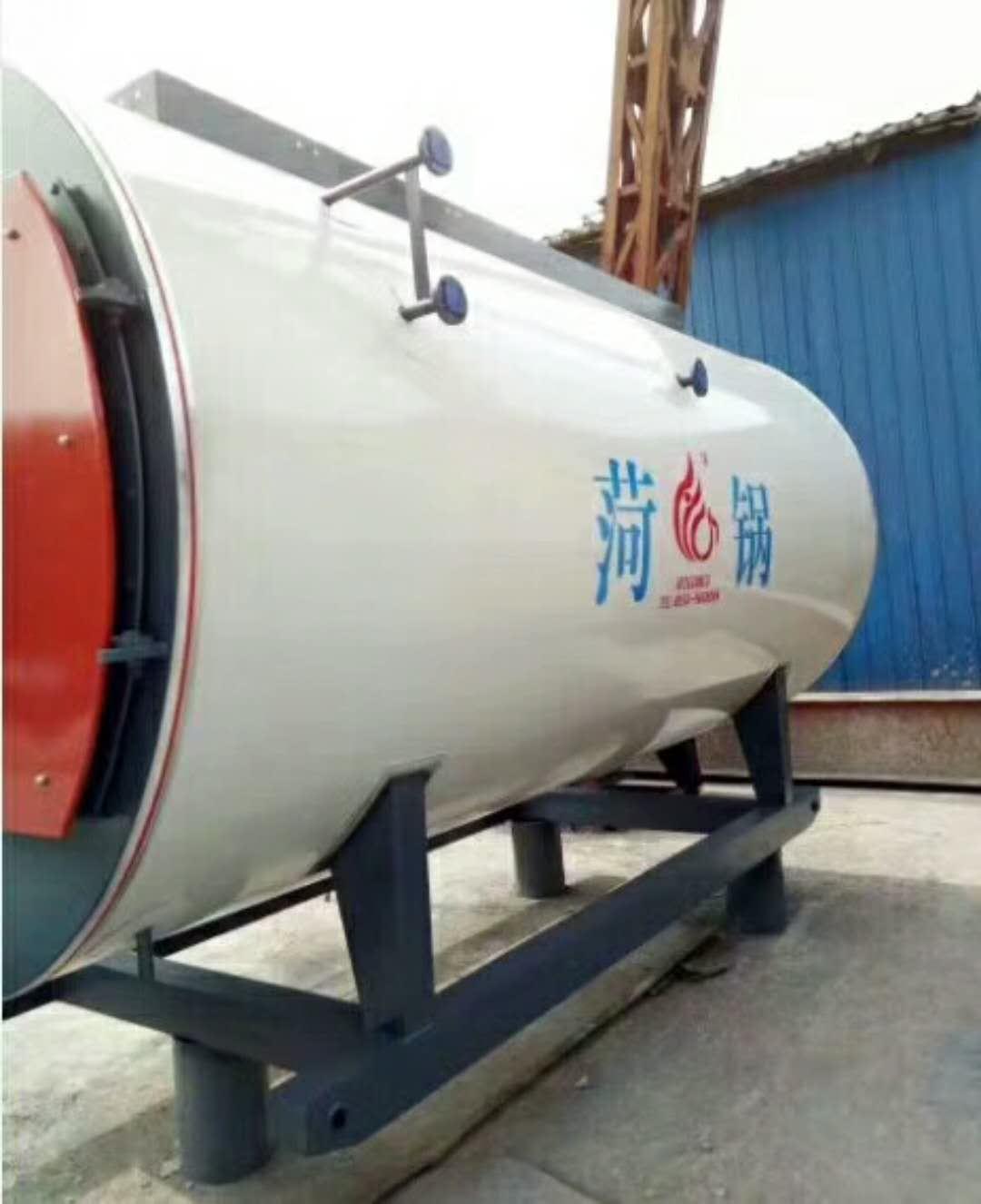
Best Brand of Discounted LNG Tanks - Discounted LNG Tank Prices - Which LNG Tank Model - Professional Manufacturer of LNG Tanks
