


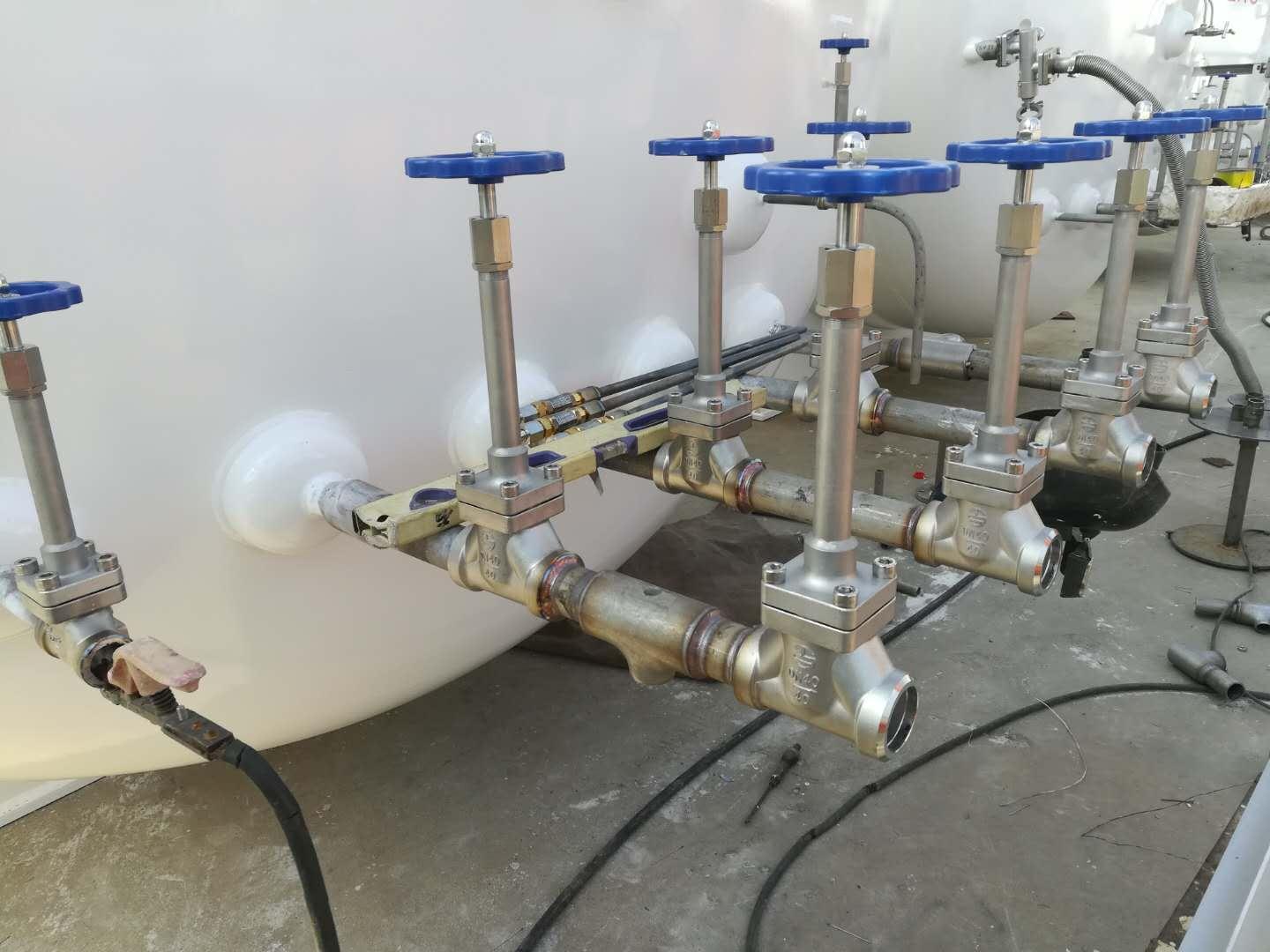
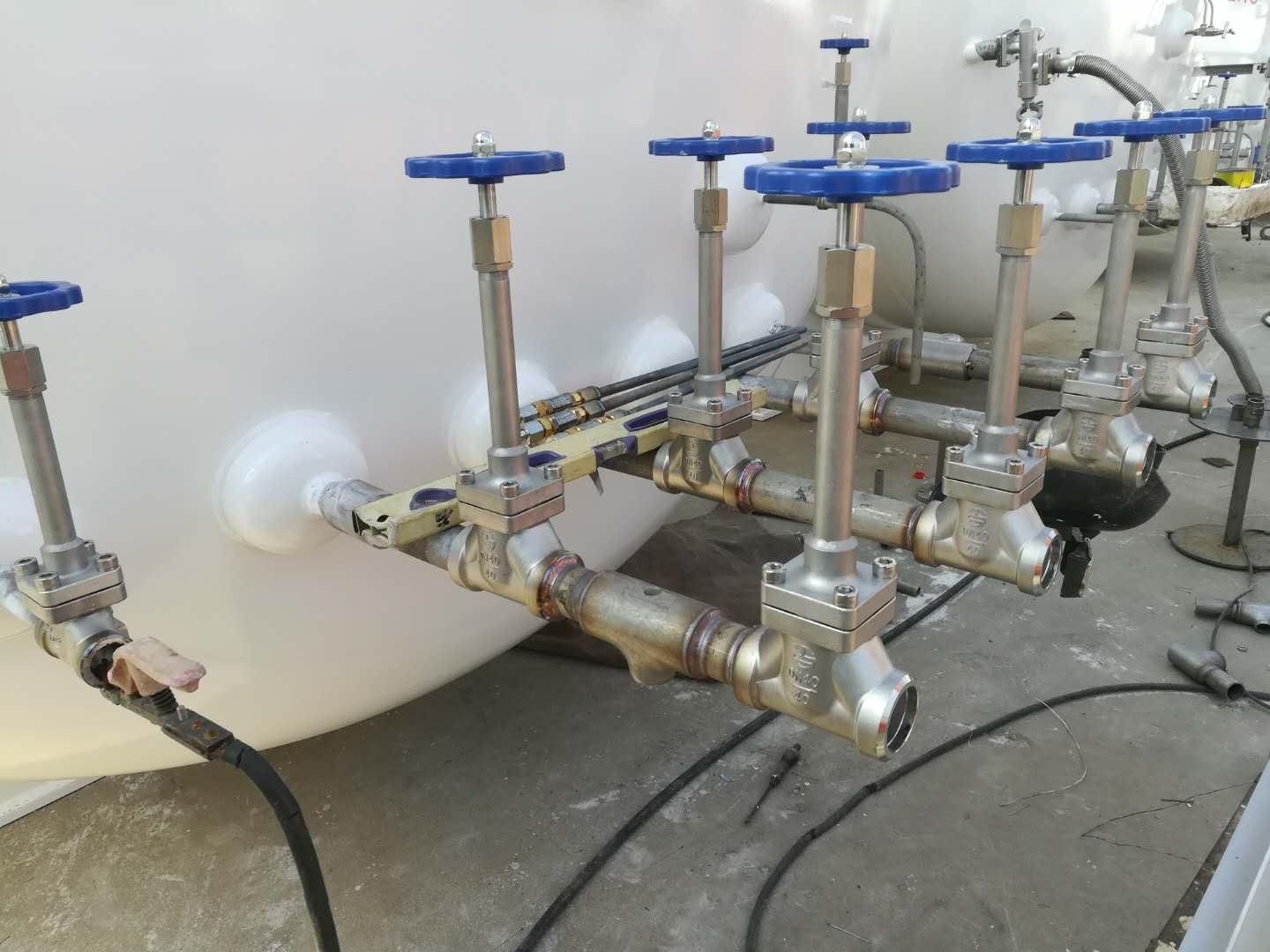
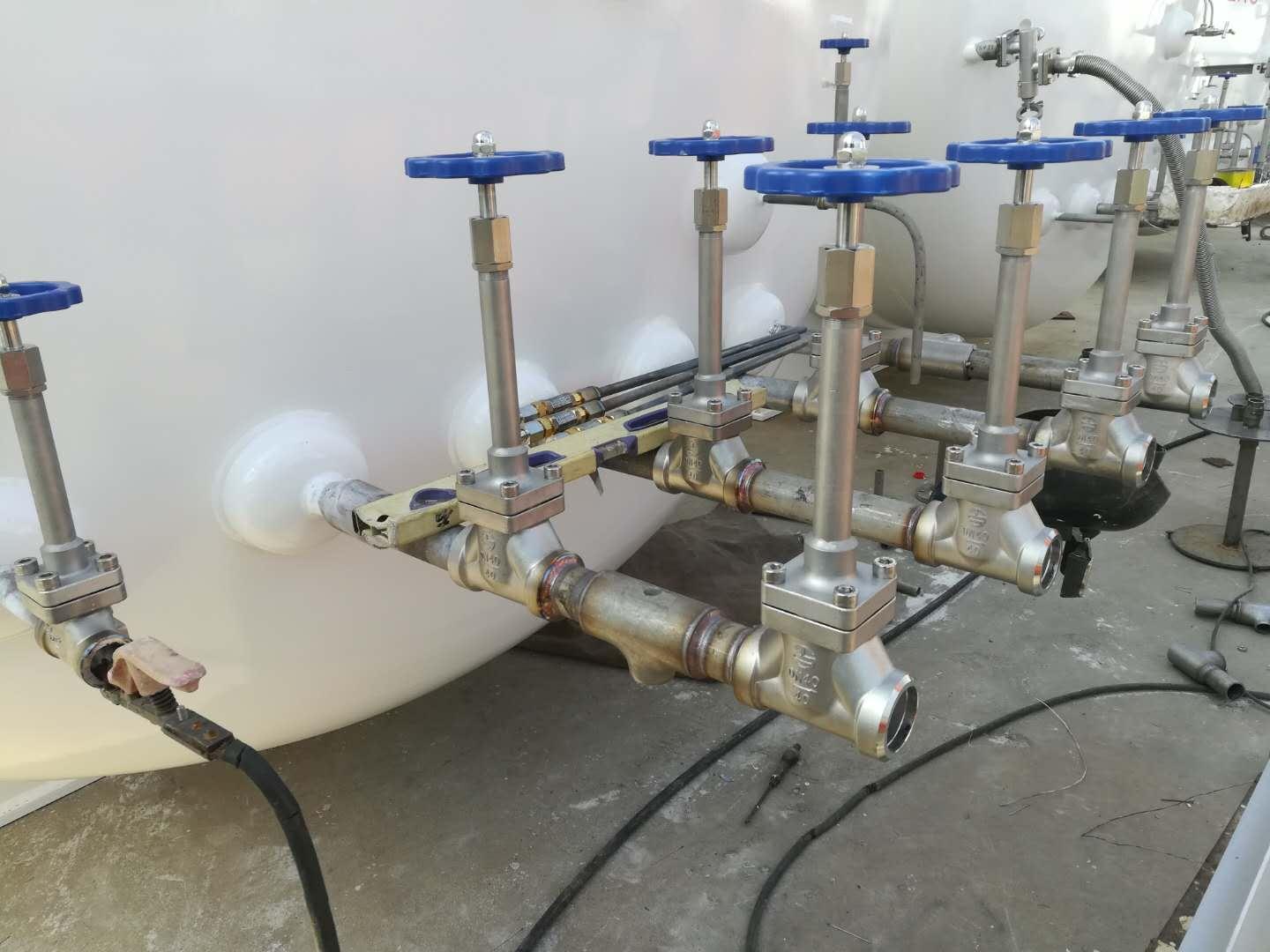

Our company specializes in tank-type pressure vessels, which are one of our key products. These include LPG storage tanks, liquid ammonia tanks, liquid chlorine tanks, propane tanks, pentane storage tanks, and low-temperature storage tanks for liquid oxygen and nitrogen. Particularly, our LPG storage tanks have reached mass production levels with a continuous production line, offering a variety of models in stock. Volumes range from 5 to 200 cubic meters, and are available in both above-ground and underground tank options.
Procedures for Safe Operation of Liquefied Petroleum Gas Aboveground Storage Tanks
1. Use storage tanks in accordance with national regulations and design parameters; strictly prohibit exceeding pressure and liquid level.
2. Inspections are strictly conducted according to regulations; tanks that fail to meet standards are not to be put into use.
3. Various safety accessories of the storage tanks must be inspected regularly according to regulations to ensure normal operation.
4. Valves connected to the storage tank should be clearly marked with "Open" and "Closed" indicators.
5. The liquid storage in the tank should be strictly controlled at 85% or below, with clear limit markings on the level gauge.
5. Promptly offload the tank when it is found to be overfilled.
6. Conduct daily routine checks on the tank's pressure, temperature, and liquid level, and promptly address and report any anomalies.
7. When the summer temperature exceeds 35℃ and the storage tank pressure is above 10 kgf, the sprinkler cooling system must be activated.
8. When the winter temperature drops below 5°C, daily draining and inspection of the storage tank should be conducted to prevent ice blockage.
Cautionary Notes for Using Natural Gas Storage Tanks: Jacketed vacuum powder-insulated pressure vessels used for storing and supplying low-temperature liquefied gases. They are widely used in industrial production. Analysis of the hazardous characteristics of low-temperature liquids: Low-temperature liquids have low boiling points, high expansibility, strong asphyxiating properties, and strong oxidizing properties. Boiling points at 101.3 KPa: Liquid nitrogen at -196°C, liquid oxygen at -183°C, liquid argon at -186°C. Contact with the human body can cause severe frostbite to the skin and eyes. In case of minor leakage of low-temperature liquids or internal leakage of valves and pipes, they absorb heat from the surrounding environment, causing rapid condensation and frost formation at the leakage point, which can lead to freezing in severe cases. When low-temperature liquids absorb high heat from the surrounding environment or large amounts of energy due to leakage, their volume expands rapidly due to quick vaporization. At 0°C and 101.3 KPa pressure, the volume of gases produced by the vaporization of 1L of low-temperature liquids: nitrogen at 674L, oxygen at 800L, argon at 780L. Inside sealed containers or pipes, the increase in internal pressure due to the vaporization of low-temperature liquids can easily cause overpressure explosions. In the surrounding environment of low-temperature liquid storage tanks, the vaporization of leaked low-temperature liquids can easily form rich gas areas. High concentrations of nitrogen, argon, or carbon dioxide can easily cause asphyxiation injuries. Additionally, high oxygen concentrations can also lead to oxygen-rich injuries. Oxygen is a strong oxidizing agent with strong oxidizing properties. Liquid oxygen, when in contact with combustible materials, can easily ignite upon exposure to an open flame; contact can easily cause explosions due to shock or impact; mixing with combustible materials poses latent explosive hazards. Liquid oxygen can adhere to clothing fabrics and easily cause flash fires upon ignition, posing a risk to personal safety.


优质液化气储罐生产厂家-LPG储罐液化气储罐找山东菏锅集团-优质液化气储罐-专业制造液化气储罐销售价格
