


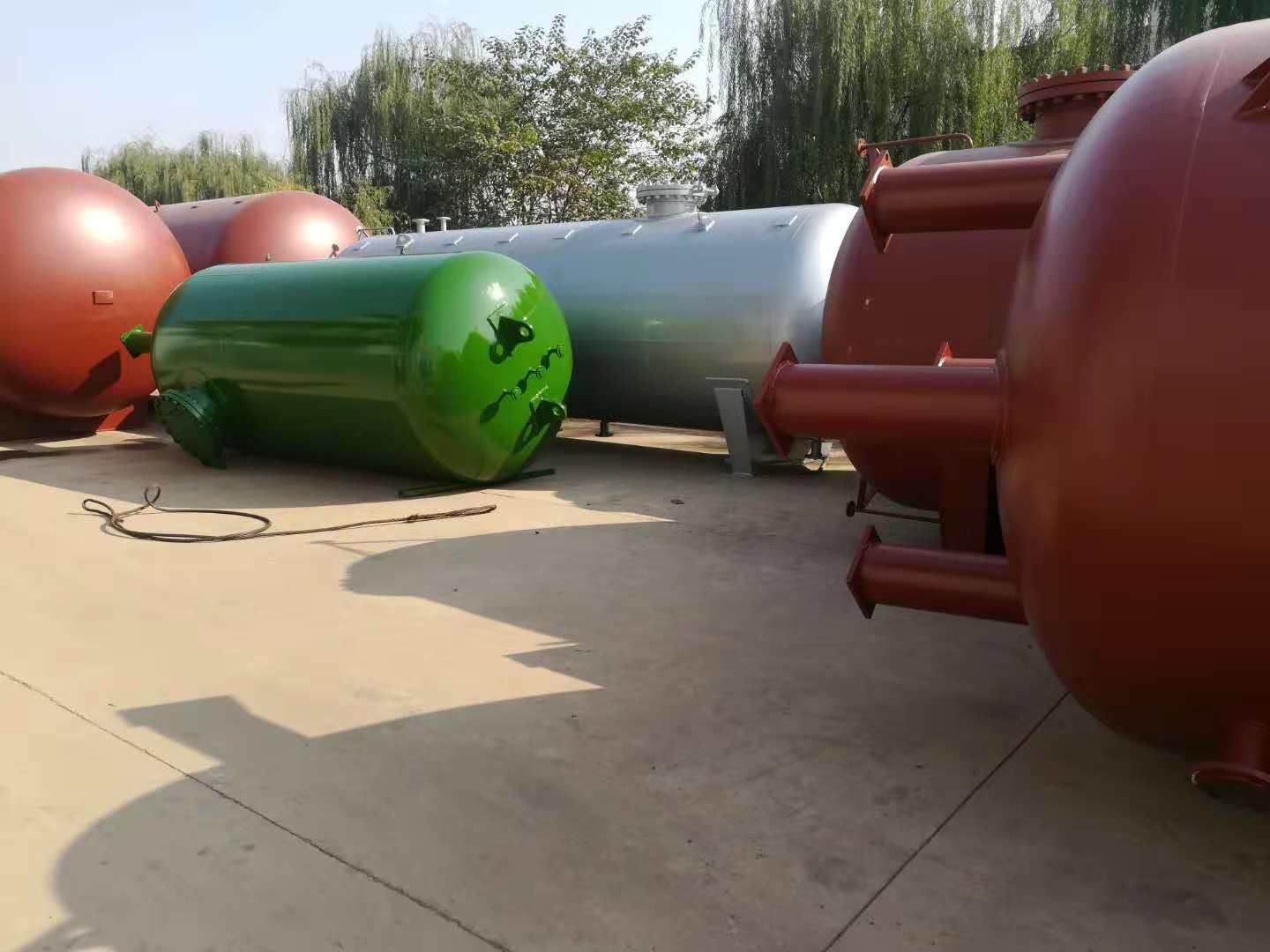
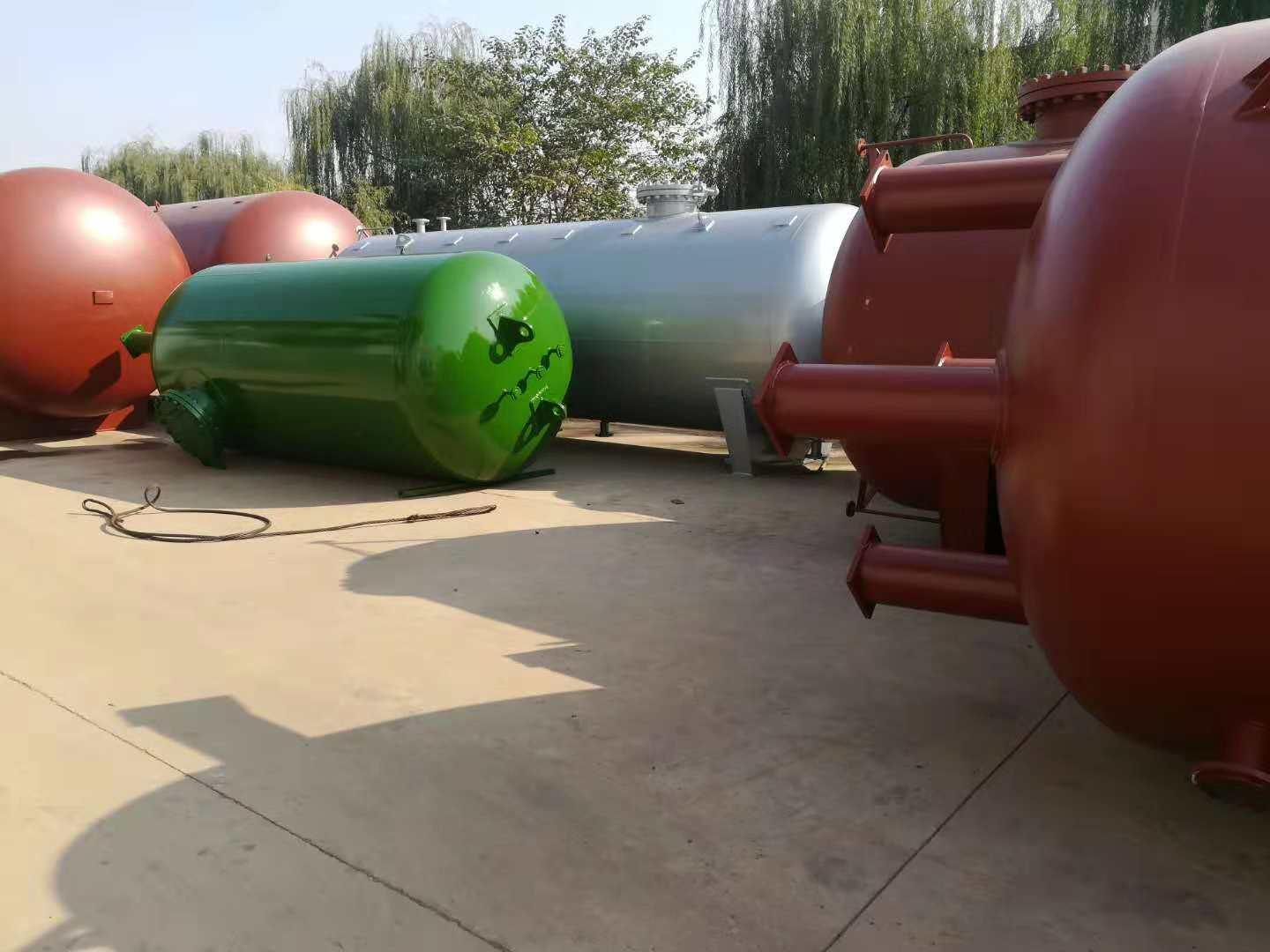
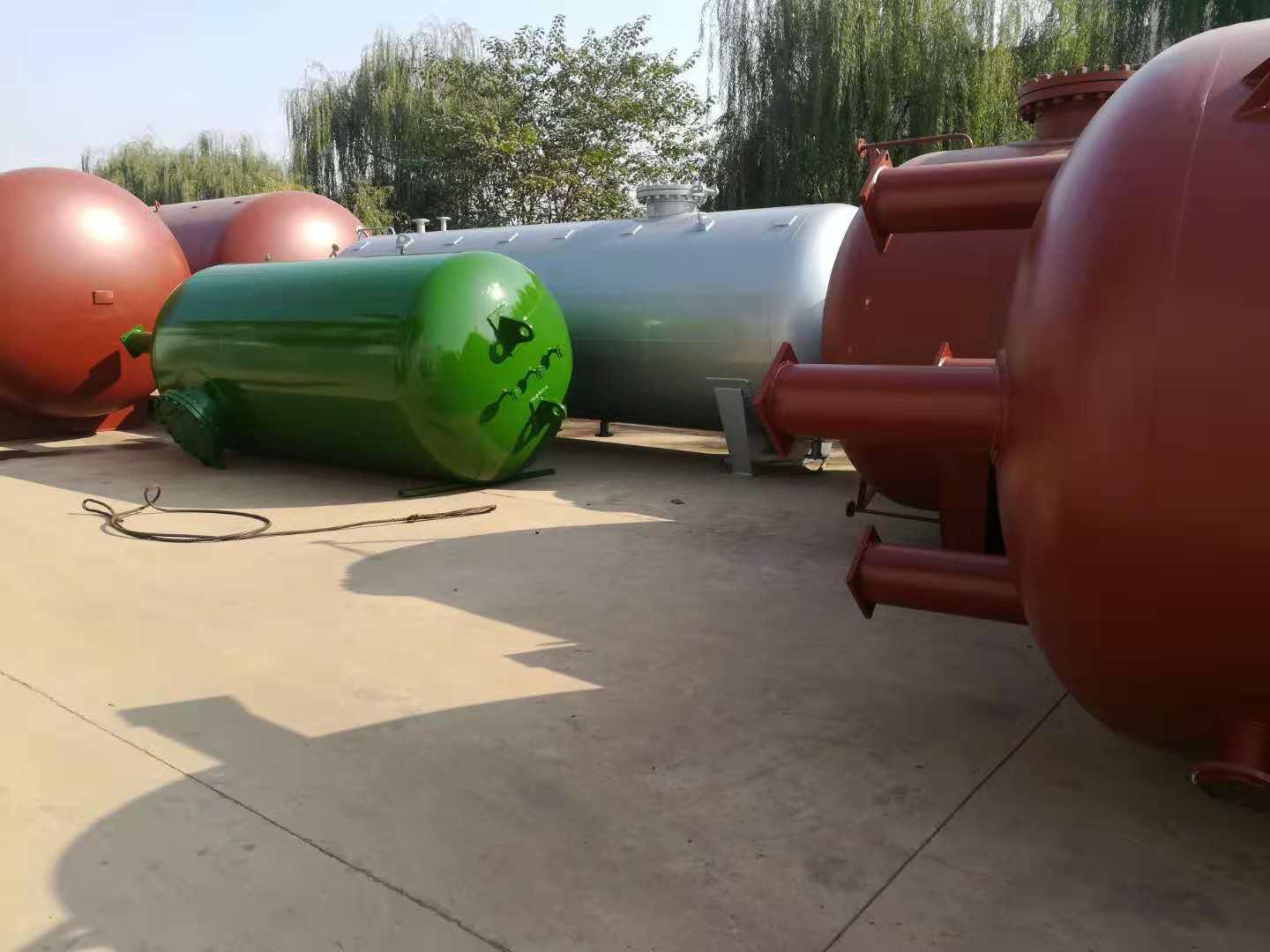

This product is a horizontal fixed vacuum powder insulation low-temperature storage tank, featuring a double-layered cylindrical structure. The inner container is used for storing low-temperature liquid natural gas, while the outer shell forms and protects the vacuum insulation space. The interlayer is filled with pearl sand and evacuated to create an excellent insulation system. The design of the outer shell and support system can withstand the related external forces during manufacturing, transportation, installation, and use. The tank bottom is equipped with a complete set of valves, instruments, and safety devices for operation.
Safety:
1. All stainless steel plates are sourced from Taiyuan Iron and Steel Plant, the leading manufacturer of stainless steel plates in China, ensuring high quality. The tubing is supplied by Anhui Tiantai Steel Tube, the No.1 domestic supplier of stainless steel seamless tubes.
Section II: Materials are all in compliance withGB150-2011Re-inspection of "Pressure Vessel"; blanking is carried out using a CNC plasma cutting machine, with strict control over the geometric dimensions of the cylinder sections.
Section 3: Both longitudinal and circumferential seams are焊接 using submerged arc welding, resulting in good surface finish and an internally lined vessel.100%XRadiation Detection
Vacuum Level:
One, the inner and outer surfaces of the stainless steel lining are degreased and pickled, the carbon steel shell's inner and outer surfaces are sandblasted for rust removal, ensuring paint adhesion, extending the paint's corrosion resistance lifespan, enhancing the stainless steel plate's corrosion resistance, and reducing the amount of gas emitted from the sandwich layers, thereby ensuring the longevity of the vacuum degree.
Two, a unique dehydration pretreatment is conducted on the pearl sand before loading, and the sandwich layer is heated and replaced with nitrogen gas, greatly reducing the gas source.
Three, the sand filling utilizes a vacuum-assisted filling and positive-pressure compaction process, ensuring the uniformity of the sandwiched pearlescent sand. The use of vibration rod compaction technology maximizes the filling amount of the pearlescent sand, thereby ensuring the insulating effect of the sandwich layer.
Four: Utilizing a unique vacuum extraction process, it significantly reduces the time required for vacuuming the inner shell and the sandwich layer, ensuring the vacuum level of the sandwich is superior to the national standards' requirements. It guarantees the vacuum level of the storage tank is3~5No reprocessing required within the year.
Appearance:
One. The bending of the pipe is performed on a CNC bending machine, ensuring strict geometric dimensions. By not using elbow joints, it significantly reduces pipeline resistance and enhances the aesthetic appearance of the external piping system.
The paint used is from the world-renowned Jotun brand, with two coats of primer and two coats of topcoat, ensuring the longevity of the paint and the quality of the equipment's appearance.
Cautionary Notes
1. Cylinders must be stored in well-ventilated areas, with a minimum distance of 1.5 meters from any fire or heat source. Cylinders are strictly prohibited from being heated with fire, boiled in water, or left exposed to direct sunlight. Regular inspections should be conducted on cylinder valves and pipeline joints to ensure airtightness and prevent gas leaks. Leak checks can be performed using soap water, but absolutely no open flames should be used for testing.
2. When lighting, ignite the primer first, followed by opening the gas; do not reverse the order. There should be someone supervising during use, and do not leave the area to prevent boiling water from spilling and extinguishing the flame, which could cause the liquefied gas to escape and lead to an explosion. After using the gas cylinder, make sure to close the valve tightly to prevent gas leakage.
3. The liquefied gas in the cylinder should not be completely exhausted; a certain residual pressure must be maintained. The residual pressure should generally be greater than 49.03 kPa (i.e., 0.5 kg/cm², gauge pressure) to prevent air from entering the cylinder. After the liquefied petroleum gas is used up, the remaining residue in the cylinder is also a flammable substance and should not be poured out arbitrarily to prevent fires caused by the flow and evaporation of the residue.
4. LPG cylinders are pressurized containers that require proper maintenance and regular inspections. Prevent the cylinders from falling or being struck during handling and use. Do not use metal tools to敲击 open the valve, and protect them from direct sunlight and prolonged exposure to rain. Cylinders should be inspected every 2 years.
5. Although the explosion range of liquefied petroleum gas (LPG) is not very wide, its lower limit is small, making it easy to ignite and explode upon leakage. Additionally, as LPG is heavier than air, it tends to flow downwards when leaked into the air, accumulating in low-lying areas and posing a hidden danger of gas explosions. Therefore, it is essential to ensure adequate ventilation in areas prone to gas leakage; simply relying on window ventilation is insufficient.
6. When a liquefied gas leak is detected indoors, immediately open windows and doors for ventilation, allowing it to disperse in the direction away from any open flame. No fire is permitted in the vicinity. Use the product only after the fault is resolved and the distinctive odor has dissipated. Dispose of any leaked liquid on the ground by covering it with sand and soil before removing it to a safe location. In case of a gas cylinder fire, immediately close the valve, move it to an open area outdoors, and extinguish it using dry powder extinguishers, carbon dioxide extinguishers, or by covering it with a wet sack.
7. Children must be educated not to play with gas cylinders carelessly, and users must understand the safety knowledge of using gas cylinders.


专业生产天然气储罐厂家-液化天然气储罐天然气储罐-哪家天然气储罐-专业的天然气储罐哪家质量好
