


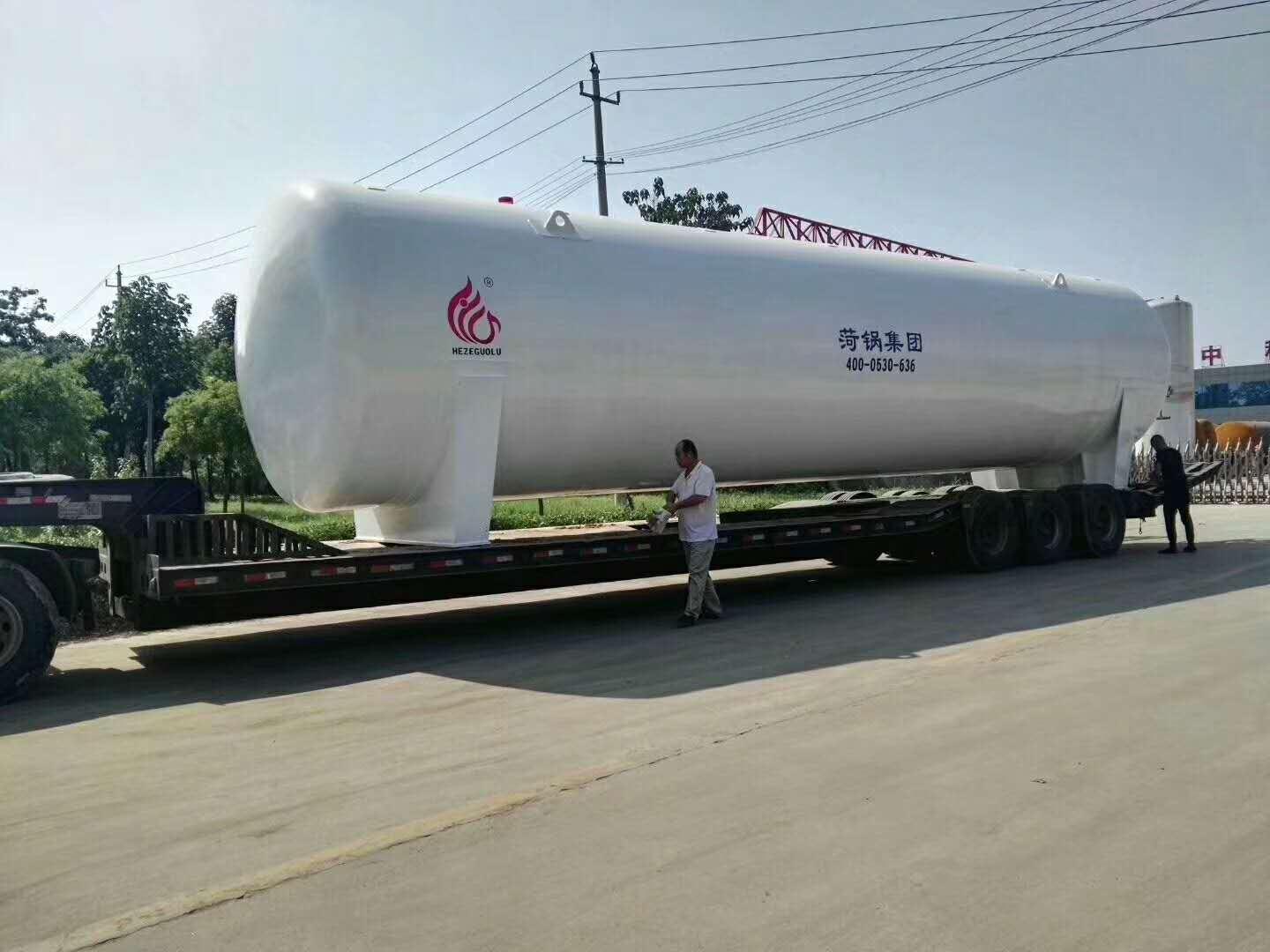
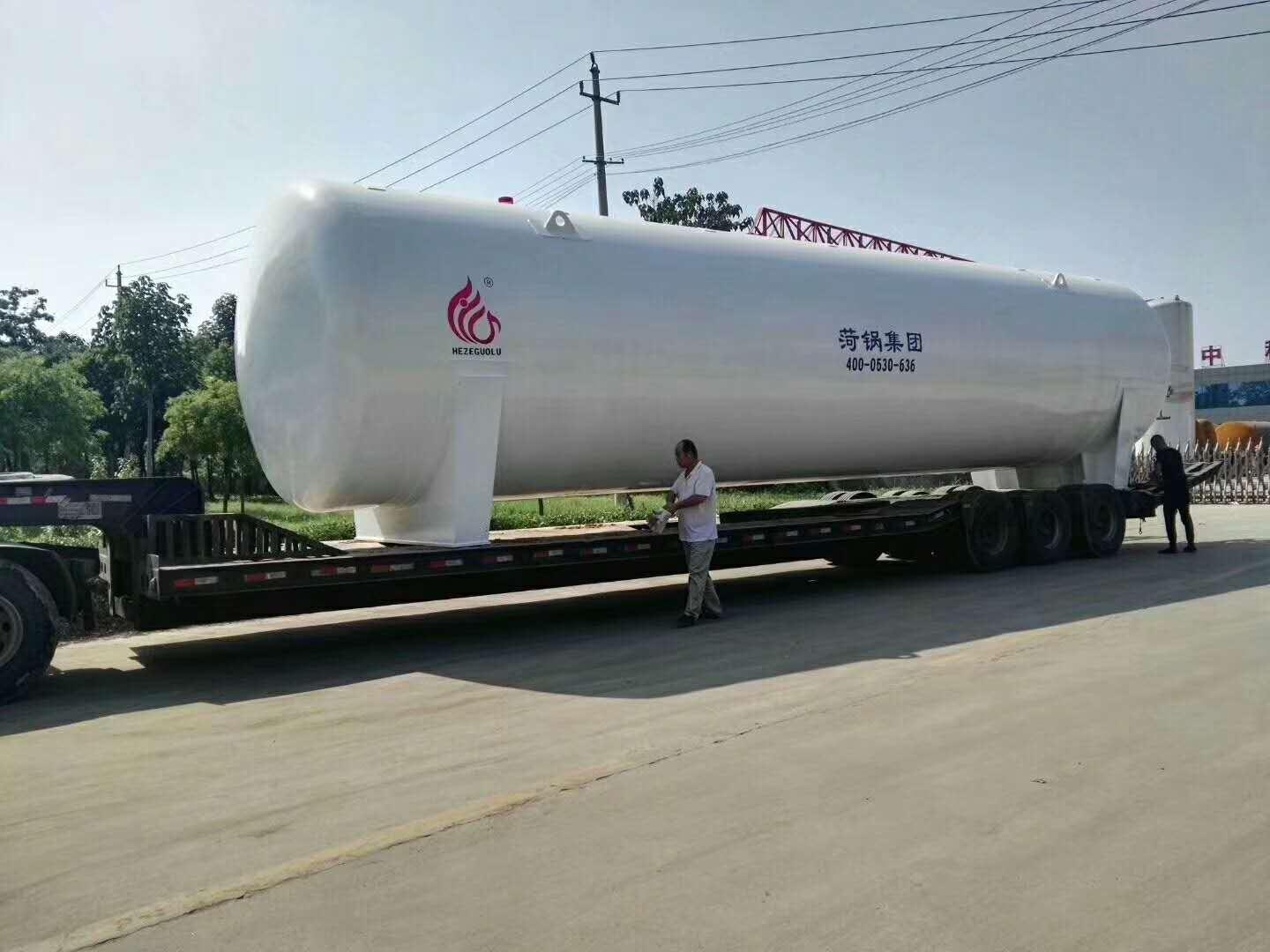
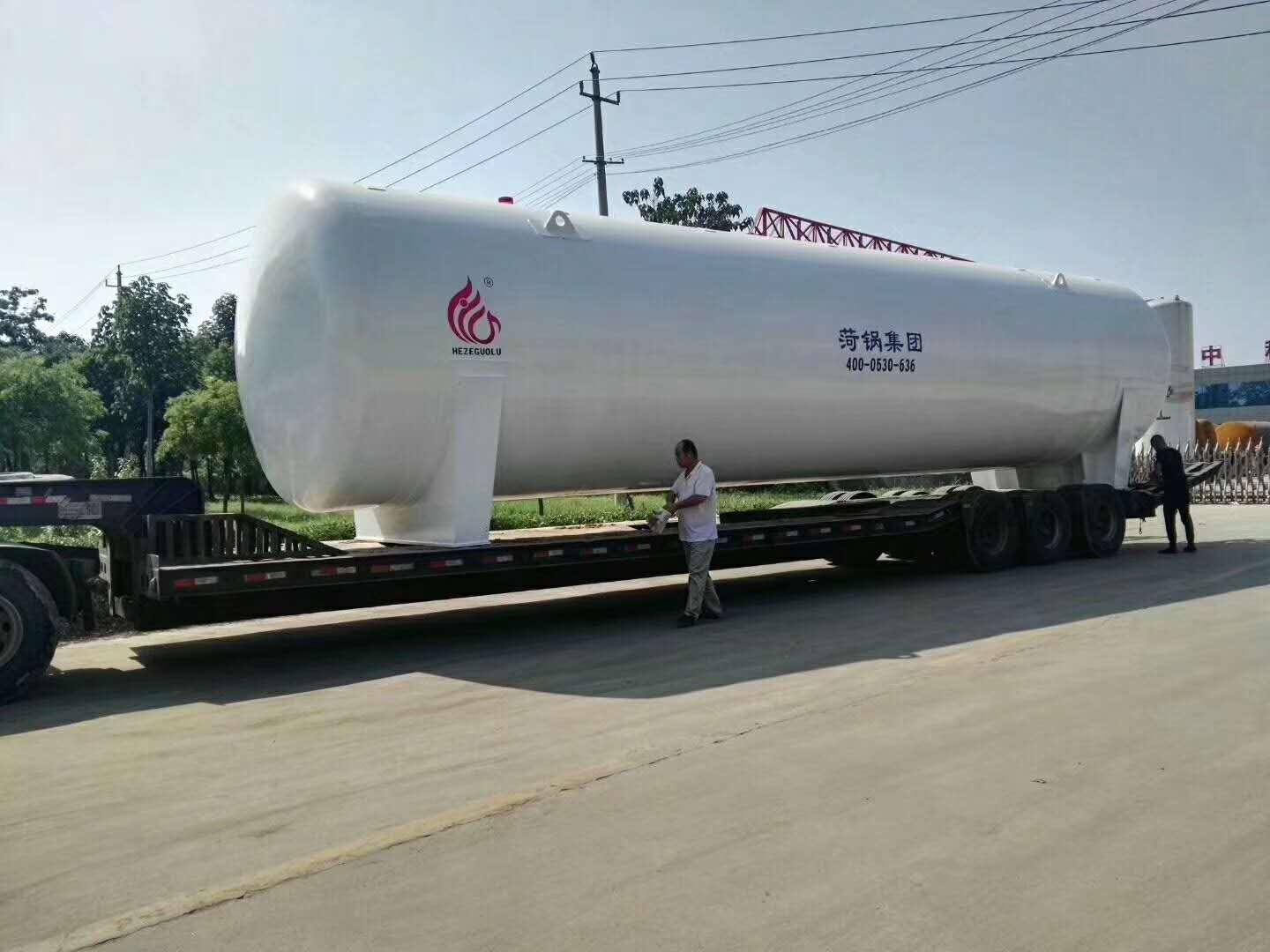
 Section 1: Equipment manufacturing complies with the following regulations and standards:
1、TSG 21-2016"Regulation for Safety Supervision of Fixed Pressure Vessels"
2、GB150.1~150.4-2011"Pressure Vessel"
3、NB/T47014-2011"Welding Process Evaluation for Pressure Equipment"
4、NB/T47015-2011Welding Procedure Specification for Pressure Vessels.
5、GB/T25198-2010"Pressure Vessel Head"
6、NB/T47013-2015Non-Destructive Testing of Pressure Equipment
7、NB/T47016-2011"Mechanical Property Test of Welded Specimens for Pressure Equipment Products"
8、JB/T4711-2003"Coating and Packaging for Pressure Vessels"
9、GB/T18442-2011"Fixed Vacuum Insulation Deep-Chilled Pressure Vessel"
II. Description of Equipment Features, Performance, and Structural Parameters
1Equipment Features
Liquefied Natural Gas (LNG) storage tank is horizontal, double-walled cylindrical vacuum powder insulation structure, with the inner cylinder containingLNGMaterial is:S30408The head is made of a standard elliptical head, with the outer cylinder facing the atmosphere, and the material isQ345RLow-alloy steel, an eight-point support structure is used between the inner and outer cylinders. Sandwich thickness250mmThe inner and outer tube cavities are filled with insulating material Pearl Sand thermal insulation material and vacuumed, with the pressure difference between the inner and outer layers being absolute pressure ≤5PaThe vacuum level at the factory exceeds national standards, ensuring the evaporation rate meets the specified indicators; the storage tank is equipped with a complete set of operating valves and instruments. These valves and instruments allow for on-site observation of liquid inflow and outflow, as well as pressure and level monitoring.
2Performance and structural parameters
Liquefied Natural Gas (LNG) storage tanks are composed of the tank body, instruments, pipelines, valves, etc. These storage tanks feature two liquid inlet methods, top and bottom, which can be chosen and used according to actual conditions.
The inner tank of the Liquefied Natural Gas (LNG) storage tank is equipped with a safety system device featuring dual safety valves. Under normal operation, one set is in operation while the other is on standby. In the event that the operating safety valve trips, the manual pressure relief valve is immediately opened to release pressure below the maximum working pressure of the tank. Simultaneously, the safety device is swiftly switched to the standby system via the manual handle, effectively ensuring the tank's safety. This safety system device consists of safety valves, explosion-proof devices, vent valves, and three-way ball valves, not only reducing pipeline welding but also featuring excellent fire and static electricity prevention structures. Additionally, the safety relief openings on the outer shell are fully guaranteed to ensure the entire equipment's safety and reliability. The low-temperature pipelines are集中引出 for ease of operation and control, and the outlet is designed with a Duralumin structure to meet low-temperature requirements and reduce stress on the pipelines caused by thermal expansion and contraction, ensuring the tank's safety. The vacuum pump valve is equipped with three stages of...OFormed ring seal ensures the reliability of the intermediate seal, made of full stainless steel and compact in size. The top design of the Liquefied Natural Gas (LNG) tank features a suspended structure for easy transportation, lifting, and installation. The unique manhole design ensures the cleanliness inside when the container is sealed. Vacuum isolation valves and combined vacuum regulators are used on the LNG tank for easy measurement and maintenance of the tank's vacuum degree between layers, extending the tank's service life and enhancing its quality. The LNG tank is equipped with a level gauge and a pressure gauge for local display of liquid level and pressure. The intermediate layer insulation material is high-quality domestic pearl sand, with the performance parameters of the pearl sand as follows:
Serial Number | Index Name | Unit | Benchmark |
1 | Loose Bulk Density | Kg/m3 | 50-60 |
2 | Particle size | mm | 0.1-0.2 Not less than80% |
3 | Thermal Conductivity (at atmospheric pressure),Temperature310-77k) | W/m.k.s | <0.026 |
4 | Moisture content(Weight) | % | <0.1 |
5 | Unexpanded Rate | % | ≤1 |
6 | Temperature | ℃ | -200℃~600℃ |
7 | PHPlease provide the Chinese content to be translated. | 6.5~7.5 |
Section 3: Inspection, Testing, and Acceptance
1Inspect the inner cylinder material; use only upon passing inspection.
2All welds are subject toGB150.1~150.4-2011Inspection of standards and drawings is required; upon passing the inspection.A、BWeld-like seam100%Gamma-ray inspectionA、B、C、DWeld seam equivalent100Percent penetration testing with a detailed test report provided
3After the cylinder assembly is completed, please proceed as follows:GB150.1~150.4-2011Standards and drawings require inspection of geometric dimensions, pipe end orientations, and shape deviations.
4After inspection, conduct a pneumatic test and issue a pressure test report. Upon passing the pneumatic test, evacuate the air. Once the vacuum level meets the requirements, perform a helium leak detection test.
5After interlayer leak detection passes, fill with pearl sand and then evacuate the air, achieving the required vacuum level.GB/T18442-2011Standard requirement for the after-sealing vacuum degree.
Section 4: Technical Information
1After the contract is signed, the seller shall provide the following technical data to the buyer:
Certificate of Product Quality for the equipment1Set (supplied with equipment)
Including: Certificate of Material for Main Pressure Components, Bill of Materials, Structural Dimensions Inspection Report, Inspection Plan, Product Compliance Certificate, Pressure Vessel Product Data Sheet, Welding Records, Non-Destructive Testing Report, Pressure Test Report, Certificate of Supervision and Inspection for Special Equipment Manufacturing (Local Inspection Institute), Product Label Copy
As-Built Drawings Various1Piece (supplied with the equipment)
Section 3: Strength Calculation Sheets1Pack (supplied with the equipment)
User's Manual1Each (supplied with the equipment)
Equipment process diagram and basic reference diagram1Per (signed contract)7Available daily.
Certificate of Conformity for accessories, instrument calibration report 1Pack (provided with the equipment)
5. Quality Assurance, After-Sales Service, Technical Support
1Equipment performance meets user requirements, ensuring normal operation within the process range.
2Valves and gauges on tanks come with a one-year warranty, which includes free service and repair during the warranty period, as well as free replacement of damaged parts. The equipment warranty period starts upon delivery.12Month(s).
3During the warranty period, if there is an issue with our manufactured equipment on-site: if it is a manufacturing defect, our company will respond to the customer's formal notification within normal working hours.2Hourly Response24Within hours, a professional technical team will arrive on-site to address the issue. Service personnel will not leave the site until the fault is resolved. Replacement parts within the warranty period are free of charge; beyond the warranty period, only cost fees will be charged.
4During equipment use, in case of any malfunctions, the seller shall first address the issue and then determine liability, with the principle being to ensure normal operation of the equipment.
Lifetime technical consultation provided by the supplier, always ready to answer customers' questions.

液化天然气储罐厂家:
液化天然气储罐生产厂家:Huzhou Boiler Factory Co., Ltd.
I. LNG Tank Safe Operation Procedures
1.1.1 Tank Operation Process Specifications
1)Highest AllowableWork Stress: 0.86MPa
2)DesignTemperature: -196℃
1.1.2 Tank Inlet Operation Procedure
1.1.2.1 Preparations
1) Operator Requirements: Operators must be certified after completing safety education and technical training, and are required to wear necessary protective gear and work uniforms during operations.
2) Pressure Test Requirements
3) All equipment must undergo pressure tests in accordance with design specifications prior to operation.
4) The test pressure gas should be dry nitrogen, with oxygen content not exceeding 3%, moisture dew point not exceeding -25°C, and free of oil contamination.
5) Blow-off replacement requirements: Blow-off replacement is a safety measure to ensure the formal filling of equipment with liquid. It should first be purged with nitrogen containing no more than 3% oxygen, while ensuring there is no oil contamination and the dew point of moisture is no greater than -25°C. Then, replace with LNG to achieve a liquid purity level before allowing the liquid to be filled.
6) Pre-cooling: After pressure testing passes, the equipment must be pre-cooled with liquid nitrogen to ensure reliable low-temperature operation. The tank must be purged and pre-cooled with nitrogen before first use. The high purge pressure should be equivalent to 50% of the working pressure or lower than this pressure.
1.1.2.2 Initial Liquid Filling Operation for Storage Tank
1) Open both the upper and lower inlet valves simultaneously for filling, and at the same time, open the valve of the overflow outlet to discharge the gas in the storage tank until LNG gas is discharged; then, immediately close the overflow outlet valve.
2) Close the lower liquid inlet valve when the tank is filled to over 50% of its capacity.
3) When the tank is filled to 85% of its capacity, close the liquid inflow valve and cease filling for 5 minutes to allow the liquid level to settle. Then, reopen the liquid inflow valve and continue filling until liquid overflows from the full overflow valve. Immediately close the full overflow valve, stop filling, and close the liquid inflow valve.
4) Upon initiating fluid filling, loosen the connections at both ends of the level gauge, fully open the liquid phase indicator valve and the gas phase indicator valve, and check if there is any water content in the exhaust gas flow. If water is present, continue to exhaust until it stops, then tighten the connections at both ends of the level gauge and close the balancing valve to ensure the level gauge is in normal operating condition.
1.1.2.3 Tank Refueling Operation Procedure
1) After the initial formal filling, the gas phase pressure inside the tank should be as low as possible during subsequent refilling.
2) Fill both top and bottom simultaneously. When the liquid level gauge shows approximately 50% full, close the lower liquid inlet valve. When filled to 85% of the storage tank's capacity, close the upper liquid inlet valve and stop filling for 5 minutes to allow the liquid level to settle. Then, reopen the upper liquid inlet valve to continue filling until liquid starts to discharge from the overflow valve. Close the overflow valve and simultaneously close the upper liquid inlet valve to stop filling.
3) Monitor the pressure gauge and level gauge during the filling process. (If the pressure rises above the filling pressure or approaches the safety valve pressure, it is necessary to open the gas discharge valve to release an appropriate amount of vapor from the storage tank.)
4) Fill out the Operation Record Sheet
2. Tank Pressure Boosting Operation Procedure
1) The boost system is the pressure regulating system for the storage tank. When the tank pressure falls below the set value, we open the boost regulating valve to increase the pressure of the storage tank.
2) During operation, open the boost liquid phase valve to allow LNG to enter the boost gasifier directly. After vaporization, it passes through BOG and enters the storage tank. At this point, closely monitor the pressure. Close the boost liquid phase valve once the storage tank pressure reaches the desired level.
3) Cautionary Notes:
a) During operation, the LNG tank must maintain a liquid level of ≥15%.
b) Personnel must not leave the site while the supercharging system is in operation.
c) When the supercharging system is in operation, the pressure-reducing system should be in the off state.
3. Tank Discharge Procedure
Preparation work:
1) Check that the tank's pressure gauge, level gauge, thermometer, flammable gas detector, and safety valve are functioning normally.
2) Inspect pipeline valves, pressure gauges, and safety valves to ensure they are in normal working condition.
3) Prepare all explosion-proof tools and wear personal protective equipment.
Section II: Catalytic Converter Safe Operation Procedure
1) When operating, first close the inlet and outlet valves in the system, then gradually open the inlet valve. As frost appears on the pipes, slowly open the exhaust valve until the required gasification amount is reached, then stabilize the valve opening.
If frost is found on the exhaust pipe, indicating an excessively low exhaust temperature, it suggests an excessive liquid intake. It is imperative to immediately reduce the intake valve to prevent overflow, and it is also necessary to promptly remove the frost from the outside of the pipe, increase ventilation equipment, or take other corresponding measures.
3) The vaporizer must be oil-free. When operating, wear oil-free thermal gloves. If the vaporizer is contaminated with oil, clean the heat exchanger. Use hot water between 60-80°C for cleaning, and if necessary, blow with nitrogen heated to 80-100°C until oil-free and dry.
4) In severe cases, use carbon tetrachloride for cleaning. Be vigilant during cleaning and wear a gas mask if the odor is intense. After the chemical wash, rinse with oil-free and debris-free water until no chemical components remain in the water. Then, dry the surface by blowing with nitrogen heated to 80-100°C until completely dry.
5) Conduct leak checks on the evaporator and all pipeline systems every six months, and maintain proper records.


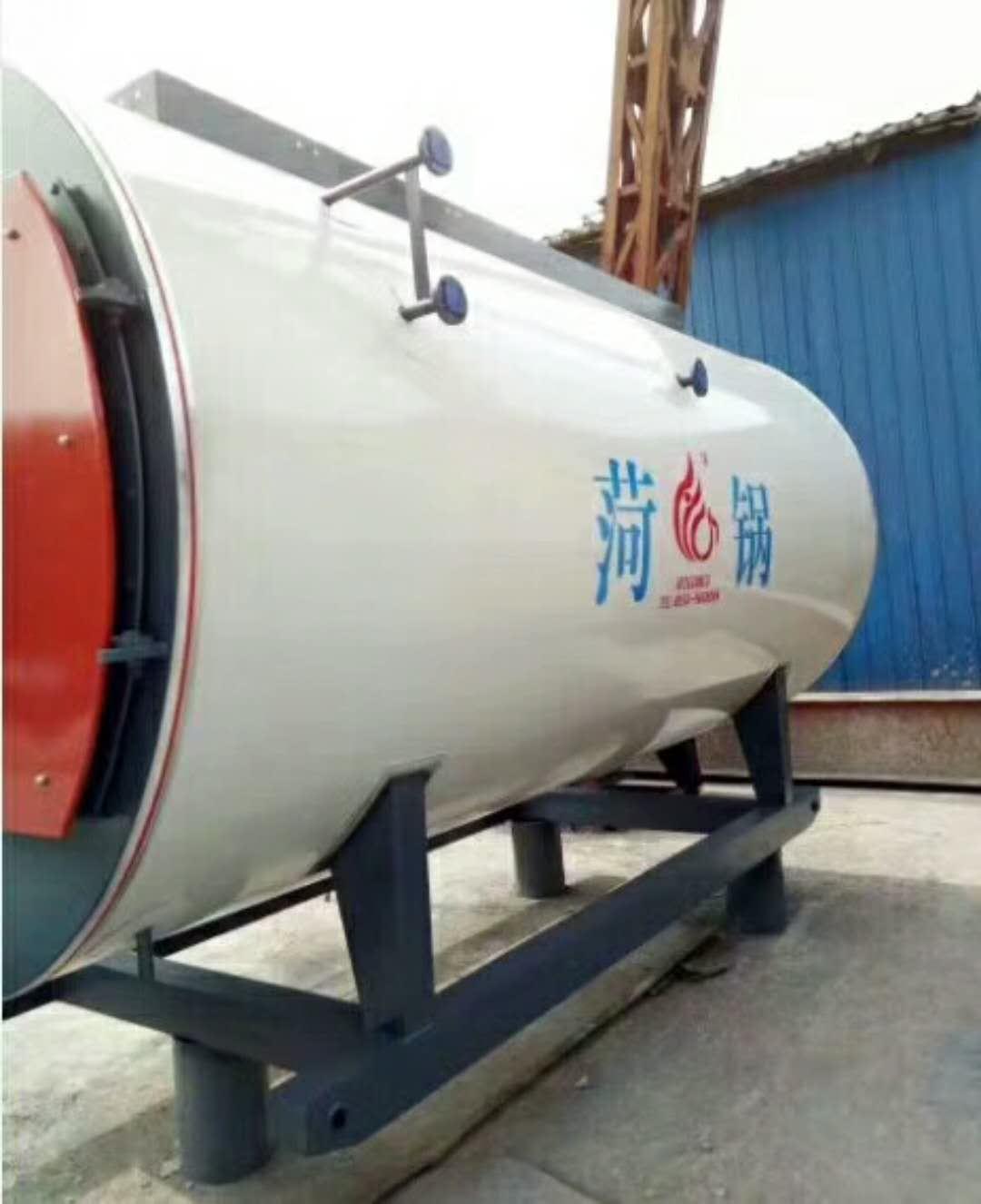
专业制造LNG储罐报价-哪里有LNG储罐定制-知名LNG储罐生产-LNG储罐生产厂家
