


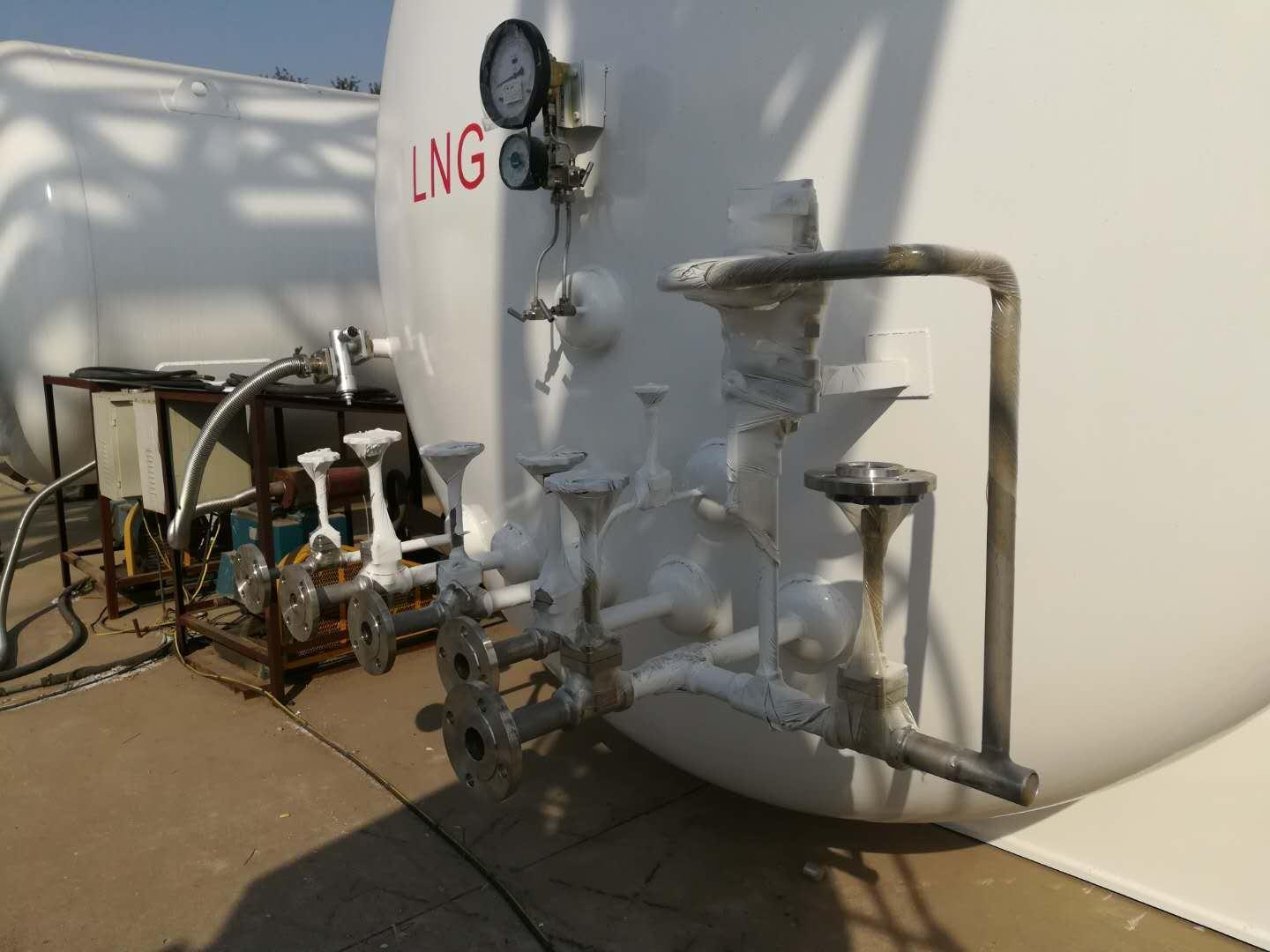
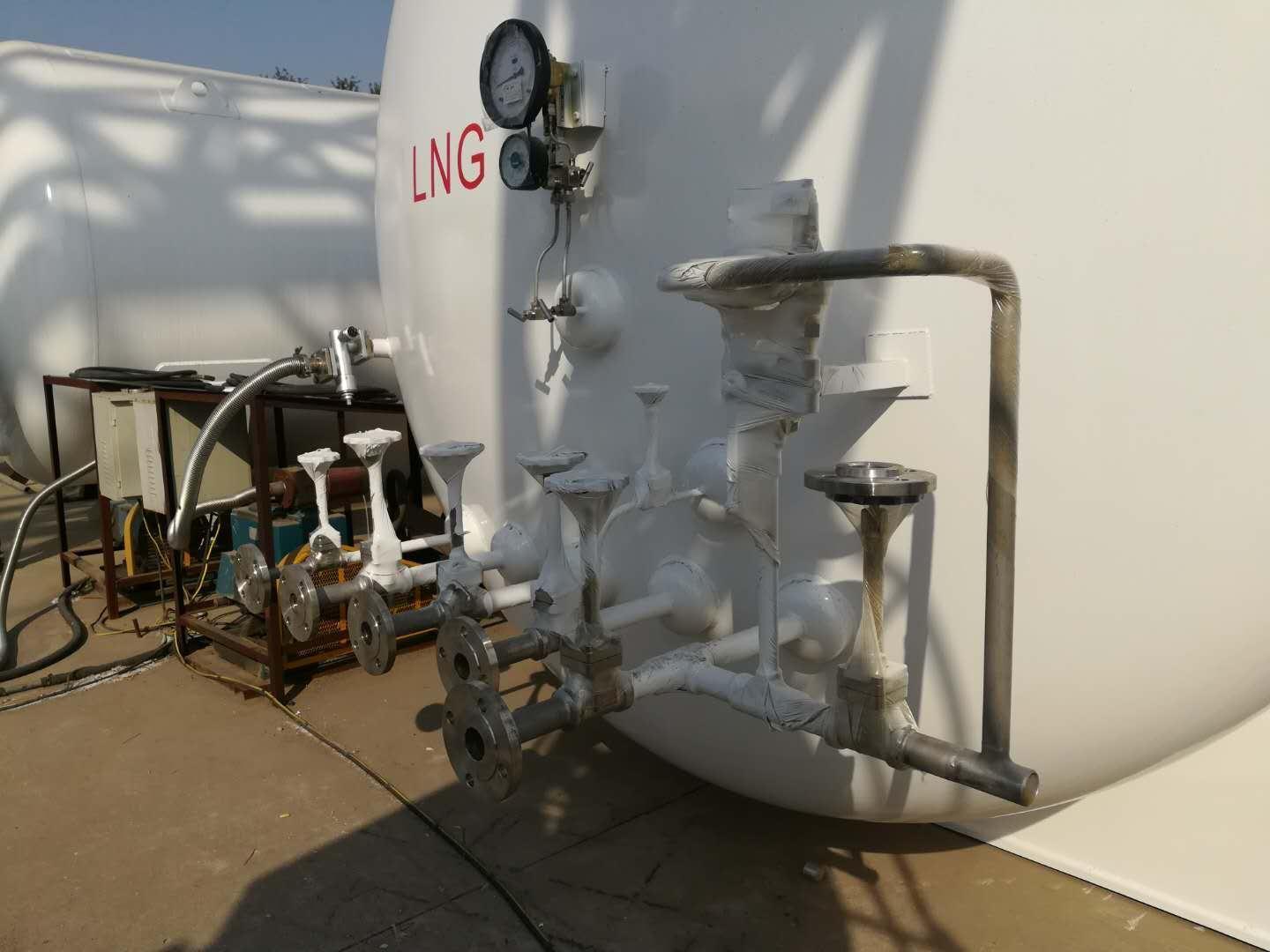
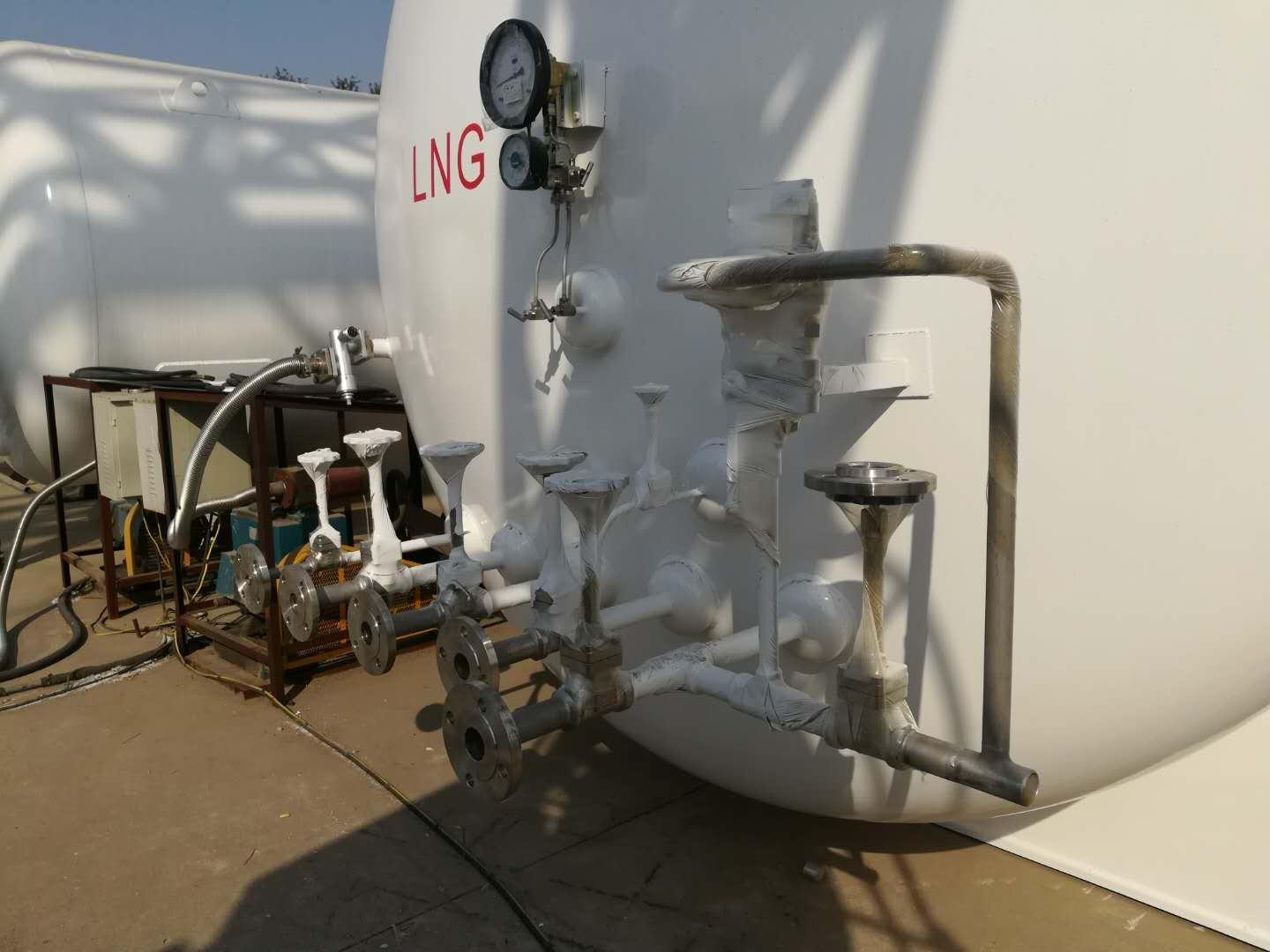
1、Natural Gas Storage TankLNG Storage System: The LNG storage system consists of low-temperature storage tanks, auxiliary pipelines, and control instruments. 2. Categorized by capacity: Small-scaleNatural Gas Storage Tank5-50 cubic meters, commonly used in civil gasification stations, LNG refueling stations for cars, etc.; medium-sizedNatural Gas Storage Tank50-100 cubic meters, commonly used in satellite liquefaction units, industrial gas vaporization stations, etc. 3Natural Gas Storage TankLNG pipelines typically use austenitic stainless steel tubes, which offer excellent low-temperature properties. 4. VerticalNatural Gas Storage TankLNG Storage Tanks, insulated with vacuum powder insulation technology, inner cylinder and pipeline materials are made of OCr18Ni Austenitic stainless steel, while the outer cylinder is made of high-quality carbon steel Q345R pressure vessel steel plate. We offer various sizes from 50 to 100 cubic meters.Natural Gas Storage Tank。5、Natural Gas Storage TankApplications: Chemical fuel, residential fuel, automotive fuel, co-generation, heat pumps, fuel cells, etc. 6Natural Gas Storage TankLiquefaction Process: Cascade liquefaction process, mixed refrigerant liquefaction process, expander-driven liquefaction process. 7,Natural Gas Storage TankThe liquefaction unit consists of a natural gas pretreatment process, liquefaction process, storage system, control system, and fire protection system, etc.
Operation Procedure for Natural Gas Low-Temperature Storage Tank
1.1 Introduction to Station Pressure Regulation Process
附 partial process flow diagram of pressure regulating area, with equipment numbers for operations indicated in the process flow diagram.
1.2 Pre-pressing Preparation
1.2.1 Tool Preparation
Explosion-proof wrench, two pairs of gloves, and two sets of protective gear.
1.2.2 Pre-Work Preparation
Wear personal protective equipment, including antistatic suits, static-free shoes, safety helmets, etc.
(2) Ensure that static-sensitive devices such as mobile phones and computers are placed in a safe area, check if the surrounding environment is safe, and if it meets the operational requirements.
(3) Before entering, rub your hands on the static discharge unit to release static electricity.
(4) Verify that all pressure-regulating tools, such as explosion-proof wrenches, are fully carried.
(5) Check that the tank's pressure gauge, level gauge, thermometer, flammable gas detector, and safety valve are operating normally.
(6) Inspect pipeline valves, pressure gauges, and safety valves to ensure they are in normal operating condition.
(7) Prepare all explosion-proof tools


Special Price LPG Tanks Wholesale - Best LPG Tank Supplier - Professional LPG Tank Pricing - In Stock LPG Tanks
