


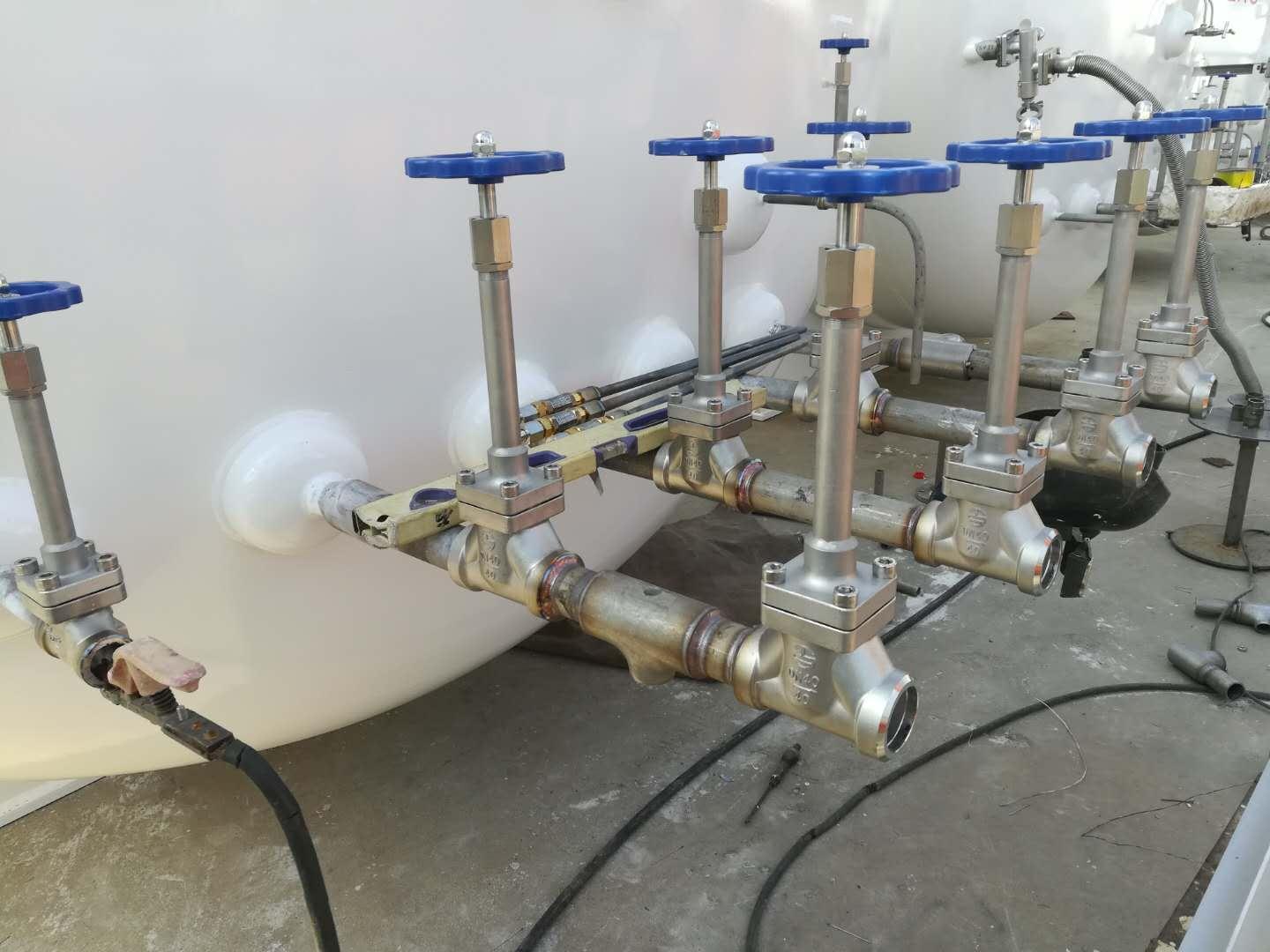
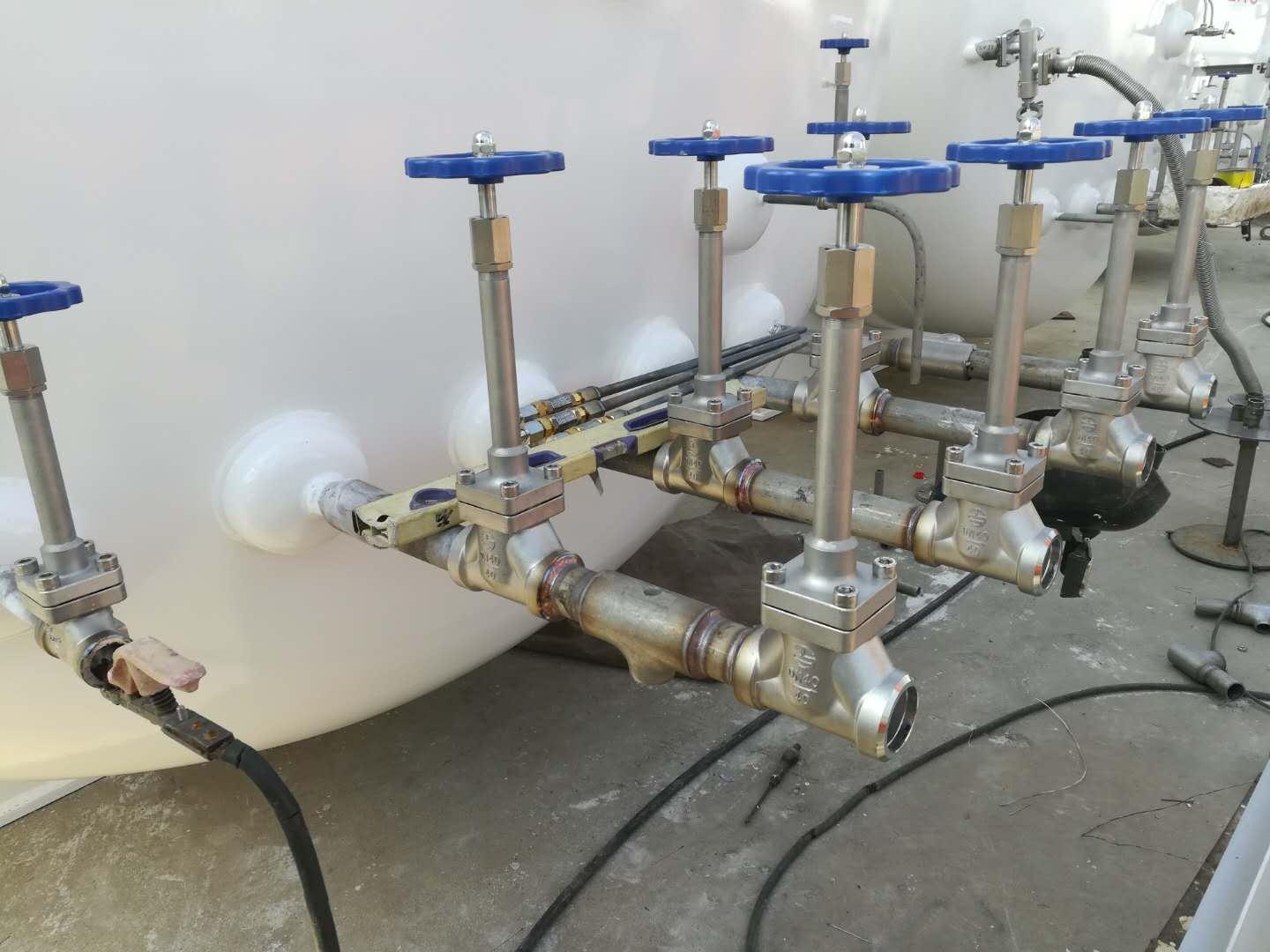
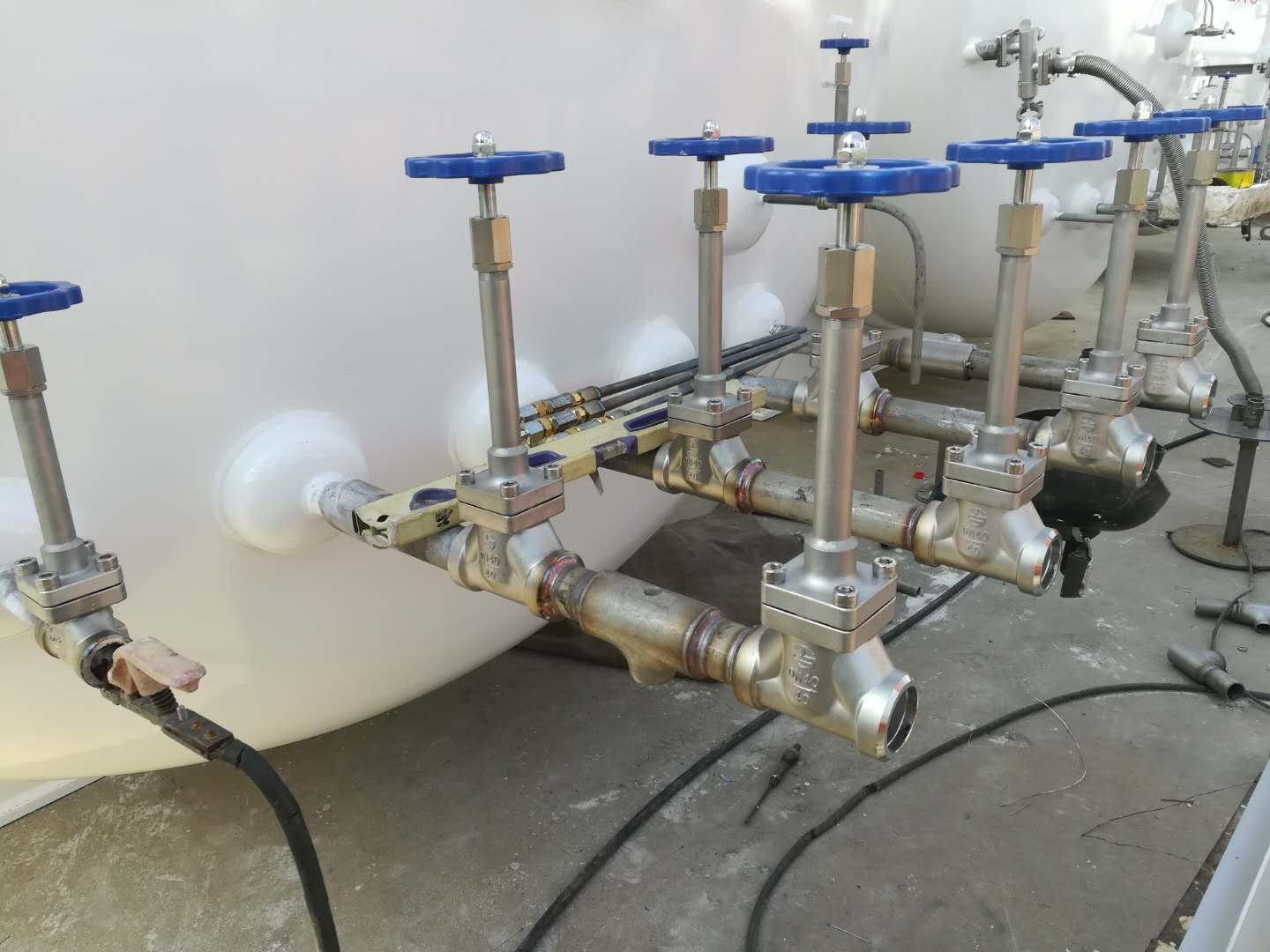

The LNG storage tank is a double-walled structure, consisting of an inner tank, an outer tank, internal and external supports, insulation layer, pressure safety system, vacuum pump, pipeline system, etc. All vacuum-insulated structures rely on vacuum. Due to the high degassing rate and suction resistance of the insulation space materials, and the inability of the sealing material to withstand high baking temperatures and slow degassing, suction is difficult. To achieve the required vacuum level within the designed suction time, in addition to the vacuum pump and suction process, it also depends on the flow area of the annular suction pipes. To ensure a high vacuum level and improve the suction rate, a vacuum pump is installed at both ends of the equipment. One vacuum pump consists of three suction pipes, placed in the lower part of the annular space and extending from the bottom, while the other vacuum pump, also with three suction pipes, is placed in the upper part of the annular space and extends from the top. The two sets of suction pipes cross and overlap along the length of the tank. By increasing the flow area of the suction pipes and using various auxiliary methods such as heating and nitrogen displacement, the vacuum time for the annular insulation space with a volume of 100 m³ is reduced to one-third of the conventional structure.
LiquefiedNatural Gas Storage TankIt is a professional product for storing liquefied natural gas, a special equipment, a Class III pressure vessel, made of 06Ni9DR material. It has undergone ultrasonic testing, hydraulic and pneumatic tests, on-site inspection by the Technical Supervision Bureau, and issued a pressure vessel inspection certificate. It is also completed with processes such as external rust removal and painting. The liquefied gas storage tank has strict quality assessment for the material, appearance dimensions, weld quality, operational quality, installation quality, internal equipment, and safety accessories of the pressure components.
Routine physical and chemical tests for the material of the drum, such as mechanical properties and chemical composition.
The welding joints, welds, tank heads, and the mutual geometric positions of all pressure components are rigorously inspected through X-ray non-destructive testing and magnetic particle inspection. Tests are conducted on the product's sealing, pressure resistance, and all technical indicators that could affect the safe operation of the product.
Common structures for LNG tanks include: vertical LNG tanks, horizontal LNG tanks, vertical mother-child tanks, and atmospheric tanks.
Vertical LNG Storage Tank
Volume options include 50 cubic, 100 cubic, 150 cubic, and 200 cubic.
Horizontal LNG Storage Tank
Volume options: 60 cubic, 100 cubic.
Vertical mother and son drum
A mother tank refers to an inner tank composed of multiple sub-tanks connected in parallel to meet large storage capacity requirements. These sub-tanks are assembled side by side within a large outer tank. The number of sub-tanks ranges from 3 to 7, generally not exceeding 12. The volume of individual sub-tanks should not be too large, typically between 100 to 150 cubic meters, with the maximum reaching 250 cubic meters. Common sizes include 1000 cubic meters, 1750 cubic meters, and 2000 cubic meters.
Atmospheric Storage Tank:
We offer medium to large-sized atmospheric LNG storage tanks, as well as extra-large atmospheric LNG storage tanks.

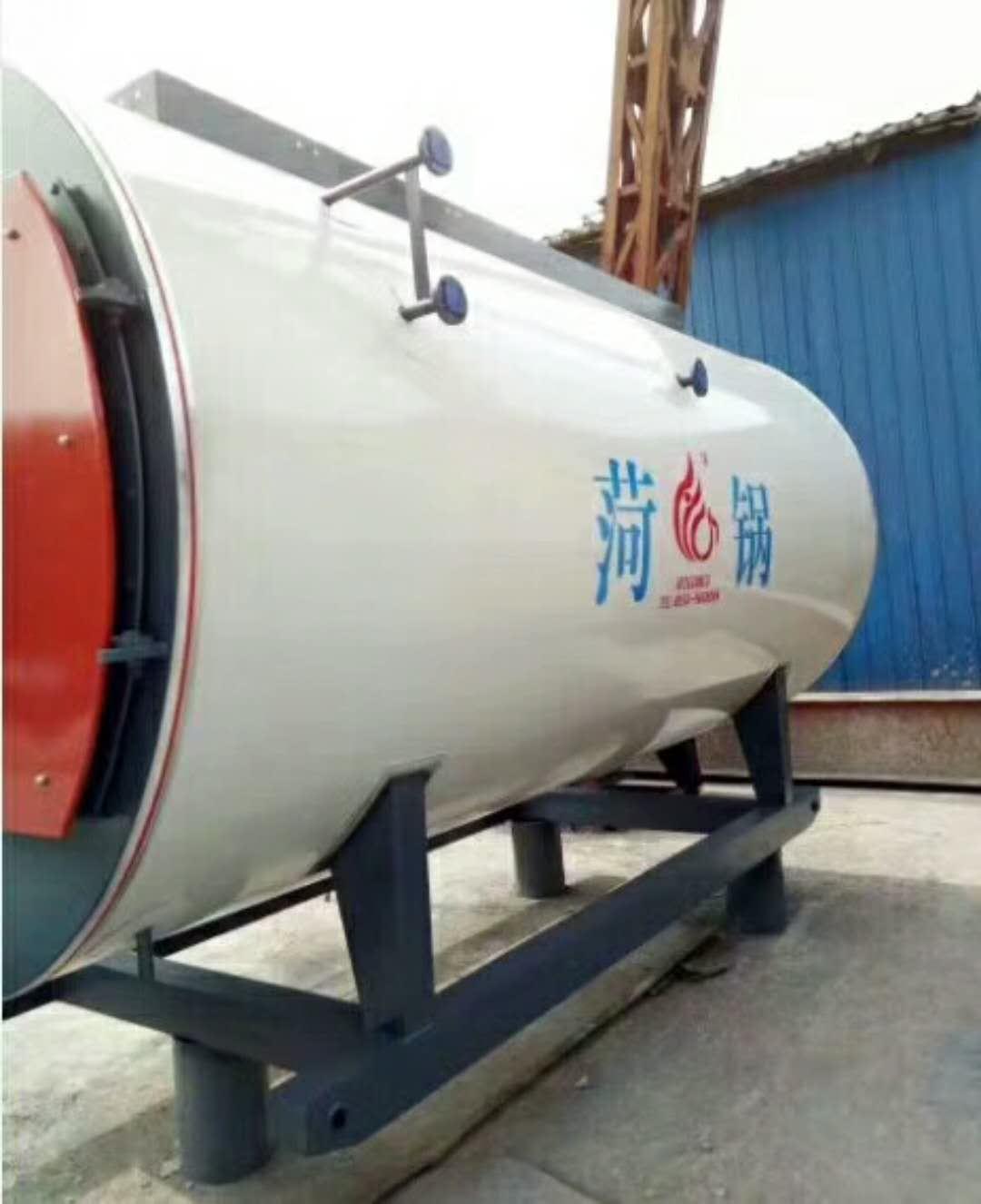

What brand of natural gas storage tank is good for sale? - Manufacturer of natural gas storage tanks - Professional manufacturer of natural gas storage tanks - Supplier of natural gas storage tank producers
