


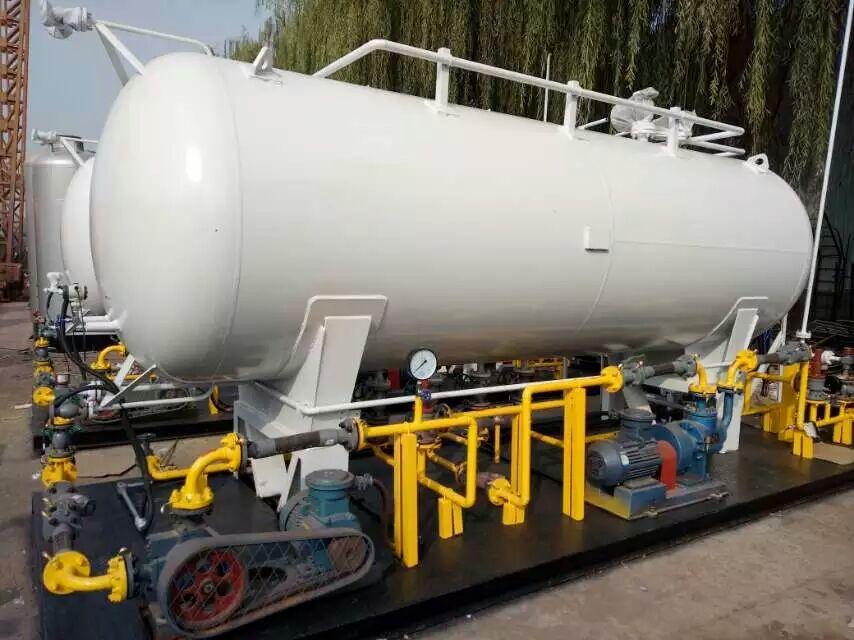
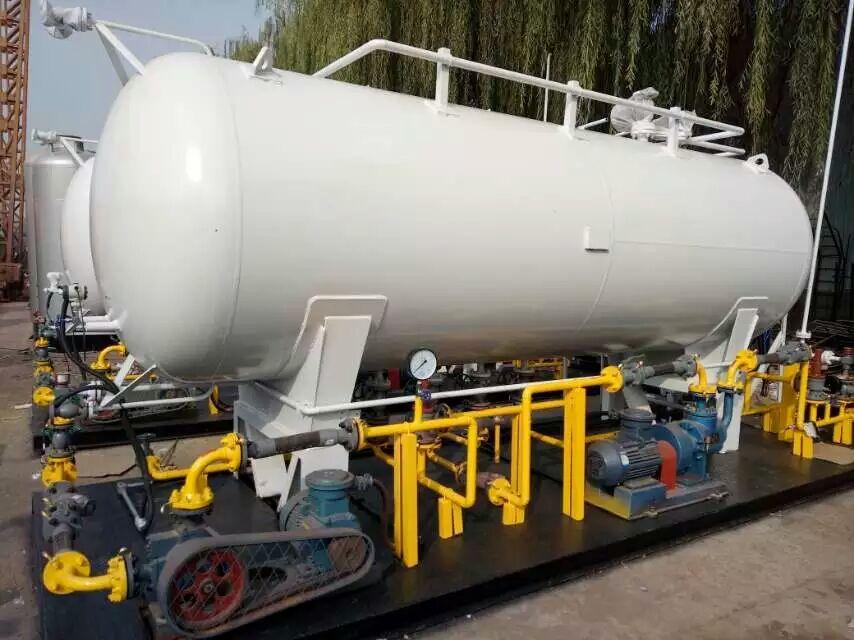
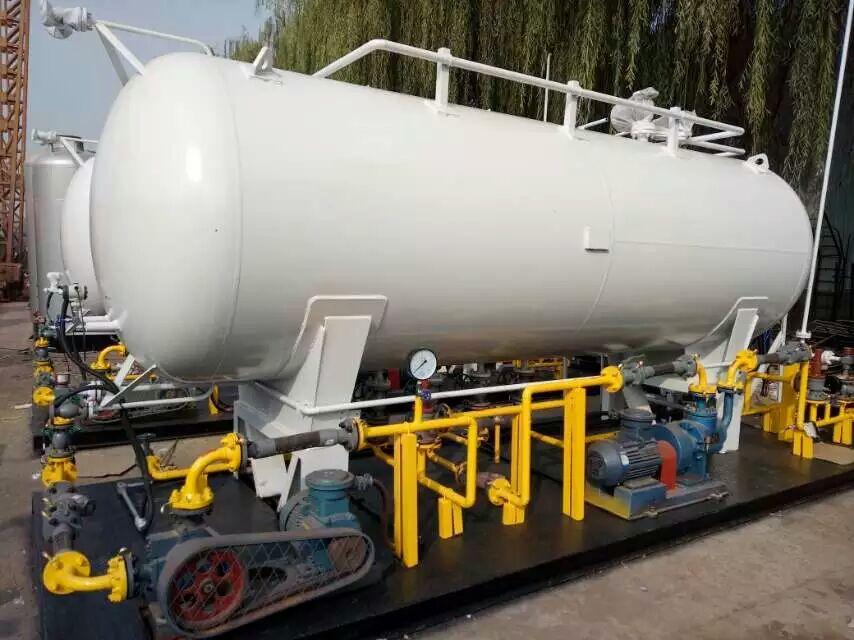

Maintain and repair
Routine Maintenance
The housing must not be subjected to any impact, and operations must be carried out according to regulations. External valves and pipe fittings should be kept clean and intact, with valves operating smoothly and being regularly inspected as per regulations. Under normal use, a yearly check and maintenance of all valves, pipe fittings, and instruments should be conducted, and replacement of consumables (such as valve seals) should be done promptly.
2. Insulation Performance Maintenance
One of the key requirements for low-temperature liquid storage tanks is excellent thermal insulation, with the quality of vacuum being a crucial factor in achieving this insulation.
Once the vacuum level of the tank is compromised, it can no longer store low-temperature liquids. Therefore, special attention should be given to protecting the tank's vacuum level. The explosion-proof device on the tank's shell and the vent valve are directly connected to the vacuum interlayer. The device should not be tampered with unless the interlayer vacuum level is not damaged, or when it is not necessary to replenish and re-evacuate with pearly sand. The vent valve is sealed with lead at the factory and must not be moved arbitrarily; otherwise, it will damage the tank's vacuum level.
The tank shell is an external pressure vessel, subjected to atmospheric pressure. It is strictly forbidden to strike or bump the shell to prevent damage and affect the vacuum degree.
3. Inspect
(1) Routine inspection
Is the valve in the correct open/close position?
2) Accuracy and reliability of pressure gauge and differential pressure (level) meter measurements.
3) Check for any leaks or blockages in pipes and valves.
4) If the container pressure reaches the set pressure of the safety valve and the valve does not activate, the safety valve's set pressure should be immediately calibrated to ensure the safety of the storage tank.
5) Are the bolts on the turbocharger connection flange loose, and is there any deformation in the pipes?
(2) Regular maintenance
1) The pressure gauge is calibrated annually.
2) The safety valve is inspected annually.
3) Measure vacuum level annually.
4) Thermocouple vacuum gauges (purchased by the user, not within the supply scope) should be calibrated according to the instructions before each measurement.
5) Inspect the tank grounding resistance annually; a resistance less than 10Ω is considered acceptable. If it exceeds 10Ω, the connection status should be checked promptly.
(3) Vacuum Level Inspection and Re-evacuation
The tank's vacuum level is measured once a year. To measure, simply unscrew the protective cover of the metal thermocouple tube and insert the plug of the thermocouple vacuum gauge, then the vacuum level of the sandwich can be known.
After several years of use, the tank's vacuum level may drop to 65Pa, necessitating a re-evacuation to enhance insulation properties. Prior to re-evacuation, the liquid in the tank should be drained first, and then heated with dry, oil-free air or nitrogen at 80-100℃ to blow out until it returns to normal temperature. Connect the vacuum piping, start the pump to remove the moist air from the pipes, and then open the vacuum valve to evacuate.
To shorten the vacuum time, the container can be heated with dry, oil-free air below 100℃. The vacuum degree of the jacket seal should be ≤3Pa. If necessary, the user may contact the manufacturer regarding vacuuming matters, and both parties can agree on the specific process for re-vacuuming.
4. Fault Handling
(1) Safety Valve Troubleshooting
1) Safety valve leakage
The valve disc and seat sealing surface may experience leakage beyond the permissible level under operating pressure, the possible causes being:
There are debris on the sealed surface.
If the installation is not fully cleaned with compressed air before use, or if solid impurities are introduced into the fluid during trial operation, or if it is necessary to perform certain actions, debris can become trapped between the valve seat and the sealing surface. If it's easy to remove the debris, do so manually. However, if there is still leakage after removal, consider the following causes: the valve seat and sealing surface may be damaged; or the debris may be embedded between the valve seat and sealing surface. If this situation is difficult for the user to handle, return it to the manufacturer for repair.
② Internal Pipeline Force
a) Human Factors
During the process of installing the safety valve on the pipeline, if it is forcibly rotated, the valve seat may rotate, which could cause the position of the safety valve adjusting ring to change or the sealing surface to be worn down forcibly. A decrease in operational performance may occur. In such cases, depending on the situation, either on-site at the user's location or at the factory, is possible for handling. However, making a quick and accurate judgment of the situation is essential.
b) Internal Force Factors
The adverse effects of welding residue's force within the pipeline on the safety valve are almost identical to the issues mentioned above. Therefore, it is crucial to thoroughly consider the absorption of forces within the pipeline during installation. This point is of utmost importance.
c) The set pressure of the safety valve is too close to the equipment's normal operating pressure, resulting in an excessively low sealing ratio pressure on the sealing surface. This makes it more prone to leakage when the safety valve is subjected to vibration or fluctuations in the medium pressure. Under the condition of meeting the strength requirements, the set pressure of the safety valve should be appropriately increased during design.
③Spring relaxation reduces the setting pressure, causing the safety valve to leak.
The primary cause of spring relaxation may be that after the safety valve is calibrated, the adjustment screw is not securely tightened, causing it to loosen during equipment operation, resulting in spring relaxation, decreased preload, and premature opening of the safety valve. The safety valve should be recalibrated.
2) Inflexible safety valve operation
The reason may be:
Improper adjustment of the safety valve's regulating ring causes the opening process to be prolonged or the return to be slow. A re-adjustment is necessary. By adjusting the lower regulating ring, increase the return pressure.
②The exhaust pipe of the safety valve has excessive resistance, causing significant back pressure during discharge, which results in insufficient opening height of the safety valve. By changing the exhaust pipe of the safety valve to a straight-through design and removing the middle bend, the safety valve will operate normally.
3) Safety valve frequent chatter or vibration
The reason may be:
The discharge of the safety valve is excessive. The rated discharge of the selected safety valve should be as close as possible to the necessary discharge of the equipment.
② The imported pipeline diameter is too small or the resistance is too high.
Excessive resistance in the exhaust pipe causes excessive back pressure during emissions. Reduce the resistance in the exhaust pipe.
④Improper adjustment of the adjusting ring leads to excessive return seat pressure. The position of the adjusting ring should be realigned.
4) Operation of Three-way Valve A-5 during the replacement of the safety valve
① During normal operation, both safety valves are in use simultaneously, meaning both channels are open at the same time, with the handle positioned as shown in Figure 1.
②When replacing the safety valve, rotate the handle 90 degrees (as shown in Figures 2 and 3), close the channel on the side of replacement, and then empty the residual medium inside the channel before replacing the safety valve.

Low-Temperature Valve Fault Handling
Common faults of low-temperature valves: leakage at the handwheel stuffing box; leakage at the valve cover nut; internal leakage of the valve; leakage at the valve-pipe connection.
Leakage at the handwheel stuffing box or valve cover nut can be tightened with a wrench when the storage tank is not pressurized; under no circumstances should it be tightened under pressure.
Valve internal leakage is usually caused by solid particles in the valve core or wear from frequent opening and closing. Both inlet and outlet valves are typically dual-valve designs, with one in reserve. When internal leakage is detected, close the reserve valve and repair the leaking valve. First, loosen the valve cover nut with a wrench, remove the valve stem, and dry the valve disc and cover stem with a hairdryer; then clean the valve body sealing surface and the valve disc sealing gasket, and wipe away any condensation or water. If the valve disc gasket shows unevenness, cracks, or grooves, replace it immediately with a spare gasket. If wear marks are found on the valve body sealing surface, sand it smooth with metallographic sandpaper (use fine wood sandpaper on the back if unavailable). Before reassembling, carefully remove dust and condensation or water, and tighten the valve cover nut.
When leakage is detected at the valve-pipe connection, please have a qualified unit perform the repair. During the repair, drain the liquid completely, vent it, and ensure the oxygen equipment contains less than 21% oxygen. Before welding, position the valve halfway open and loosen the valve cover nuts. After welding, retighten the nuts and conduct an air tightness test on the piping.
Pressure (Level) Gauge Fault Handling
Common issues include malfunctioning indicators and trembling pointers.
1) Failure of the indicator is categorized into two types: the pointer not returning to zero position and the pointer remaining fixed at a certain value. If the former is the case, it is usually due to improper use, i.e., the combined valve of the differential pressure (level) gauge is not in a balanced state before filling, causing the pointer to not return to zero. Open the combined valve after liquid is introduced through the lower inlet. If the deviation between the pointer and zero is minimal, you can loosen the screw securing the fixed gauge needle, move the pointer to zero, and then tighten the screw.
2) Pointer tremors are usually due to air leakage in the gauge tube. Carefully inspect the gauge tube, combination valve of the level gauge, and related connections of the pressure gauge. Additionally, if the liquid is overfilled, causing a differential pressure (level) gauge to draw in liquid through the upper tube, it may also exhibit tremors.
(4) Summary of Fault Handling Methods
Potential Faults During Use, Causes and Solutions are listed in the following table.
Troubleshooting Methods
Fault Phenomenon Cause Solution
During use, internal pressure
An abnormal increase occurred: a. The turbocharger's intake valve is not sealing properly, causing internal leakage. The turbocharger intake valve is being ground and inspected.
b. The pressure gauge reading is inaccurate. Inspect or replace the pressure gauge.
Differential Pressure (Level) Gauge Reading is Inaccurate a. The Differential Pressure (Level) Gauge is malfunctioning. Inspect the Differential Pressure (Level) Gauge.
b. Leaks in the upper and lower pipes of the differential pressure (level) gauge. Repair and leak sealing.
c. Leaks at the differential pressure (level) gauge connection. Repair and remove the leak.
Evaporation rate exceeds design
Value, sweating and frosting at the top a. The vapor relief valve is not tightly closed or there is an internal leak. Valve grinding and maintenance required.
b. Vacuum degradation. Re-evacuate the vacuum.
c. Top pearlescent sand settled, sand not properly filled. Refill pearlescent sand, re-evacuate vacuum.
Leakage of liquid or gas from the valve cap or connection. a. The sealing packing is not tightly compressed. Tighten the gland nut.
b. Seal ring damaged. Replace the seal ring.
c. Sealing surface damage. Repair or replace parts.
d. Weld Seam Leaks - Repaired Welding (but should be carried out according to the repair welding requirements).

专业LNG储罐哪家好-供应LNG储罐定做-知名LNG储罐加工-正品LNG储罐制造商
