


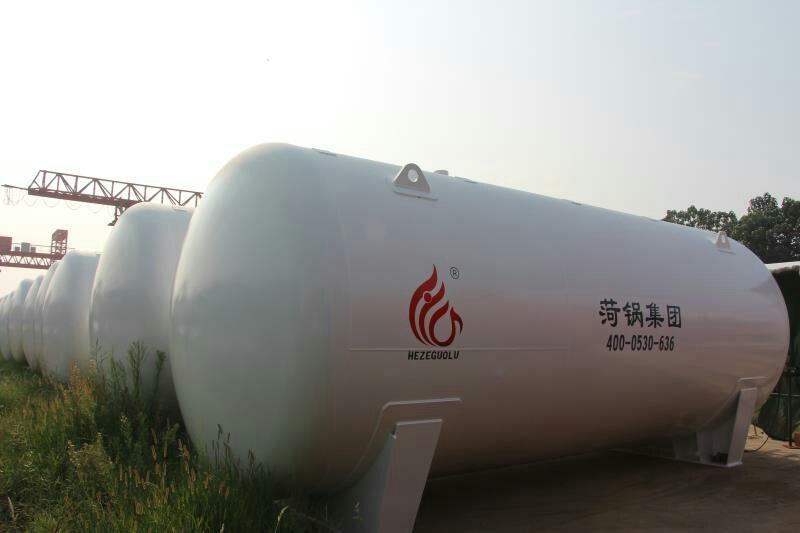
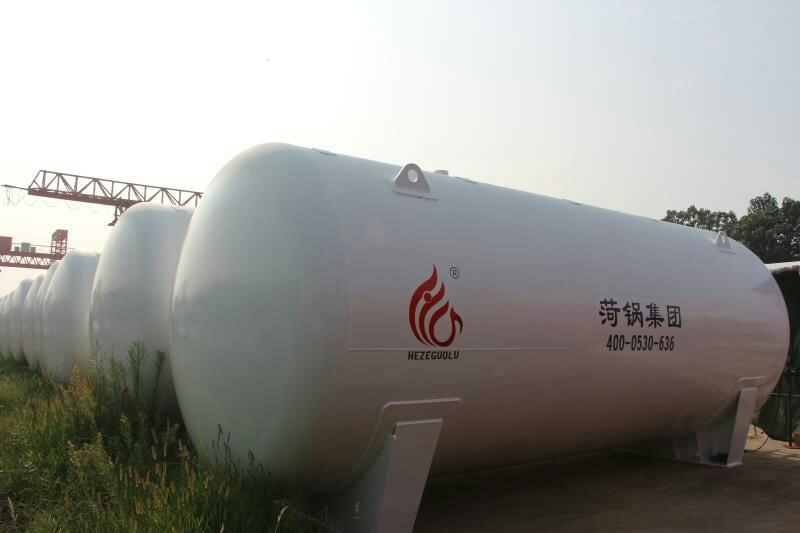
LiquefiedNatural Gas Storage TankA specialized product for storing liquefied natural gas, a special equipment, a Category III pressure vessel, made of 06Ni9DR material, complete with ultrasonic testing, hydrostatic and pneumatic testing, on-site inspection by the Technical Supervision Bureau, and issued with a pressure vessel inspection certificate. The process also includes external rust removal and painting. The liquefied gas storage tank undergoes rigorous quality assessment for the material, appearance dimensions, weld quality, operational quality, installation quality, internal equipment, and safety accessories of the pressure components.
Routine physical and chemical tests for the cylinder material, such as mechanical properties and chemical composition.
The welding joints, seams, head of the tank, and the mutual geometric positions of all pressure elements are strictly inspected through X-ray non-destructive testing and magnetic particle inspection. Testing and experiments are conducted for the product's sealing, pressure resistance, and all technical indicators that could affect the safe operation of the product.
Common LNG storage tank structures include: vertical LNG tanks, horizontal LNG tanks, vertical mother-child tanks, and atmospheric storage tanks.
Vertical LNG Storage Tank
Volume options include 50, 100, 150, and 200 cubic units.
Horizontal LNG Storage Tank
Volume options: 60 cubic, 100 cubic.
Vertical mother-child drum
The mother罐 consists of multiple interconnected daughter tanks, designed to meet large storage capacity requirements. These daughter tanks are assembled side by side within a large outer tank. The number of daughter tanks ranges from 3 to 7, generally not exceeding 12. Each daughter tank's volume should not be excessively large, typically between 100 to 150 cubic units, with the maximum reaching 250 cubic units. Common sizes include 1000 cubic, 1750 cubic, and 2000 cubic units.
Atmospheric Storage Tank:
We offer large and medium-sized atmospheric LNG storage tanks, as well as extra-large atmospheric LNG storage tanks.
Cautionary Notes
1. Cylinders must be stored in well-ventilated areas and kept at least 1.5 meters away from any fire or heat source. Cylinders are strictly prohibited from being heated with fire, boiled in water, or left exposed to direct sunlight. Regular inspections of cylinder valves and pipeline joints for airtightness are required to ensure no leaks. Leaks can be checked using soap and water, but open flames for leak testing are strictly forbidden.
2. When lighting, ignite the primer first, followed by opening the gas; do not reverse the order. There should be a person watching during use; do not leave it unattended to prevent boiling water from spilling and extinguishing the flame, which could cause the escaping liquefied gas to ignite and explode. After using the gas cylinder, the valve must be tightly closed to prevent gas leakage.
3. The liquefied gas inside the cylinder should not be completely exhausted; a certain residual pressure must be maintained. The residual pressure should generally be greater than 49.03 kPa (i.e., 0.5 kg/cm2, gauge pressure) to prevent air from entering the cylinder. After the liquefied petroleum gas is used up, the remaining residue inside the cylinder is also a flammable substance and should not be poured out arbitrarily to avoid fires caused by the flow and evaporation of the residue.
4. LPG cylinders are pressurized containers that require proper maintenance and regular inspections. Prevent the cylinders from falling or being struck during handling and use. Do not use metal tools to敲击 open the valve. Protect them from direct sunlight and prolonged exposure to rain. Cylinders should be inspected every 2 years.
5. Although the explosive range of liquefied petroleum gas (LPG) is not very wide, its lower limit is small, making it easy to ignite and explode upon leakage. Additionally, as LPG is heavier than air, it tends to flow downwards upon leakage in the air, accumulating in low-lying areas and posing a hidden danger of gas explosion. Therefore, in areas where gas leakage is prone, relying solely on window ventilation is insufficient; attention must also be given to lower-level ventilation.
6. Upon discovering a liquefied gas leak indoors, promptly open windows and doors for ventilation, allowing the gas to disperse in the direction away from any open flame. No fire is allowed in the vicinity. Only use the space once the fault is rectified and the distinctive odor has dissipated. Dispose of any spilled liquid on the ground by covering it with sand or earth before removing it to a safe location. In case of a gas cylinder fire, immediately close the valve, move it to an open area outdoors, and extinguish the fire using dry powder extinguisher, CO2 extinguisher, or by covering it with a damp sack.
7. Educate children not to tamper with gas cylinders carelessly, and users must be aware of the safety knowledge for using gas cylinders.


供应天然气储罐报价-特价天然气储罐批发价-正规天然气储罐生产商-专业的天然气储罐出售
