


Shandong Zhongjie Special Equipment (formerly Heze Boiler Factory Co., Ltd.) holds an A-grade boiler manufacturing license, an A2-grade pressure vessel manufacturing license, an A2-grade pressure vessel design license, a B-grade boiler installation license, and GB2/Class GC2 pressure pipeline installation licenses, as well as a mechanical and electrical equipment installation contracting qualification. It is a member of the China Boiler and Water Treatment Association, the China Chemical Equipment Association, and the理事 unit of the Shandong Equipment Manufacturing Association. The company has also passed certifications for the ISO9001 Quality Management System, ISO14001 Environmental Management System, OHSAS18001 Occupational Health and Safety Management System, and the American ASME/U2 certification.
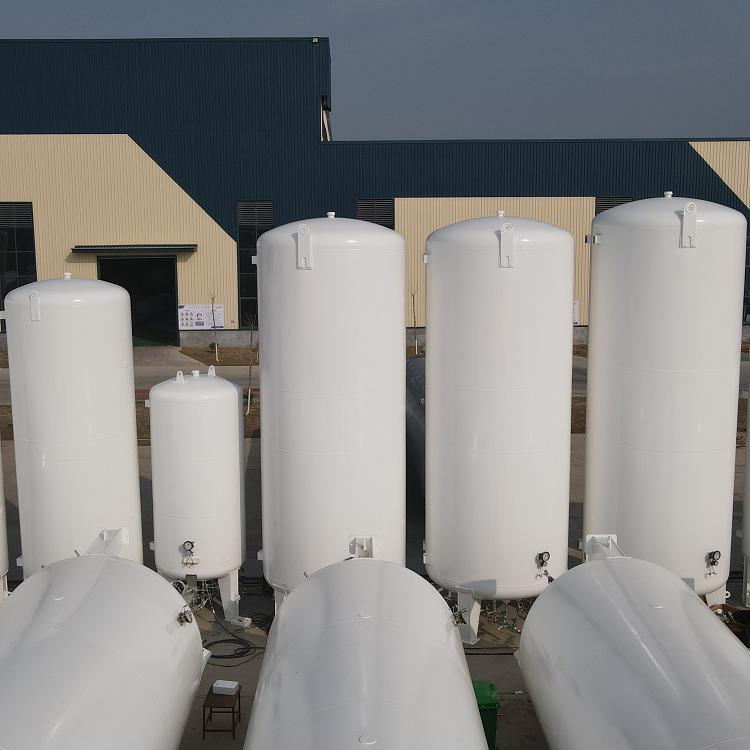
Liquid argon storage tanks are designed specifically for storing liquid argon and come with the following parameters, features, and characteristics:
Parameters:
Tank Capacity: The capacity of liquid argon tanks can be customized to meet requirements, with various sizes available such as 500L, 1000L, 2000L, etc.
Work Pressure: The working pressure of liquid argon tanks is typically atmospheric or slightly above atmospheric pressure.
Storage Temperature: Liquid argon tanks are typically stored at -196°C, which is the boiling point of argon, maintaining its liquid state.
Feature:
Store Liquid Argon: Liquid argon tanks are primarily used for storing liquid argon, maintaining its liquid state at low temperatures for supply and use.
Insulation: The liquid argon storage tank utilizes advanced insulation materials and structural design to minimize heat transfer and retain the low-temperature state of liquid argon.
Safety Control: The liquid argon storage tank is equipped with safety devices such as pressure relief valves and level alarms, ensuring safe operation and use.
Features:
High Purity Supply: Liquid Argon tanks offer high purity liquid argon supply to meet the requirements of applications such as cryogenic storage, gas shielding welding, and semiconductor manufacturing.
Long-term Storage: Liquid argon tanks can store liquid argon for extended periods, thereby extending its service life. By controlling the temperature inside the tank and the performance of the insulation layer, the evaporation and oxidation of the liquid argon are slowed down.
Broad Applications: Liquid Argon Storage Tanks are widely used in various fields such as industry and scientific research, including refrigeration, semiconductor manufacturing, and more.
Environmental Protection & Energy Saving: Liquid argon storage tanks ensure effective storage and utilization of liquid argon, reducing energy waste and environmental pollution.
In summary, liquid argon storage tanks are designed for storing liquid argon, thermal insulation, and safety.
During the process of constructing low-temperature liquid oxygen storage tanks with central oxygen supply, special attention should be paid to the following aspects:
Safe Operation: Strict adherence to safety procedures and standards must be followed during the storage tank installation process. Operators should be trained, familiar with the properties and safety requirements of liquid oxygen, and knowledgeable about the equipment and operational procedures to ensure safety during operations.
Fire Prevention Measures: Liquid oxygen has a high oxygen content and is prone to causing fires. During the installation process, necessary fire prevention measures should be taken, such as setting up fire barriers, using fire-resistant coatings, and prohibiting open flames, to prevent the occurrence and spread of fires.
Leakage Control: Pay attention to leakage control during the installation process. Oxygen concentration may increase due to the leakage of liquid oxygen, which can increase the risk of fire and explosion. Leak detectors and alarm systems should be equipped to detect and control leaks in a timely manner, and appropriate emergency measures should be taken.
Oxygen Concentration Monitoring: During the installation process, the oxygen concentration around the liquid oxygen storage tank should be monitored regularly. High oxygen concentrations can intensify the combustion of flammable materials, increasing the risk of fire and explosion. Take timely measures to ensure the oxygen concentration remains within a safe range.
Grounding and Static Protection: During the liquid oxygen equipment process, ensure proper grounding of the storage tank and related equipment to minimize static accumulation and discharge. Utilize static-conductive materials and anti-static equipment to reduce the risks caused by static electricity.
Regular inspections and maintenance: After installation, liquid oxygen tanks should be regularly inspected and maintained. This includes visual inspections, pressure tests, and leak detection, to ensure the tank's safety and stability.
Note that during the installation of the central oxygen supply low-temperature liquid oxygen storage tank, operations should be carried out by experienced personnel and in accordance with relevant safety operation procedures and standards. Close attention should be paid to safety risks during the installation process, and timely measures should be taken to ensure the safety and stability of the installation.
Operation procedures for liquid oxygen storage tanks should be established based on specific tank design and usage requirements. The following are some common contents of general operation procedures for liquid oxygen storage tanks:
- Operator Training: Ensure operators have received relevant training for liquid oxygen storage tanks, understanding the tank's structure, performance, operation procedures, and safety precautions.
- Safety Inspections: Conduct necessary safety checks before operating the liquid oxygen storage tank, including checking the tank's integrity, the sealing of valves and pipes, and the condition of the insulation layer.
- Liquid Oxygen Supply: Ensure the liquid oxygen supply system is functioning properly, including inspecting the status of liquid oxygen supply pipes, valves, and pressure gauges, and ensuring an adequate supply of liquid oxygen.
- Tank Pressure Control: Monitor the pressure of the liquid oxygen storage tank to ensure it remains within a safe range. If necessary, control the tank's pressure by adjusting pressure valves or pressure relief devices.
- Leak Control: Regularly check the sealing of the tank and pipes to ensure there are no leaks. In case of a leak, take immediate measures for leak control and notify relevant personnel.
- Fire Prevention Measures: Prohibit open flames and prevent sparks and high-temperature objects from contacting the tank around the storage tank. Set up fire prevention facilities and fire extinguishing equipment, and conduct regular inspections and maintenance.
- Safety Distance: Maintain a certain safety distance around the liquid oxygen storage tank to prevent the spread of fires, explosions, and leaks.
- Maintenance and Repair: Regularly perform maintenance and repairs on the tank, including cleaning the tank, inspecting the insulation layer, valves, and pipes, to ensure the tank operates normally.
- Waste Disposal: Properly dispose of waste generated by the liquid oxygen storage tank, including residual liquid oxygen, waste gases, and waste liquids, following relevant environmental protection regulations and standards.
Note that operation procedures for liquid oxygen storage tanks should be established based on specific tank design and usage requirements and should comply with applicable regulations, standards, and safety guidelines. When operating liquid oxygen storage tanks, cooperate with local regulatory agencies and individuals to ensure the tank's safety and reliability.
Safety guidelines and considerations for the handling and transportation of liquid oxygen tanks include:
Safe Usage Instructions:
Tank Selection: Choose liquid oxygen tanks that comply with regulations and standards, ensuring their quality and safety performance.
Tank Installation: Tanks should be installed on a sturdy foundation to ensure stability. Additionally, the area around the tank should be well-ventilated and kept away from flammable materials and heat sources.
Sealability Inspection: Regularly inspect the tank's sealing performance to ensure there are no leakage at valve and pipeline joints.
Pressure Control: Tanks should be equipped with pressure gauges and safety valves, and regularly inspected and maintained to ensure pressure remains within safe limits.
Fire Prevention Measures: Liquid oxygen contains a high oxygen content and is highly flammable. Establish fire barriers around the storage tanks, prohibit smoking and open flames, and ensure safety.
Static Dissipation: During the transportation and use of liquid oxygen, static electricity can cause sparks, increasing the risk of fire. Measures such as using static-conductive materials and anti-static equipment are taken to reduce the accumulation and release of static electricity.
Shipping Precautions:
Transportation Tool Selection: Choose a vehicle that meets the requirements for liquid oxygen transportation, ensuring its safety and sealability.
Loading and Unloading: During the transportation of liquid oxygen, appropriate loading and unloading procedures should be adopted.
Zhong Jie Special Equipment upholds the great vision of "realizing employees' dreams, creating value for customers, and striving for the prosperity and strength of our motherland," and is dedicated to the development of the green energy equipment industry. We contribute to society with products and services that offer high value for money!
Guiyang 5 cubic meter argon storage tank, manufacturer's direct sale
