


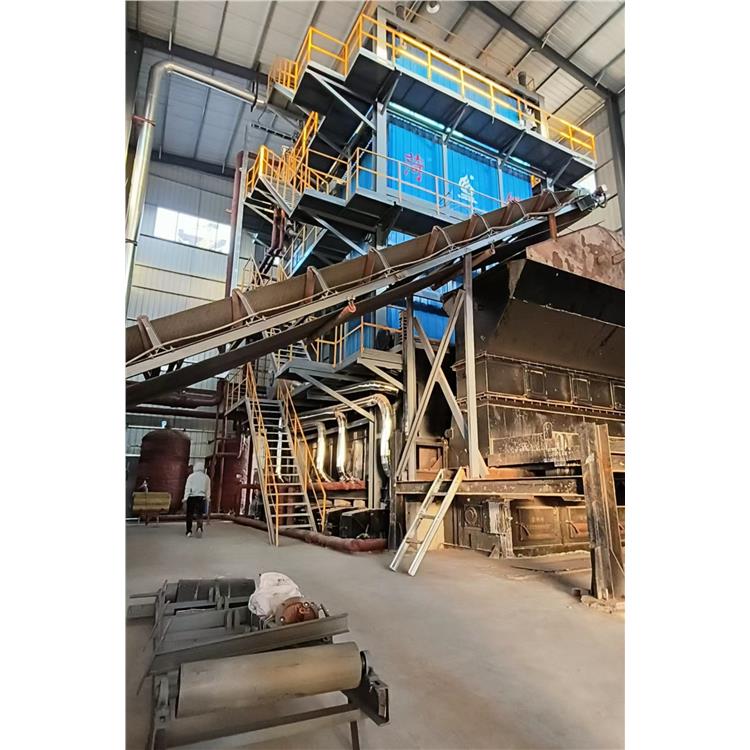

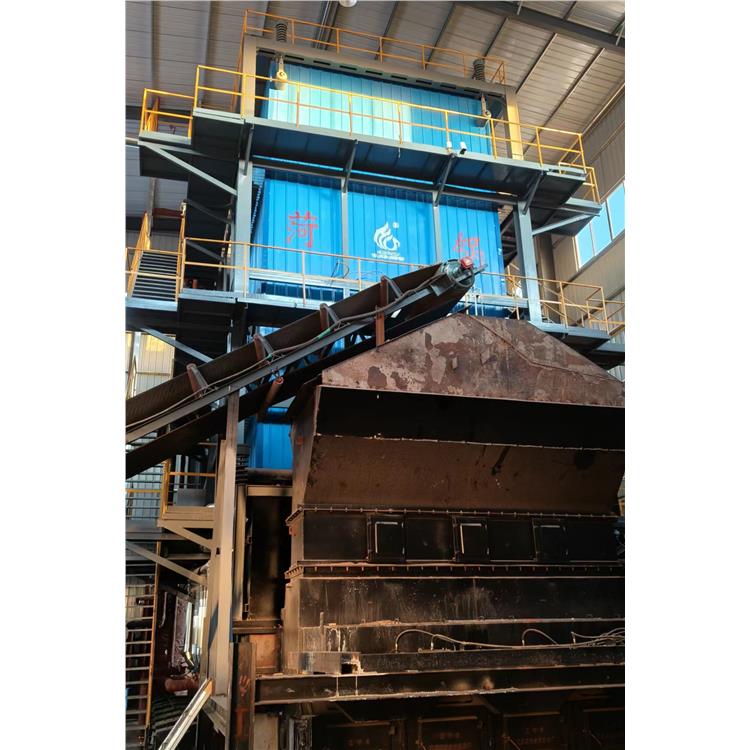
Shandong Zhongjie Special Equipment (formerly Heze Boiler Factory Co., Ltd.) was established in 2001, located at No. 2218 Jinnan Road, Development Zone, Heze City, with a registered capital of 50 million yuan and total assets of 500 million yuan. The company has 7 business centers: boilers, deep-freeze containers, pressure vessels, central air conditioning, engineering installation, international trade, and Internet of Things. It has three factory sites on Jinnan Road, East Changjiang Road, and Bohai Road, covering a total of 200,000 square meters, with the main workshop spanning 83,000 square meters. It currently employs 710 people, including 247 engineers and technicians, and 82 intermediate-level technicians. In December 2016, it was recognized as a "High-tech Enterprise" by the Science and Technology Department. In June 2021, it was identified as a "Specialized and New Enterprise in Shandong Province" by the Ministry of Industry and Information Technology. In June 2022, it was recognized as a "Gazelle Enterprise in Shandong Province" and in August 2022, it was identified as a "Specialized and New Small Giant Enterprise" by the Ministry of Industry and Information Technology.
The biomass steam boiler boasts several advantages:
Renewable Energy: Biomass steam boilers utilize biomass fuels such as wood chips, straw, and rice husks, which are renewable. Compared to traditional fossil fuels, these fuels offer lower carbon emissions and are more environmentally friendly.
Versatile fuel options: Biomass steam boilers are suitable for various biomass fuels such as wood chips, straw, and husks, demonstrating strong adaptability to different fuels. This allows for broad application of biomass steam boilers in various regions and industries.
Energy Utilization: Biomass steam boilers utilize advanced combustion technology and heat recovery systems, achieving high energy utilization efficiency. By optimizing the combustion process and heat recovery, energy efficiency can be maximized and energy consumption minimized.
Flexible operational modes: The biomass steam boiler can be operated flexibly according to actual needs, such as manual control, automatic control, or remote monitoring, etc. This ensures the boiler meets requirements in various scenarios and provides a stable steam supply.
Superior Environmental Performance: Biomass steam boilers produce relatively fewer emissions during combustion, resulting in less environmental impact. With reasonable combustion control and flue gas treatment facilities, the content of emissions can be further reduced, meeting higher environmental protection standards.
Replace Traditional Boilers: Biomass steam boilers can replace traditional coal or oil-fired boilers, reducing dependence on fossil fuels and lowering energy costs and carbon emissions. This is of great significance for achieving sustainable development and reducing greenhouse gas emissions.
In summary, biomass steam boilers offer renewable energy and diversity.
Reducing the emissions of nitrogen oxides (NOx) from biomass boilers can be achieved through the following measures:
Combustion Control Technology: Utilizes advanced combustion control technologies, such as low nitrogen combustion technology. By optimizing the combustion process, controlling the combustion temperature and oxygen concentration, the generation of nitrogen oxides is reduced. Methods such as staged combustion and optimized combustion chamber design can be employed to lower combustion temperatures and extend combustion times, thereby further decreasing nitrogen oxide production.
SNCR Technology: Selective Non-Catalytic Reduction (SNCR) technology involves injecting a reductant, such as urea solution, into the combustion process, which reacts with nitrogen oxides to convert them into nitrogen and water. This technology helps reduce the formation and emission of nitrogen oxides during combustion.
SCR Technology: Selective Catalytic Reduction (SCR) technology is a nitrogen oxide control method. By injecting urea solution into flue gas and acting through a catalyst, nitrogen oxides are converted into nitrogen and water. SCR technology achieves nitrogen oxide removal at lower temperatures, suitable for large biomass boilers.
Flue Gas Recirculation (FGR): FGR technology recycles a portion of flue gas back into the boiler combustion chamber, reducing combustion temperature and oxygen concentration, and minimizing nitrogen oxide formation. This technique can control nitrogen oxide emissions by adjusting the recirculation ratio.
Fuel selection and pretreatment: Choosing low nitrogen fuels, such as low nitrogen biomass fuel, can reduce the formation of nitrogen oxides. Additionally, for biomass fuels with high nitrogen content, pretreatment measures like drying and gasification can be taken to decrease the formation of nitrogen oxides during combustion.
Regular Maintenance and Cleaning: Regular maintenance and cleaning of biomass boilers ensure the cleanliness and proper operation of components such as burners and heat exchangers. Cleaning the combustion chamber and heat exchangers reduces soot buildup, enhances heat transfer efficiency, and lowers nitrogen oxide emissions.
By implementing the aforementioned measures comprehensively, nitrogen oxide emissions from biomass boilers can be effectively reduced, achieving both environmental protection and energy-saving goals. The specific measures to be chosen should be based on the characteristics of the boiler, operating conditions, and emission requirements.
Biomass hot water boilers can meet environmental regulations under certain conditions. They utilize renewable biomass fuels such as wood chips, straw, and waste materials, emitting less carbon dioxide during combustion compared to traditional fossil fuels, thus having a smaller environmental impact.
However, to ensure that biomass hot water boilers comply with environmental regulations, the following conditions must be met:
High combustion efficiency: The biomass hot water boiler should be equipped with a combustion system and heat exchanger to ensure complete combustion of the fuel and efficient use of thermal energy, reducing fuel waste and emissions.
Flue Gas Purification Equipment: Biomass hot water boilers should be equipped with effective flue gas purification equipment, such as bag dust collectors and desulfurization devices, capable of effectively capturing and purifying particulates and pollutants in the flue gas, reducing atmospheric pollution.
Compliance Emission: The flue gas emissions of biomass hot water boilers must comply with local environmental protection laws and standards, including the emission limits for pollutants such as particulate matter and nitrogen oxides.
Regular Maintenance: Biomass hot water boilers require regular maintenance to maintain optimal equipment condition and ensure stable combustion efficiency and emission performance.
Fuel Selection and Supply: Choose appropriate biomass fuel and ensure its source is legal and sustainable. Avoid using waste containing harmful substances as fuel to prevent negative impacts on the environment and human health.
It's important to note that while biomass hot water boilers are relatively eco-friendly, they still require evaluation and monitoring based on specific conditions in actual use to ensure compliance with environmental regulations. Additionally, environmental protection regulations may vary by region, so users should adhere to local environmental laws and standards.
Several advantages come with choosing biomass boilers:
Renewable Energy: Fuel for biomass boilers comes from organic matter such as plants, animals, and microorganisms, making it a renewable energy source. Compared to traditional fossil fuels, biomass fuel has lower carbon emissions and a smaller environmental impact, contributing to the reduction of greenhouse gas emissions and being more environmentally friendly.
Diverse Fuel Sources: Biomass fuel sources are extensive, encompassing wood, straw, waste crops, food scraps, and urban solid waste, among others. This diversity in fuel sources provides flexibility and adaptability to biomass boilers, enabling the utilization of waste and by-products from plants and animals, thereby reducing resource waste.
Environmental friendliness: The carbon dioxide produced during the combustion of biomass boilers can be absorbed by plants, forming a cycle that reduces air pollution. Additionally, the emissions and ash produced during the combustion process are relatively low, resulting in minimal environmental impact.
Energy Security: As a native renewable energy source, biomass can reduce dependence on imported energy and enhance energy security. In regions with scarce resources, the use of biomass boilers can provide a reliable energy supply.
Economic Efficiency: Biomass fuel is relatively cost-effective, which can reduce energy costs. Moreover, the technology and equipment for biomass boilers are continuously evolving and maturing, making them even more economically viable.
Shandong Zhongjie Special Equipment, welcome clients to our factory for business discussions.
Ziyang 35-ton biomass boiler, real factory
