


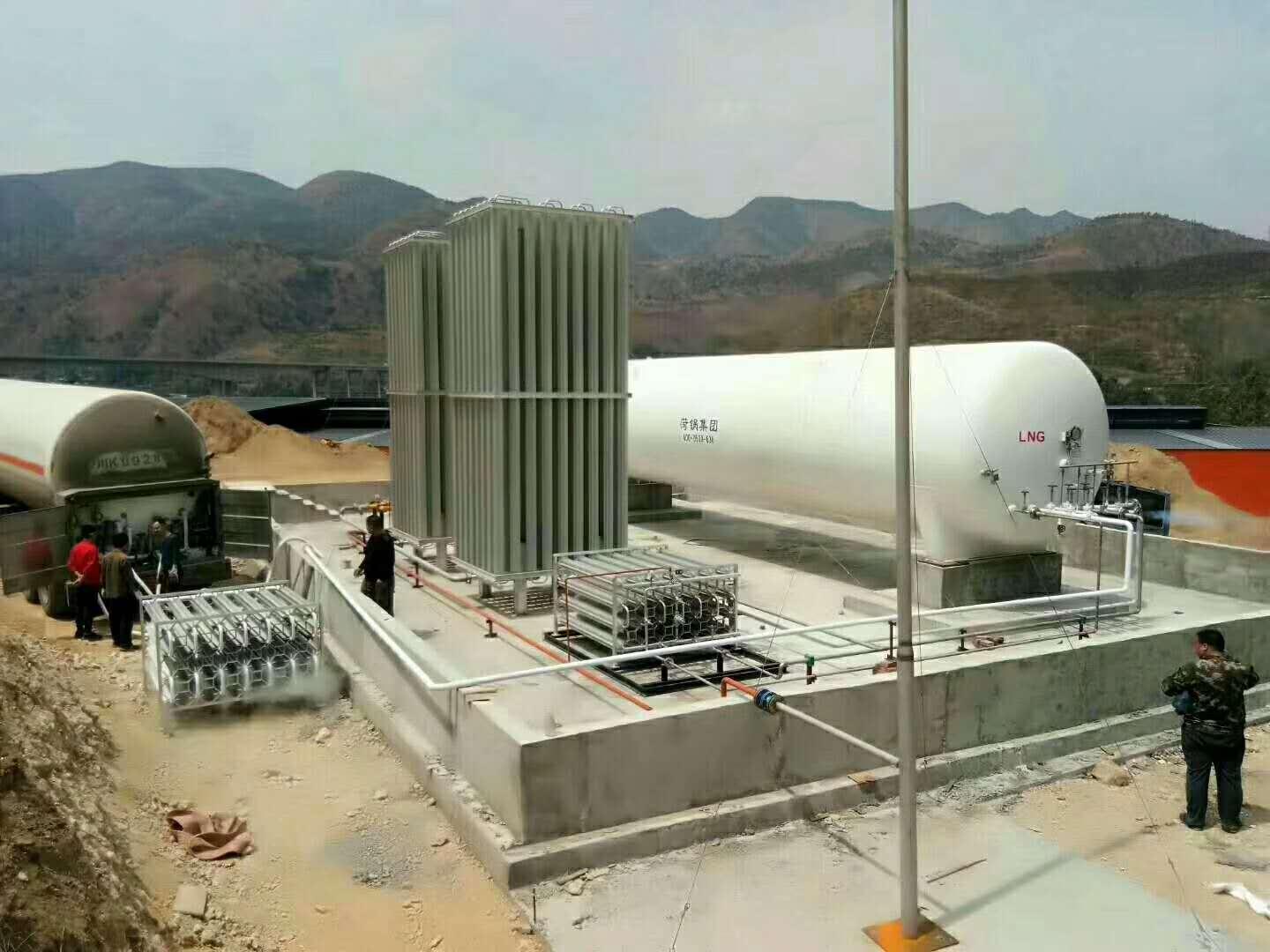
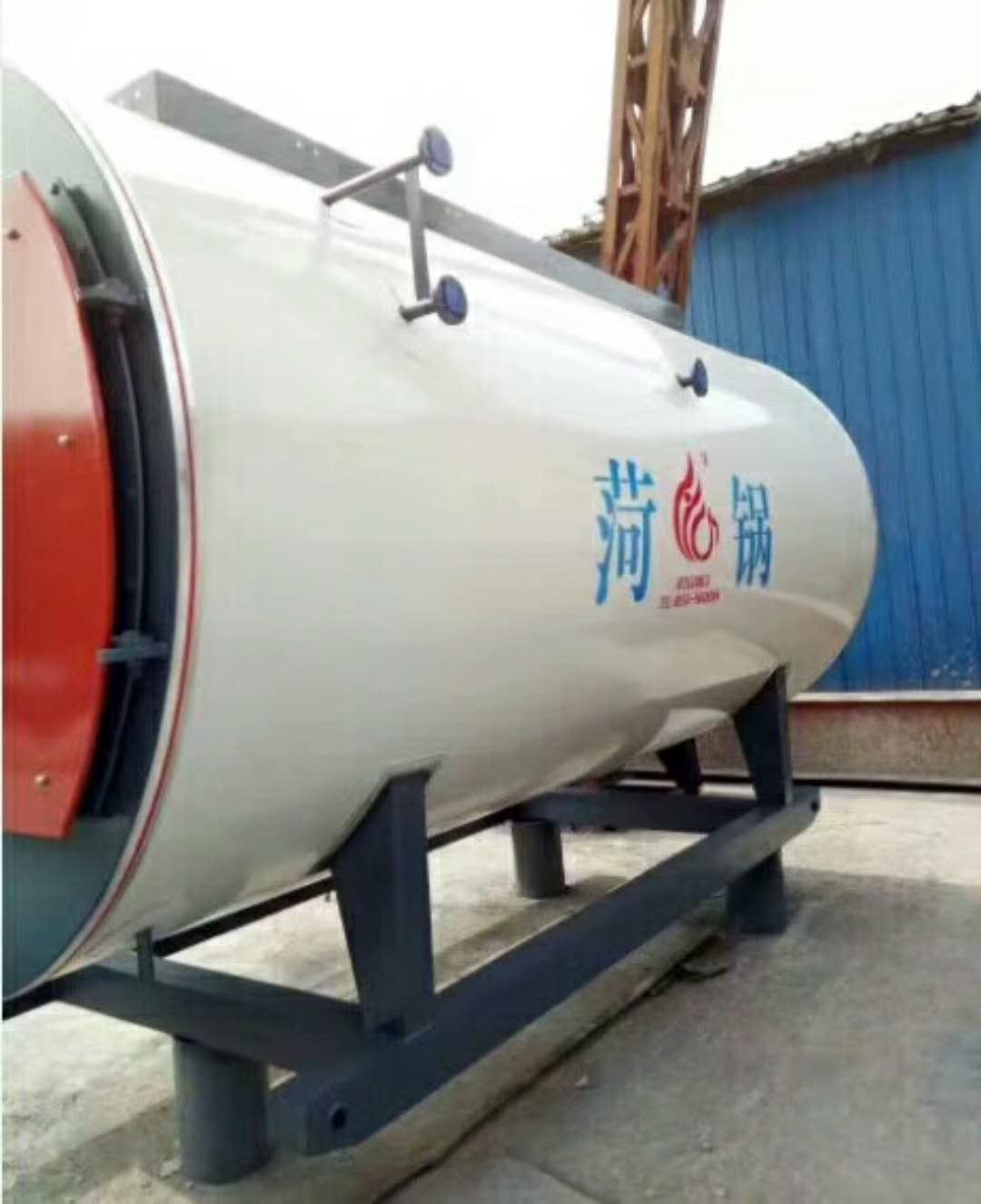
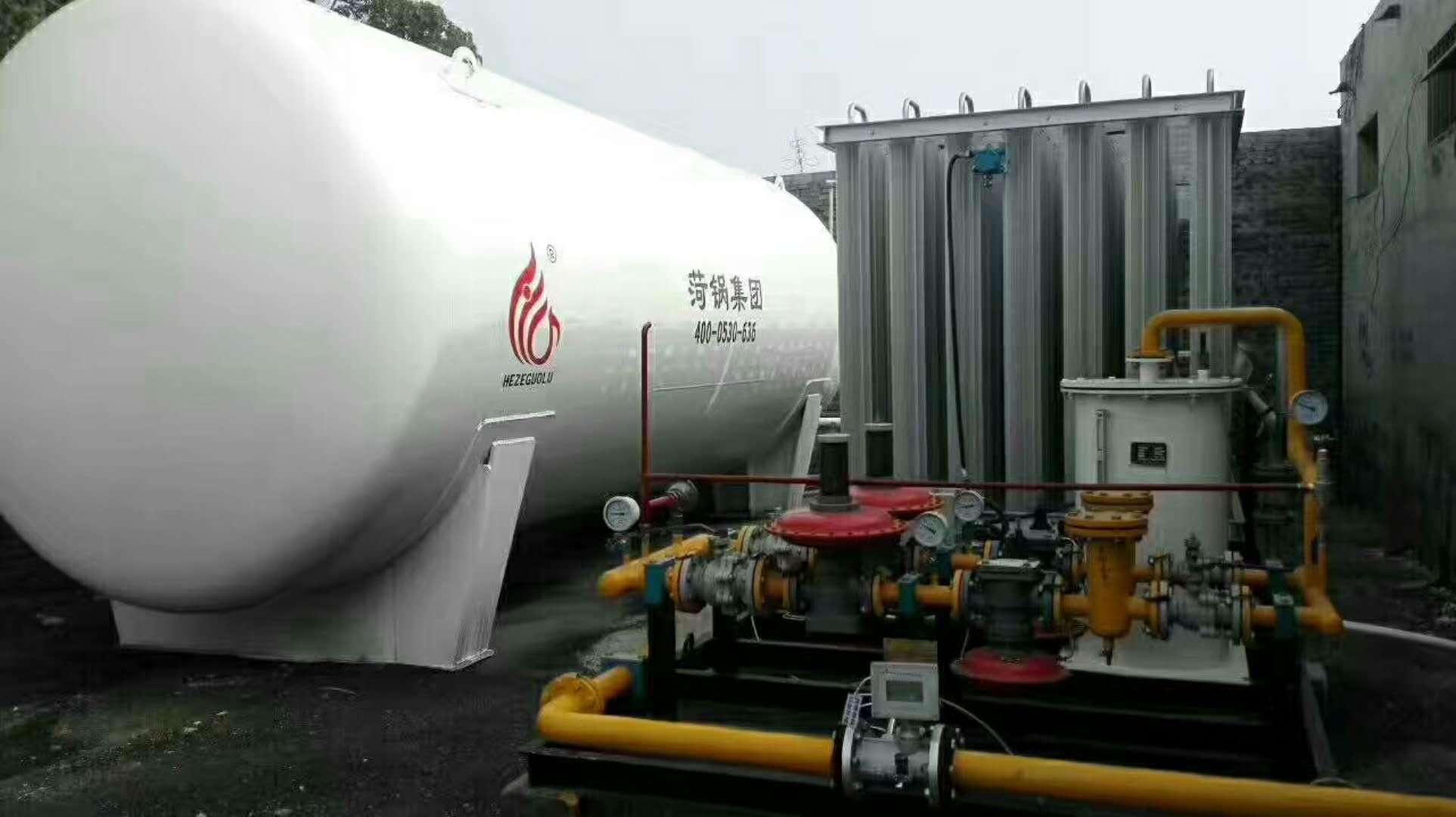

Maintain and repair
Routine Maintenance
The housing must not be subjected to any impact; operations must be carried out according to regulations. External valve fittings should be kept clean and intact, with valves operating smoothly and being regularly inspected as per regulations. Under normal operation, a full check and maintenance of all valves, fittings, and instruments should be conducted annually. Replacement of consumables (such as valve seals) should be done promptly.
2. Insulation Performance Maintenance
One of the key requirements for low-temperature liquid storage tanks is excellent insulation performance, with the quality of vacuum being crucial to this insulation.
Once the vacuum level of the storage tank is compromised, it cannot store low-temperature liquids. Therefore, special attention should be paid to protecting the vacuum level of the tank. The explosion-proof device on the tank shell and the vacuum valve are directly connected to the vacuum interlayer. The device should not be tampered with unless the vacuum level in the interlayer is not damaged, or it is not necessary to replenish and re-vacuum with mica sand. The vacuum valve is sealed with lead at the factory and must not be moved arbitrarily; otherwise, it will damage the vacuum level of the storage tank.
The tank shell is an external pressure vessel, bearing atmospheric pressure. It is strictly prohibited to strike or bump the shell to prevent damage and affect the vacuum degree.
3. Inspect
(1) Routine inspection
1) Is the valve in the correct open/close position?
2) Accuracy and reliability of pressure gauges and differential (level) meters.
3) Check for any leakage or blockage in pipes and valves.
4) If the container pressure reaches the set pressure of the safety valve and the valve does not activate, the safety valve's set pressure should be immediately adjusted to ensure the tank's safety.
5) Are the turbocharger flange bolts loose, and is the piping deformed?
(2) Regular maintenance
1) The pressure gauge is calibrated annually.
2) The safety valve is calibrated annually.
3) Measure vacuum level annually.
4) Thermocouple vacuum gauges (purchased by the user, not within the supply scope) should be calibrated according to the instructions before each measurement.
5) The storage tank grounding resistance should be tested annually; a resistance below 10Ω is considered acceptable. If it exceeds 10Ω, the connection status should be checked promptly.
(3) Vacuum Level Inspection and Re-evacuation
The vacuum level of the storage tank is measured once a year. To measure, simply unscrew the protective cover of the metal thermocouple tube and plug in the thermocouple vacuum gauge to determine the sandwich vacuum level.
After several years of use, the vacuum level in the tank may drop to 65Pa, requiring a re-evacuation. To enhance the insulation performance, first, empty the liquid in the tank and then heat it with 80-100°C dry, oil-free air or nitrogen until it returns to room temperature. Connect the vacuum piping, start the pump to remove the moist air from the pipes, and then open the vacuum valve to evacuate the tank.
To reduce the vacuum time, the container can be heated with dry, oil-free air at a temperature below 100°C. The vacuum degree of the annular seal should be ≤3Pa. If necessary, the user can contact the manufacturer for vacuuming matters, and both parties can agree on the specific process for re-vacuuming.
4. Fault Handling
(1) Safety Valve Troubleshooting
Safety valve leakage
The valve disc and seat sealing surface may experience leakage beyond the allowable limit under operating working pressure, the possible causes of which may include:
There is debris on the sealed surface.
If the installation was not thoroughly cleaned with compressed air prior to use, or if solid impurities mixed with the fluid enter during the trial operation, or if it performs necessary actions, debris can become trapped between the valve seat and the sealing surface. If it's simple to remove the debris, do so manually. However, if there is still leakage after removal, consider the following causes: it could be damage to the valve seat and its sealing surface; or debris might have become embedded between the valve seat and sealing surface. If this is difficult for the user to handle, return it to the manufacturer for repair.
② Internal Pipeline Force
a) Human Factors
During the process of installing the safety valve on the pipeline, if it is forcibly rotated, the valve seat may rotate, and the position of the safety valve adjusting ring may change or the sealing surface may be worn down by force. A decrease in operational performance may occur. If this situation arises, depending on the circumstances, it can be handled on-site by the user or returned to the factory for processing, but it is necessary to fully grasp the situation and make a quick judgment.
b) Internal Force Factors
The adverse effects of welding residue's force within the pipeline on the safety valve are almost identical to the issues mentioned above. Therefore, it is crucial to thoroughly consider the absorption of forces within the pipeline during installation. This is a very important point.
c) The setting pressure of the safety valve is too close to the normal operating pressure of the equipment, resulting in a low sealing face sealing pressure. This makes it more prone to leakage when the safety valve is subjected to vibration or fluctuations in the medium pressure. Under the condition of meeting the strength requirements, the setting pressure of the safety valve should be appropriately increased during design.
③ Spring relaxation reduces the set pressure, causing the safety valve to leak.
The primary cause of spring relaxation may be that the adjusting screw of the safety valve was not securely tightened after the safety valve was calibrated, causing it to loosen during equipment operation, leading to spring relaxation, reduced pre-tension, and premature opening of the safety valve. The safety valve should be recalibrated.
2) Inflexible safety valve operation
The reason may be:
Improper adjustment of the safety valve's regulating ring leads to an extended opening process or delayed return to the seat. It should be readjusted. By adjusting the lower regulating ring, increase the return seat pressure.
②The exhaust pipe of the safety valve has excessive resistance, resulting in significant back pressure during discharge, which causes the safety valve to open at an insufficient height. By changing the exhaust pipe of the safety valve to a straight-through design and removing the intermediate bend, the safety valve will function normally.
3) Safety valve frequent chatter or vibration
The reason may be:
The safety valve's discharge capacity is excessive. The rated discharge capacity of the selected safety valve should be as close as possible to the equipment's necessary discharge amount.
② The imported pipeline diameter is too small or has excessive resistance.
③ Excessive resistance in the exhaust pipe leads to high back pressure during emissions. Reduce the resistance of the exhaust pipe.
④Improper adjustment of the regulating ring leads to excessive return seat pressure. The position of the regulating ring should be readjusted.
4) Operation of Three-way Valve A-5 during the replacement of the safety valve
During normal operation, both safety valves are working simultaneously, meaning both channels are open at the same time, with the handle positioned as shown in Figure 1.
②When replacing the safety valve, rotate the handle 90° (as shown in Figures 2 and 3), close the side channel to be replaced, and empty the remaining medium inside the channel, then replace the safety valve.

Huzhou Boiler Factory Co., Ltd._Shandong Hekou Group
Regular inspections
1. The using unit should report for periodic inspection to the inspection agency one month prior to the expiration of the regular inspection validity. The first periodic inspection of storage tanks is generally conducted within 3 years of their commissioning. Subsequent inspection intervals are determined by the inspection agency based on the safety status level.
2. The unit and its auxiliary units should carry out technical handling after shutdown and conduct safety inspections before the inspection. Confirm that the on-site conditions meet the requirements for the inspection and prepare accordingly.
3. During inspections, the unit's safety management personnel, operators, and maintenance staff should be present to assist with the inspection, promptly provide relevant documents, oversee safety, and establish reliable communication methods.
Safety Protection
Potential hazards in the operation of liquefied natural gas mainly stem from its physical properties:
Liquefied natural gas has an extremely low temperature at atmospheric pressure: -162°C.
The gas-liquid volume ratio is quite high; improper pressure reduction measures can lead to a rapid increase in pressure. The gas-liquid volume ratio of liquefied natural gas is approximately 620:1.
Natural gas is an asphyxiating gas.
Natural gas is a flammable gas (ignition point 538°C).
Explosions may occur in confined spaces (explosion limits in air: 5.3% to 15%)
2. When working on-site with natural gas or liquefied natural gas, it is essential to possess the following safety knowledge:
Keep liquefied natural gas equipment away from flames or electric sparks.
No smoking or open flames are permitted in areas involved in liquefied natural gas equipment maintenance, refueling, and storage.
When working in areas with liquefied natural gas, safety goggles, face shields, and insulated gloves must be worn. Pants should not be tucked into boots, sleeves should not be worn inside insulated gloves, and boots should not have nails.
When disassembling parts for maintenance, the liquefied natural gas tank must be emptied and depressurized.
Tools used for maintenance should not produce sparks.
Warning
Protect eyes and exposed skin.
Maintain good ventilation in the area where the equipment is located.
Ensure the system is depressurized before repairing or maintaining equipment.
Keep away from flammable materials or electrical sparks.
The root valve must be kept open at all times.


哪里有卖LNG储罐价格-专业生产LNG储罐哪家专业-专业制造LNG储罐定做-专用LNG储罐生产
