



Maintain and repair
Routine Maintenance
The housing must not be subjected to any impact, and operations must be carried out in accordance with regulations. The external valves and piping components should be kept clean and intact, with valves operating smoothly and being able to open and close freely. Regular inspections should be conducted as per regulations. Under normal usage, an annual check and maintenance of all valves, piping components, and instruments should be performed, and replacement of consumable parts (such as valve seals) should be done promptly.
2. Insulation Performance Maintenance
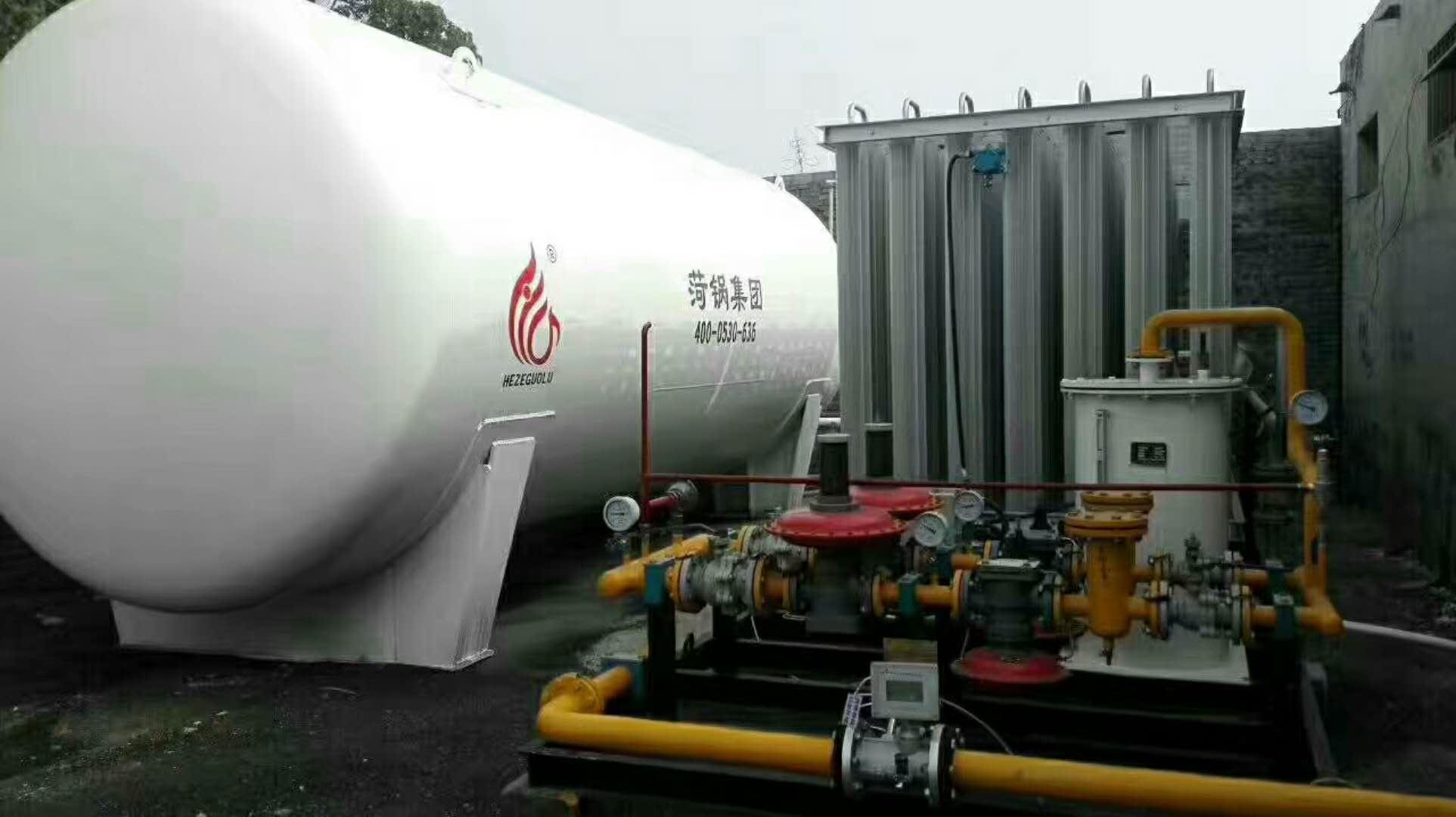
One of the key requirements for low-temperature liquid storage tanks is excellent thermal insulation, with the vacuum level being crucial to its effectiveness.
Once the vacuum level of the storage tank is compromised, it cannot store low-temperature liquids. Therefore, special attention should be given to protecting the vacuum level of the tank. The explosion-proof device on the tank shell and the vacuum valve are directly connected to the vacuum jacket. The device should not be tampered with when the jacket vacuum level is not damaged, or when there is no need to replenish and re-vacuum with mica sand. The vacuum valve is sealed with lead at the factory and must not be moved arbitrarily; otherwise, it will damage the vacuum level of the storage tank.
The tank shell is an external pressure vessel, subject to atmospheric pressure. It is strictly prohibited to strike or bump the shell to prevent damage and affect the vacuum level.
3. Inspect
(1) Routine inspection
1) Is the valve in the correct open/close position?
2) Accuracy and reliability of pressure gauge and differential pressure (level) meter measurements.
3) Check for any leaks or blockages in pipes and valves.
4) If the container pressure reaches the set pressure of the safety valve and the valve does not activate, the safety valve's set pressure should be immediately adjusted to ensure the tank's safety.
5) Is the turbocharger flange bolt loose, and are there any deformations in the pipe?
(2) Regular maintenance
1) The pressure gauge is calibrated annually.
2) The safety valve is to be inspected annually.
3) Measure vacuum level annually.
4) Thermocouple vacuum gauges (purchased by the user, not within the supply scope) should be calibrated according to the instructions before each measurement.
5) Tanks should be tested for ground resistance annually; a resistance less than 10Ω is acceptable. If greater than 10Ω, the connection should be inspected promptly.
(3) Vacuum Level Inspection and Re-evacuation
The tank's vacuum level is measured once a year. To measure, simply unscrew the protective cover of the metal thermocouple tube, insert the plug of the thermocouple vacuum gauge, and you can determine the interlayer vacuum level.
After several years of use, the vacuum level in the tank may drop to 65Pa, necessitating a re-evacuation. To enhance the insulating performance, first, empty the liquid inside the tank and then use dry, oil-free air or nitrogen heated to 80-100℃ to blow out until it returns to normal temperature. Connect the vacuum pipeline, start the pump to remove the moist air from the tube, and then open the vacuum valve to evacuate.
To reduce the vacuuming time, the container can be heated with dry, oil-free air at a temperature below 100℃. The vacuum degree of the jacketed seal should be ≤3Pa. If necessary, the user can contact the manufacturer for vacuuming matters and negotiate the specific process for re-vacuuming.
4. Troubleshooting
(1) Safety Valve Fault Handling
1) Safety valve leakage
The valve disc and seat sealing surface may experience leakage beyond the allowable limit under operating pressure, the possible reasons for which include:
There are debris on the sealed surface.
Before installation, if the cleaning with compressed air is not fully completed, or if solid impurities are mixed with the fluid during trial operation, or if necessary actions are performed, debris can become trapped between the valve seat and the sealing surface. If it's easy to remove the debris manually, do so. However, if there's still leakage after removal, consider the following causes: it may be damage to the valve seat and its sealing surface; or debris may have become embedded between them. If this situation is difficult for the user to handle, return it to the manufacturer for repair.
②Internal Pipeline Force
a) Human Factors
During the process of installing the safety valve on the pipeline, if it is forcibly rotated, the valve seat may rotate, and the position of the safety valve adjustment ring may change or the sealing surface may be forcibly worn. A decrease in operational performance may occur. In such cases, depending on the situation, it can either be handled on-site by the user or returned to the factory for processing, but making a prompt and accurate judgment is essential.
b) Internal Force Factors
The adverse effects of welding residue's force within the pipeline on the safety valve are almost identical to the aforementioned issue. Therefore, it is crucial to thoroughly consider the absorption of forces within the pipeline during installation.
c) The set pressure of the safety valve is too close to the normal operating pressure of the equipment, resulting in a low sealing face pressure. This makes it more prone to leakage when the safety valve is subjected to vibration or fluctuations in the medium pressure. Under the condition of meeting the strength requirements, the set pressure of the safety valve should be appropriately increased during design.
③ Spring relaxation lowers the set pressure, causing the safety valve to leak.
The primary cause of spring relaxation may be that after the safety valve has been checked, the adjustment screw of the safety valve was not tightened, causing it to loosen during equipment operation, resulting in spring relaxation, a decrease in pre-tension, and premature opening of the safety valve. The safety valve should be rechecked.
2) Inflexible safety valve operation
The reason may be:
Improper adjustment of the safety valve's regulating ring can cause the opening process to be prolonged or the return to be slow. Adjust it again. By adjusting the lower regulating ring, increase the return pressure.
②The exhaust pipe of the safety valve has excessive resistance, resulting in significant back pressure during discharge, which causes the safety valve to open at an insufficient height. To normalize the operation, the exhaust pipe of the safety valve should be altered to a straight-through design, removing the intermediate bend.
3) Safety valve frequent chatter or vibration
The reason may be:
The relief valve's discharge is excessive. The rated discharge of the selected safety valve should be as close as possible to the necessary discharge of the equipment.
② The imported pipeline diameter is too small or has excessive resistance.
③ Excessive resistance in the exhaust pipe causes high back pressure during emissions. Reduce the resistance of the exhaust pipe.
④Improper adjustment of the regulating ring causes excessive return seat pressure. The position of the regulating ring should be readjusted.
4) Operation of the three-way valve A-5 when replacing the safety valve
① Normally, two safety valves operate simultaneously, meaning both channels are open at the same time, with the handle positioned as shown in Figure 1.
②When replacing the safety valve, rotate the handle 90 degrees (as shown in Figures 2 and 3), close the side channel being replaced, and empty the remaining medium inside the channel, then replace the safety valve.
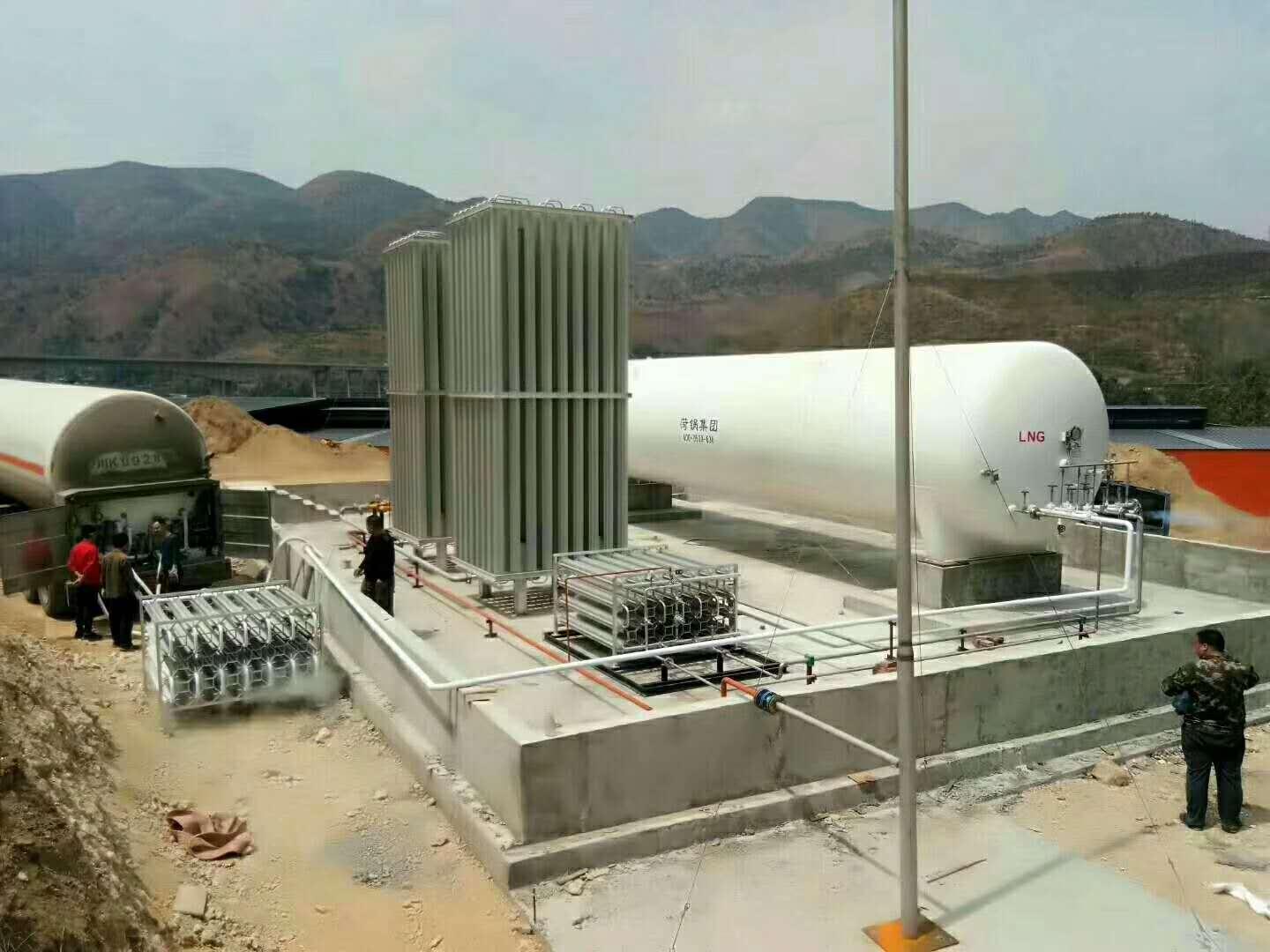
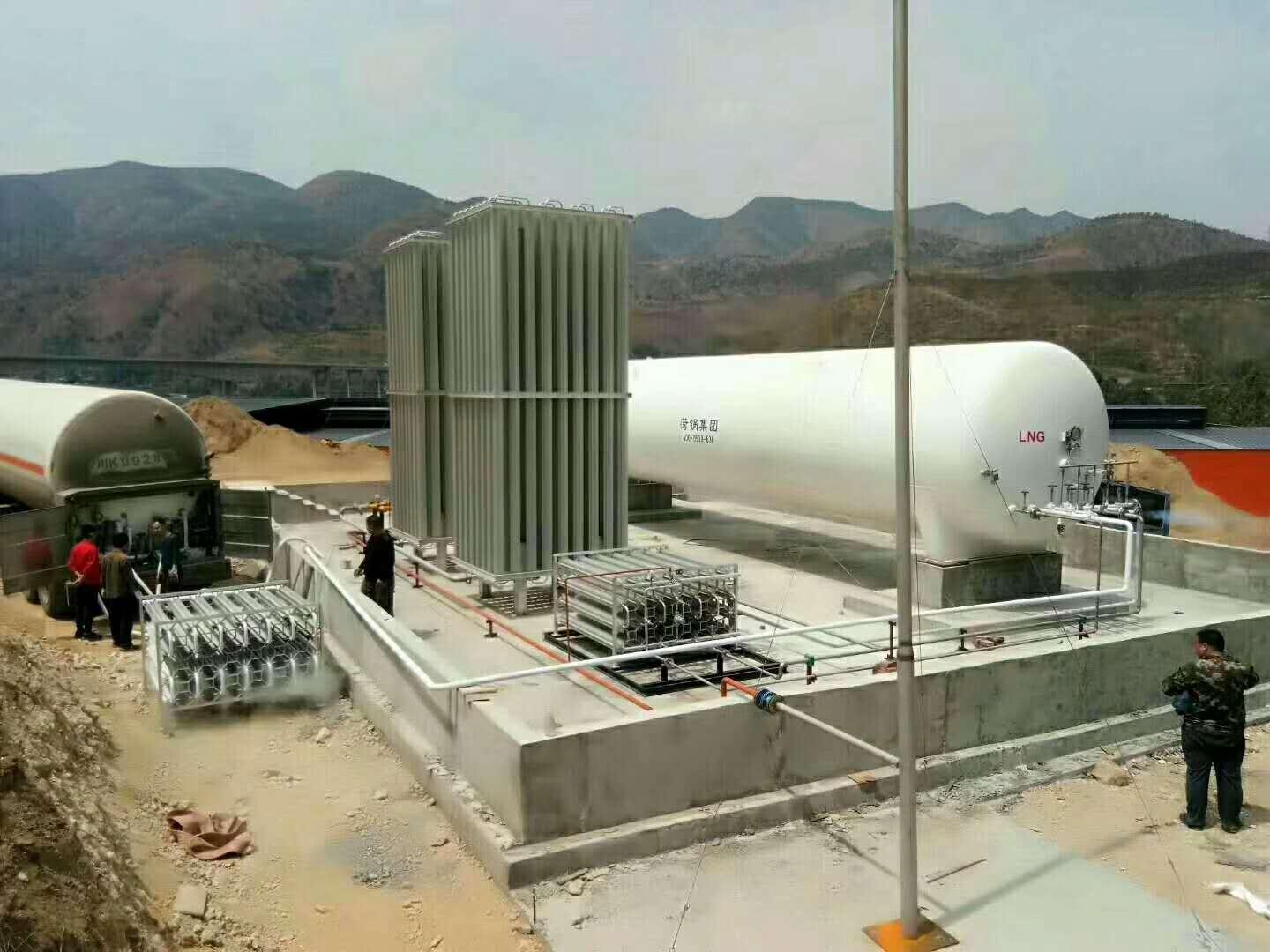
LNG stands for Liquefied Natural Gas, a premium natural gas product primarily composed of methane. Natural gas boasts high calorific value, low pollution, and ease of storage and transportation, making it one of the preferred high-quality energy sources in modern society. LNG is the result of purifying and processing natural gas from gas fields, removing all impurities, and then cooling it to approximately -162°C under atmospheric pressure, condensing it into a safe, colorless, odorless, and non-toxic low-temperature liquid. It features high purity, high safety, high storage efficiency, and flexible transportation. Its volume is about 1/600th that of the equivalent gaseous natural gas, and its weight is approximately 45% of the same volume of water.

Safety Advantages of LNG
Due to its excellent physical and chemical properties, it is safe: has a high ignition point, an auto-ignition temperature of 590 degrees Celsius, a narrow combustion range of 5-15%, lighter than air and easy to disperse. LNG will rapidly heat up and vaporize upon leakage, and the gas density of the natural gas after vaporization is approximately half that of air, making it highly volatile but non-flammable, and non-toxic. Methane has relatively stable chemical properties and can burn quietly in the air without promoting combustion.
Due to perfect storage conditions, it is safe: The tank material maintains its mechanical strength, such as tensile and compressive strength,低温impact toughness, and thermal expansion coefficient under low-temperature operating conditions. The foundation of the tank can withstand low temperatures in direct contact with LNG, the insulation material is non-flammable, and it has sufficient toughness to withstand the impact force of fire-fighting water, and the safety protection system is reliable. Vehicle LNG storage is in an insulated container at a pressure of 0.05 to 0.5 MPa, compared to the storage pressure of 20 MPa for CNG, the lower storage pressure offers higher safety. The low-temperature vehicle bottles have undergone strict inspections including high-temperature resistance tests, impact tests, and vehicle simulation tests by the National Quality Supervision and Inspection总局. Even in the event of traffic accidents, LNG leakage is unlikely to occur.
Economic Advantages of LNG
Due to its high calorific value and economic efficiency. Compared to coal, natural gas, and liquefied petroleum gas, LNG boasts a higher calorific value and relatively stable prices with less international influence. The calorific value of LNG is 12,000 kcal per kg, while good coal only has about 8,000 kcal. An LNG vehicle of the same displacement can save around 20% in fuel costs compared to gasoline or diesel vehicles, and maintenance costs can also be reduced by about 10%. Although there is a price difference of around 80,000 yuan between LNG heavy trucks and diesel trucks, the operational advantage is significant due to lower fuel expenses. The driving range equivalent to 1 cubic meter of LNG (after gasification) is equivalent to 0.95 liters of diesel (Number 0). Calculations show that a trailer can save around 80,000-140,000 yuan in fuel costs annually. A dump truck can save around 100,000 yuan in fuel costs annually.
Advantages of LNG Transportation
Low temperature, high gas-liquid expansion ratio, and high energy efficiency make it easy to transport and store. Natural gas is piped, providing a continuous supply, with simple and easy-to-operate equipment. It is straightforward, convenient for long-distance transportation, and cost-effective. With the rapid development of the global natural gas industry, liquefied natural gas (LNG) has become an important part of international natural gas trade. Compared to a decade ago, the global LNG trade volume has doubled, showing a strong growth momentum.
Convenience Advantages of LNG Usage
Convenient due to the LNG refueling time. LNG refueling takes even less time than gasoline. Long-distance LNG buses equipped with two cylinders can safely travel over 1,000 kilometers, requiring only a few minutes to refuel once.
Due to the power performance of LNG, it is convenient. The power performance of LNG vehicles is not inferior to diesel vehicles, with a longer driving range. A LNG truck equipped with two 450-liter gas cylinders can travel 800-1000 kilometers.
Due to the well-developed LNG industry chain. China has established a complete technological and industrial chain for LNG vehicles. The core technology for natural gas engines and cryogenic vehicle cylinders is mature, and the vehicle assembly, spare parts production, and maintenance technology all meet international standards.
The clean and environmentally friendly advantages of LNG
LNG is considered to be the cleanest fossil fuel on Earth, offering significant environmental benefits.
Clean due to the chemical properties of the main component of natural gas. Compared to coal as fuel, it can significantly reduce emissions of carbon dioxide, carbon monoxide, sulfur monoxide, sulfur dioxide, dust, and other hydrocarbon and nitrogen oxide compounds, as well as coal slag and other pollutants, leading to a substantial improvement in environmental quality and tremendous social benefits.
Cleaned due to the liquefied natural gas (LNG) production process. During the process of natural gas turning into a liquid after deep cooling, it first goes through a gas-liquid separator to remove mechanical impurities and free liquid droplets from the natural gas; then, the feed gas heater uses MDEA to fully contact with the natural gas to absorb carbon dioxide and hydrogen sulfide; followed by processes like decarbonization, dehydration, dehydrocarbonation, and mercury removal; as well as a dust filter to remove dust from the natural gas and a series of impurity removal steps, ultimately producing -162°C LNG. Data shows that using engines fueled by LNG reduces overall emissions by approximately 85% compared to gasoline and diesel, with hydroxides in vehicle exhaust reduced by 72%, carbon monoxide by 97%, nitrogen oxides by 39%, carbon dioxide by 24%, sulfur dioxide by 90%, noise by 40%, and it contains no lead, benzene, and other carcinogens. It also has minimal sulfur compounds.


正品LNG储罐制作-专业LNG储罐促销-正品LNG储罐出售-专业生产LNG储罐加工
