



液化天然气储罐厂家:
Manufacturer of Liquefied Natural Gas Storage TanksHuzhou Boiler Factory Co., Ltd.
I. LNG Storage Tank Safe Operation Procedures
1.1.1 Tank Operation Process Specifications
1)Highest AllowableWork Pressure: 0.86MPa
2)DesignTemperature: -196℃
1.1.2 Tank Inflow Procedure
1.1.2.1 Preparation
1) Operator Requirements: Operators must be certified after completing safety education and operational technical training, and should wear necessary protective gear and work uniforms while performing their duties.
2) Pressure Test Requirements
3) All equipment should undergo pressure tests in accordance with design specifications prior to operation.
4) The test pressure gas should be dry nitrogen, with oxygen content not exceeding 3%, water vapor pressure not exceeding -25°C, and free of oil contamination.
5) Blow-off Replacement Requirements: Blow-off replacement is a measure to ensure the safety of liquid filling in equipment. It should first be carried out using nitrogen with an oxygen content not exceeding 3%, ensuring there is no oil contamination and the dew point of moisture is not greater than -25°C. Subsequently, LNG should be used for replacement to achieve a liquid purity level before allowing for liquid filling.
6) Pre-cooling: After pressure testing passes, pre-cooling with liquid nitrogen is required to ensure the reliability of low-temperature operation of the equipment: The tank must be purged and pre-cooled with nitrogen before its first use. The high purge pressure should be equivalent to 50% of the high working pressure, or lower than this pressure.
1.1.2.2 Initial Liquid Filling Operation for Storage Tank
1) Open both the upper and lower liquid inlet valves simultaneously for filling. At the same time, open the liquid filling overflow valve and discharge the gas in the storage tank until LNG gas is released, then immediately close the filling overflow valve.
2) When the tank is filled to more than 50% of its capacity, the lower liquid inlet valve should be closed.
3) Upon reaching 85% of the storage tank's capacity, close the liquid inlet valve, and stop filling for 5 minutes to allow the liquid level to settle. Then, reopen the liquid inlet valve and continue filling until liquid overflows from the full overflow valve. Immediately close the full overflow valve, stop filling, and close the liquid inlet valve.
4) When beginning to fill, loosen the connections at both ends of the level gauge, fully open the liquid phase indicator valve and the gas phase indicator valve to check if there is any moisture in the exhaust gas flow. If moisture is present, continue to exhaust until no moisture is detected. Then, tighten the connections at both ends of the level gauge and close the balance valve to put the level gauge into normal operating condition.
1.1.2.3 Tank Refueling Operation Procedure
1) After the first formal filling, the gas phase pressure inside the tank should be reduced as much as possible during subsequent refilling.
2) Fill both top and bottom simultaneously. When the liquid level gauge indicates approximately 50% full, close the lower liquid inlet valve. When filled to 85% of the storage tank's capacity, close the upper liquid inlet valve and stop filling for 5 minutes to allow the liquid level to settle. Then, reopen the upper liquid inlet valve to continue filling until liquid starts to drain from the overflow valve. Close the overflow valve and simultaneously close the upper liquid inlet valve to stop filling.
3) Monitor the pressure and level gauges during filling. (If the pressure rises above the filling transfer pressure or nears the safety valve pressure, it is necessary to open the gas discharge valve to release an appropriate amount of vapor from the storage tank.)
4) Fill out the Operation Record Sheet
2. Tank Pressure Boosting Operation Procedure
1) The boost system is a pressure regulating system for the storage tank. When the tank pressure falls below the set value, we open the boost regulating valve to increase the pressure in the storage tank.
2) During operation, open the boost liquid phase valve to allow LNG to directly enter the boost gasifier. After vaporization, it passes through BOG and enters the storage tank. At this point, closely monitor the pressure and close the boost liquid phase valve once the storage tank pressure reaches the desired level.
3) Cautionary Notes:
a) During operation, the LNG tank must maintain a liquid level of ≥15%.
b) During the operation of the supercharging system, personnel must not leave the site.
c) When the boost system is in operation, the pressure relief system should be in the off position.
3. Tank Discharge Procedure
Preparation Work:
1) Check that the tank's pressure gauge, level gauge, thermometer, flammable gas detector, and safety valve are functioning normally.
Check if the pipeline valves, pressure gauges, and safety valves are in normal working condition.
3) Prepare all explosion-proof tools and wear protective gear.
Section 2: Safety Operating Procedures for Gasifiers
1) First, close the inlet and outlet valves in the system, then slowly open the inlet valve. When frost appears on the pipe, slowly open the exhaust valve until the desired gasification amount is reached, and then stabilize the valve opening.
If frost is found on the exhaust pipe, causing the exhaust temperature to drop too low, it indicates an excessive amount of liquid intake. The intake valve must be immediately reduced to prevent overflow, and frost on the pipe should be cleared promptly. Increase ventilation equipment or take other appropriate measures.
3) De-oil the vaporizer. Wear oil-free insulated gloves during operation. If the vaporizer is contaminated with oil, clean the heat exchange tubes. Use 60-80℃ hot water for cleaning, and if necessary, use nitrogen heated to 80-100℃ for blowing off, until no oil is detected and the vaporizer is dry.
4) In severe cases, use carbon tetrachloride for cleaning. Be highly vigilant during cleaning and wear a gas mask if the odor is intense. After the chemical is washed off, rinse with oil-free and debris-free clean water until no chemical residue is present. Then, use nitrogen heated to 80-100°C to blow off the moisture, ensuring it is completely dry.
5) Conduct leak checks on the vaporizer and all pipeline systems every six months, and maintain detailed records.

Heze Boiler Factory Co., Ltd. — Shandong Heke Group
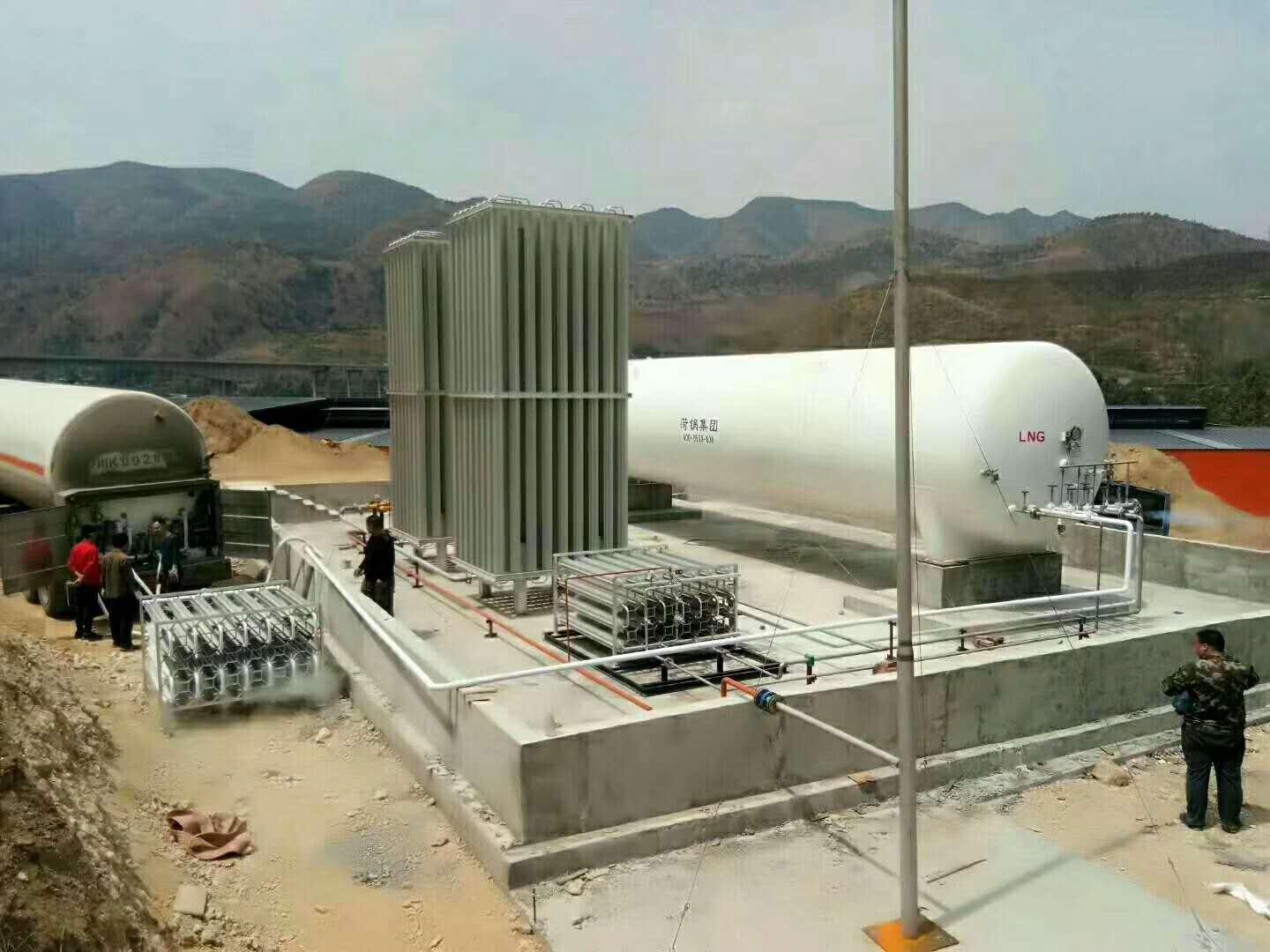
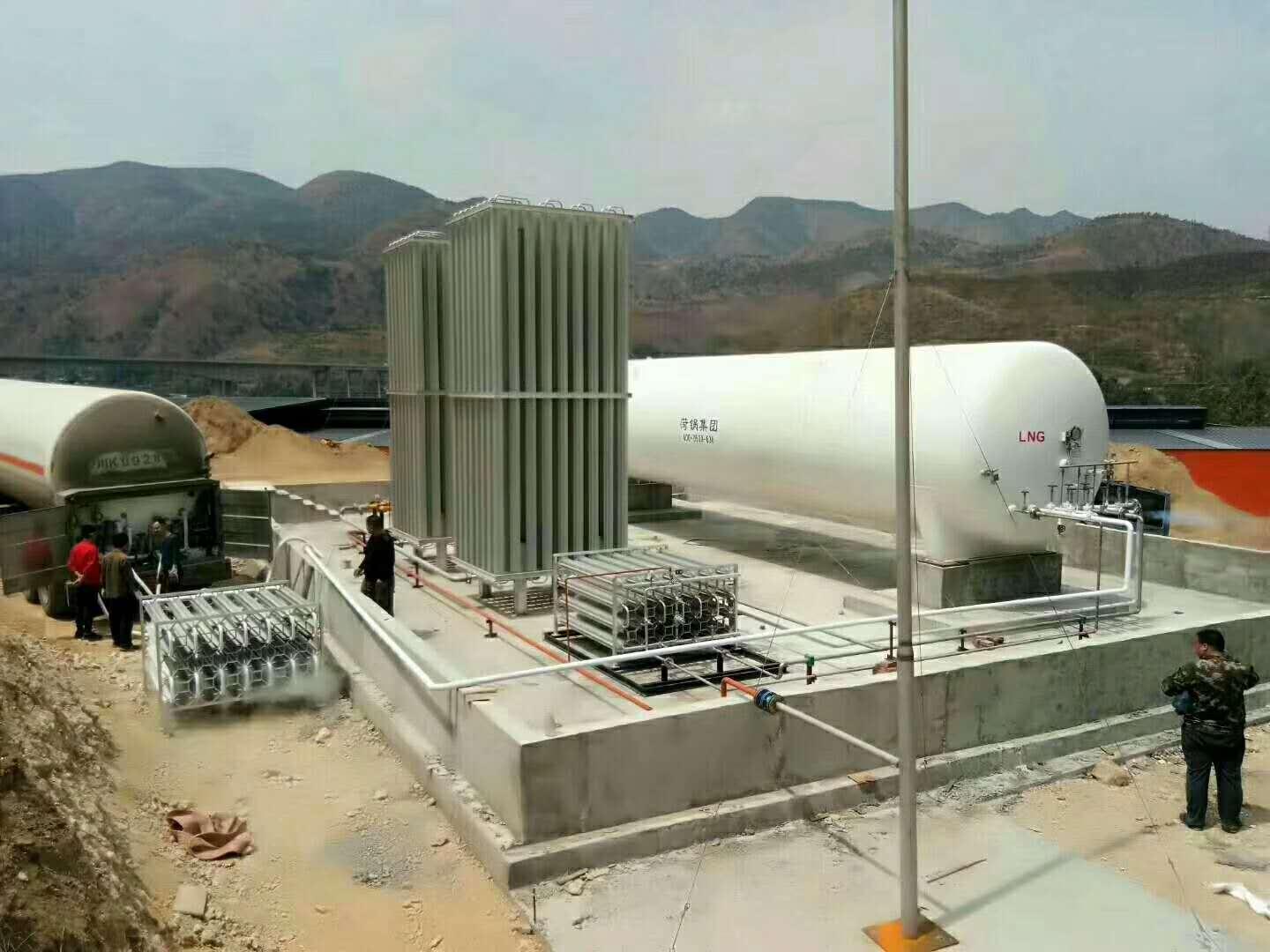
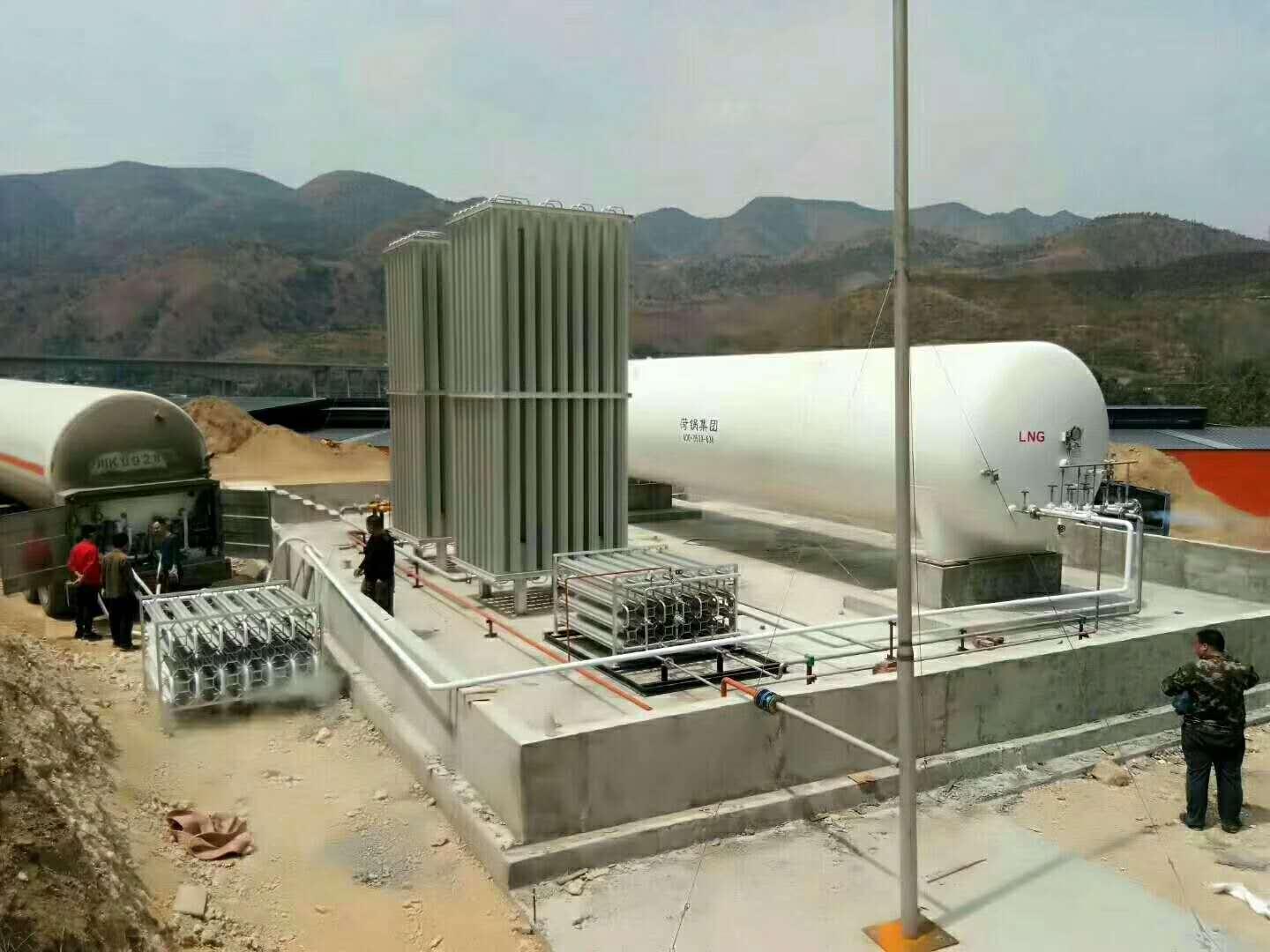
Liquefied Natural Gas (LNG) Storage Tanks, also known as LNG tanks, are specialized low-temperature liquid pressure vessels designed for the containment of liquefied natural gas.
Natural gas transforms into a liquid state, known as liquefied natural gas (LNG), when cooled to -162°C under atmospheric pressure.
Liquefied natural gas (LNG) is colorless, odorless, non-toxic, and non-corrosive. Its main component is methane, and it also includes a certain amount of ethane, propane, and heavier hydrocarbons.
Hydrocarbons of high quality. Also contains trace amounts of nitrogen, oxygen, carbon dioxide, and sulfur compounds.
Liquefied Natural Gas Storage Tanks are classified as type III pressure vessels, manufactured in accordance with the national GB150-98 standard for steel pressure vessels and GB18442-2001 standard for low-temperature vessels, with on-site supervision and inspection conducted by the National Technical Supervision Authority.
The Liquefied Natural Gas storage tank is a double-layer vacuum-insulated low-temperature storage tank, consisting of an outer cylinder, inner body, insulation layer, thermal insulation material, root valve, liquid level gauge, vacuum pump valve, and in/out liquid pipes.
The outer cylinder is made of 235B or 345R steel, while the inner cylinder is made of austenitic stainless steel.。
Product Specifications; 5-100 Cubic Units


专业承接LNG储罐生产-正品LNG储罐哪家专业-LNG储罐哪家专业-特价LNG储罐制造商
