



Operation Instructions
Utilize Security Management
The using unit shall apply for and obtain the "Special Equipment Use Registration Certificate" from the department responsible for the registration of special equipment use in the locality within 30 days before or after the product is put into use.
(2) Users should comply with the relevant requirements of the "Special Equipment Operation and Management Regulations" by implementing safety management for this product. This includes appointing a safety management supervisor, safety personnel, and operational staff, establishing various safety management systems, drafting operational procedures, and conducting inspections.
2. Pre-Use Preparation
Tanks and associated piping are installed and positioned. After passing the acceptance inspection, prepare for pre-use.
Tanks must be purged with dry nitrogen and pre-cooled with liquid nitrogen prior to first use. The purge pressure should not be less than 0.2 MPa.
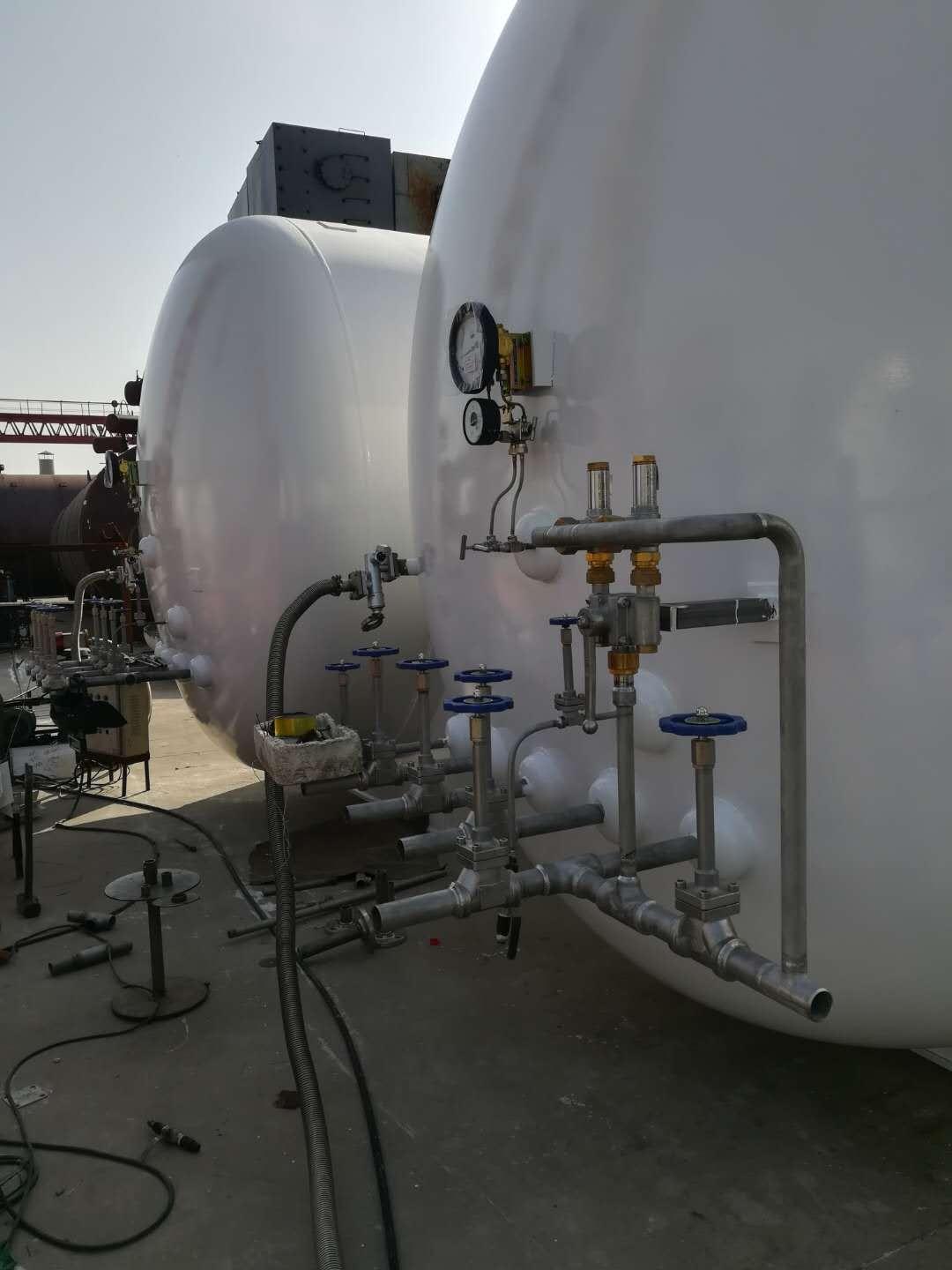
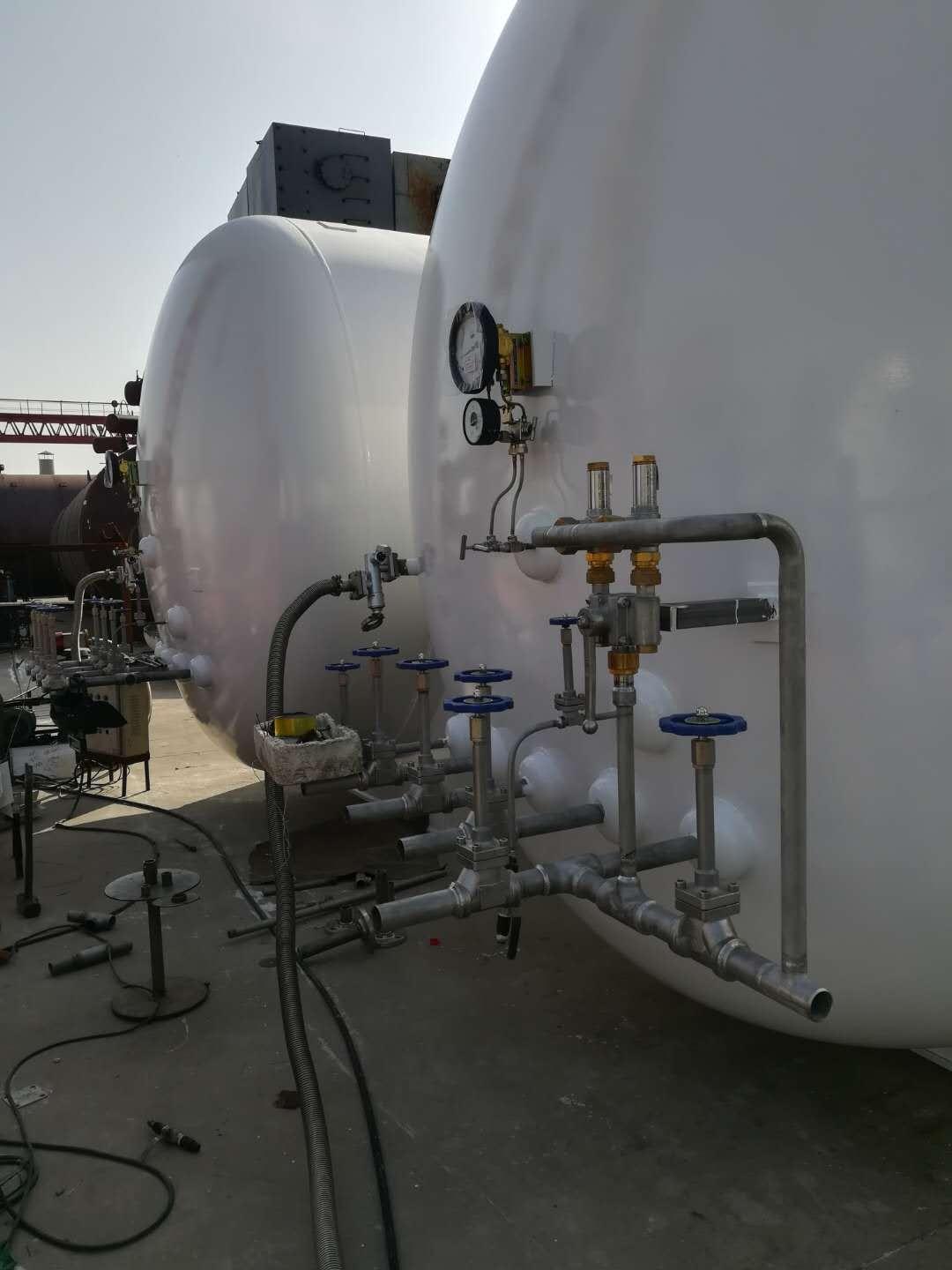
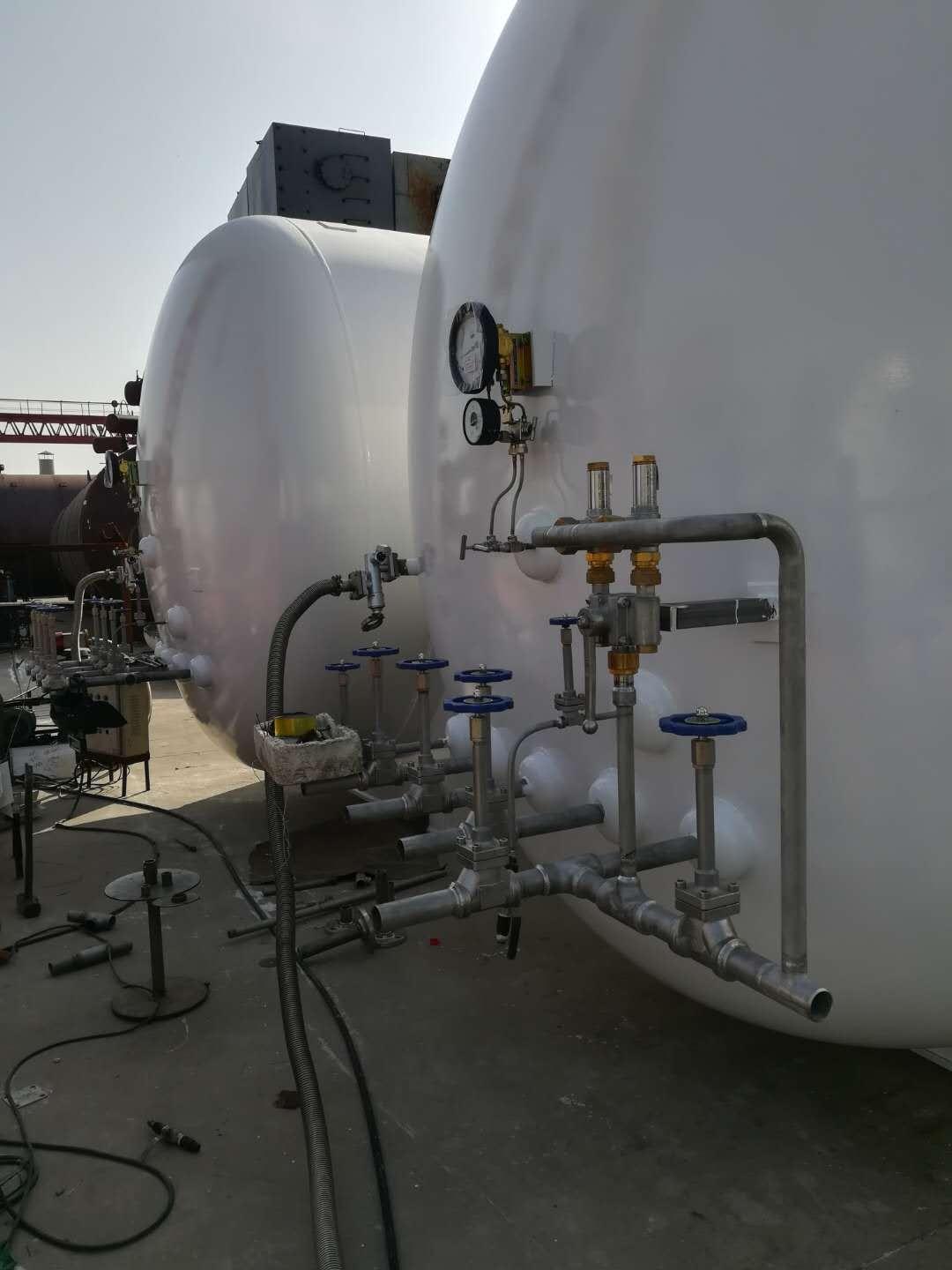
Before blowing, loosen the connections at both ends of the differential pressure (level) gauge, and fully open the combination valve A9 of the differential pressure (level) gauge. Check if there is moisture in the exhaust air flow. If there is moisture, continue blowing until the moisture stops. Tighten the connections at both ends of the differential pressure (level) gauge, and close the balancing valve to put the differential pressure (level) gauge into normal working condition.
Before the tank is initially filled with LNG, the liquid nitrogen or nitrogen inside the tank should be displaced with LNG gas. First, open drain valve A-6 to vent the nitrogen, then close the valve. Open vent valve A-12 and transfer LNG gas from the tank container into the tank via the unloading platform. When the tank pressure reaches 0.1-0.2 MPa, close vent valve A-12, stabilize for 3 minutes, and then open drain valve A-6 to vent. Repeat this process 2-3 times to complete displacement. Check the displacement level by using a flammable gas detector or taking a gas sample for ignition test.
During the first LNG filling, the tank should be pre-cooled or checked for previous pre-cooling conditions. The liquid filling rate must be strictly controlled and operated slowly. First, slowly open the upper filling valve A-2, and transfer LNG from the tanker to the tank through the unloading platform. Due to the lag in vaporization when LNG is transferred to the tank, closely monitor the rate of pressure increase inside the tank. The liquid filling amount must be minimal. When the pressure reaches 0.3 MPa, open the gas exhaust valve A-12 to depressurize, and close the upper filling valve A-2 if necessary. Pre-cool the tank through continuous filling and exhaust. After a period of controlled liquid filling, when the tank pressure stabilizes and the liquid level gauge indicates a certain level, gradually increase the opening of the upper filling valve A-2 and open the lower filling valve A-1.
3. Initial Filling Operation for Storage Tanks
(1) Open the liquid inlet valves A-2 and A-1 at the top and bottom simultaneously for filling. During the filling process, monitor the differential pressure (level) gauge readings. Open the full indicator valve A-4, vent the gas in the storage tank, and immediately close valve A-4 when LNG gas starts to discharge.
(2) When the tank is filled to over 50% of its capacity, the lower liquid inlet valve A-1 should be closed.
(3) Upon reaching 85% of the storage tank's capacity, close valve A-2 and cease filling for 5 minutes to stabilize the liquid level in the container. Then, reopen valve A-2 to continue filling and activate valve A-4 to indicate fullness. Close valve A-4 and A-2 immediately when liquid starts to flow from A-4, and stop filling.
4. Tank Refilling Liquid Operation Procedure
Upon the first formal filling of the tank, and during subsequent refills, the vapor pressure within the tank should be as low as possible.
(2) Fill both the upper and lower sections simultaneously. When the differential pressure (level) gauge indicates approximately 50% of the tank's volume, close the lower inlet valve A-1. When filled to about 85% of the tank's volume, close the upper inlet valve A-2. Stop filling for 5 minutes to allow the liquid level in the container to stabilize. Then, reopen the upper inlet valve A-2 to continue filling and open the full indicator valve A-4. Continue filling until liquid begins to discharge from the full indicator valve A-4. Close the full indicator valve and simultaneously close the upper inlet valve A-2, then cease filling.
(3) Monitor the pressure gauge and differential pressure (level) meter during the filling process. (If the pressure rises above the filling delivery pressure or near the safety valve pressure, the exhaust valve A-12 must be opened to release an appropriate amount of gas from the storage tank to relieve pressure.)
(4) Fill out the operation record sheet.
5. Tank Pressurization Operation Procedure (Valves and equipment for this stage are to be provided and installed by the owner)
Using a supercharger can increase the pressure inside the tank, with the boost pressure controlled according to the draining requirements and not exceeding the tank's maximum working pressure. The boost system of this tank is controlled by a pressure regulator valve, with the product pressure adjustment range being 0.2~0.8MPa. The boost operation procedure is as follows:
Check if the pressure gauge is in working condition.
(2) Confirm the boost system pressure regulator is turned on.
(3) Gradually open the bypass valve.
(4) When stopping the draining, close the shutoff valve to prevent an increase in tank pressure.
(5) Important Notes:
1) During operation, the LNG tank must maintain a liquid level of ≥15%.
2) When operating the supercharging system, safety must be prioritized, strict monitoring is required, and unauthorized personnel leaving the scene is strictly prohibited.
6. Tank Pressure Reduction Procedure
Open valve A-12 to reduce the vapor pressure inside the storage tank to no more than the pressure set on the pressure regulating valve, then close valve A-12.
7. Tank Discharge Operation Procedure
Inspect the tank's pressure gauge, differential pressure (level) meter, combustible gas detector, and safety valve to ensure they are in normal working condition.
(2) Inspect the pipeline valves, pressure gauges, and safety valves to ensure they are in normal working condition.
(3) Prepare all explosion-proof tools and wear protective gear.
(4) Inspect the IV line and open the drain valve A-6.

Huzhou Boiler Factory Co., Ltd. _ Shandong Hekou Group
Regular inspections
1. The user unit should report for periodic inspection to the inspection agency one month prior to the expiration of the regular inspection validity period. The first periodic inspection of storage tanks is generally conducted within 3 years of their commissioning. Subsequent inspection cycles are determined by the inspection agency based on the safety condition level.
2. The using unit and its auxiliary units should conduct technical handling post-shutdown and safety inspections prior to inspection, confirming the site conditions meet inspection requirements and preparing accordingly.
3. During inspections, the unit's safety management personnel, operators, and maintenance staff should be present to assist with the inspection, promptly provide relevant documents, oversee safety, and establish reliable communication channels.
Safety Protection
The potential hazards in the operation of liquefied natural gas primarily arise from its physical properties:
Liquefied natural gas has an extremely low temperature at atmospheric pressure: -162°C.
The gas-liquid volume ratio is quite high, and if the pressure reduction measures are not properly implemented, it can lead to a rapid increase in pressure. The gas-liquid volume ratio for liquefied natural gas is approximately 620:1.
Natural gas is an asphyxiating gas.
Natural gas is a flammable gas (ignition point 538°C).
Explosions may occur in confined spaces (explosion limits in air: 5.3% to 15%)
2. When working on-site with natural gas or liquefied natural gas, the following safety knowledge is required:
Keep liquefied natural gas equipment away from flames or electric sparks.
No smoking or open flames are permitted in areas involved in the maintenance, refueling, and storage of liquefied natural gas equipment.
When working in areas with liquefied natural gas, safety goggles, face shields, and insulated gloves must be worn. Pants should not be tucked into boots, sleeves should not be worn inside insulated gloves, and boots should not have nails.
During disassembly and component repair, the liquefied natural gas storage tank must be emptied and depressurized.
Tools used for maintenance should not produce sparks.
Warning
Protect eyes and exposed skin.
Maintain good ventilation in the area where the equipment is located.
Ensure the system is depressurized before repairing or maintaining equipment.
Keep away from flammable materials or electrical sparks.
The root valve must always remain open.


Where to customize LNG tanks - Where to find wholesale LNG tank prices - Specialized LNG tanks - Which company is professional in handling LNG tank projects
