


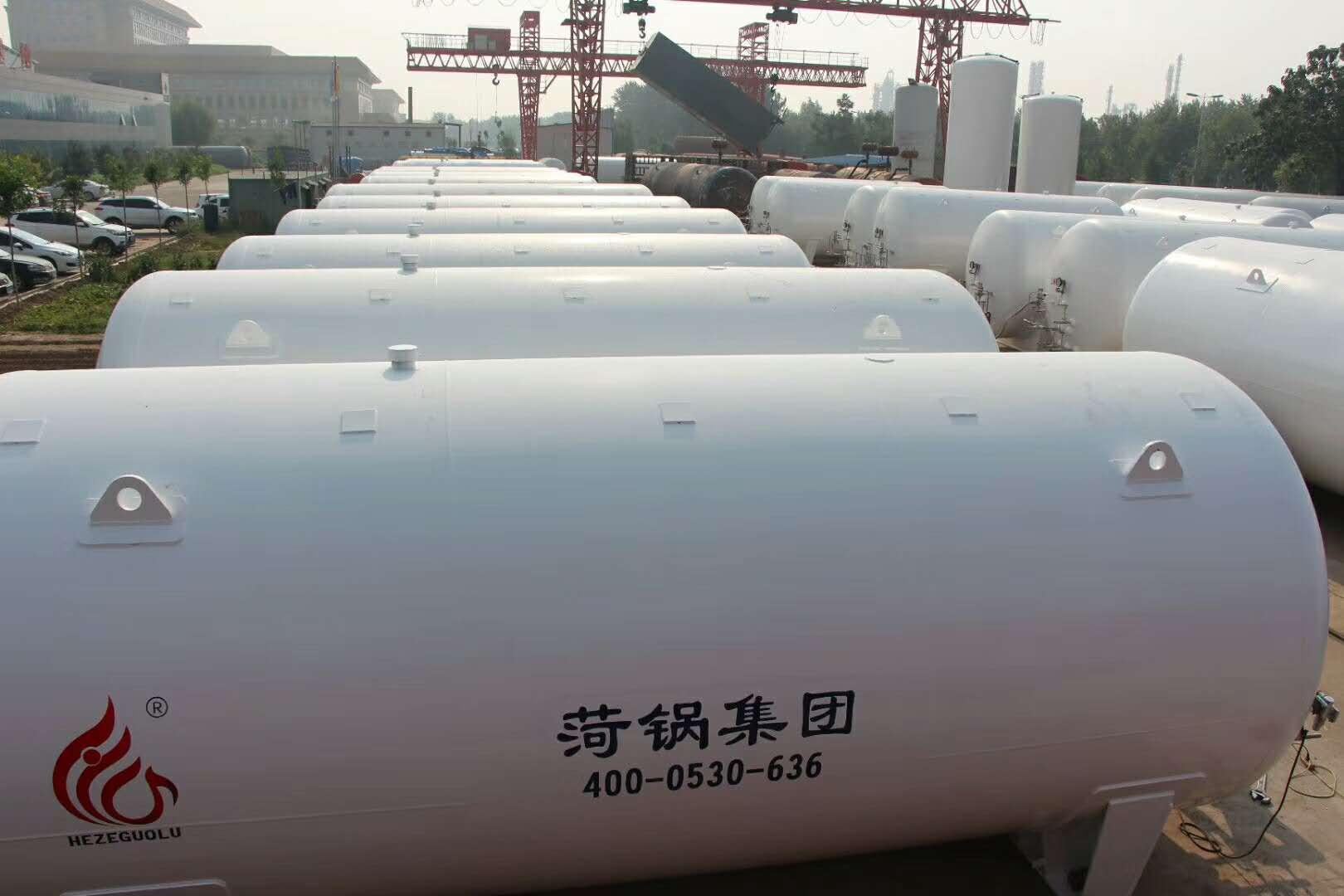
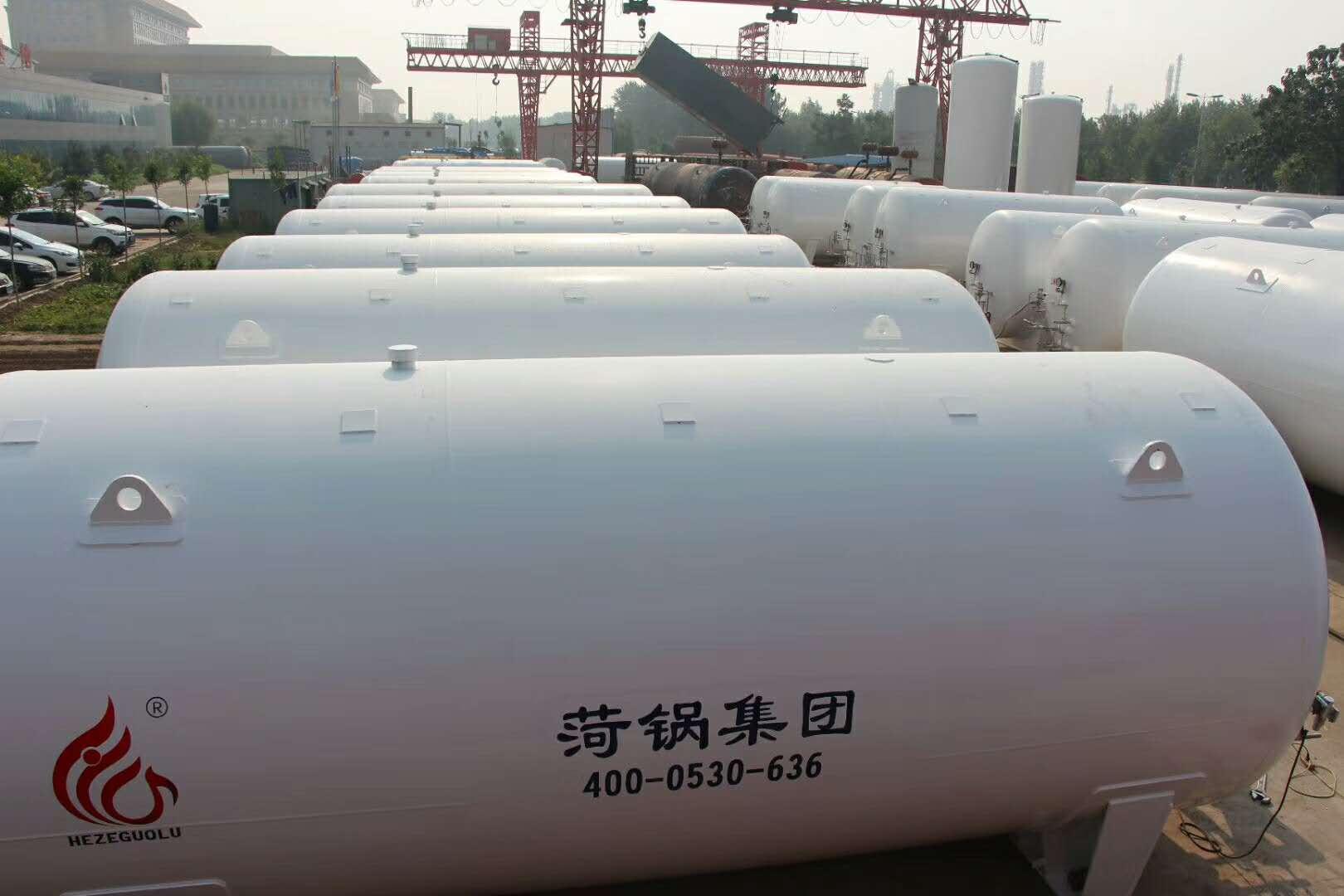
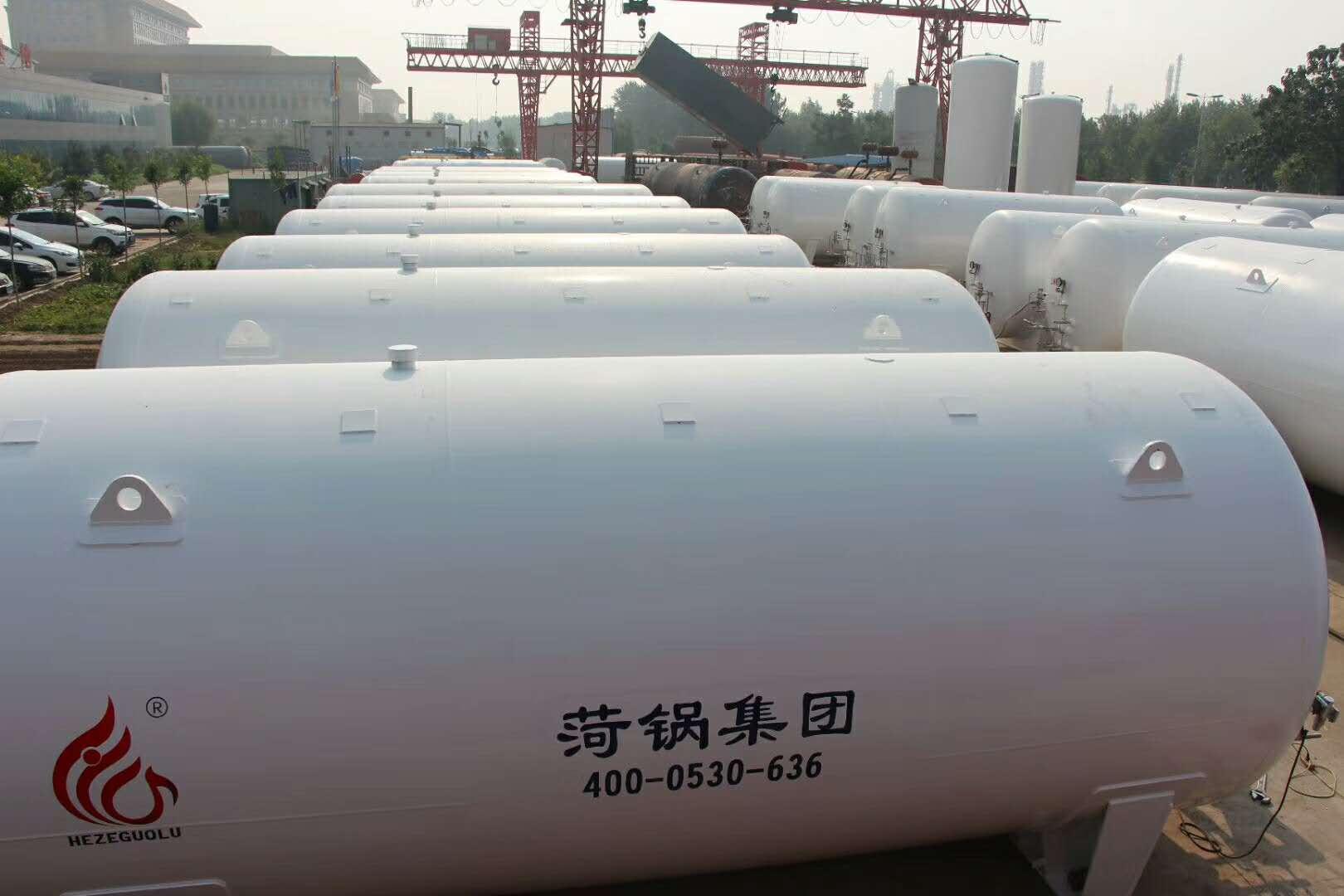

Liquefied Natural Gas (LNG) storage tanks consist of the tank body, instruments, pipelines, valves, etc. These tanks are designed with two types of liquid inlet methods, upper and lower, allowing for selection based on actual conditions.
The inner tank of the liquefied natural gas storage tank is equipped with a safety system device consisting of dual safety valves. In normal operation, one set is in service and the other in standby. If the safety valve in service trips, the manual pressure relief valve is immediately opened to depressurize below the tank's working pressure. Simultaneously, the safety device is quickly switched to the standby system via the manual handle, effectively ensuring the tank's safety. This safety system device comprises safety valves, explosion-proof devices, vent valves, and three-way ball valves, not only reducing pipeline welding but also having excellent fire and electrostatic protection structures. Additionally, the safety relief openings on the housing are fully guaranteed for the entire equipment's safety reliability. The low-temperature pipeline is centrally extracted for ease of operation and control, and the extraction outlet is structured with Dura Tube to accommodate low-temperature requirements and reduce stress on the pipeline due to thermal expansion and contraction, ensuring the tank's safety. The vacuum extraction valve employs a triple-sealed design.OThe shape ring seal effectively ensures the reliability of the sandwich seal, and is made of full stainless steel with a compact size. The top design of the liquefied natural gas (LNG) storage tank features a suspended structure for easy transportation, lifting, and installation. The unique manhole design ensures the cleanliness inside the container when it is sealed. Vacuum isolation valves and combined vacuum gauges are used on the LNG storage tank for easy measurement of the vacuum degree in the sandwich and maintenance, extending the tank's lifespan and improving its quality. The LNG storage tank is equipped with a level gauge and a pressure gauge for local display of the liquid level and pressure. The sandwich insulation material is high-quality domestic pearl sand, with the performance parameters of the pearl sand as follows:
Serial Number Indicator Name Unit Index
1 Loose Bulk Density Kg/m3 50-60
2 Particle size mm 0.1-0.2 Not less than80%
3 Thermal Conductivity (at atmospheric pressure),Temperature310-77k) W/m.k.s <0.026
4 Moisture content(Weight) % <0.1
5 Unexpanded Rate % ≤1
6 Temperature ℃ -200℃~600℃
7 PHValue 6.5~7.5
Section 3: Inspection, Testing, and Acceptance
1Inspect the inner cylinder material, and it can be put into use only after passing the inspection.
2All welds to be inspectedGB150.1~150.4-2011Inspection of standards and drawings is required; upon passing the inspectionA、BWeld-type seam100Percent-ray inspectionC、DWeld-like seam100Percent penetration testing with a corresponding test report provided
3After the cylinder assembly is completed, proceed to...GB150.1~150.4-2011Standards and drawings require inspection of geometric dimensions, pipe end orientations, and shape deviations.
4After inspection, conduct a pneumatic test and issue a pressure test report. Upon passing the pneumatic test, evacuate the vacuum. Once the vacuum level meets the requirements, perform a helium leak test.
5After interlayer leak detection passes, fill with pearlescent sand and then perform vacuum extraction; the vacuum degree reachesGB/T18442-2011Standard requirements for the sealed vacuum degree.
Four: Technical Data
1After the contract is signed, the seller shall provide the following technical documents to the buyer:
⑴ Certificate of Product Quality for the equipment1Set (supplied with equipment)
Including: Certificate of Material for Main Pressure Components, Bill of Materials, Structural Dimensions Inspection Report, Inspection Plan, Product Compliance Certificate, Pressure Vessel Product Data Sheet, Welding Records, Non-Destructive Testing Report, Pressure Test Report, Supervision and Inspection Certificate for Special Equipment Manufacturing (Local Inspection Authority), Product Brand Copy
As-built drawings All1Piece (supplied with the equipment)
Section 3: Strength Calculation Document1Piece (supplied with the equipment)
④ User's Manual1Piece (provided with the equipment)
Equipment process diagram and basic reference diagram1Piece (signed contract)7Available today (subject to availability)
⑹ Certificate of Conformity for accessories, Instrument Calibration Report 1Unit (provided with equipment)

The LNG storage tank is a double-walled structure, comprising an inner tank, outer tank, inner and outer supports, insulation layer, pressure safety system, vacuum pump, piping system, etc. All vacuum-insulated structures rely on vacuum. Due to the high degassing rate and suction resistance of the insulation space materials, and the fact that the baking temperature of the sealing material cannot be too high or the degassing too slow, suction is difficult. To achieve the required vacuum level within the design-specified vacuum time, aside from the vacuum pump and suction process, it also depends on the flow area of the annular suction pipes. To ensure a high vacuum level and improve the suction rate, a vacuum pump is installed at both ends of the equipment. One vacuum pump consists of three suction pipes, placed in the lower half of the annular space and extending from the bottom, while the other vacuum pump, also with three suction pipes, is placed in the upper half of the annular space and extends from the top. The two sets of suction pipes cross and overlap along the length of the tank. By increasing the flow area of the suction pipes and using various auxiliary methods such as heating and nitrogen displacement, the vacuum time for the annular insulation space of 100m³ is reduced to one-third of the conventional structure.


Discounted Natural Gas Tanks - Best Brands, Famous Natural Gas Tank Sales, Genuine Natural Gas Tank Customization - Natural Gas Tank Sales Company
