


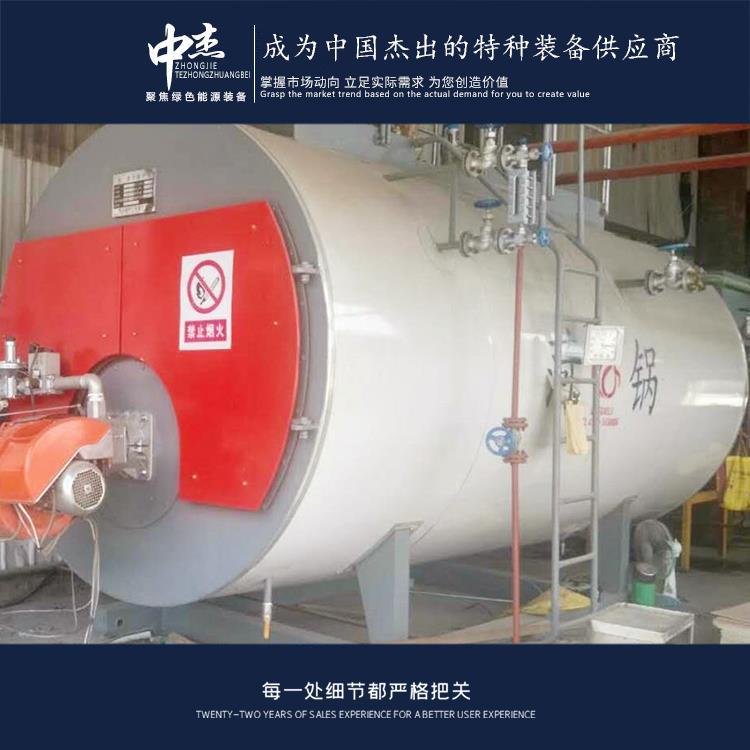
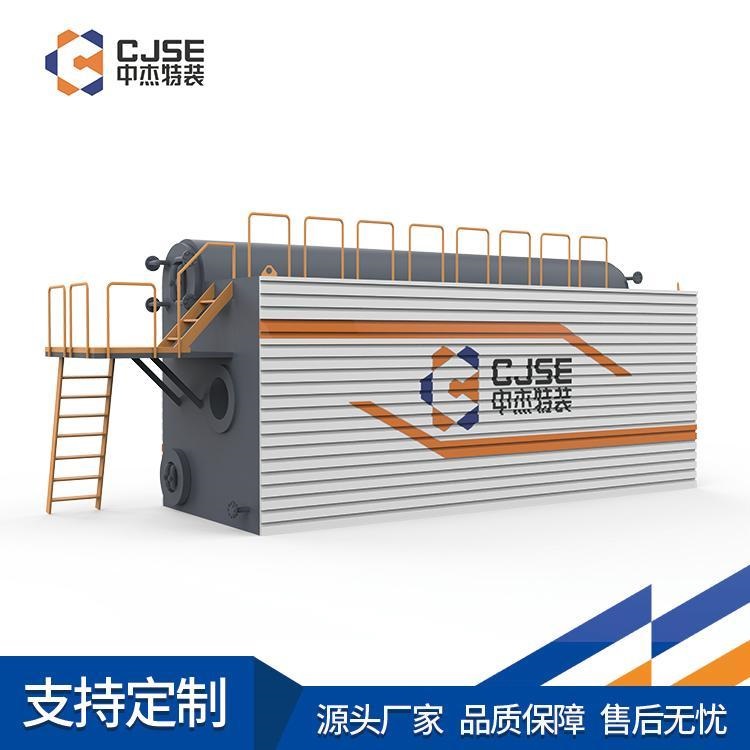
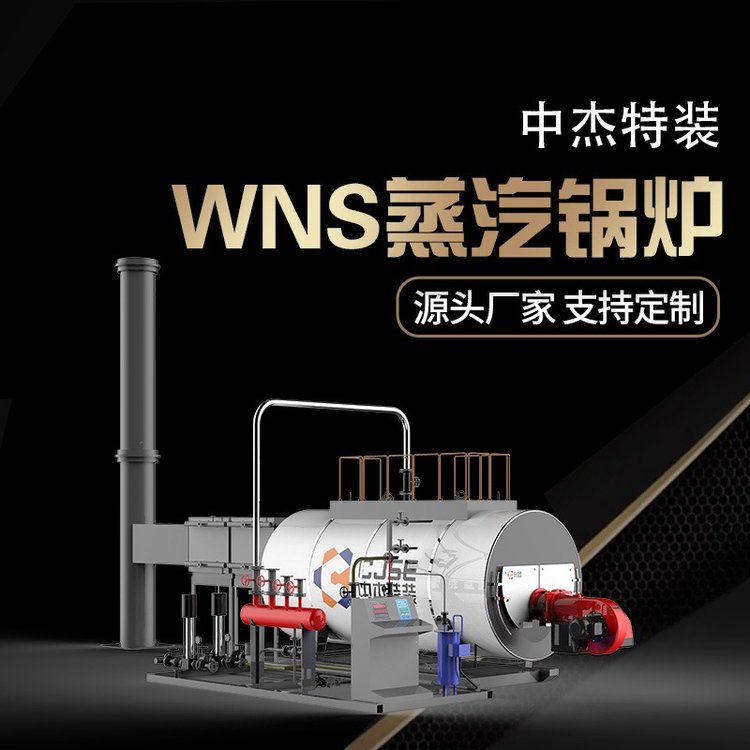
Shandong Zhongjie Special Equipment Co., Ltd. specializes in the following main products: fuel (gas) boilers, organic heat carrier boilers, biomass boilers, waste heat recovery boilers, and other boiler products; vacuum insulation cryogenic pressure vessels such as LNG storage tanks, oxygen/nitrogen/argon storage tanks, and CO2 storage tanks; pressure vessel products including denitrification engineering equipment, heat storage and energy storage equipment, and complete chemical equipment; central air conditioning and ventilation equipment such as ground (water) source heat pumps, air source units, water-cooled screw units, and air-cooled modular units. Planned products include large-scale energy centers, LNG transport vehicles, LNG tank containers, and other green energy equipment.
WNS Low-Nitrogen Condensing Hot Water Boilers offer the following advantages:
- Low Nitrogen Emissions: The WNS Low-Nitrogen Condensing Hot Water Boilers utilize low-nitrogen combustion technology, optimizing the combustion process and burner design to significantly reduce nitrogen oxide (NOx) emissions. This helps minimize environmental pollution.
- High Thermal Efficiency: These boilers employ condensing technology, recovering heat from flue gases to enhance energy utilization efficiency. The thermal efficiency of condensing hot water boilers typically exceeds 90%, surpassing that of traditional hot water boilers. This aids in energy conservation and cost reduction.
- Safety and Reliability: The control systems and safety devices used in the WNS Low-Nitrogen Condensing Hot Water Boilers provide excellent safety performance. They are equipped with multiple safety features such as overheat protection, overpressure protection, and water level protection, which automatically monitor and control the boiler's operation to ensure safe operation.
- Versatility: The WNS Low-Nitrogen Condensing Hot Water Boilers are suitable for various applications including industrial, commercial, and residential settings. They can accommodate different thermal load demands, offering strong flexibility. Additionally, they can be integrated with other systems like solar hot water systems and ground-source heat pump systems to further improve energy efficiency.
- Easy Operation and Maintenance: The operation and maintenance of the WNS Low-Nitrogen Condensing Hot Water Boilers are straightforward and user-friendly.
Chemical cleaning of industrial boilers is a common method that effectively removes dirt and sediments inside the boiler, enhancing heat exchange efficiency and extending the boiler's lifespan. Below are the general steps and methods for industrial boiler chemical cleaning:
Preparation: Turn off the boiler's power and gas supply, drain the water and steam from the boiler, and ensure the boiler is in a safe condition. Prepare the required chemical cleaning agents and cleaning equipment.
Cleaning Agent Selection: Choose a suitable chemical cleaning agent based on the boiler's material and the nature of the dirt. Common cleaning agents include acidic cleaners, alkaline cleaners, and chelating agents.
Cleaning Agent Circulation: Dissolve the cleaning agent in an appropriate amount of water and circulate it into the boiler through a pump. Determine the circulation time and temperature of the cleaning agent based on the size of the boiler and the extent of the dirt.
Cleaning Agent Action: During circulation, the cleaning agent reacts chemically with the dirt inside the boiler, dissolving and decomposing it. Acidic cleaners can remove rust and scale, while alkaline cleaners can remove grease and organic matter.
Rinsing and Neutralization: After the cleaning agent circulation is complete, rinse the boiler with clean water to flush out the cleaning agent and dissolved dirt. Simultaneously, use a neutralizer to neutralize any remaining acidic or alkaline substances, ensuring the boiler's neutrality.
Inspection and Maintenance: After cleaning, inspect the boiler to ensure the cleaning effect and normal operation. Perform necessary maintenance and upkeep as needed.
Points to Note When Conducting Industrial Boiler Chemical Cleaning:
1. Adhere strictly to the instructions for using chemical cleaning agents and safety operation procedures to ensure the safety of operators.
2. Choose the appropriate cleaning agent and method based on the boiler's material and the properties of the cleaning agent.
3. Control the concentration, temperature, and circulation time of the cleaning agent to avoid unnecessary damage to the boiler.
4. Monitor the concentration and pH value of the cleaning agent in a timely manner during the cleaning process and adjust the cleaning conditions.
5. Flush the boiler after cleaning to ensure the complete removal of cleaning agents and dirt.
6. Perform boiler maintenance and upkeep promptly after cleaning to ensure normal operation and long-term use.
The management system for gas heat transfer oil furnace equipment incidents primarily includes the following aspects:
1. Equipment Safety Management System: Establish and improve the safety management system for gas heat transfer oil furnace equipment, clarify responsibilities and authorities, and ensure the safe operation of the equipment. This includes equipment safety operation procedures, emergency response plans for accidents, and equipment inspection and maintenance schedules.
2. Equipment Maintenance Management System: Establish a maintenance management system for equipment, clarify the maintenance responsibilities and plans for the equipment. This includes regular equipment inspections, maintenance, and repairs to ensure the normal operation and safety of the equipment.
3. Equipment Operation Management System: Establish an equipment operation management system, clarify the operation procedures and requirements for the equipment. This includes start-up, shutdown, adjustment, and monitoring processes, ensuring the safety and operation of the equipment.
4. Equipment Accident Management System: Establish an equipment accident management system, clarify the reporting, investigation, and handling procedures for accidents. This includes requirements for reporting equipment accidents, responsibility pursuit, accident cause analysis, and improvement measures to reduce accidents and minimize accident losses.
5. Equipment Training and Assessment System: Establish a training and assessment system for equipment to ensure operators possess the necessary skills and knowledge. This includes equipment operation training, safety training, and technical training, as well as regular assessments and evaluations of operators.
6. Equipment Inventory and Record Management System: Establish an equipment inventory and record management system to record the operating conditions, maintenance records, and accident records of the equipment. This includes equipment inventory management, filling and preserving maintenance records, and sorting and analyzing accident records for equipment management and issue tracing.
The above are some basic contents of the management system for gas heat transfer oil furnace equipment incidents. Specific management systems need to be formulated and improved based on actual conditions. At the same time, relevant laws, regulations, and standards must be observed to ensure the safety and environmental performance of the equipment.
Based on the provided information, I cannot accurately determine the heating area for a 40-ton gas-fired hot water boiler or the gas pressure for an atmospheric pressure gas boiler. Establishing these parameters requires considering multiple factors, including the boiler's design specifications, the type and quality of the gas, and the heating system requirements. The heating area is typically calculated based on the size of the building or industrial production facility that needs heating and the heat load. Common calculation methods include heat load calculations based on the building's floor area, the climate conditions of the region, and the required indoor temperatures. The gas pressure depends on the type of gas and the design of the gas supply system. Different types of gas require different pressure levels. The gas pressure also needs to consider factors such as the distance of the gas pipeline, pipeline diameter, and pipeline material. Therefore, for an accurate determination of the heating area for the 40-ton gas-fired hot water boiler and the gas pressure for the atmospheric pressure gas boiler, it is recommended to consult the boiler manufacturer or engineer to calculate and design based on the specific situation.
Zhongjie Special Equipment upholds the grand vision of "realizing employees' dreams, creating value for customers, and striving for the prosperity and strength of our motherland," and is dedicated to the development of the green energy equipment industry. We offer society high-quality and cost-effective products and services!
Quzhou 2-ton gas boiler
