



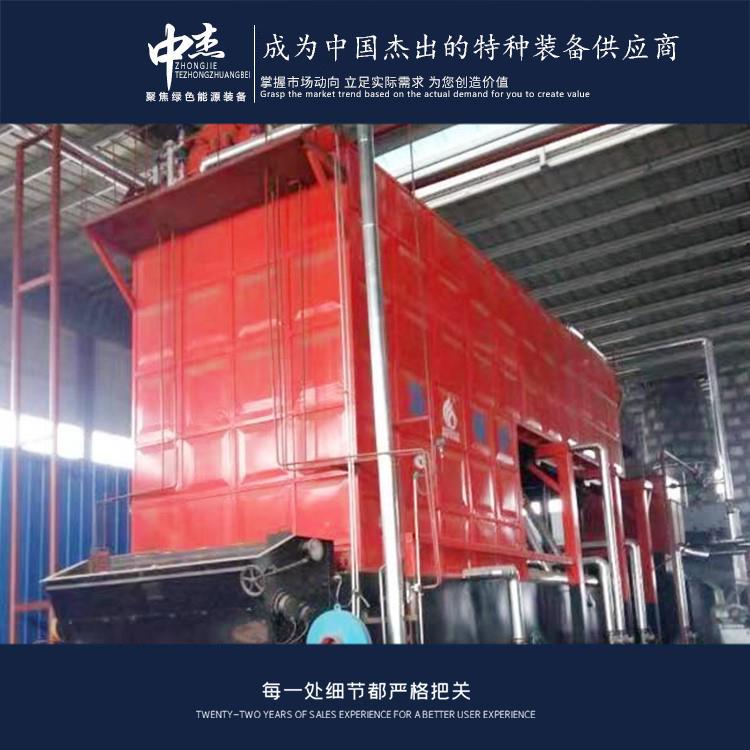
Shandong Zhongjie Special Equipment (formerly Heze Boiler Factory Co., Ltd.) was established in 2001, located at No. 2218 Jinan Road, Development Zone, Heze City, with a registered capital of 50 million yuan and total assets of 500 million yuan. The company has 7 business centers: boilers, deep-freezing vessels, pressure vessels, central air conditioning, engineering installation, international trade, and the Internet of Things. It has three manufacturing sites on Jinan Road, East Yangtze Road, and Bohai Road, covering a total of 200,000 square meters. The main workshop spans 83,000 square meters. Currently, there are 710 employees, including 247 engineers and technicians, and 82 intermediate-level technical personnel. In December 2016, it was recognized as a "High-Tech Enterprise" by the Science and Technology Department. In June 2021, it was identified as a "Specialized, Focused, and New Enterprise of Shandong Province" by the Industrial and Information Technology Department. In June 2022, it was recognized as a "Gazelle Enterprise of Shandong Province" and in August 2022, it was identified as a "Specialized, Focused, and New Small Giant Enterprise" by the Ministry of Industry and Information Technology.
Biomass boilers can be broadly categorized into the following two types based on their applications:
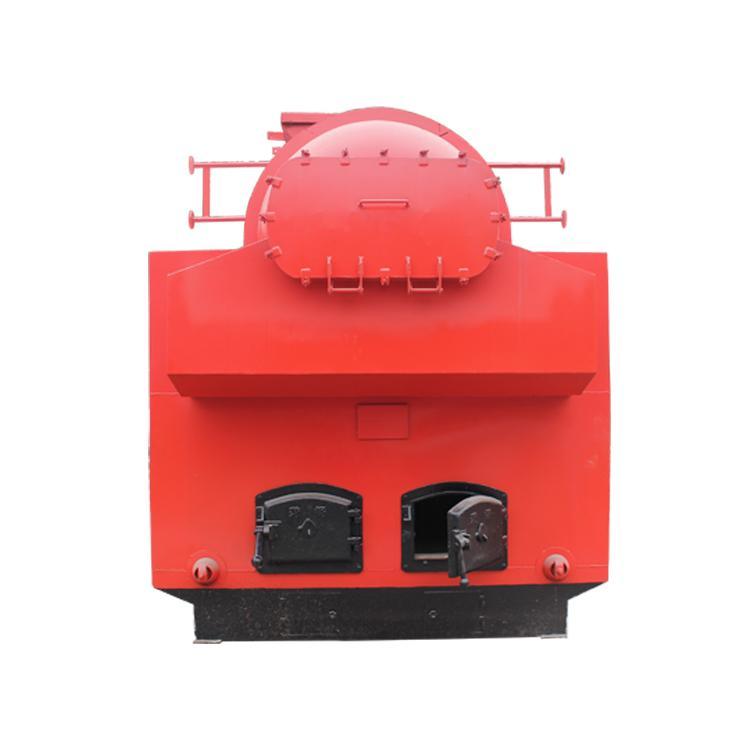
Biomass Hot Water Boiler: Biomass hot water boilers are primarily used for heating and hot water supply. They transfer thermal energy to water by burning biomass fuel, producing hot water. This type of boiler is widely used in heating and hot water systems in homes, office buildings, schools, hotels, and other venues.
Biomass Steam Boilers: Biomass steam boilers are primarily used for steam supply in industrial production processes. They generate high-pressure steam at high temperatures by burning biomass fuel, which is utilized to power machinery, heating, and processing in various industrial applications. This type of boiler is commonly found in industries such as pulp and paper, food processing, and chemicals.
These two types of biomass boilers differ in principle and design, making them suitable for various application scenarios. Whether hot water or steam boilers, they utilize the heat energy from biomass fuel to harness renewable energy, featuring environmental protection and energy-saving properties.
Energy-saving methods for biomass hot water boilers mainly include the following aspects:
Fuel Selection: Choose biomass fuels in bulk, such as wood chips and straw, ensuring the moisture content and particle size meet the boiler's requirements. Low moisture content and appropriate particle size of the fuel can enhance combustion efficiency and reduce energy waste.
Combustion Optimization: Enhance combustion efficiency by optimizing the combustion process. Adjust combustion parameters such as temperature and duration to achieve more complete combustion and minimize fuel waste.
Heat Recovery Utilization: Utilize the excess heat from flue gas for heat recovery. By installing flue gas heat recovery units, the excess heat in the flue gas is recovered and used for other heat needs such as heating and hot water, improving energy utilization efficiency.
Boiler Insulation: Enhance the insulation of the boiler to minimize heat loss. Insulate the boiler shell and pipes to reduce heat dissipation and improve the thermal efficiency of the boiler.
Control System Optimization: Optimizing the boiler's control system to achieve temperature and pressure control. Through reasonable control strategies, reduce energy waste and enhance the operational efficiency of the boiler.
Regular Maintenance: Perform regular maintenance on biomass hot water boilers to ensure normal operation. Clean the combustion chamber, heat exchangers, and other components, inspect and replace worn parts, and ensure the boiler's performance.
Energy Management: Establish a scientific energy management system, monitor and analyze energy consumption, and formulate reasonable energy-saving measures. Continuously optimize the operation of boilers through energy management practices to achieve energy-saving objectives.
By integrating the above energy-saving methods, the energy utilization efficiency of biomass hot water boilers can be enhanced, reducing energy waste, and achieving the goal of energy conservation and environmental protection.
There are several common types of biomass energy-saving steam boilers:
Biomass Chain Grate Boilers: The biomass chain grate boiler utilizes a chain feeding system to deliver biomass fuel into the furnace for combustion. The chain feeding system ensures continuous fuel supply, making it suitable for large-scale biomass steam boilers.
Biomass Circulating Fluidized Bed Boiler: The biomass circulating fluidized bed boiler utilizes circulating fluidized bed combustion technology, mixing biomass fuel with a fluidizing medium (such as sand) for combustion at high temperatures. This type of boiler boasts high combustion efficiency and strong adaptability to various fuels.
Biomass Pellet Boilers: Biomass pellet boilers are specifically designed for burning biomass pellet fuels. They feature high combustion efficiency and stability, making them suitable for small to medium-sized biomass steam boilers.
Biomass Gasification Boilers: Biomass gasification boilers utilize gasification technology to convert biomass fuel into combustible gases, which are then burned to produce steam. These boilers offer advantages such as utilizing biomass energy and reducing pollution emissions.
Biomass Hot Air Furnace: The biomass hot air furnace is a device that utilizes biomass fuel to generate high-temperature hot air, suitable for drying and heating processes in industrial production. It features energy-saving and environmental protection characteristics.
These types of biomass energy-saving steam boilers have their own characteristics and suitability in different application scenarios, and the appropriate type can be selected based on actual needs.
Biomass boiler furnace ash blowing refers to the cleaning operation of the combustion area within the furnace by means of an ash blowing device. The purpose of ash blowing is to remove the ash and slag inside the furnace, maintain the unobstructed flow of the combustion area, and enhance the combustion efficiency and operational stability of the boiler.
The furnace ash blowing operation generally consists of two methods: mechanical ash blowing and pulse ash blowing.
Mechanical Ash Blowing: Mechanical ash blowing is a process that uses mechanical devices, such as rotary ash blowers and chain ash blowers, to clean the combustion area within the furnace. The mechanical ash blowers rotate or move periodically to remove ash and slag from the combustion area.
Pulse Blasting: Pulse blasting utilizes high-pressure gas or compressed air to喷射气流 into the combustion zone of the furnace through nozzles, creating impact and vibration to remove slag and soot. It is characterized by its effective and quick cleaning performance.
The impact of the furnace ash blowing operation on biomass boilers is mainly reflected in the following aspects:
Clean combustion area: The furnace ash blowing can burn the ash and slag in the combustion area, keeping the combustion area unobstructed, which is conducive to the full combustion of fuel and improves combustion efficiency.
Reducing smoke resistance: Firing bed ash blowing can burn away the slag and accumulated ash in the combustion area, reducing resistance in the smoke passage, facilitating smooth smoke exhaust, and improving the boiler's heat exchange efficiency.
Shandong Zhongjie Special Equipment, welcome customers to our factory for business discussions.
Fuzhou Biomass Boiler Manufacturer, Various Models Available
