


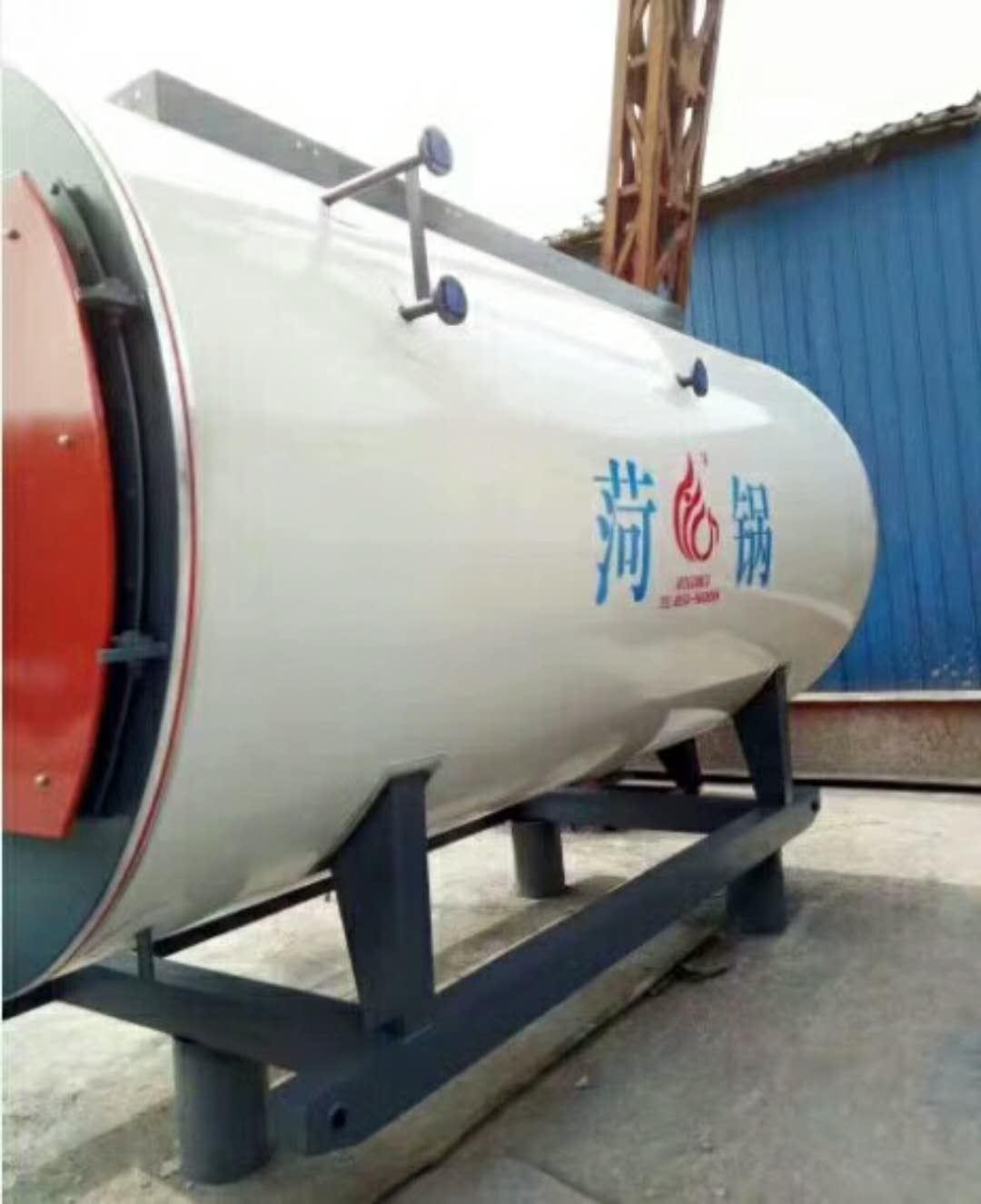
Shandong Zhongjie Special Equipment's main products include: fuel (gas) boilers, organic heat carrier boilers, biomass boilers, waste heat boilers, and other boiler products; vacuum insulation cryogenic pressure vessels such as LNG storage tanks, oxygen/nitrogen/argon storage tanks, and CO2 storage tanks; pressure vessel products like denitrification engineering equipment, heat storage and energy storage equipment, and complete chemical equipment; central air conditioning and HVAC equipment such as ground (water) source heat pumps, air source units, water-cooled screw units, and air-cooled modular units. Planned products include large-scale energy centers, LNG transport vehicles, LNG tank containers, and other green energy equipment.
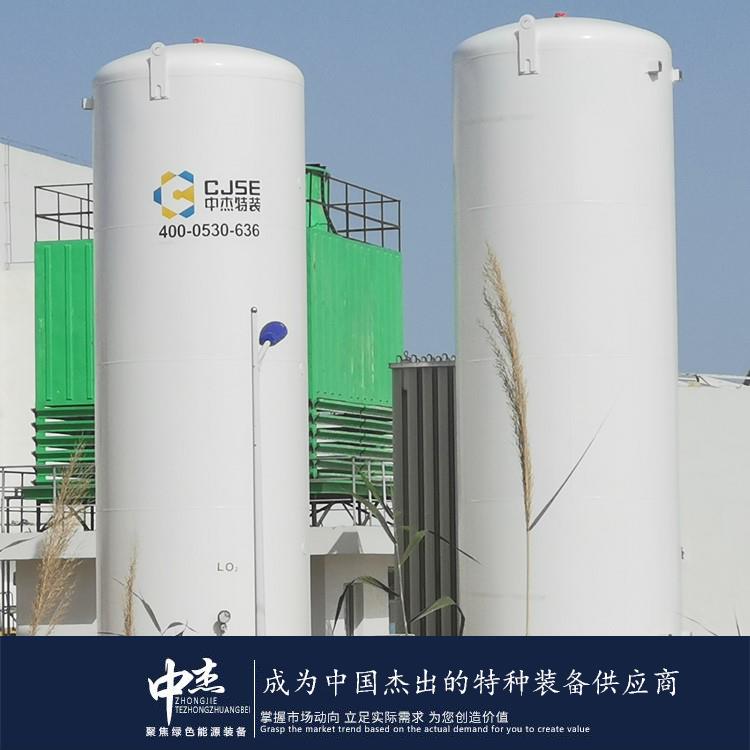
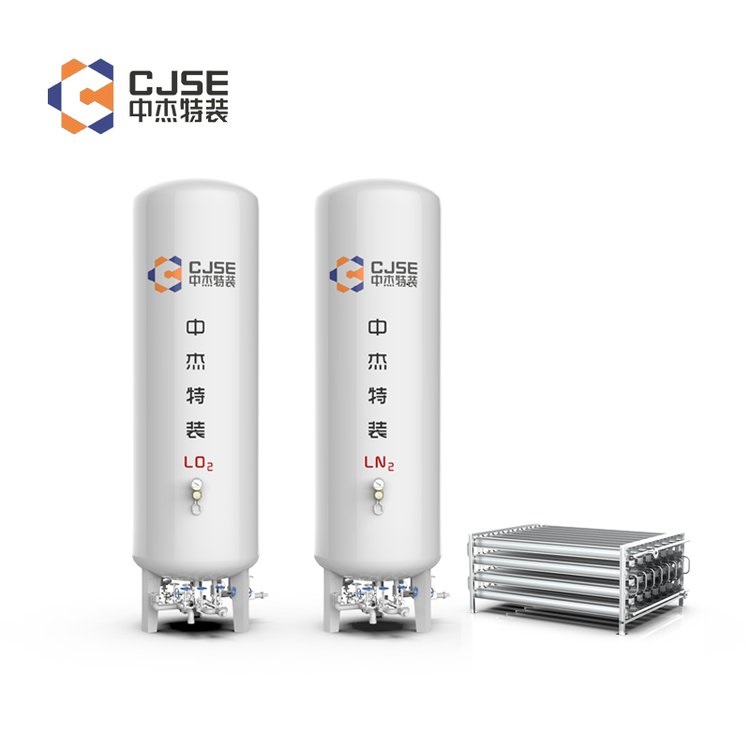
Liquid oxygen low-temperature storage tanks are primarily used for storing and supplying liquid oxygen, and their application methods can vary depending on specific requirements and scenarios. The following are some common application methods for liquid oxygen low-temperature storage tanks:
Applications: Liquid oxygen low-temperature storage tanks are widely used in the field for cryogenic preservation of biological samples, cells, tissues, and vaccines. Institutions such as biomedical research organizations and biobanks utilize these storage tanks to store and protect these biological materials.
Experimental Research: Liquid Oxygen Low-Temperature Storage Tanks are used in scientific research and laboratories to provide low-temperature environments for cryogenic preservation and experiments. These tanks play a crucial role in experimental research across various fields, including physics, chemistry, biology, and materials science.
Industrial Applications: Liquid Oxygen Low-Temperature Storage Tanks are used in industrial sectors for providing low-temperature cooling in processes such as metal processing, welding, and heat treatment. These tanks can achieve low temperatures, enabling metals to reach the desired hardness and toughness during processing.
Food Industry: Liquid Oxygen Low-Temperature Storage Tanks are used in the food industry for freezing and refrigerating foods such as frozen meats, frozen fruits, and frozen seafood. The low temperature of liquid oxygen can quickly freeze foods, preserving their freshness and quality.
Liquid oxygen low-temperature storage tanks are used in the field for storing and supplying liquid oxygen as fuel. Liquid oxygen, as a high-energy fuel, is widely used in the propulsion systems of engines and vessels.
During the operation of liquid oxygen low-temperature storage tanks, it is crucial to strictly adhere to relevant safety regulations and operating guidelines to ensure the safe operation and use of the tanks. Liquid oxygen is highly flammable, so fire prevention measures must be taken when using liquid oxygen low-temperature storage tanks, and it must be ensured that there are no sources of fire around the tank.
Daily inspection of liquid nitrogen storage tanks primarily includes the following aspects:
Appearance Inspection: Check for any obvious damage, deformation, or corrosion on the tank's exterior, including the tank walls, valves, pipes, and joints.
Sealability Inspection: Check the tank's sealing performance, including inspecting for leaks at valve and pipe connections, and verifying that the tank's exhaust valve and safety valve are functioning properly.
Pressure Check: Verify that the tank's pressure gauge is functioning properly and that the pressure is within the normal range to ensure the tank operates correctly.
Level Check: Monitor the liquid nitrogen tank's level to ensure it remains within the normal range, avoiding issues caused by excessive or insufficient levels.
Insulation Layer Inspection: Check for any damage or detachment in the tank's insulation layer to ensure proper insulation and reduce evaporation losses of liquid nitrogen.
Leak Inspection: Check for signs of liquid nitrogen leakage around the storage tank, including frost, ice, or liquid nitrogen stains on the ground.
Safety Equipment Inspection: Verify that the storage tank's safety equipment, such as leak detectors, alarm systems, and safety valves, are functioning properly to ensure the tank's safety.
Clean Inspection: Regularly clean the interior of the tank to remove accumulated impurities and dirt, maintaining the tank's cleanliness and sanitation.
Above is the content of daily inspections for liquid nitrogen tanks. The specific inspection items should be adjusted and supplemented according to the tank's model, usage, and relevant regulations. During the inspection process, strict adherence to operational procedures and safety requirements is essential to ensure the safe operation of the tank.
To prevent the dangers caused by static electricity in liquid oxygen tanks, the following measures can be taken:
Ensure proper grounding of the liquid oxygen storage tank and related equipment. Grounding helps dissipate static electricity to the ground, reducing the likelihood of static buildup. Metal components such as tanks and pipes should be connected to a reliable grounding system.
Static dissipative materials: Utilize static dissipative materials to reduce the accumulation of static electricity. For instance, apply conductive coatings or materials on the insulating layer of liquid oxygen storage tanks and pipelines to discharge static electricity to the ground.
Anti-static Equipment: Utilize anti-static equipment, such as static-conductive pipes and hoses, to minimize the accumulation and discharge of static electricity. These devices aid in grounding static electricity, reducing the occurrence of static sparks.
Static grounding wire: Install static grounding wires on liquid oxygen storage tanks and related equipment to discharge static electricity to the ground. These grounding wires should be connected to a reliable grounding system and be inspected and maintained regularly.
Static Eliminator: Utilize a static eliminator to dissipate static electricity. Static eliminators neutralize static by releasing opposite charges, reducing the buildup of static and the occurrence of sparks.
Electrostatic Safety Training: Provide electrostatic safety training for operators of liquid oxygen storage tanks to enhance their awareness and preventive measures against electrostatic hazards. Training content can include the principles of electrostatic formation, preventive measures, and emergency response procedures.
It is important to note that the static control measures for liquid oxygen storage tanks should be designed and implemented by personnel, following relevant safety operating procedures and standards. During operation, strict adherence to the prescribed operational procedures is required to avoid the generation of static sparks, ensuring the safety of the tank.
Low-temperature liquid storage tanks are equipment used for storing low-temperature liquids, commonly employed for liquid oxygen, liquid nitrogen, liquid argon, and other low-temperature liquids. These liquids exist in a gaseous state at room temperature but are cooled to a liquid state under low temperatures for better storage and use. Such tanks are typically made of high-strength materials like stainless steel or aluminum alloys to withstand low temperatures and high pressures. They usually have an insulating layer inside to minimize evaporation and maintain the低温 state. Applications of low-temperature liquid storage tanks include but are not limited to the following areas: They are widely used in rocket engines and propulsion systems, such as liquid oxygen, liquid nitrogen, and liquid hydrogen storage tanks, for storing and supplying low-temperature liquids as fuel and oxidizers to propel the engines. In industrial production, these tanks are used to store and supply low-temperature liquids like liquid oxygen, nitrogen, and argon, serving as coolants, raw materials for gas separation, and reactants in chemical reactions. They are also used in medical fields to store liquid oxygen for oxygen therapy, inhalation therapy, and operating rooms. In scientific research and laboratories, low-temperature liquid storage tanks provide low-temperature liquids as coolants and freezing media, used for cooling laboratory equipment, material research, superconductivity, and low-temperature physics. In summary, low-temperature liquid storage tanks are extensively applied in rocketry, industrial production, and laboratory research, storing and supplying low-temperature liquids to meet the demands of various fields.
Shandong Zhongjie Special Equipment, welcome customers to our factory for cooperation discussions.
Lianyungang Nitrogen Storage Tank, Years of Industry Experience
