


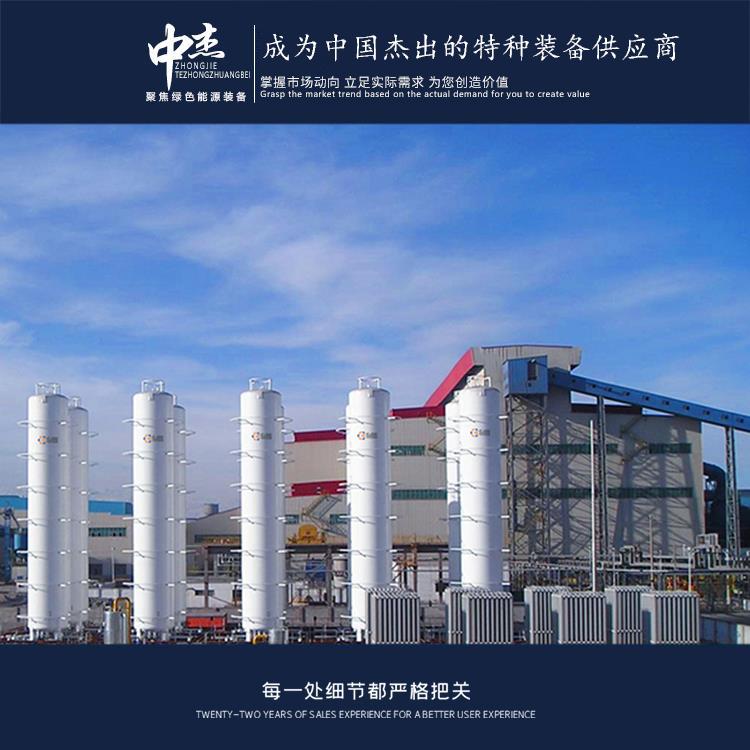
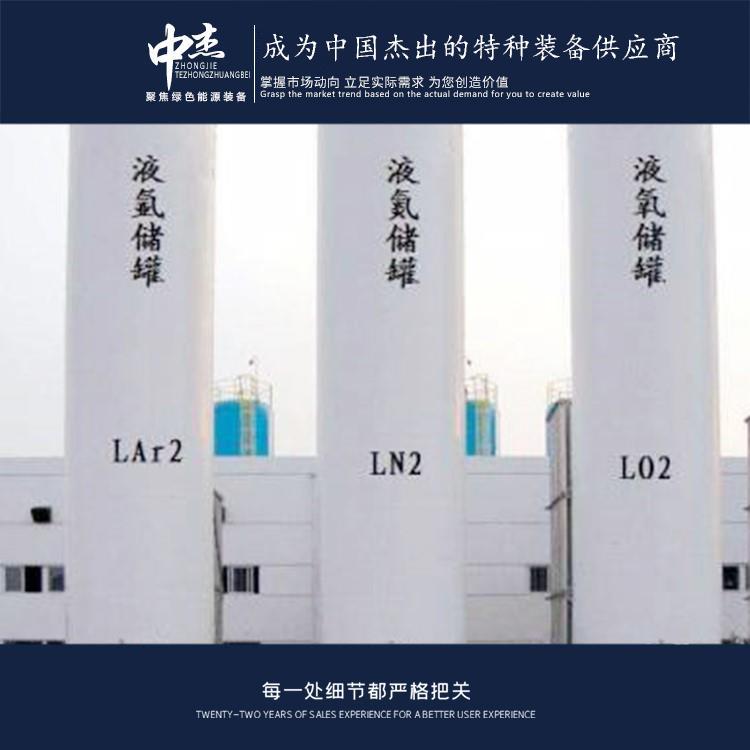
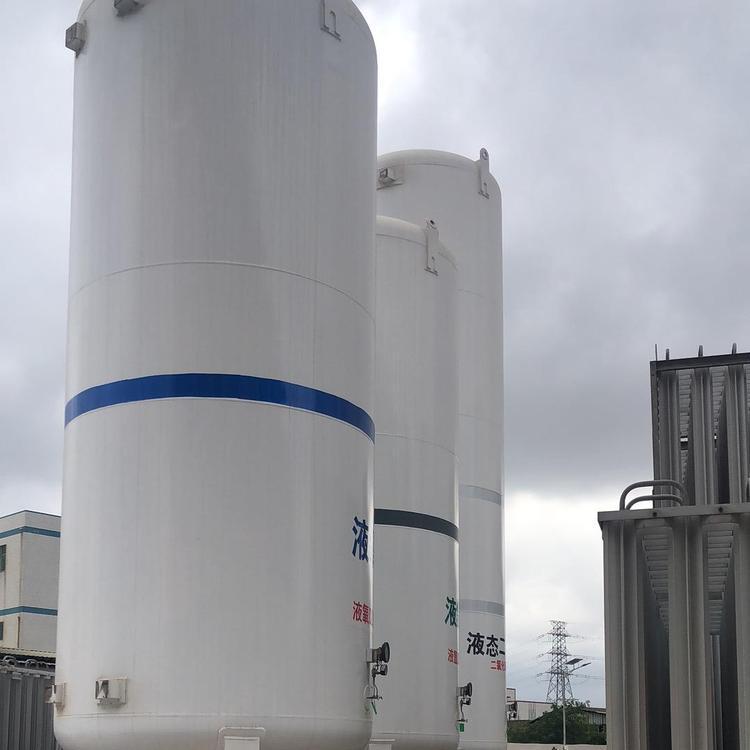
Shandong Zhongjie Special Equipment's main products include: fuel (gas) boilers, organic heat carrier boilers, biomass boilers, waste heat boilers, and other boiler products; vacuum insulation cryogenic pressure vessels such as LNG tanks, oxygen-nitrogen-argon tanks, and CO2 tanks; pressure vessel products such as denitrification engineering equipment, heat storage and energy storage equipment, and complete chemical equipment; central air conditioning and ventilation equipment such as ground (water) source heat pumps, air source units, water-cooled screw units, and air-cooled modular units. Planned products include large-scale energy centers, LNG transport vehicles, LNG tank containers, and other green energy equipment.
When storing liquid nitrogen in low-temperature storage tanks, the following points should be noted:
Protective Gear: When operating low-temperature storage tanks, appropriate protective gear must be worn, including gloves, protective suits, and non-slip shoes. This equipment can protect the skin from the low temperatures of liquid nitrogen and other hazards.
Avoid direct contact: Liquid nitrogen is extremely cold and can cause chilling. Therefore, it is essential to avoid direct contact with liquid nitrogen, especially with the skin. Use tools or utensils for handling to prevent direct hand contact with liquid nitrogen.
Ventilation Requirements: In the operation area of low-temperature storage tanks, adequate ventilation must be ensured to expel gases produced by the evaporation of liquid nitrogen. Maintain air circulation to avoid excessive oxygen concentration, and reduce the risk of fire and explosion.
Prevent Leaks: Regularly inspect the low-temperature storage tank for leaks and equip with leak detectors and alarm systems. In case of a leak, take immediate action to control and repair it. Avoid the hazards of liquid nitrogen leaks to personnel and the environment.
Fire Prevention Measures: Liquid nitrogen has a low boiling and freezing point, which can easily cause fires. Measures such as installing fire barriers around low-temperature storage tanks and using fire-resistant coatings are taken to prevent fires from occurring and spreading.
Electrostatic Protection: Electrostatic buildup in low-temperature storage tanks may cause sparks, increasing the risk of fire. Measures should be
The temperature difference between the interior and exterior of a low-temperature liquid storage tank depends on various factors, including the tank's design, insulation performance, the temperature of the liquid, and the external environmental temperature. Generally, the temperature inside the low-temperature liquid storage tank is much lower than the external environmental temperature.
Low-temperature liquid storage tanks are commonly used for storing liquefied nitrogen, oxygen, argon, and other low-temperature liquids. These liquids have very low boiling points, usually below -100 degrees Celsius. To maintain the low temperature of the liquids, the internal insulation of the tank must be excellent to minimize heat transfer and evaporation loss.
Low-temperature liquid storage tanks typically offer a smaller temperature variance. Generally, the internal temperature of the tank can be maintained near the boiling point of the liquid, usually several tens of degrees Celsius lower than the ambient temperature. The specific temperature variance depends on the tank's design, insulation performance, and the properties of the liquid.
Note that the temperature differences in low-temperature liquid storage tanks may vary over time. As time progresses, the performance of the insulation material may be affected by wear or aging, leading to increased temperature differences. Therefore, regular inspection and maintenance of the tank's insulation are crucial to ensure its effective and stable insulating performance.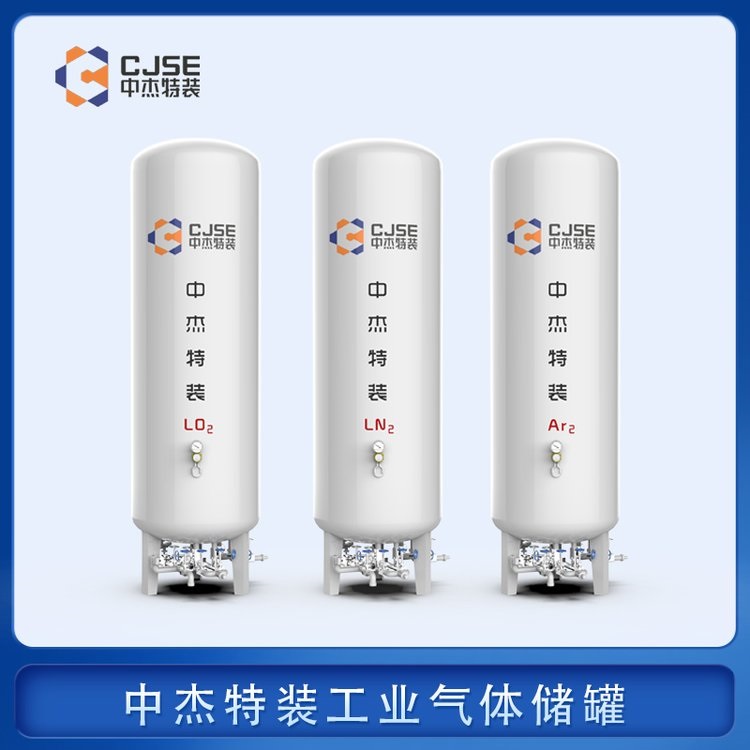
When selecting low-temperature liquefied natural gas (LNG) storage tanks, the following factors should be considered:
Tank Types: Common LNG tank types include vertical fixed-roof tanks, spherical tanks, and horizontal tanks. Choose the appropriate tank type based on specific application requirements and site conditions.
Tank Capacity: Determine the tank capacity based on the storage requirements for LNG and the estimated usage volume. The tank capacity should meet the expected storage cycle and supply demand.
Material Selection: LNG tanks typically use low-temperature steel or nickel alloy materials to ensure corrosion resistance and strength in low-temperature environments. Select the appropriate material based on the tank's design pressure and temperature requirements.
Safety Performance: LNG tanks should have excellent safety performance, including seismic resistance, fire resistance, and leakage control capabilities. The tanks must comply with relevant safety standards and specifications, such as API 620, EN 1473, etc.
Maintenance and Repair: Consider the maintenance and repair requirements of the tank, including internal cleaning, coating protection, corrosion prevention measures, etc. The tank's design should facilitate maintenance and repair operations to ensure long-term reliable operation.
Environmental Impact: When selecting LNG tanks, consider their impact on the surrounding environment. The layout and design of the tanks should meet environmental protection requirements, minimizing noise, vibration, and gas emissions, etc.
Cost-effectiveness: Consider the investment, operational, and lifecycle costs of the tank to select one with a favorable cost-performance ratio.
需要注意的是,选型LNG储罐时应遵循相关的和地区的法规、标准和规范。此外,咨询的工程师或储罐制造商,以获取更详细和准确的选型建议。
Low-temperature storage tanks have several advantages:
Storage: Low-temperature storage tanks can store liquefied low-temperature substances (such as liquid nitrogen, liquid oxygen, etc.) at low temperatures, maintaining their liquid state. Compared to gas storage, liquid storage significantly increases storage density and saves space.
Long-Term Storage: Low-temperature storage tanks are designed for long-term storage of low-temperature materials, extending their service life. By controlling the temperature within the tank and the performance of the insulation layer, the evaporation and oxidation of the liquid material can be slowed down, maintaining its stability and purity.
Safety: The low-temperature storage tank boasts excellent safety features. Constructed with special materials and structural design, it can withstand low temperatures and high pressure environments. Additionally, the tank is equipped with safety devices such as pressure relief valves and level alarms, ensuring safe operation and usage.
Wide Applications Across Multiple Fields: Low-temperature storage tanks are extensively used in various industries. They can be used for storing liquid oxygen, providing oxygen supply; in industrial sectors, they are suitable for storing liquefied natural gas (LNG) and other process gases like liquid nitrogen; in the scientific research field, they can store low-temperature experimental samples.
Environmental Protection and Energy Saving: Low-temperature storage tanks enable effective storage and utilization of low-temperature materials, reducing energy waste and environmental pollution. During the storage and transportation of liquid substances, energy loss is minimized, improving energy utilization efficiency.
In summary, low-temperature storage tanks offer advantages such as storage, long-term storage, safety, multi-industry applications, and environmental protection and energy conservation. This makes them a crucial equipment for storing and supplying low-temperature materials, playing a significant role in various fields.
Shandong Zhongjie Special Equipment, welcome customers to visit our factory for business talks.
Neijiang 5 cubic meter liquid oxygen storage tank, manufacturer direct
