


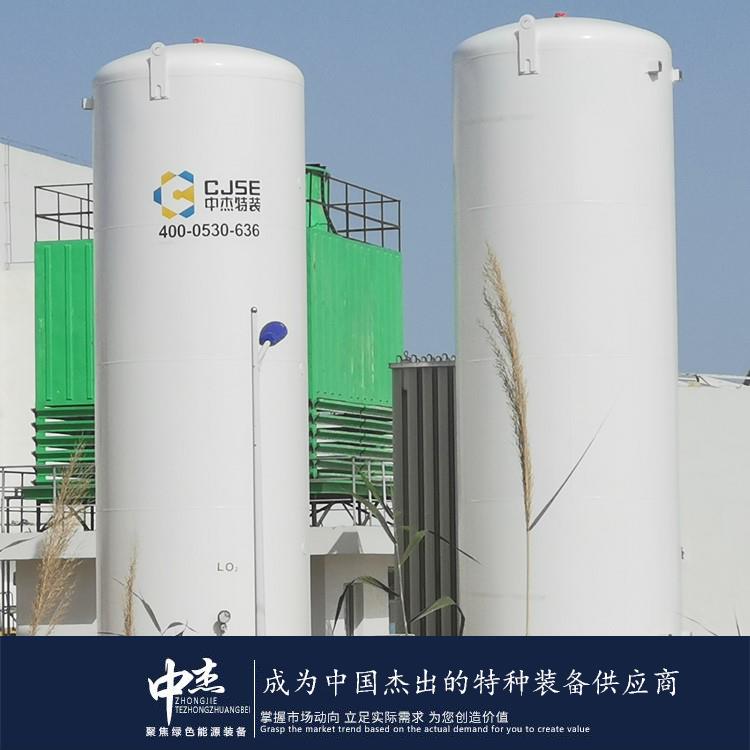
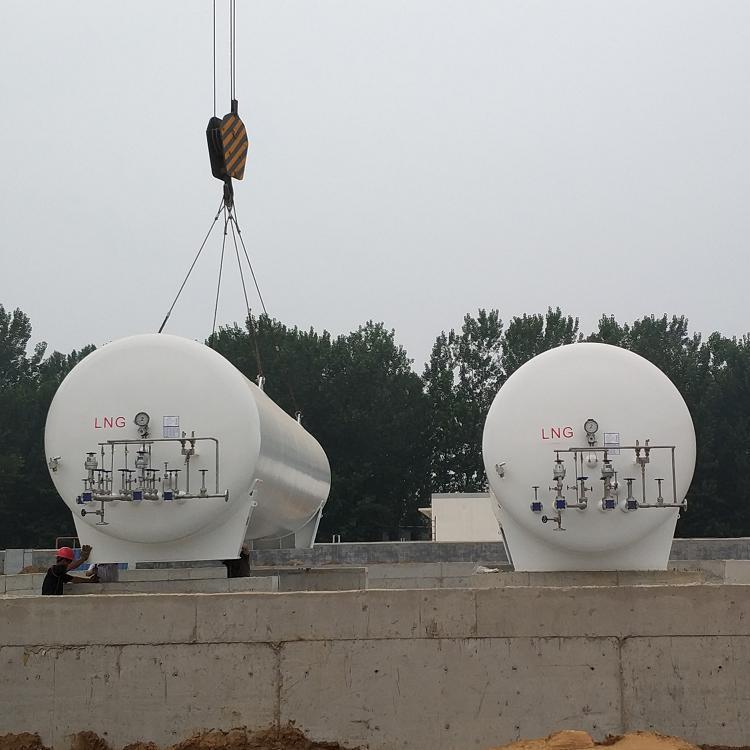
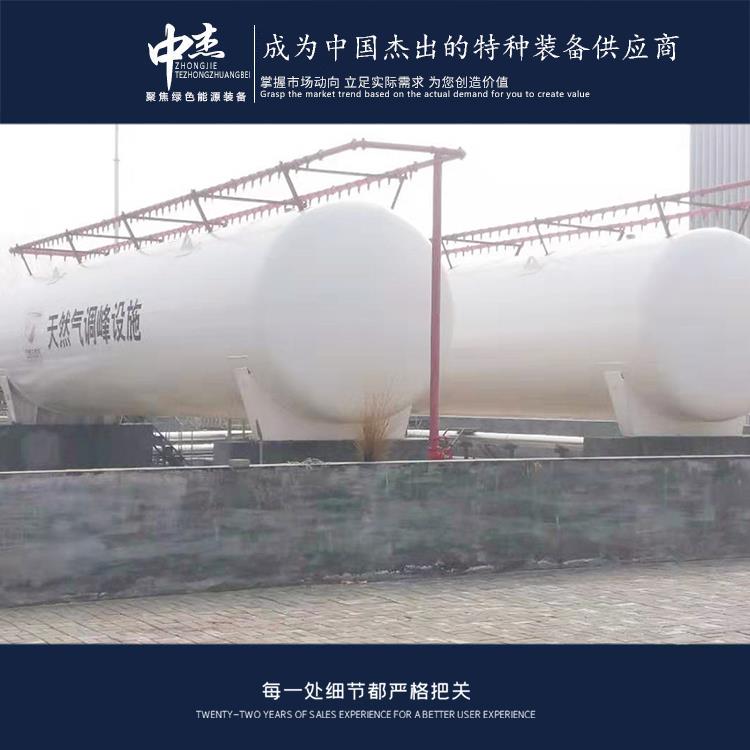
Shandong Zhongjie Special Equipment Co., Ltd. specializes in the following products: fuel (gas) boilers, organic heat carrier boilers, biomass boilers, waste heat boilers, and other boiler products; vacuum insulation cryogenic pressure vessels such as LNG tanks, oxygen/nitrogen/argon tanks, and CO2 tanks; pressure vessel products including denitrification engineering equipment, heat storage and energy storage equipment, and complete chemical equipment sets; central air conditioning and ventilation equipment such as ground (water) source heat pumps, air source units, water-cooled screw units, and air-cooled modular units. Planned products include large-scale energy centers, LNG transport vehicles, LNG tank containers, and other green energy equipment.
Liquid argon storage tanks are equipment used for storing and transporting liquid argon, featuring the following characteristics:
Low-temperature retention performance: The liquid argon storage tank is equipped with special insulation materials and structural design, effectively maintaining the low temperature of liquid argon. The tank is internally lined with insulation to minimize heat conduction and loss, ensuring long-term storage of liquid argon.
High-seal performance: The liquid argon storage tank boasts excellent sealing performance, effectively preventing leaks and evaporation of liquid argon. The tank's valves, connectors, and seals, etc., are designed and manufactured with precision, ensuring reliable sealing performance.
High strength and corrosion resistance: The liquid argon tank is made of high-strength materials, capable of withstanding the high pressure and low temperature of liquid argon. The internal and external surfaces of the tank are treated specially, offering excellent corrosion resistance to withstand corrosion and oxidation by liquid argon.
Safety Performance: The liquid argon tank is equipped with multiple safety protection measures, such as safety valves, pressure sensors, and level monitoring devices. These devices monitor and control the tank's pressure, temperature, and level, ensuring the tank operates within a safe range.
Reliability and Stability: The liquid argon tank has undergone rigorous design, manufacturing, and testing, offering excellent reliability and stability. The tank is capable of long-term stable storage and transportation of liquid argon, ensuring that the quality and performance of the liquid argon are unaffected.
Easy to operate and maintain: The liquid argon storage tank is relatively simple to operate and maintain, equipped with valves and fittings that are easy to use. The maintenance work mainly includes regular inspections, cleaning, and repairs, which can extend the service life of the tank.
The performance features of liquid argon tanks make them crucial for the storage and transportation of liquid argon, widely used in scientific research, industry, and other fields. When using liquid argon tanks, it is essential to strictly comply with relevant operational specifications and safety requirements to ensure safe usage.
Proper installation of the liquid oxygen safety valve is a crucial step in ensuring the safe operation of the liquid oxygen storage tank. Here are the installation steps for the liquid oxygen safety valve:
Select the appropriate safety valve: Choose a safety valve that meets the design pressure and flow requirements of the liquid oxygen storage tank. Ensure the rated pressure and flow of the safety valve align with the tank's specifications and comply with relevant safety standards and regulations.
Valve Installation Location: Select a suitable location for installing the safety valve. Typically, the safety valve should be mounted on the top or side of the liquid oxygen storage tank to allow for timely pressure release in the event of overpressure.
Preparation for installation interfaces: Prepare the corresponding interfaces based on the connection method of the safety valve. This may include welding interfaces, threaded interfaces, or flange interfaces, etc. Ensure the sealing and firmness of the connections.
Install the safety valve: Mount the safety valve onto the prepared interface. Follow the installation instructions for the safety valve to ensure it is correctly connected and securely fastened.
Adjustment and Testing: After installation, adjust and test according to the requirements of the safety valve. Ensure that the opening and closing pressures of the safety valve meet the design specifications, and conduct a leak test to ensure sealing.
Labeling and Record Keeping: Identify relevant information on the safety valve, such as rated pressure, flow rate, and installation date. Additionally, record the installation details and test results of the safety valve for future reference and maintenance.
When installing the liquid oxygen safety valve, it is essential to follow relevant safety regulations and operational guidelines. If you lack the necessary experience and knowledge, it is advisable to seek assistance and guidance from experts to ensure the correct installation and reliable operation of the safety valve.
The manufacturing process for the heads and cylinders of low-temperature storage tanks typically includes the following steps:
Material Preparation: Select suitable materials, such as low-temperature alloy steel or stainless steel, based on design requirements and specifications. Conduct inspections and acceptance of the materials to ensure they meet quality standards.
Sheet cutting: Sheets are cut to specified dimensions and shapes. Common cutting methods include flame cutting, plasma cutting, or laser cutting, among others.
Bending and Shaping: Cut sheets are bent and shaped to form heads and cylinders. Common shaping methods include cold bending, hot bending, or hydraulic forming, etc.
Welding: Welds the formed sheets together to create the structure of the head and cylinder. Common welding methods include manual arc welding, gas shielded welding, or laser welding, etc.
Weld Seam Treatment: Process the weld seams after welding, such as sanding, polishing, or applying anti-corrosion coatings, to enhance the quality and appearance of the welds.
Inspection and Acceptance: Conduct inspections and acceptance on the finished caps and cylinders to ensure their quality and compliance with design specifications. Common inspection methods include ultrasonic testing, radiographic testing, or liquid penetrant testing, etc.
Reinforcement and Support: Reinforcement and support processing and installation are performed on the heads and cylinders as required to enhance structural strength and stability.
Surface Treatment: The heads and cylinders are subjected to surface treatment, such as coating with anti-corrosion paint, hot galvanizing, or polishing, to enhance their corrosion resistance and appearance quality.
Note that the manufacturing process for low-temperature storage tanks must comply with relevant standards and regulations to ensure quality and safety throughout production. Strict adherence to safety operating procedures and the implementation of necessary protective measures are required to ensure the safety of personnel.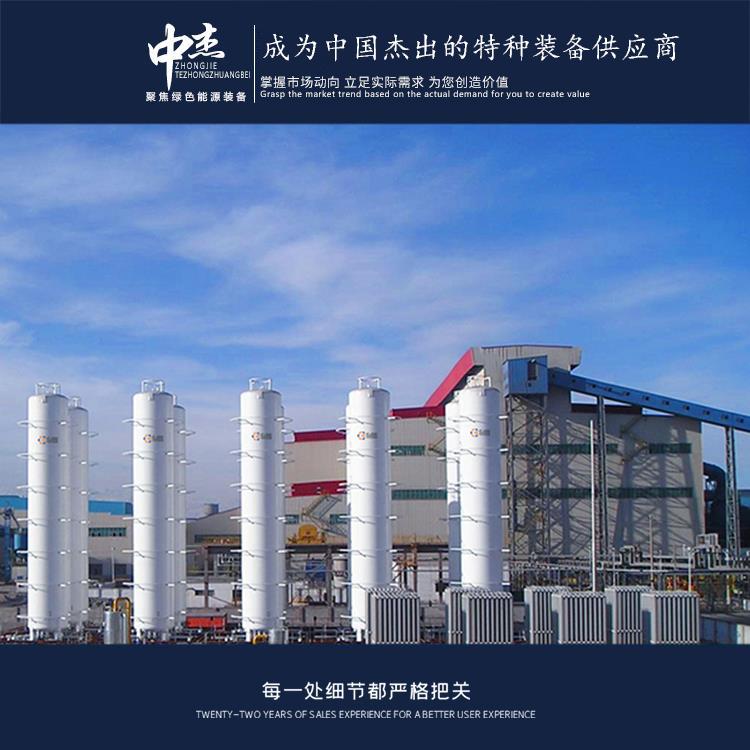
The medical oxygen steel cylinder filling area, in addition to the liquid oxygen storage tank, includes the following components:
Oxygen Compressor: Oxygen compressors are used to compress gaseous oxygen into high-pressure oxygen. These compressors are typically made of special materials and designed to ensure safe handling and compression of oxygen.
Oxygen Purification System: The oxygen purification system is designed to remove impurities and contaminants from oxygen, ensuring the purity and quality of the supplied oxygen. The system typically includes filters, adsorbents, and molecular sieves.
Oxygen Storage System: In addition to liquid oxygen tanks, the oxygen filling area may also include a gaseous oxygen storage system for temporary storage and supply of gaseous oxygen. The gaseous oxygen storage system typically includes high-pressure oxygen cylinders or gas storage tanks.
Filling Equipment: Filling equipment is used to transfer oxygen from liquid oxygen storage tanks or gaseous oxygen storage systems into medical oxygen steel cylinders. The filling equipment typically includes filling machines, filling pipelines, and filling control systems.
Oxygen Quality Monitoring System: The oxygen quality monitoring system is used to monitor the quality and purity of oxygen being filled. Quality testing and monitoring of the filled oxygen are conducted through an oxygen analyzer or other detection equipment.
Safety Facilities: The filling area should be equipped with corresponding safety facilities, such as fire alarm systems, oxygen leak detection systems, and ventilation systems, to ensure the safety and protective measures during the filling process.
Note that the design and equipment configuration of the medical oxygen cylinder filling plant should comply with relevant regulations, standards, and specifications. During the filling process, strict adherence to operational procedures and safety requirements is essential to ensure the safe supply of oxygen.
Our company attaches great importance to technological innovation and R&D, boasting one municipal enterprise technology center in Heze City. We have established testing facilities for non-destructive testing, physical and chemical testing, welding testing, hydrostatic testing, and more, equipped with over 600 instruments and equipment including CNC machines, X-ray flaw detectors, digital ultrasonic flaw detectors, mechanical property testing machines, chemical analyzers, spectrometers, tensile testing machines, plasma welding machines, and others. The key products we have developed, such as temperature and pressure vessel welding, biomass boiler emissions reduction, and waste heat utilization, have successively been included in multiple Shandong Provincial Department of Industry and Information Technology innovation projects, key provincial projects, and Heze City innovative and excellent projects. We have accumulated a total of 27 authorized utility models, 16 authorized inventions, participated in drafting 2 standards, 2 industry standards, and registered 15 trademarks. Our technical team, in collaboration with Professor Li Yajiang of Shandong University, has developed deep cryogenic container processing technology using the internationally recognized plasma arc + filled wire tungsten arc welding (PAW-GTAW) technology. After being appraised as a provincial-level scientific and technological achievement, our technology level has reached international standards in the field of deep cryogenic container manufacturing. Choose Zhongjie Special Equipment, and let's create brilliance together!
Liangshan Liquid Oxygen Storage Tank – Over 20 Years of Experience for Added Peace of Mind
