


Shandong Zhongjie Special Equipment (formerly Heze Boiler Factory Co., Ltd.) was established in 2001, located at No. 2218 Jinnan Road, Economic and Technological Development Zone, Heze City. With a registered capital of 50 million yuan and total assets of 500 million yuan, the company has 7 business centers: boilers, deep-freeze containers, pressure vessels, central air conditioning, engineering installation, international trade, and the Internet of Things. It has three factory areas on Jinnan Road, East Yangtze Road, and Bohai Road, covering a total area of 200,000 square meters, with the main workshop spanning 83,000 square meters. Currently, there are 710 employees, including 247 engineers and technicians, and 82 intermediate-level technicians. In December 2016, it was recognized as a "High-tech Enterprise" by the Science and Technology Department. In June 2021, it was identified as a "Specialized and New Enterprise in Shandong Province" by the Ministry of Industry and Information Technology. In June 2022, it was recognized as a "Gazelle Enterprise in Shandong Province" and in August 2022, as a "Specialized and New Small Giant Enterprise" by the Ministry of Industry and Information Technology.
Biomass boilers emit nitrogen oxides (NOx) during combustion, which are harmful to the environment. Therefore, controlling the NOx emissions from biomass boilers is a significant challenge. Here are some difficulties in controlling NOx emissions from biomass boilers:
Fuel Characteristics: The composition and properties of biomass fuels are diverse, containing varying nitrogen content and volatiles. This makes it challenging to accurately predict and control NOx emissions during the combustion process in biomass boilers.
Combustion Temperature: The generation of NOx is closely related to combustion temperature; both excessively high and low temperatures can increase NOx formation. The combustion temperature of biomass boilers is influenced by various factors such as fuel moisture and oxygen supply, making it somewhat challenging to control the combustion temperature for NOx emissions control.
Proper combustion air supply can help control NOx generation, but excessive or insufficient air supply can affect combustion efficiency and NOx emissions. For biomass boilers, the combustion air supply must be adjusted reasonably based on fuel characteristics and combustion conditions, which poses certain requirements for operators and controllers.
Combustion System Design: The design of the combustion system in biomass boilers also has an impact on NOx emissions control. For instance, the adopted combustion technologies and burner designs, such as low-NOx combustion technology and optimized combustion chamber structure, can effectively reduce NOx emissions.
Operation and Maintenance: Proper operation and regular maintenance of biomass boilers are crucial for controlling NOx emissions. Rational operation and scheduled maintenance can ensure the normal operation and combustion of the combustion system, thereby reducing NOx generation.
In summary, the challenges in controlling NOx emissions in biomass boilers primarily include fuel characteristics.
The phenomenon of biomass boiler economizer tube damage may include the following situations:
Pipe Corrosion: Flue gas produced by biomass combustion contains certain acidic substances, which may lead to corrosion of the economizer pipe. Long-term corrosion can result in reduced wall thickness of the pipe, the formation of holes and cracks.
Pipe blockage: During biomass combustion, flue gas may contain some ash and particulate matter, which may settle and accumulate in the economizer pipes, leading to blockage. Blockage can affect the flow of flue gas and reduce heat exchange efficiency.
Pipe fatigue: The operating temperatures and pressures of biomass boilers fluctuate significantly, leading to long-term thermal expansion and contraction that can cause fatigue damage to economizer pipes, such as cracking and deformation.
For the aforementioned issues, the following solutions can be adopted:
Enhanced Corrosion Protection: Anti-corrosion treatments can be applied internally to economizer pipes, such as coating with corrosion-resistant materials or using corrosion-resistant materials for pipe construction, to minimize corrosion occurrences.
Regular cleaning and maintenance: Regularly clean and maintain the economizer to prevent clogging by removing ash and particulates within the pipes. Methods such as mechanical cleaning and water flushing can be employed.
Enhance Monitoring and Inspection: Regularly inspect economizers, including pipe thickness measurements and crack detection, to identify issues promptly and take corrective actions.
Optimize operating parameters: Reasonably adjust the operating parameters of the biomass boiler, such as combustion temperature and air volume, to minimize damage to the economizer.
Biomass boilers can be categorized according to various classification criteria. Here are some common methods of classification:
By combustion method classification:
Direct Combustion Boilers: Directly burn biomass fuel to generate heat energy.
Gasification Boiler: Converts biomass fuel into combustible gas and then burns it.
Pyrolysis Boiler: Converts biomass fuel into combustible gases and solid carbon through pyrolysis, which is then burned.
By fuel type:
Wood biomass boiler: Utilizes wood chips, wood shavings, cassava residue, and other wood-based fuels.
Crop biomass boiler: Utilizes straw, rice husks, wheat straw, and other crop waste as fuel.
Industrial waste biomass boiler: Utilizes industrial waste materials such as sawdust and pulp sludge as fuel.
Categorized by boiler type:
Water tube biomass boiler: The combustion chamber is equipped with water pipes for heat transfer.
Fire-tube biomass boiler: The combustion chamber is equipped with fire tubes, which transfer heat energy.
Hybrid biomass boiler: Combines the features of both water-tube and fire-tube designs, featuring both water tubes and fire tubes.
By power scale classification:
Small biomass boiler: Power typically ranges from 1 to 10 MW, suitable for small buildings and rural heating.
Medium-sized biomass boiler: Power typically ranges from 10 to 50 MW, suitable for medium-sized industrial plants and large buildings.
Large-scale biomass boiler: Over 50MW power, suitable for large industrial plants and centralized heating.
These categorization methods merely provide a general overview of biomass boilers; in reality, there are more specific subcategories and combinations. Different types of biomass boilers may vary in application scenarios and technical characteristics.
The occurrence of oil atomization in thermal oil furnaces may be related to the following operations:
Excessive oil pump pressure: If the oil pump pressure of a heat-conducting oil furnace is set too high, beyond the design specifications, it may lead to oil spitting. Excessive oil pump pressure increases the喷油 amount from the nozzle, exceeding the combustion requirements within the furnace.
Excessive nozzle orifice size: An oversized nozzle orifice in a thermal oil furnace can lead to excessive fuel injection, causing spray issues. The nozzle orifice size should be selected reasonably based on the combustion requirements within the furnace and design specifications.
Excessive Furnace Temperature: Overheating within the thermal oil furnace exceeds the design specifications, which may lead to atomization. Elevated temperatures reduce the viscosity of the thermal oil, increasing the risk of atomization.
Low oil level: An oil level that is too low in a heat transfer oil furnace can cause the oil pump to intake air, leading to potential oil jetting. The oil level should be maintained within the normal range to prevent the oil pump from drawing in air.
Oil Pump Failure: Failures of the thermal oil furnace oil pump, such as clogging or oil leakage in the pump housing, can lead to the occurrence of spraying. Regularly inspect and maintain the oil pump to ensure its normal operation.
Oil Tube Clogging: Clogging in the thermal oil furnace oil tube, such as the accumulation of impurities or sediments inside, can lead to oil spitting. Regularly clean and maintain the oil tube to ensure smooth oil flow.
Improper operation: Failure to follow the correct operational procedures when handling a thermal oil furnace, such as over-adjusting the oil pump pressure or arbitrarily changing nozzles, may lead to oil jetting occurrences.
Shandong Zhongjie Special Equipment, welcome clients to our factory for business discussions.
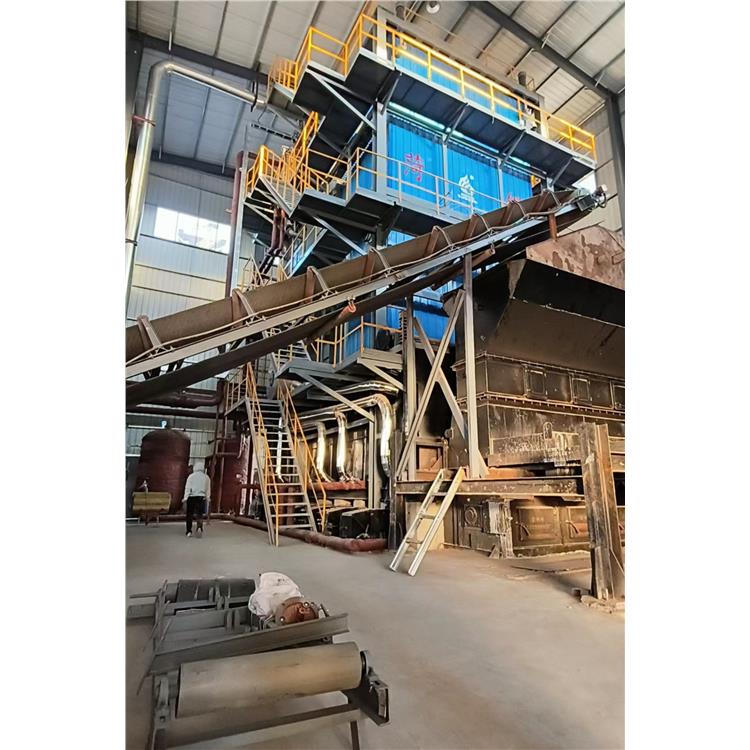
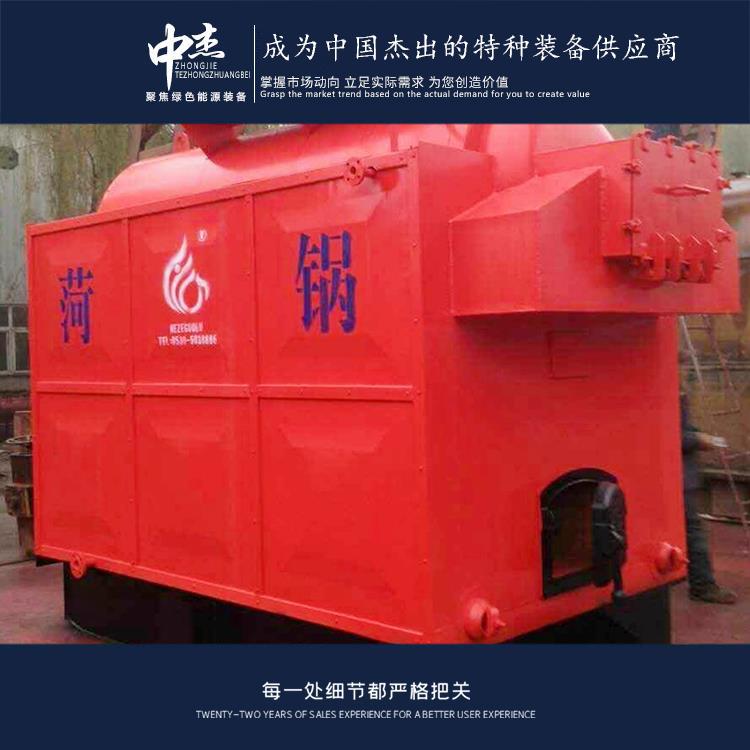
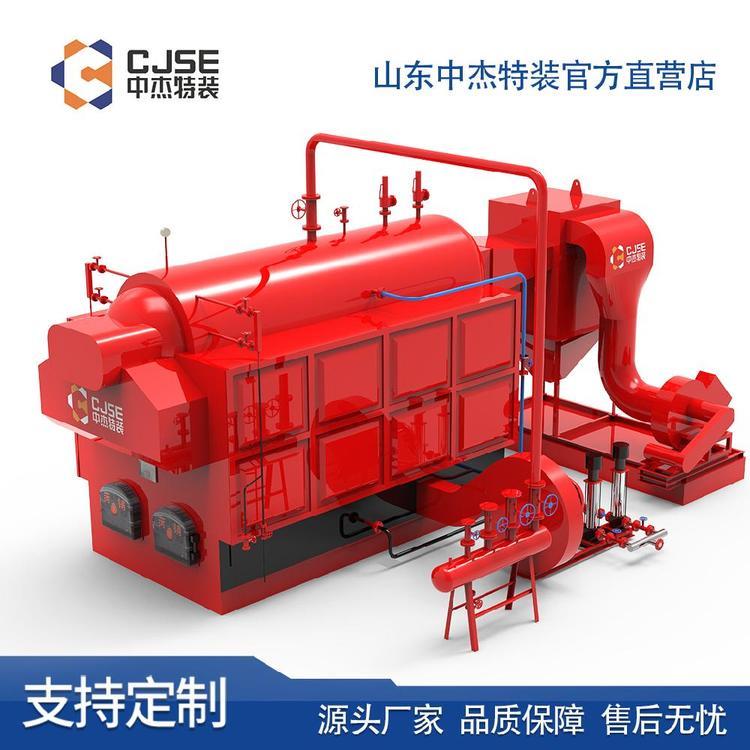
Loudi 10-ton biomass boiler, in stock supply
