


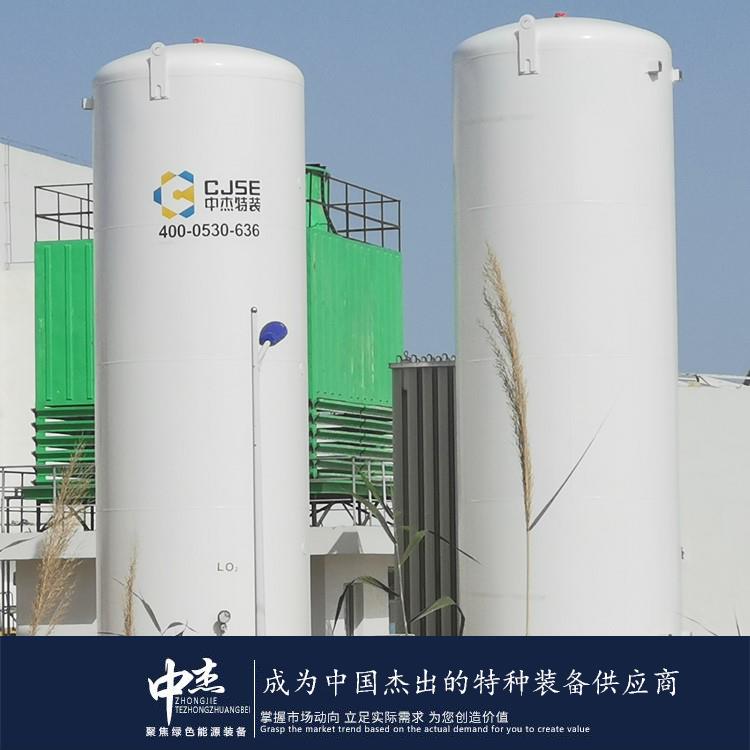
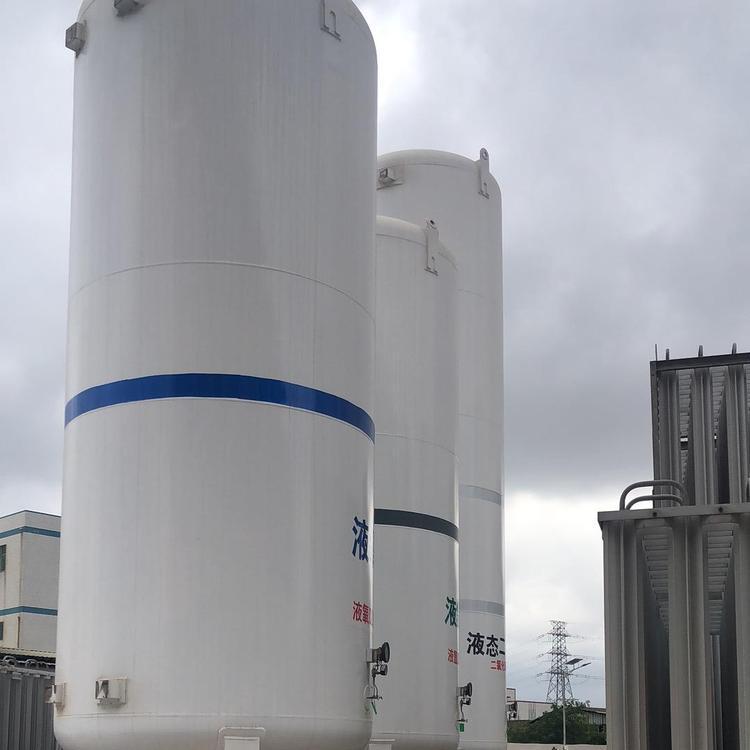
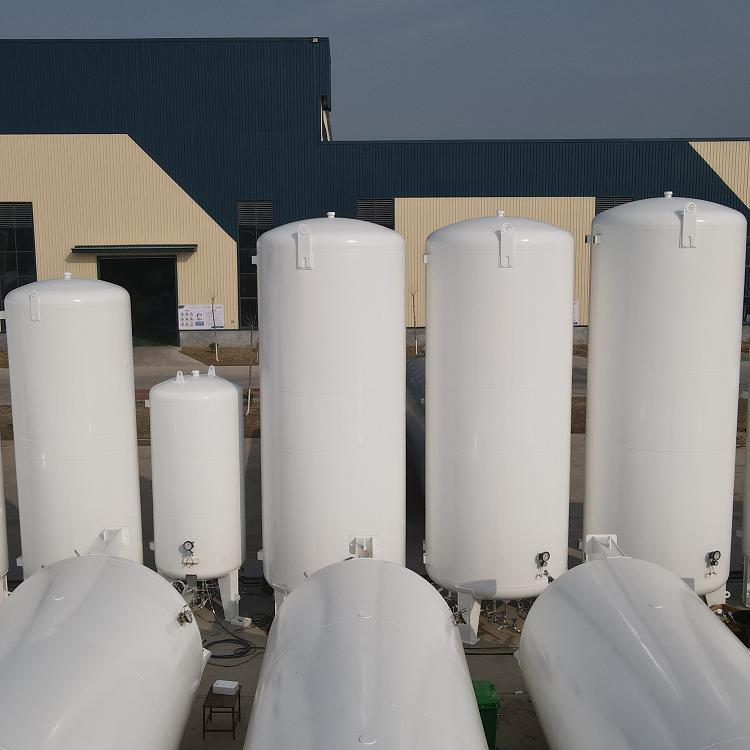
Shandong Zhongjie Special Equipment Co., Ltd. specializes in: fuel (gas) boilers, organic heat carrier boilers, biomass boilers, waste heat boilers, and other boiler products; vacuum insulation cryogenic pressure vessels such as LNG tanks, oxygen/nitrogen/argon tanks, and CO2 tanks; pressure vessel products including denitrification engineering equipment, heat storage and energy storage equipment, and complete chemical equipment; central air conditioning and HVAC equipment such as ground (water) source heat pumps, air source units, water-cooled screw units, and air-cooled modular units. Planned products include large-scale energy centers, LNG transport vehicles, LNG tank containers, and other green energy equipment.
Standard parameters for liquid oxygen storage tanks typically include the following:
Capacity: The capacity of liquid oxygen tanks is typically expressed in liters or cubic meters, with common capacities ranging from a few liters to several thousand liters.
Work Pressure: The working pressure of liquid oxygen tanks is typically expressed in megapascals (MPa) or bars, with a common working pressure range from 0.2 MPa to 2.5 MPa.
Design Temperature: The design temperature for liquid oxygen tanks is typically expressed in degrees Celsius, with common design temperature ranges varying from -196°C to -150°C.
Material: The primary material for liquid oxygen storage tanks is typically stainless steel, offering excellent corrosion resistance and low-temperature properties.
Insulation Layer: Liquid oxygen storage tanks are typically equipped with an insulation layer to minimize evaporation losses of liquid oxygen. The material for the insulation layer is usually a multi-layer composite material or foam glass.
Safety valve: Liquid oxygen storage tanks must be equipped with a safety valve to control the internal pressure of the tank and prevent it from bursting due to excessive pressure.
Leak Detectors: Liquid oxygen tanks are typically equipped with leak detectors to promptly detect and alert for any leaks in liquid oxygen.
Appearance Design: The appearance design of liquid oxygen storage tanks generally conforms to relevant standards and regulations, including exterior colors, markings, and safety warning signs.
Note that the specific parameters of liquid oxygen tanks may vary depending on the manufacturer and application requirements; the above are merely general standard parameters. In actual use, choose the appropriate liquid oxygen tank based on the specific situation.
The manufacturing materials for liquid oxygen tanks typically require excellent low-temperature resistance and corrosion resistance. The following are common materials used for making liquid oxygen tanks:
Stainless Steel: Commonly used for liquid oxygen tank construction, stainless steel boasts excellent corrosion resistance and mechanical strength. Common stainless steel materials include 304 and 316 stainless steel.
Aluminum Alloy: Aluminum alloys are often used in the production of liquid oxygen tanks due to their low density and excellent corrosion resistance. Common aluminum alloy materials include 5083 and 6061 alloys.
Fiberglass Reinforced Plastic (FRP): FRP is a composite material composed of glass fibers and resin. It boasts excellent corrosion resistance and mechanical strength, making it suitable for liquid oxygen storage tanks in some special environments.
Carbon Steel: Carbon steel is a common material for tank fabrication, known for its high strength and corrosion resistance. However, it is prone to oxidation in liquid oxygen environments, necessitating anti-corrosion measures.
It's important to note that the choice of materials for liquid oxygen tanks should be determined based on specific application requirements, operating conditions, and safety standards. When selecting materials, consider the properties of liquid oxygen and the design requirements of the tank to ensure safety and reliability. Additionally, manufacturers and suppliers often provide material selection recommendations and technical support.
Routine inspections of liquid nitrogen tanks include the following aspects:
Level Inspection: Regularly check the liquid nitrogen tank's level to ensure it is within the normal range. Inspections can be conducted using level gauges or level scales.
Pressure Check: Inspect the tank's pressure to ensure it is within the safe range. Pressure gauges or pressure sensors can be used for the inspection.
Insulation Layer Inspection: Verify that the insulation of the tank is intact with no damage or detachment. The integrity of the insulation layer is crucial for reducing heat transfer and the evaporation of liquid nitrogen.
Leak Inspection: Check for signs of liquid nitrogen leakage around the storage tank, such as evaporated mist, frost, or freezing. If a leak is detected, take prompt action to repair it.
Valve and pipeline inspection: Verify that the valves and pipelines of the storage tank are functioning properly without any leaks or blockages. Ensure the tightness and unobstructed flow of the valves and pipelines.
Safety Device Inspection: Examine the safety devices of the storage tank, such as pressure relief valves, temperature sensors, and level alarms, to ensure they are functioning properly.
Tank exterior cleaning: Regularly clean the external surface of the tank to remove dust, dirt, and debris. Maintain the tank's appearance for easy inspection and maintenance.
Record and Documentation: Timely record the inspection results and maintenance records of the tanks, including liquid levels, pressure, insulation status, and leakage conditions. These records help monitor the tank's operating condition and identify issues promptly.
Above are the routine inspection items for liquid nitrogen tanks. Regularly performing these checks ensures the safe and efficient operation of the tanks. At the same time, follow relevant safety regulations and operational guidelines to ensure the safety of personnel and equipment.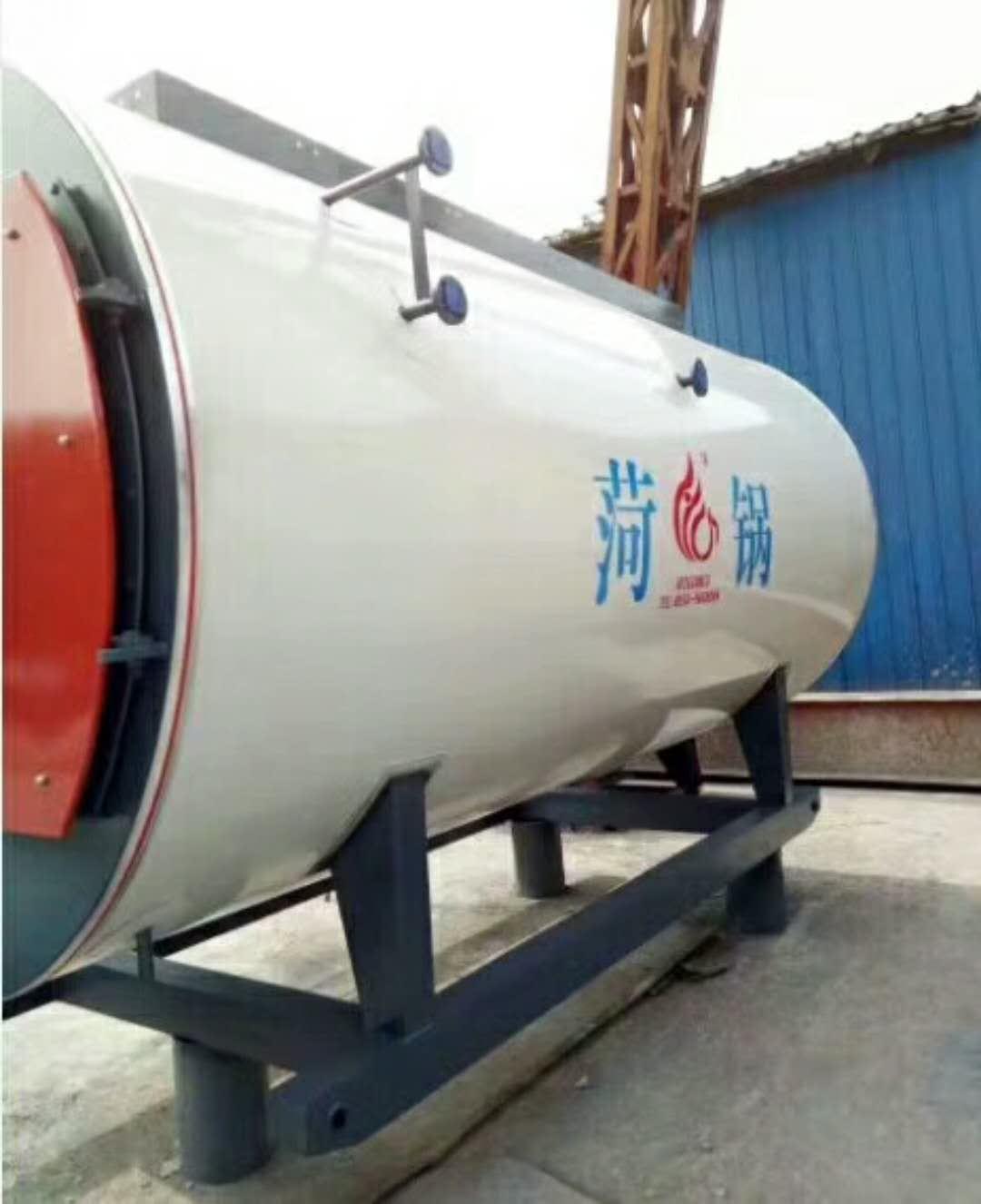
To extend the service life of low-temperature liquid storage tanks, the following measures can be taken:
Regular inspections and maintenance: Conduct periodic visual inspections of the tank, including the shell, welds, valves, and connections, etc. Check for any abnormalities such as cracks, corrosion, or deformation, and promptly repair or replace damaged parts.
Maintain Insulation Layers: Insulation is crucial for the thermal retention of low-temperature liquid storage tanks. Regularly inspect the integrity and insulating properties of the insulation, repair or replace damaged insulation materials to ensure the tank's insulating effectiveness.
Control temperature and pressure: The temperature and pressure of the low-temperature liquid storage tank should be maintained within a safe range. Avoid excessive or low temperatures and pressures that may damage the tank. Implement appropriate cooling or heating measures to ensure stable temperature and pressure of the liquid.
Corrosion Protection: The exterior shell and internal structure of the tank should be protected against corrosion and oxidation. Regularly inspect and maintain the protective coating to ensure it remains intact.
Avoid excessive pressure and overfilling: Prevent the internal pressure of the tank from being too high or too low, as well as overfilling with liquid. Excessive pressure and overfilling can lead to structural rupture or damage to the tank.
Regular cleaning and waste removal: Regularly clean the interior of the tank to remove accumulated impurities and dirt. Regularly remove waste to prevent damage to the tank from impurities and sediments in the liquid.
Safe Operation and Training: Ensure operators have knowledge and skills in the safe operation of low-temperature liquid storage tanks. Strengthen safety training to enhance operators' safety awareness and emergency response capabilities.
Manage records and documents: Establish comprehensive management records and documentation, including the usage of storage tanks.
Chongjie Special Equipment upholds the great vision of "realizing employees' dreams, creating value for customers, and striving for the prosperity and strength of our motherland," focusing solely on the development of green energy equipment. We dedicate high-quality, cost-effective products and services to society!
Shenyang 5 cubic meter liquid argon storage tank, factory direct supply
