


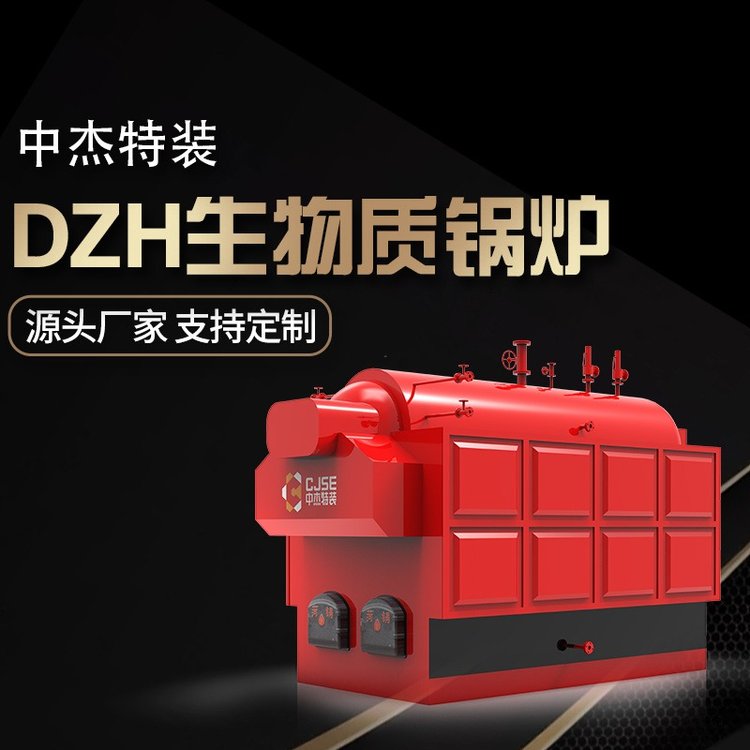
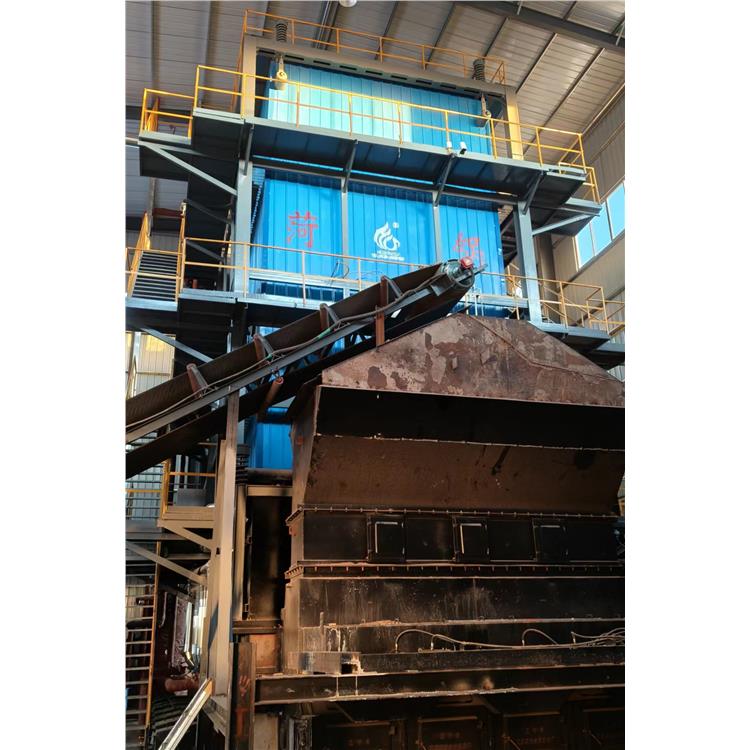
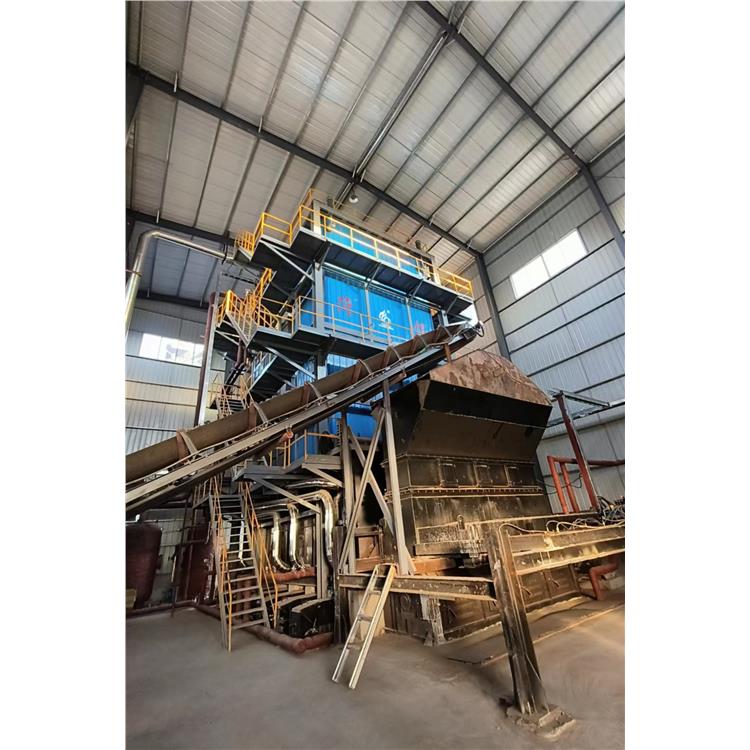
Shandong Zhongjie Special Equipment (formerly Heze Boiler Factory Co., Ltd.) was established in 2001, located at No. 2218 Jinnan Road, Development Zone, Heze City, with a registered capital of 50 million yuan and total assets of 500 million yuan. The company has 7 business centers: boilers, deep-freeze containers, pressure vessels, central air conditioning, engineering installation, international trade, and Internet of Things. It has three factory sites on Jinnan Road, East Changjiang Road, and Bohai Road, covering a total of 200,000 square meters, with the main workshop spanning 83,000 square meters. It currently employs 710 people, including 247 engineers and technicians, and 82 intermediate-level technicians. In December 2016, it was recognized as a "High-tech Enterprise" by the Science and Technology Department. In June 2021, it was identified as a "Specialized and New Enterprise in Shandong Province" by the Ministry of Industry and Information Technology. In June 2022, it was recognized as a "Gazelle Enterprise in Shandong Province" and in August 2022, it was identified as a "Specialized and New Small Giant Enterprise" by the Ministry of Industry and Information Technology.
Fully automatic biomass boiler uses a make-up water pump to maintain constant pressure, which is a common water supply method. The specific working principle is as follows:
Feedwater Pump: The fully automatic biomass boiler is equipped with a feedwater pump, which is used to pump water from a water source (such as a water tank or municipal water supply) into the boiler's water supply system.
Pressure Regulation: The feed water pump employs a constant pressure method, which involves setting up a pressure sensor or controller in the boiler water supply system to monitor the pressure. When the pressure in the water supply system falls below the set value, the feed water pump will automatically activate, replenishing water into the system to increase the pressure.
Pressure Control: The feed pump will control the water supply based on the set pressure range. When the system pressure reaches the set value, the feed pump will cease operation to prevent excessive pressure.
Automation Control: The water supply system of fully automatic biomass boilers is typically equipped with an automated control system that can intelligently manage based on the boiler's operating status and requirements. For instance, when the boiler needs to replenish water, the control system will automatically activate the feed pump to ensure the stable operation of the water supply system.
By utilizing a constant pressure supply pump system, the fully automatic biomass boiler achieves automated control of the water supply system and stable water supply, ensuring the boiler's normal operation and safety. This method can be adjusted and optimized according to actual needs, enhancing water supply and energy utilization efficiency.
A hot water boiler is a device used to supply hot water, and with the rise in energy demand and environmental awareness, hot water boilers have continuously developed and improved in terms of technology and application.
Below are the trends in the development of hot water boilers:
Energy-saving: The energy-saving of hot water boilers is an important direction for development. By improving the combustion technology of boilers, the design of heat exchangers, and material selection, enhance the efficiency of heat energy utilization, and reduce energy consumption and emissions.
Temperature Control Intelligence: With the advancement of intelligent technology, the temperature control systems of hot water boilers are becoming increasingly intelligent. Through the use of control algorithms and sensor technology, temperature control and energy consumption management are achieved, enhancing system stability and comfort.
Multi-energy supply: To reduce reliance on traditional energy sources, the development trend of hot water boilers is towards multi-energy supply. In addition to traditional fuels like gas and oil, an increasing number of hot water boilers are now utilizing renewable energy sources such as biomass, solar, and geothermal energy, achieving energy diversity and sustainable development.
Environmental Protection and Emission Reduction: Environmental protection and emission reduction is a crucial direction for the development of hot water boilers. By improving combustion technology, increasing flue gas purification equipment and control systems, and reducing pollutant emissions during the combustion process, we protect the environment and human health.
Safety and Reliability: The safety and reliability of hot water boilers are crucial for development. By enhancing the structural design of the boiler, improving safety valves, and control systems, we elevate the safety performance of the boiler to prevent accidents.
Miniaturization and Modularization: With the acceleration of urbanization, there is a noticeable trend towards miniaturization and modularization in hot water boilers. These miniaturized hot water boilers can better adapt to the needs of urban buildings, reducing space requirements and installation costs, and enhancing flexibility and scalability.
Overall, the development trend of hot water boilers is towards energy-saving, intelligence, multi-energy supply, environmental protection and emission reduction, safety and reliability, miniaturization, and modularization. These trends will drive continuous innovation and application of hot water boiler technology, providing more comfortable, reliable, and environmentally friendly hot water supply for people.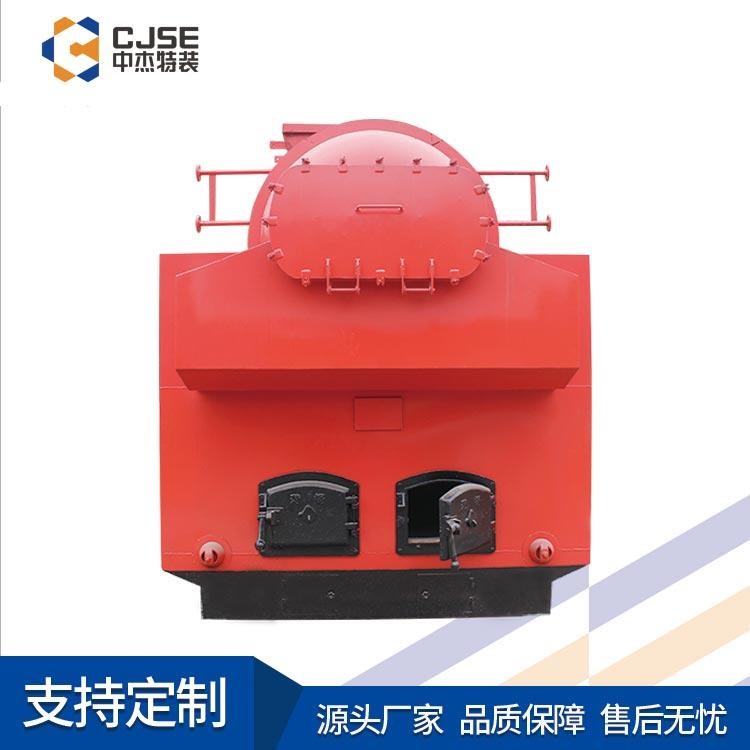
The SZL biomass boiler is a water-tube boiler with two drums and a chain grate, suitable for burning biomass fuel. Below is a structural introduction to the SZL biomass boiler:
Boiler Drum: The SZL biomass boiler features two parallel water pipes in the drum, namely the upper drum and the lower drum. The upper drum is used for the combustion chamber, while the lower drum is for transferring heat between steam and flue gas.
Briquette Grate: The SZL biomass boiler utilizes a chain grate, where fuel enters the combustion chamber through the grate, facilitating the combustion process. The design of the chain grate ensures even and complete combustion of the fuel.
Combustion Chamber: The combustion chamber is located within the upper cylinder, where fuel is burned to release thermal energy. The structure and design of the combustion chamber ensure complete fuel combustion and efficient thermal energy conversion.
Flue Channels: The flue gas produced from combustion is channeled through the flue channels into the lower cylinder, where it undergoes heat exchange with the water inside, transferring thermal energy to the water and producing steam.
Water pipes: A large number of water pipes are arranged inside the lower drum of the SZL biomass boiler. Flue gas passes through these pipes, where it exchanges heat with the water, transferring thermal energy and generating steam.
Upper Equipment: The upper equipment of the SZL biomass boiler includes a steam separator, water level gauge, safety valve, etc., used for controlling and protecting the safe operation of the boiler.
Equipment: The SZL biomass boiler includes equipment such as the water supply system, effluent discharge system, and fuel supply system, which are used to provide the necessary water for the boiler, treat wastewater, and supply fuel.
The SZL biomass boiler features a compact structure, high thermal efficiency, and is suitable for the combustion of biomass fuel. Its dual drum and chain grate design ensures complete fuel combustion and heat conversion, while also offering excellent safety and reliability.
Current biomass boilers encounter the following issues in practical application:
Fuel supply instability: The supply of biomass fuel is subject to seasonal and regional limitations, leading to unstable fuel supply for biomass boilers. This may result in the inability of biomass boilers to operate continuously or necessitate frequent fuel switching, increasing operational costs and management challenges.
Low combustion efficiency: Due to the characteristics of biomass fuel and the complexity of the combustion process, the combustion efficiency of biomass boilers is relatively low. Some fuels have high volatile and ash content, which may produce excessive ash and particulate matter during combustion, reducing combustion efficiency and heat utilization.
NOx emissions issue: Biomass boilers produce a relatively high amount of nitrogen oxides (NOx) during the combustion process, which has a certain impact on the environment. Controlling and reducing NOx emissions is a significant challenge for biomass boilers.
Combustion Equipment Wear: The high ash content in biomass fuel can cause wear and clogging of the combustion equipment during the burning process. This may lead to reduced equipment lifespan and necessitate frequent maintenance and cleaning.
Ash residue from combustion: Ash residue produced by biomass boiler combustion must be treated and disposed of properly. Improper handling may lead to environmental pollution and harm.
Lack of unified technical standards and specifications: Currently, there is a lack of unified technical standards for biomass boilers.
Shandong Zhongjie Special Equipment, welcome customers to visit our factory for business discussions.
Zhangzhou Biomass Boiler Manufacturer - High Product Safety
