


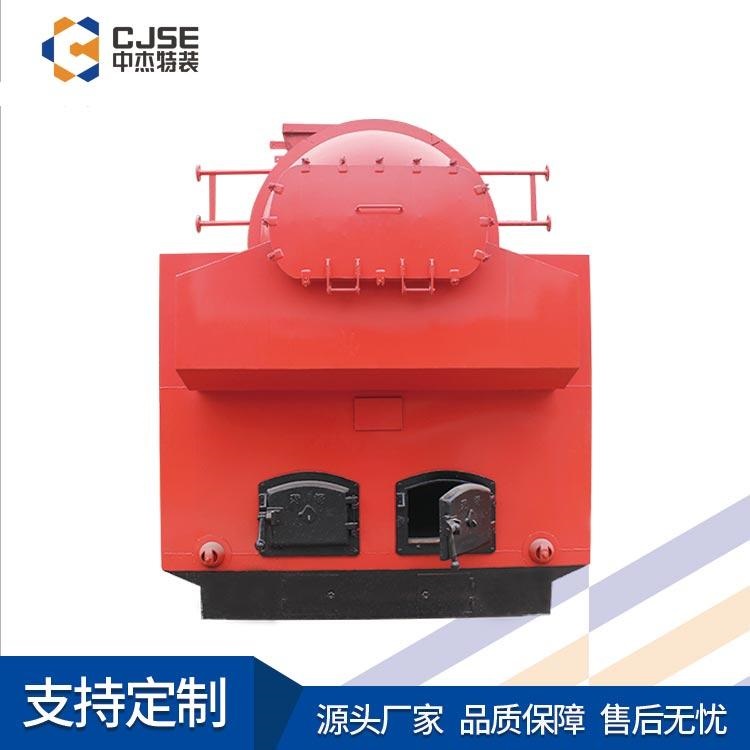
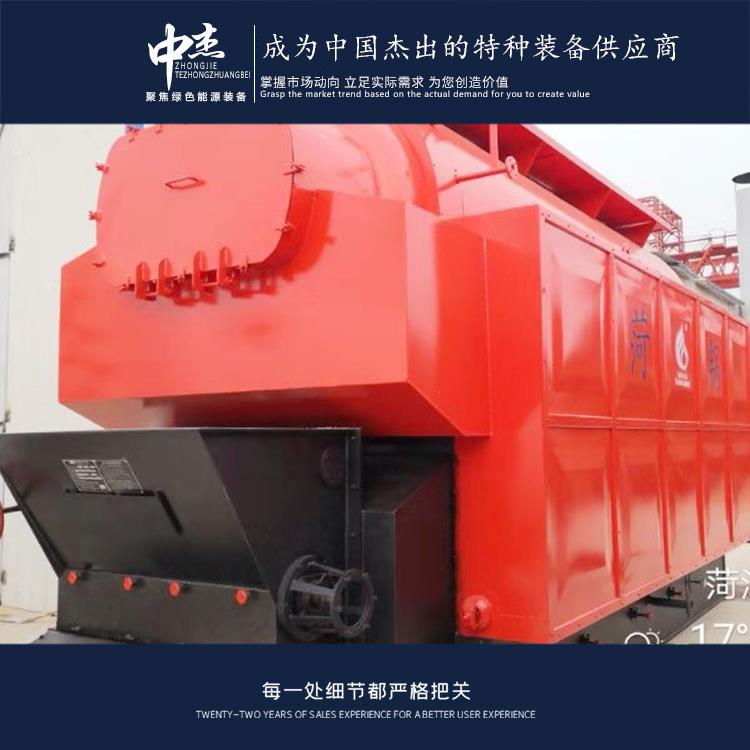
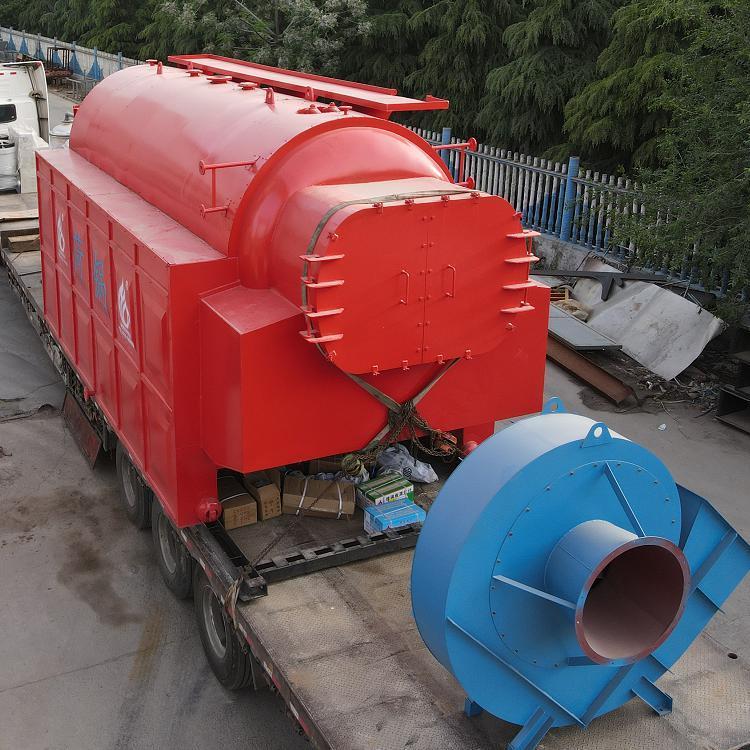
Shandong Zhongjie Special Equipment (formerly Heze Boiler Factory Co., Ltd.) was established in 2001, located at No. 2218 Jinnan Road, Development Zone, Heze City, with a registered capital of 50 million yuan and total assets of 500 million yuan. The company has 7 business centers: boiler, deep-freeze vessel, pressure vessel, central air conditioning, engineering installation, international trade, and Internet of Things. It has three factory sites on Jinnan Road, East Changjiang Road, and Bohai Road, covering a total of 200,000 square meters, with the main workshop area being 83,000 square meters. It currently employs 710 people, including 247 engineers and technicians and 82 intermediate-level technicians. In December 2016, it was recognized as a "High-Tech Enterprise" by the Science and Technology Department. In June 2021, it was identified as a "Specialized and New Enterprise in Shandong Province" by the Ministry of Industry and Information Technology. In June 2022, it was recognized as a "Gazelle Enterprise in Shandong Province" and in August 2022, as a "Specialized and New Small Giant Enterprise" by the Ministry of Industry and Information Technology.
During the operation of biomass boilers, attention should be paid to the following aspects:
Fuel Selection: Choose a biomass fuel that is suitable, considering factors such as supply stability, quality, and cost. Additionally, be aware of the fuel's characteristics and combustion properties to ensure it meets the boiler's requirements.
Equipment Selection: Choose suitable biomass boiler equipment based on actual requirements, including boiler type, capacity, and configuration, etc. Consider factors such as fuel characteristics, thermal load demands, and environmental protection requirements to ensure the equipment meets operational needs.
Installation and Commissioning: During the installation of biomass boilers, follow relevant specifications and requirements for installation, and conduct necessary adjustments and tests. Ensure the safe and reliable operation of the equipment.
Operation Management: Establish and improve operational management systems, including daily operation, maintenance, and care of equipment. Regularly inspect the equipment's operational status and promptly address any malfunctions or anomalies.
Combustion Control: Reasonably control the combustion process, including fuel supply, combustion air adjustment, and combustion temperature control. Improve combustion efficiency and environmental performance through optimized combustion parameters.
Flue Gas Treatment: Process flue gases produced by biomass boiler combustion, including dust removal of particulates, nitrogen oxide denitration, and sulfur dioxide removal. Ensure flue gas emissions are controlled.
Safety Protection: Enhance the safety measures for equipment, including automated control of the combustion system, monitoring and protection of pressure and temperature. Ensure the safe and reliable operation of the equipment to prevent accidents.
Knowledge Training: Provide necessary training for operators and management staff to enhance their understanding and operational skills in biomass boilers. Ensure personnel can operate the equipment correctly and address operational issues promptly.
Developing biomass boiler heating is an effective measure against air pollution. Here are some relevant suggestions:
Replace high-polluting energy sources: Swap traditional coal boilers with biomass boilers to reduce emissions of air pollutants from coal combustion. The combustion of biomass fuel produces relatively fewer pollutants, resulting in less pollution to the atmosphere.
Enhance Combustion Efficiency: Boost the combustion efficiency of biomass boilers by optimizing the combustion process, reducing fuel waste and emissions. Adjust combustion parameters such as combustion temperature and duration for a more complete burn.
Regulate Pollutant Emissions: Utilize pollution control technologies such as flue gas desulfurization, denitrification, and particulate matter capture to reduce emissions. Install flue gas purification equipment to effectively remove pollutants like nitrogen oxides and particulates generated during the combustion process.
Enhanced Monitoring and Management: Establish and improve a monitoring system to oversee the operation status and pollutant emissions of biomass boilers. Strengthen the management of biomass boilers to ensure regular maintenance and equipment care.
Possible reasons for incomplete combustion in biomass boilers may include the following aspects:
Poor fuel quality: Low-quality biomass fuel, such as fuel with high moisture content and uneven particle size, can affect the combustion process. Fuel with high moisture content can lead to a decrease in combustion temperature and incomplete combustion.
Insufficient air supply: Air is essential during the combustion process. If the air supply is insufficient, the fuel cannot react fully with oxygen, leading to incomplete combustion. Possible causes include blocked air inlets and fan malfunctions.
Unstable Combustion System: The instability of the combustion system may also lead to incomplete combustion. For example, improper adjustment of the burner or不合理 design of the combustion chamber may affect the stability of the combustion process.
Insufficient combustion temperature: Low combustion temperature can lead to incomplete combustion. Possible causes include improper adjustment of the burner and unstable fuel supply.
Ash Accumulation in Combustion Chamber: Ash buildup in the combustion chamber can affect the combustion process, hindering fuel and oxygen contact, leading to incomplete combustion.
Insufficient burn time: Inadequate burn time can also lead to incomplete combustion. If the fuel stays in the combustion chamber for too short a time, it cannot burn completely, resulting in unburned fuel residues.
Improper combustion chamber design: An improperly designed combustion chamber, such as one that is too large or too small, hinders the full mixing of fuel and oxygen, resulting in incomplete combustion.
Above are some possible causes of incomplete combustion in biomass boilers, which require analysis and resolution based on specific circumstances. Regular maintenance, rational fuel selection, and optimization of the combustion system, etc.
Biomass boiler combustion has the following energy-saving characteristics compared to traditional fuel boilers:
Combustion: The combustion technology and design of biomass boilers enable the combustion of biomass fuel. Compared to traditional fuel boilers, biomass boilers have higher combustion efficiency, allowing for more energy from the fuel to be utilized, thus reducing energy waste.
Heat Recovery Utilization: Biomass boilers are equipped with a heat recovery system, enabling the excess heat from combustion to be used in the heating system, thus improving energy efficiency. In traditional fuel boilers, the heat from flue gas is usually wasted, but biomass boilers can recover and utilize the heat energy from flue gas, reducing energy waste.
Renewable Energy Utilization: Biomass boilers utilize renewable biomass fuels such as wood chips, straw, and waste crops, reducing dependence on finite fossil fuel resources. Compared to traditional fuel boilers, biomass boilers have a more sustainable fuel source, enabling the sustainable use of energy.
Carbon Emission Reduction: The combustion of biomass fuel results in relatively lower carbon emissions compared to traditional fuel boilers, leading to reduced carbon emissions from biomass boilers. The use of biomass boilers can decrease greenhouse gas emissions and is more environmentally friendly.
Waste Utilization: Biomass boilers can utilize agricultural straw, wood waste, and other agroforestry by-products as fuel, effectively utilizing waste resources and reducing resource waste. Compared to traditional fuel boilers, biomass boilers have a more diverse fuel source and can achieve effective waste utilization.
Shandong Zhongjie Special Equipment, welcome customers to visit our factory for business discussions.
Huangshi Biomass Boiler - Real Manufacturer
