


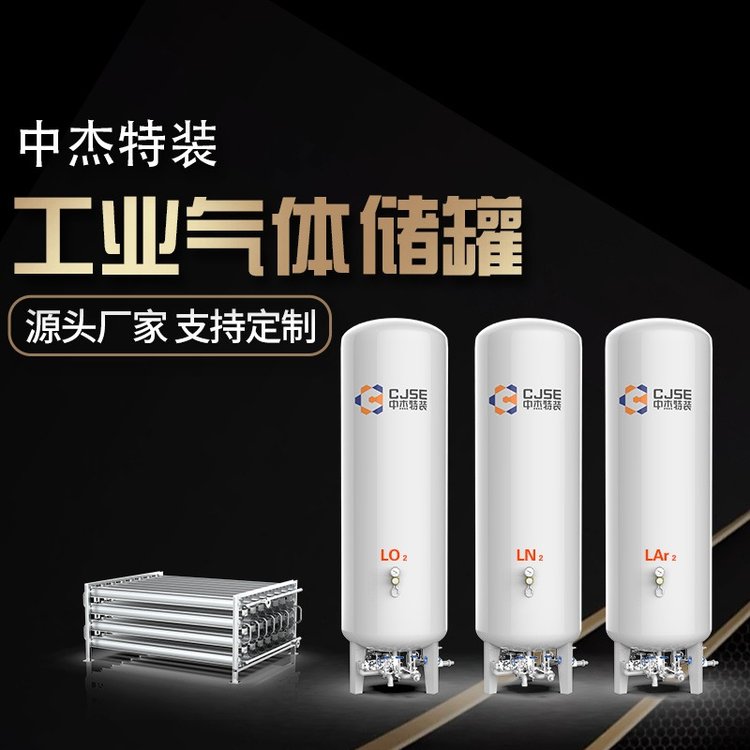
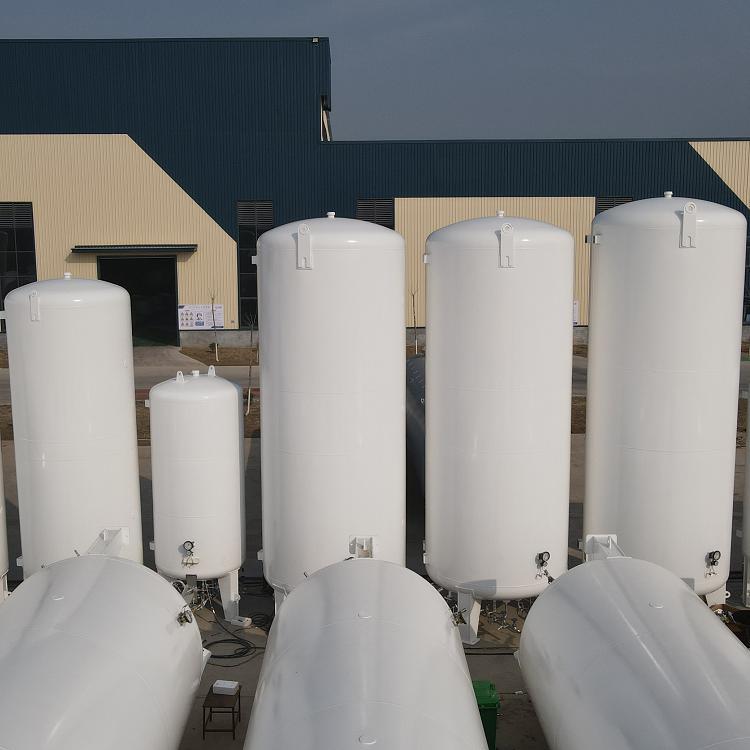
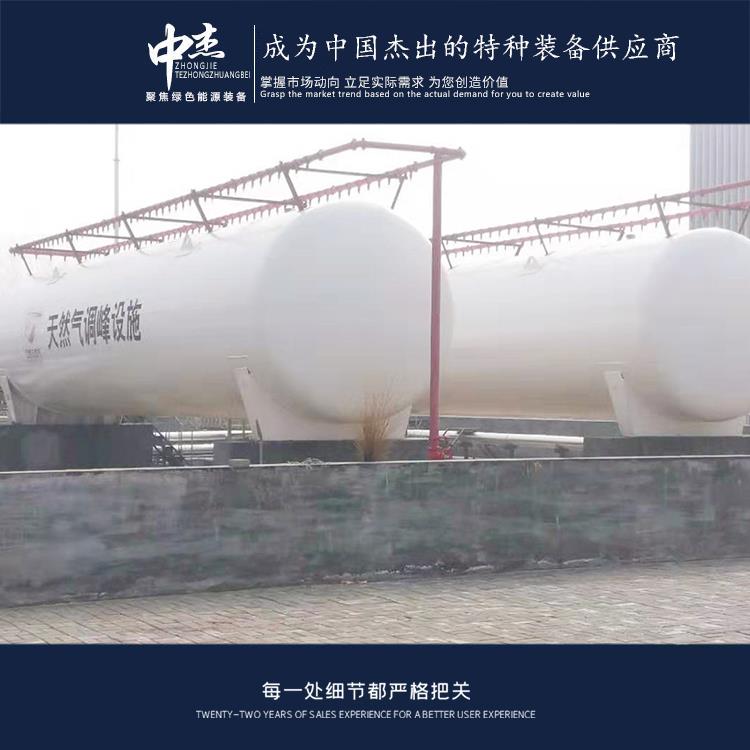
Shandong Zhongjie Special Equipment Co., Ltd. specializes in the following products: fuel (gas) boilers, organic heat carrier boilers, biomass boilers, waste heat recovery boilers, and other boiler products; vacuum insulation cryogenic pressure vessels such as LNG storage tanks, oxygen/nitrogen/argon storage tanks, and CO2 storage tanks; pressure vessel products including denitrification engineering equipment, heat storage and energy storage equipment, and complete chemical equipment; central air conditioning and HVAC equipment such as ground (water) source heat pumps, air source units, water-cooled screw units, and air-cooled modular units. Planned products include large-scale energy centers, LNG transport vehicles, LNG tank containers, and other green energy equipment.
Prior to using the CO2 storage tank, the following preparations must be made:
- Inspect the tank: Check for any damage, corrosion, or oil leakage on the tank's exterior. Ensure the structural integrity and safety of the tank.
- Check valves and pipes: Verify that the tank's inlet and outlet valves and pipe connections are functioning properly with no leaks or loose fittings. Ensure the valves operate smoothly and reliably.
- Inspect safety accessories: Check that safety accessories such as relief valves, pressure sensors, and temperature sensors are functioning correctly. Confirm that their set parameters meet requirements.
- Inspect the level measurement system: Verify the accuracy and reliability of the level measurement system. Calibrate the level sensors to ensure precise level measurements.
- Check the pressure relief device: Ensure that the tank's pressure relief device (e.g., relief valve) is working correctly. Confirm that the set pressure of the relief device meets requirements.
- Check gas quality: Ensure the CO2 gas in the tank meets quality standards with no impurities or contaminants.
- Check fire protection equipment: Confirm that fire protection equipment around the tank is in good condition and check that fire extinguishers, sprinkler systems, etc., are functioning properly.
- Train operators: Operators should receive training on the characteristics, operational requirements, and safety measures of the CO2 storage tank. Training should include safe operation, leak handling, and emergency procedures.
- These preparations ensure the CO2 storage tank is in good condition prior to use and guarantees the safety and reliability of operations. Follow relevant safety operation procedures during preparation and have personnel handle the operations.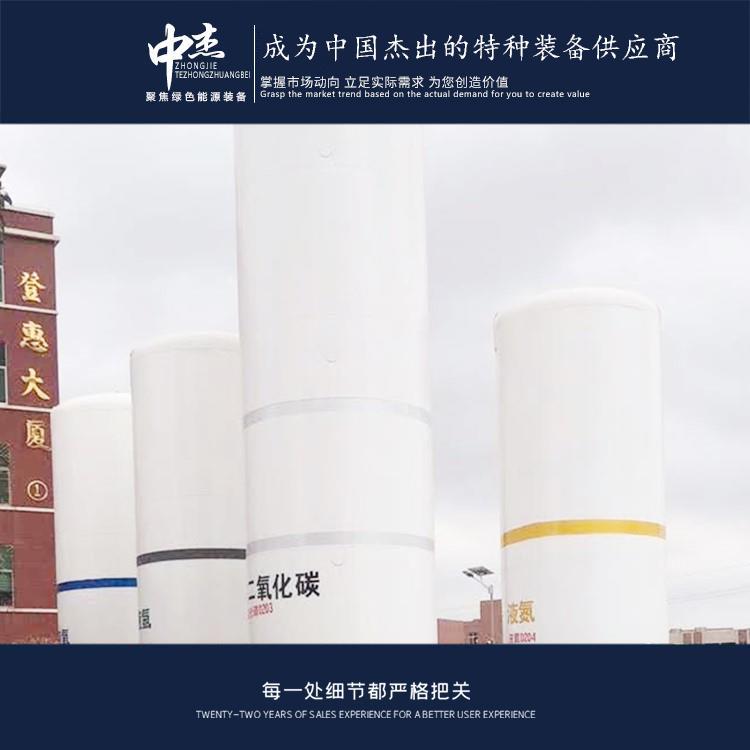
Carbon dioxide recovery is a technology designed to capture carbon dioxide from industrial emission sources or the atmosphere and store or utilize it, thereby reducing carbon dioxide emissions. Below are some common carbon dioxide recovery techniques:
Coal-fired power plant carbon dioxide recovery: In coal-fired power plants, the carbon dioxide produced by burning coal can be captured and recovered. A common method is to use carbon capture technology to separate the carbon dioxide from flue gas and then store or utilize it.
Industrial emission source carbon dioxide recovery: Many industrial processes produce carbon dioxide that can be treated through capture and recovery techniques. For example, the carbon dioxide produced during the production processes of industries such as steel, cement, and chemicals can be recovered using methods to reduce emissions.
Atmospheric carbon dioxide capture: Carbon dioxide in the atmosphere can also be recovered using direct air capture technology. This technology uses adsorbents or chemical reactions to capture and separate carbon dioxide from the atmosphere, which is then stored or utilized.
Carbon dioxide utilization: Captured carbon dioxide can be used to produce valuable chemicals and fuels. For instance, through carbon dioxide catalytic conversion technology, carbon dioxide can be converted into fuels or chemicals like ethanol.
The development of carbon dioxide recovery technologies aims to reduce greenhouse gas emissions and alleviate climate change. However, these technologies are still in continuous development and research, requiring further technological breakthroughs and practical verification for large-scale application.
In recent years, the surge in the development of low-temperature liquid storage tanks can be attributed to the following factors: increasing energy demand: As the economy grows and the population expands, the demand for energy continues to rise. Low-temperature liquid storage tanks are primarily used for storing liquid gases (LNG), liquid oxygen (LOX), liquid nitrogen (LIN), and other low-temperature liquid energy sources to meet the growing energy needs. Greenhouse gas reduction: These tanks can store and transport liquid carbon dioxide (CO2), used in carbon capture and storage (CCS) technology to reduce greenhouse gas emissions. With heightened awareness of environmental protection and climate change, the demand for low-temperature liquid storage tanks in the CCS field has also increased. Industrial development needs: The application of low-temperature liquid storage tanks in the industrial sector is also on the rise. For instance, in industries such as chemicals, pharmaceuticals, food and beverage, there is a need for storing and transporting low-temperature liquid raw materials or products like liquid nitrogen, liquid oxygen, and liquid ethylene. As these industries develop, so does the demand for low-temperature liquid storage tanks. Technological advancement and innovation: In recent years, there have been continuous advancements and innovations in the design, manufacturing, and transportation of low-temperature liquid storage tanks. The application of new materials, optimization of tank structures, and improvements in safety control systems have made these tanks safer and more reliable, further propelling their peak development. In summary, factors such as increasing energy demand, greenhouse gas reduction, industrial development needs, and technological advancements and innovations have collectively driven the peak development of low-temperature liquid storage tanks in recent years. As related industries grow and technology progresses,
When selecting a carbon dioxide tank support, consider the following factors: Load Capacity: The design and selection of the support should be able to bear the weight and pressure of the tank. The load-bearing capacity of the support should be determined based on the tank's size, weight, and working conditions. Stability: The support should have sufficient stability to prevent the tank from tilting or collapsing during use. The design of the support should take into account the center of gravity position and changes of the tank to provide stable support. Corrosion Resistance: Due to the corrosive nature of carbon dioxide, the material choice for the support should have good corrosion resistance to prevent corrosion and damage. Installation and Maintenance Ease: The design of the support should consider ease of installation and maintenance to facilitate the installation, adjustment, and maintenance of the tank. Compliance with Standards and Regulations: The design and selection of the support should comply with relevant standards and regulations, such as Standard GB150 "Steel Pressure Vessels." Additionally, other related factors can be considered, such as cost, reliability, and durability. When selecting a support, consult engineers or consulting companies for advice and guidance.
Our company attaches great importance to technological innovation and R&D, boasting 1 municipal-level enterprise technology center in Heze City. We have established testing facilities for non-destructive testing,理化 analysis, welding, and hydrostatic testing, equipped with over 600 various instruments and equipment such as CNC machines, X-ray flaw detectors, digital ultrasonic flaw detectors, mechanical property test machines, chemical analyzers, spectrometers, tensile test machines, and plasma welding machines. The key products and technologies we have developed, including welding for temperature-pressure vessels, emissions reduction for biomass boilers, and waste heat utilization, have successively been shortlisted for multiple Shandong Provincial Department of Industry and Information Technology innovation projects, key projects in Shandong Province, and innovative and excellent projects in Heze City. We have accumulated a total of 27 authorized utility models, 16 authorized inventions, participated in drafting 2 standards, 2 industrial standards, and registered 15 trademarks. Our technical team, in collaboration with Professor Yajiang Li from Shandong University, has jointly developed deep cryogenic container processing technology using the international plasma arc + wire filling argon arc welding (PAW-GTAW) technique. This technology has been appraised as internationally competitive at the provincial level, reaching international standards in the field of deep cryogenic container manufacturing. Choose Zhongjie Special Equipment, and let's create brilliance together!
Quzhou 80 cubic CO2 storage tank, manufacturer
