


Shandong Zhongjie Special Equipment Co., Ltd. (formerly Heze Boiler Factory Co., Ltd.) was established in 2001, located at No. 2218 Jinnan Road, Economic and Technological Development Zone, Heze City, with a registered capital of 50 million yuan and total assets of 500 million yuan. The company has 7 business centers: boilers, deep-freezing containers, pressure vessels, central air conditioning, engineering installation, international trade, and the Internet of Things. It has three factory areas on Jinnan Road, East Changjiang Road, and Bohai Road, covering a total area of 200,000 square meters, with the main workshop area at 83,000 square meters. Currently, there are 710 employees, including 247 engineers and technicians and 82 intermediate-level technical personnel. In December 2016, it was recognized as a "High-Tech Enterprise" by the Science and Technology Department. In June 2021, it was identified as a "Specialized and New Enterprise in Shandong Province" by the Department of Industry and Information Technology. In June 2022, it was recognized as a "Gazelle Enterprise in Shandong Province" and in August 2022, as a "Specialized and New Small Giant Enterprise" by the Ministry of Industry and Information Technology.
When installing a gas boiler unit, the following points should be noted:
Safety: A gas boiler is a device that uses gas as fuel, so safety must be ensured during installation. Firstly, select an appropriate installation location, away from flammable materials and combustible gases, and ensure good ventilation. Secondly, install according to relevant safety regulations, including the connection of gas pipes and the installation of gas valves.
Pipe Connection: Gas boilers require connection to gas pipes to ensure a smooth gas supply. During the connection process, use suitable pipes and joints to ensure a secure connection and prevent gas leaks. Additionally, conduct a leak test to ensure there are no leaks.
Exhaust Duct: Gas boilers produce exhaust gases during combustion and require an appropriate exhaust duct. The exhaust duct must be kept clear to avoid the accumulation of exhaust gases indoors, which can pose safety hazards and cause air pollution.
Electrical Connection: Gas boilers typically require electrical power, so electrical connections must be made during installation. Ensure the electrical connections are correct and secure to avoid circuit shorts or other electrical issues.
Water System: Gas boilers usually need to be connected to the water system, including water supply and drain pipes. During the connection process, ensure the water pipes are securely connected to prevent leaks or unstable water pressure.
Commissioning and Testing: After installation, commissioning and testing of the gas boiler should be carried out. This includes ignition tests, combustion efficiency tests, and temperature control tests to ensure the boiler operates normally and is safe and reliable.
It is recommended to follow relevant installation specifications and requirements when installing a gas boiler unit. If you do not possess the necessary technical knowledge, it is best to have a qualified installer perform the operation to ensure the installation process is safe and reliable.
If gas boiler gas leakage is detected, immediate action must be taken to handle the situation:
1. Immediately shut off the gas supply: First, quickly close the gas supply valve to cut off the gas supply. This prevents further leakage and reduces safety risks.
2. Ventilation: Open windows and doors to ensure indoor air circulation and expel any remaining gas. This lowers the indoor gas concentration, reducing the risk of explosion and poisoning.
3. Avoid open flames and electrical appliances: In the event of gas leakage, avoid using open flames and electrical equipment to prevent fire or sparks that could cause an explosion.
4. Do not operate electrical switches: Do not operate electrical switches, including lights, TVs, computers, etc., to prevent sparks that could lead to accidents.
5. Contact the gas company or personnel: Promptly contact the local gas company or personnel to report the gas leakage and request them to inspect and handle the situation.
6. Do not use a mobile phone or make phone calls: In cases of suspected gas leakage, do not use a mobile phone or make phone calls to prevent static electricity from causing an explosion.
7. Keep away from the leakage area: Keep a safe distance from the leakage area to ensure personal safety. Do not approach the gas boiler or the leakage point to avoid injury.
Remember, handling gas boiler gas leakage is a dangerous task that requires caution. It is best handled by professionals to ensure safety.
Industrial boilers, during their long-term operation, can accumulate scale and sediment, which affect the efficiency of heat exchange and the normal operation of the boiler. Here are some effective descaling methods:
1. Mechanical Cleaning: Utilizing cleaning equipment and tools, scale and sediment inside the boiler are removed through high-pressure water or mechanical brushing. This method is suitable for lighter scale and sediment.
2. Chemical Cleaning: Using chemical cleaning agents, scale and sediment are dissolved through chemical reactions. Select an appropriate cleaning agent based on the composition and nature of the scale, and operate according to the instructions provided. Safety precautions are crucial in chemical cleaning to avoid damage to equipment and the environment.
3. Acid Cleaning: Acid cleaning is a common descaling method for difficult-to-dissolve scale and sediment. Commonly used acid cleaners include (list specific cleaners), and the appropriate cleaner and concentration should be selected based on the specific situation. Safety operations are necessary to prevent harm to equipment and personnel.
4. Alkali Cleaning: Alkali cleaning is a descaling method for specific types of scale, suitable for alkaline scale. Commonly used alkali cleaners include (list specific cleaners), and the appropriate cleaner and concentration should be selected based on the specific situation. Safety operations are necessary to prevent harm to equipment and personnel.
5. Physical Descaling: Physical descaling methods include ultrasonic cleaning and electro-descaling. Ultrasonic cleaning uses the vibrational effect of ultrasound to vibrate and break apart scale. Electro-descaling utilizes the principle of electrolysis, dissolving scale through the action of electricity. These physical descaling methods are suitable for special circumstances and specific types of scale.
When choosing a descaling method, it is necessary to consider the specific conditions of the boiler.
The importance of energy-saving in steam boilers is significant for the following reasons: Energy Costs: Steam boilers typically use fuels (such as coal, gas, oil, etc.) to generate steam, with energy costs accounting for a substantial portion of the boiler's operational expenses. Energy-saving measures can reduce energy consumption and lower costs. Environmental Protection: The combustion process of steam boilers produces exhaust gases and dust, causing environmental pollution. Energy-saving can decrease fuel usage and reduce emissions, positively impacting environmental protection. Sustainable Development: Energy-saving is a crucial aspect of sustainable development. By reducing energy consumption and extending the boiler's lifespan, resources can be conserved and waste minimized, achieving sustainable development. Measures for energy-saving include: Improving Boiler Thermal Efficiency: Enhancing the boiler's combustion system, optimizing combustion parameters, and increasing heat exchange efficiency can raise the boiler's thermal efficiency and reduce energy waste. Heat Recovery Utilization: Utilizing waste heat recovery systems to capture and reuse the excess heat from the boiler's exhaust gases for heating water or other heat-intensive processes, enhancing energy utilization efficiency. Application of Energy-Saving Equipment: Using energy-saving equipment such as variable-frequency drives, energy-saving burners, and heat pumps can lower energy consumption and improve efficiency.
Our company attaches great importance to technological innovation and research and development. We have one municipal-level enterprise technology center in Heze City, equipped with non-destructive testing, physical and chemical testing, welding testing, hydrostatic testing, and other testing facilities. We have over 600 types of equipment, including CNC machine tools, X-ray flaw detectors, digital ultrasonic flaw detectors, mechanical property testing machines, chemical analyzers, spectrometers, tensile testing machines, plasma welding machines, and more. Our key products and technologies, such as welding of temperature-pressure vessels, biomass boiler emission reduction, and waste heat recovery, have successively been included in multiple Shandong Provincial Department of Industry and Information Technology science and technology innovation projects, key projects of Shandong Province, and Heze City innovation and excellence projects. We have accumulated a total of 27 authorized utility models, 16 authorized inventions, participated in drafting 2 standards, 2 industry standards, and registered 15 trademarks. The technical team, in collaboration with Professor Yajiang Li of Shandong University, has developed deep cryogenic vessel processing technology using the international plasma arc + filled wire tungsten inert gas (PAW-GTAW) technology. This technology has been appraised as reaching international standards in the field of deep cryogenic vessel manufacturing at the provincial level.
Choose ZJET Customization, let's create brilliance together!
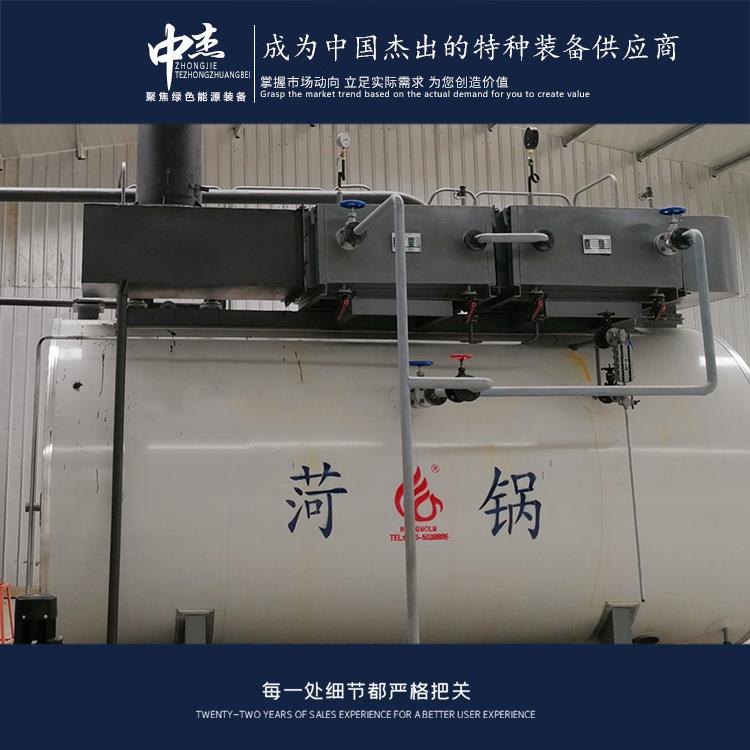
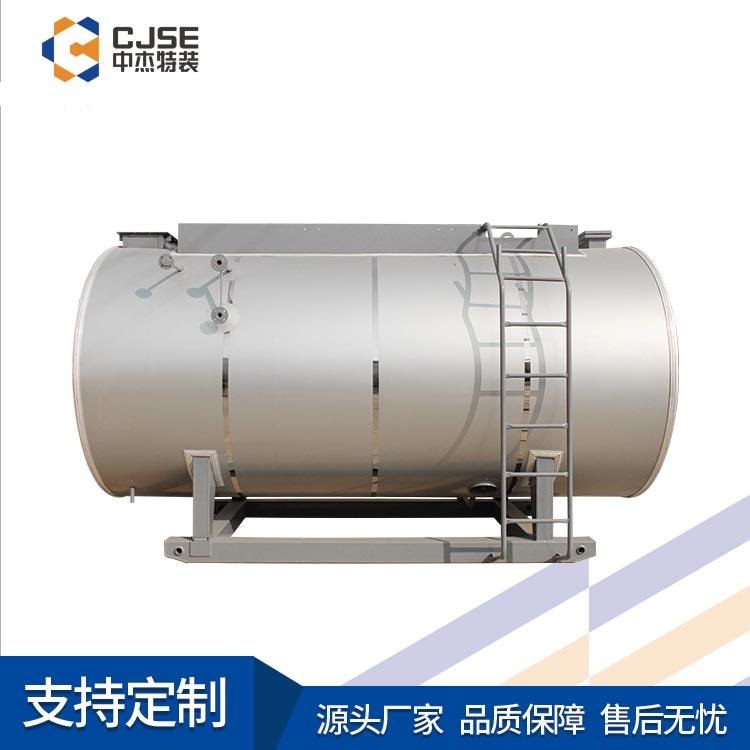
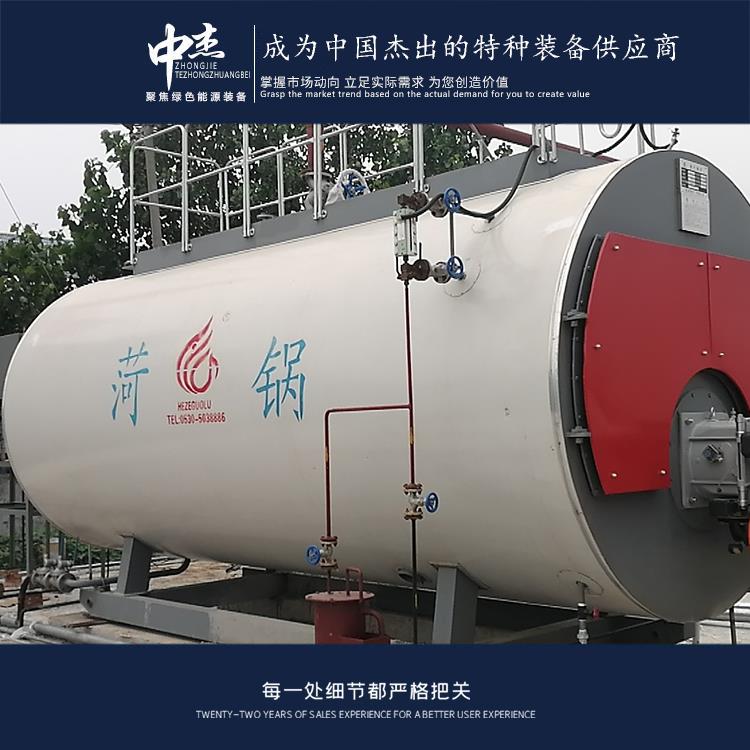
Jiujiang 8-ton gas boiler, high thermal efficiency, stable output
