


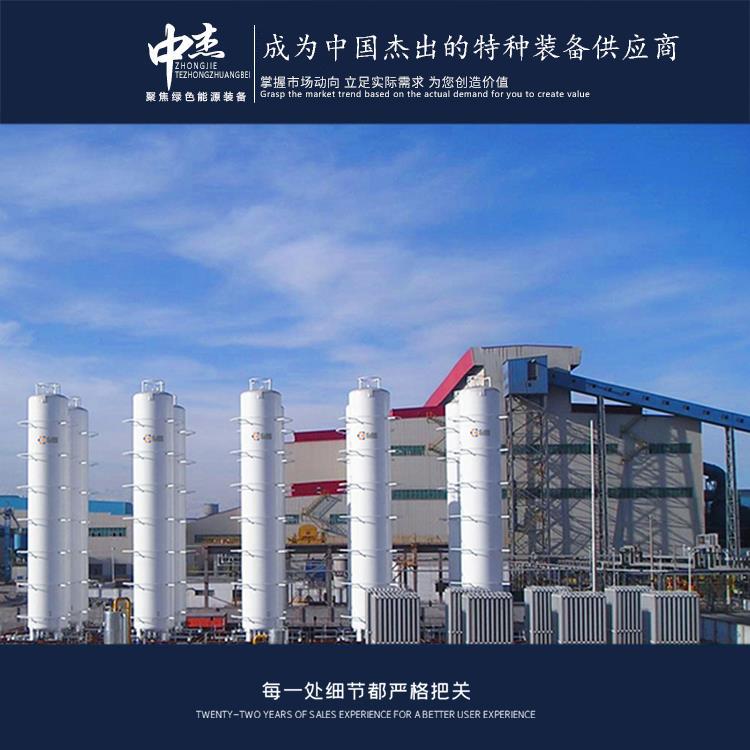
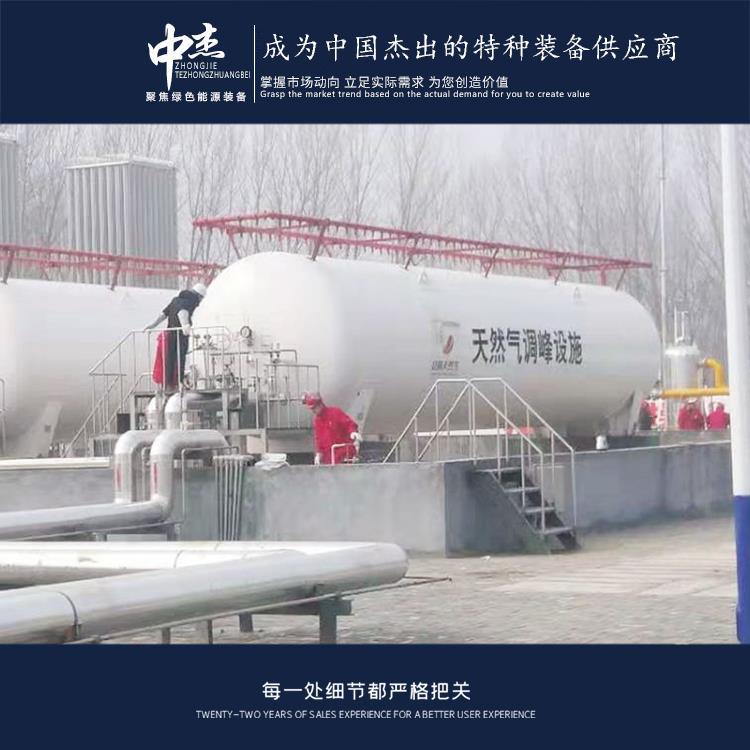
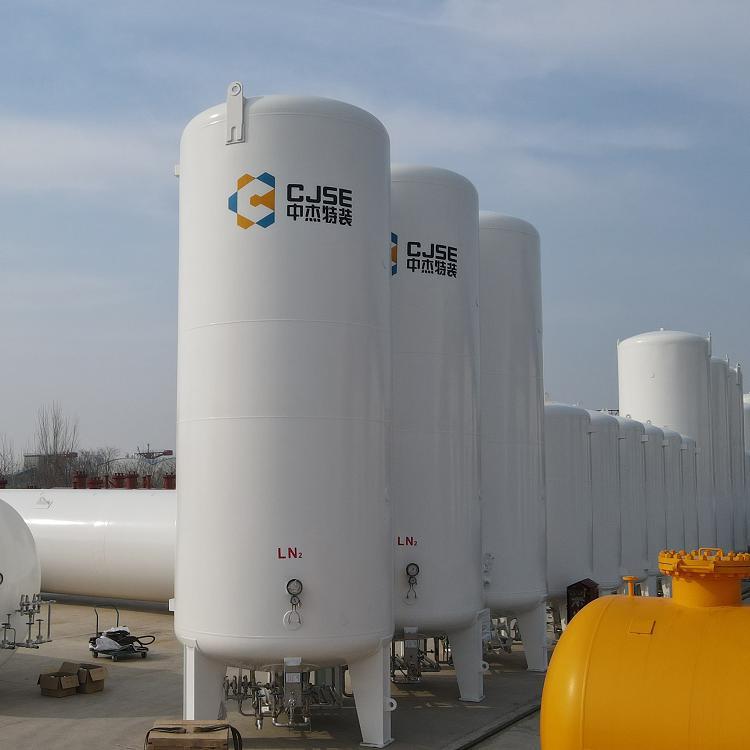
Shandong Zhongjie Special Equipment specializes in: fuel (gas) boilers, organic heat carrier boilers, biomass boilers, waste heat recovery boilers, and other boiler products; vacuum insulation deep-chilled pressure vessels such as LNG tanks, oxygen/nitrogen/argon tanks, CO2 tanks; pressure vessel products including denitrification engineering equipment, heat storage and energy storage equipment, complete chemical equipment; central air conditioning and HVAC equipment such as ground (water) source heat pumps, air source units, water-cooled screw units, and air-cooled modular units. Planned products include large-scale energy centers, LNG transport vehicles, LNG tank containers, and other green energy equipment.
When using CO2 storage tanks, the following precautions should be taken:
Safety Operation: Prior to operating a CO2 storage tank, it is mandatory to familiarize yourself with and adhere to relevant safety operation procedures and guidelines. Ensure that operators have received necessary training and understand the tank's working principle, operational procedures, and emergency measures.
Tank Inspection: Regularly inspect the external and internal condition of the CO2 storage tank, including checking for corrosion, leaks, and welds on the tank walls. If abnormalities or damage are found, take immediate corrective or replacement actions.
Tank Pressure Control: Ensure that the internal pressure of the tank remains within a safe range. Monitor and control the tank's pressure to avoid damage or safety risks from excessive or low pressure.
Fire Prevention Measures: CO2 is a flammable gas, so fire prevention measures must be taken when in use. Avoid open flame operations near the tank and ensure the surrounding environment is free of flames.
Leakage Handling: In the event of a CO2 leak, appropriate emergency measures should be taken immediately. Quickly notify relevant personnel, ensure safe evacuation, and take actions to prevent the spread of the leak.
Tank Maintenance: Regularly perform maintenance and upkeep on the tank, including cleaning, lubrication, and corrosion prevention. Follow the manufacturer's recommendations and guidelines to ensure the tank operates normally and has a long service life.
Compliance: Adhere to local regulations, standards, and specifications to ensure that the tank's design, manufacturing, installation, and use meet the corresponding requirements.
It is crucial to strictly adhere to safety operation procedures when using CO2 storage tanks and to cooperate with relevant personnel to ensure the tank's safety and reliability.
以下是一些常见的二氧化碳储罐管理守则: 安全管理:建立完善的安全管理制度,包括安全操作规程、应急预案和事故处理程序等。确保操作人员具备必要的安全知识和技能,并定期进行安全培训和演练。 储罐检查和维护:定期检查储罐的外观、阀门、连接件等,确保其完好无损。定期进行泄漏检测和压力测试,确保储罐的安全性能符合要求。 液位监测和控制:定期监测储罐内的液位,确保储罐内的二氧化碳充足。根据需要进行充填或放空操作,维持适当的液位。 废气处理:处理二氧化碳储罐产生的废气,避免对环境造成污染。采取适当的废气处理措施,如收集和处理废气。 防火防爆措施:采取防火防爆措施,确保储罐周围的环境安全。远离火源、高温区域和易燃物质,定期检查和维护防火设施。 标识和警示:储罐应明确标识,包括储存的气体类型、压力等信息。周围应设置警示标志,提醒人员注意储罐的存在和相关安全注意事项。 储存记录:记录储罐的使用情况,包括充填日期、充填量、检查记录等。定期进行储罐的检测和维护,并保留相关记录。 定期审查和改进:定期审查储罐管理制度和操作流程,及时发现问题并进行改进。根据实际情况进行风险评估和管理,提高管理水平和安全性能。 需要注意的是,具体的管理守则可能会因不同的储罐类型和应用而有所不同。在管理二氧化碳储罐时,应根据相关的规范和标准进行操作,并咨询人士以确保安全和有效性。
Urea synthesis from carbon dioxide is a significant chemical reaction with several applications:
- Urea Production: Urea is a crucial nitrogen fertilizer and chemical, widely used in both agricultural and industrial sectors. Carbon dioxide synthesis is one of the commonly used methods for urea production. In this process, carbon dioxide reacts under high temperature and pressure to form urea. This approach utilizes carbon dioxide resources, reducing dependence on fossil fuels used in traditional urea production methods.
- Urea Fuel: Urea can also serve as a urea fuel for internal combustion engines and burners. By heating and decomposing urea, energy is released, which then reacts with oxygen in the air to produce combustion heat. This combustion process yields only water vapor and nitrogen as byproducts, minimizing environmental pollution.
- Chemical Synthesis: Urea is an essential raw material for the synthesis of many chemicals. Carbon dioxide synthesis of urea provides a sustainable supply for the chemical industry, used to produce other chemicals such as plastics, resins, paints, etc.
- Energy Storage: Urea can also act as a medium for energy storage. By converting carbon dioxide into urea, energy can be stored in the form of chemical bonds. When energy is needed, urea can be decomposed to release energy, which then reacts with oxygen in the air to produce combustion heat and release the stored energy.
The development of carbon dioxide synthesis urea technology aims to reduce dependence on fossil fuels used in traditional urea production methods, lower greenhouse gas emissions, and promote the development of sustainable agriculture and the chemical industry. However, this technology is still under development and research, requiring further technical breakthroughs and practical validation for large-scale application.
Before using a CO2 storage tank, certain inspection and filling points must be addressed. Here are some common precautions:
- Inspect the tank exterior: Check for any visible damage, corrosion, or leakage signs. Ensure the tank shell is intact.
- Check valves and fittings: Verify that the tank's valves and fittings are securely fastened and there are no leaks. Ensure proper operation.
- Inspect the pressure gauge: Confirm that the tank's pressure gauge is functioning correctly and readings are accurate. Replace or repair if abnormal.
- Check the level indicator: Ensure the tank's level indicator is working properly and accurately displays the level. Repair or replace if abnormal.
- Inspect the pressure relief device: Verify that the tank's pressure relief device (e.g., safety valve) is functioning correctly and the set pressure meets requirements. Repair or replace if abnormal.
- Inspect the filling equipment: Check that the filling equipment (e.g., filling pipes, pumps) is operating correctly with no leaks or blockages. Ensure safety and reliability.
- Filling operation: During the filling process, pay attention to the following:
- Control the filling speed to avoid too fast or too slow.
- Control the filling pressure to prevent exceeding the tank's rated pressure.
- Monitor the level to ensure proper filling.
- Regularly inspect filling equipment and valves to ensure normal operation.
- Safety measures: Adhere to relevant safety regulations and procedures during the filling process. Operators should wear appropriate protective gear, such as static-resistant clothing, gloves, etc.
- Note that specific inspection and filling points may vary depending on the tank type and application. Before using a CO2 storage tank, inspect and operate according to relevant specifications and standards, and consult with experts to ensure safety and effectiveness.
ZJ Special Equipment adheres to the great vision of "realizing employees' dreams, creating customer value, and striving for the prosperity and strength of our motherland," devoting itself to the development of the green energy equipment industry, and offering society high-quality products and services at competitive prices!
Yichun 100 Cubic CO2 Storage Tank, Genuine Manufacturer
